
Reviewed · WORKSHOPS
Salvador: Traditional Drumming and Percussion Workshop
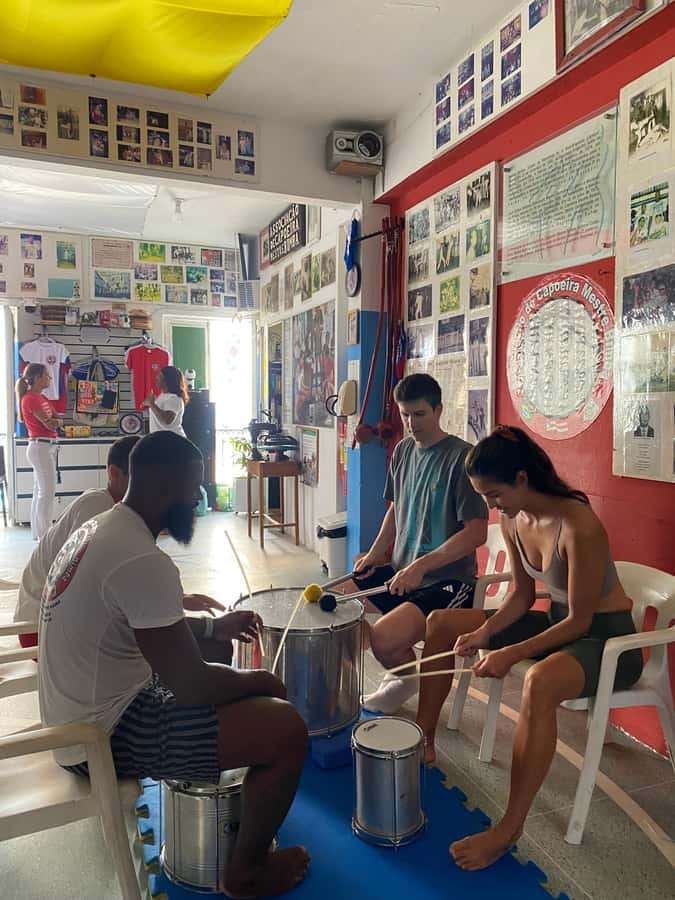
At Associação de Capoeira Mestre Bimba, a one-hour drumming class becomes a lesson in how Afro-Brazilian music survived pressure and persecution. You’ll handle percussion instruments, learn basic rhythms, and hear why capoeira, samba, and drumming matter far beyond the beat.
I like the hands-on format and the small group of no more than 10 people. I also like the setting: Mestre Bimba’s first school in Pelourinho connects the music lesson to a real place of cultural resistance, not just a generic classroom.
The main caution is language. Portuguese and English are offered, but one booking reported that the instructor could not speak English, so English-only participants should be ready for some uncertainty.
Key points to know before you book
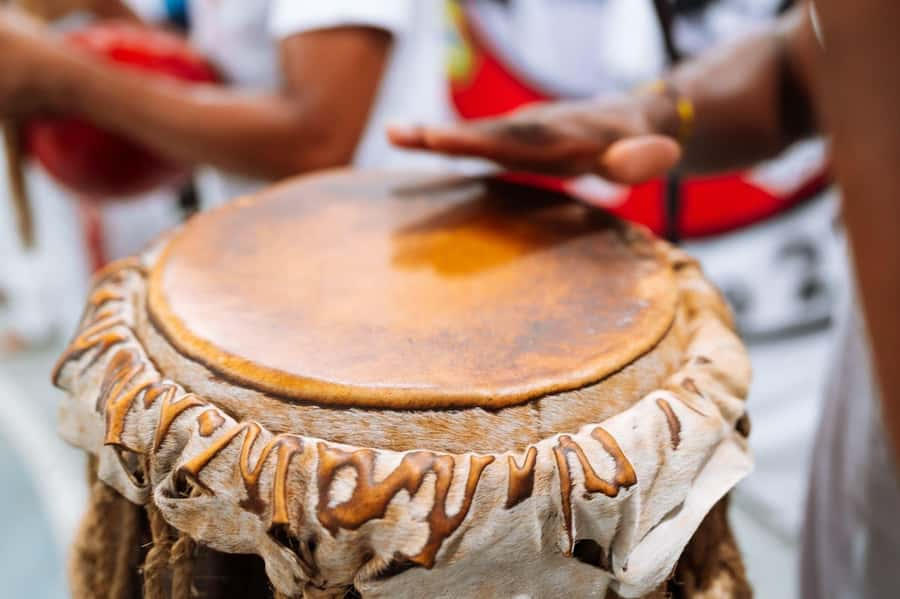
- One hour of practical music making: You learn by playing, not by watching a long demonstration.
- Mestre Bimba’s first school: The location links the class to capoeira and Afro-Brazilian cultural resistance.
- No musical background required: The focus is on basic gestures, posture, rhythms, and participation.
- Small group size: The class is limited to 10 people, and one participant received 1:1 instruction with Yasmin.
- Central Pelourinho location: The meeting point is near Ó Paí Ó Restaurante and São Domingos Gusmão Church in Largo do Terreiro de Jesus.
- Good value at $43: The price makes sense if you want a focused cultural activity that fits neatly around sightseeing.
Learning rhythms at Mestre Bimba’s first school
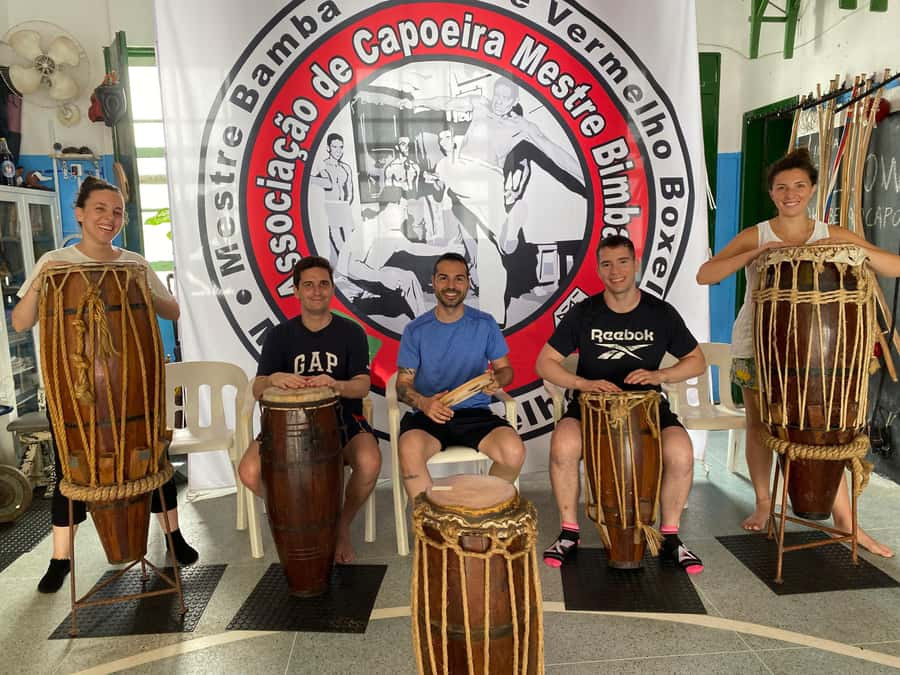
The most important part of this activity is the setting. You meet at Associação de Capoeira Mestre Bimba, identified as Mestre Bimba’s first school. It is presented as a Quilombo of resistance, a place tied to the survival of Afro-Brazilian practices in Salvador.
That background gives the hour some weight. In the late 19th century, capoeira, samba, and drumming were often treated with suspicion and could be criminalized. Today, they are central symbols of Brazilian identity. The class gives you a direct way to connect those two realities.
I would not book this as a formal music course. You are not signing up to become a percussionist in 60 minutes. Instead, you get a compact introduction to instruments, rhythm, body position, and the cultural setting behind the music.
The result should suit you if you like activities that mix doing and listening. You are not simply told about Afro-Brazilian culture. You take part in a small piece of it, under the direction of an instructor who teaches the basic movements and beats.
More workshops and classes in Salvador
- Salvador: Capoeira Class at Mestre Bimba’s 1st Ever School.
★ 4.9 · 34 reviews - Salvador: CAPOEIRA CLASS – CULTURAL
★ 4.6 · 13 reviews - Salvador: 3-Hour Percussion Class
★ 4.9 · 10 reviews
What happens during the one-hour class
The class begins with instruction from a professional guide in Portuguese or English. The exact order may vary, but the supplied details point to a practical session covering percussion instruments, drumming, posture, gestures, and several rhythms.
You do not need to read music or bring any previous experience. That matters because percussion can look simple until your hands and timing have to work together. The instructor repeats the movements and helps you adjust your technique, so beginners have a clear way into the activity.
A one-hour class is a sensible length. It gives you enough time to learn several patterns without turning the session into a tiring workshop. One participant who tried different instruments found the hour sufficient, especially because the lesson included more than one way to make percussion sounds.
The class may include Brazilian capoeira percussion instruments and drumming. You should expect to try instruments rather than spend the whole time with one drum. That variety adds interest, although it also means the lesson is an introduction rather than a detailed study of one instrument.
The best approach is to treat the class as a guided experiment. Pay attention to the instructor’s hands, copy the pattern, and do not worry if your first attempt is uneven. The goal is participation and understanding, not a polished performance.
Why the cultural background matters
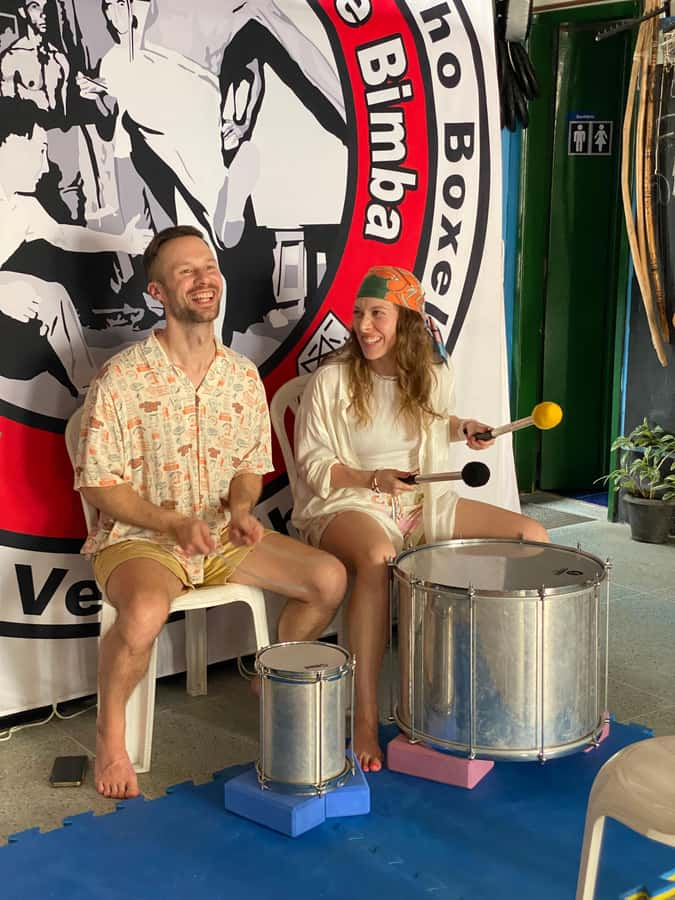
This activity works better when you understand why the music is being taught in this particular place. Capoeira, samba, and drumming were not always accepted as cultural treasures. They were linked to Afro-Brazilian communities and were subject to suspicion and official restrictions.
The school’s story gives the lesson a stronger purpose. You are helping support a place that keeps these traditions in active use, while learning about practices that have shaped Salvador and Brazil.
That does not mean the class is a lecture. The historical material appears to support the music making rather than replace it. You learn some context, then use your hands and ears to connect with the subject.
I especially like this balance. Many cultural activities give you facts but no personal connection. Others offer a fun performance with little explanation. Here, the instructors aim to show you the history and then let you participate in the rhythms.
The experience is also a useful choice for visitors who want to look beyond Salvador’s churches and colorful streets. Pelourinho is one of the city’s main sightseeing areas, but this class gives you a closer link to the people and traditions that helped shape it.
The teaching style and language question
The strongest praise is for patient, attentive teaching. Yasmin received particular credit for explaining the cultural background of the instruments, correcting technique, and encouraging a beginner who expected to struggle. That is exactly the kind of instruction that makes a short class work.
You may receive one-to-one attention if the group is small enough. The official limit is 10 participants, and that is a good size for a practical lesson. The instructor can watch several people at once while still having room to correct posture and hand movements.
The class is listed in Portuguese and English. I would still treat the English option with some caution. One participant booked an English session but found that the instructor could not speak English. That does not establish a regular problem, but it is a real consideration if you need detailed verbal explanations.
The music itself provides some common ground. You can copy a rhythm by watching and listening, even when conversation is limited. Still, cultural and historical explanations are harder to follow without shared language.
If your Portuguese is limited, confirm the language when you arrive and keep expectations flexible. If you speak Portuguese, you may find the session easier to follow. If you are an English speaker traveling alone, the small group and visual nature of the lesson may help, but I would not assume every instructor will offer fluent English.
More Tours in Brazil
- From Salvador: Schooner Tour to Frades Islands and Itaparica
★ 3.9 · 98 reviews - Afro-Brazilian Roots Private City Tour in Salvador
★ 4.7 · 88 reviews - Salvador Historic Walking Tour – Pelourinho
★ 4.8 · 62 reviews - Salvador de Bahia African Culture Tour
★ 4.5 · 60 reviews
A central Pelourinho stop that fits a busy day
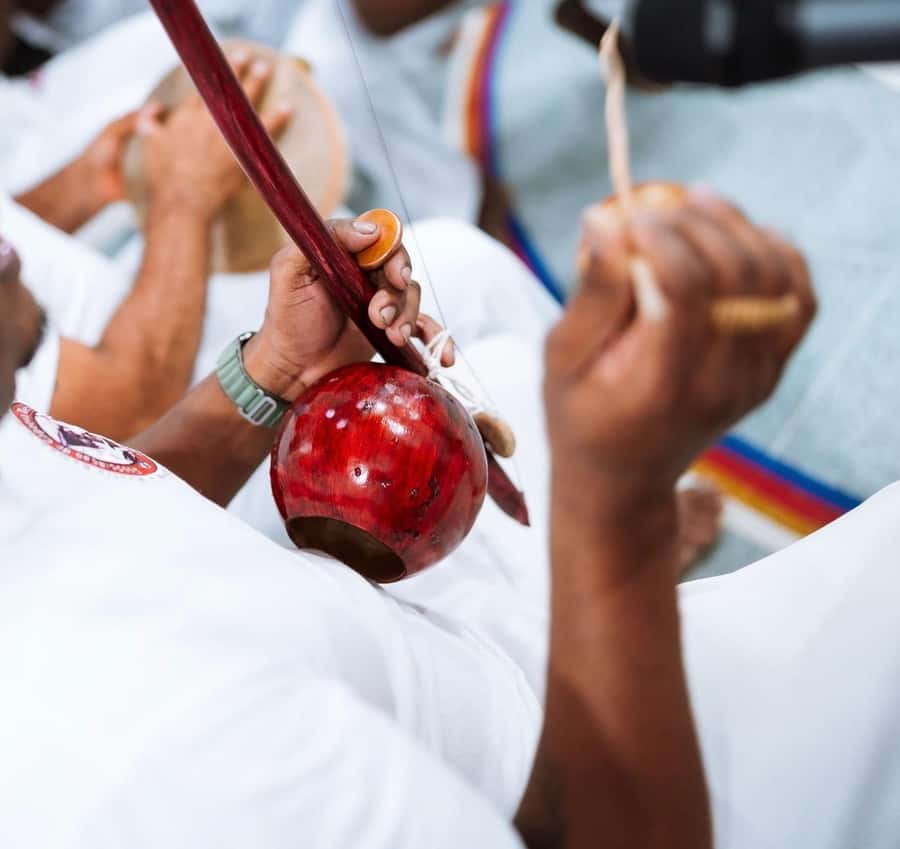
The meeting point is at Associação de Capoeira Mestre Bimba, with no hotel pickup or drop-off. You are expected to make your own way there.
The school is in the Pelourinho area, near Ó Paí Ó Restaurante and São Domingos Gusmão Church in Largo do Terreiro de Jesus. These landmarks are useful because they give you a practical way to orient yourself in a dense historic center.
Plan your route before the class begins. The experience lasts only one hour, so arriving late would take a large bite out of the activity. I would also allow enough time to locate the association rather than relying on a last-minute search.
The location makes the class easy to pair with sightseeing. Afterward, you can continue exploring Pelourinho, visit nearby churches, or stop for a meal. One participant combined the workshop with an afternoon of sightseeing during Carnaval, effectively fitting two activities into the same stretch of the day.
That convenience adds real value. You do not spend half a day traveling to and from a remote venue. You get a focused cultural class in one of Salvador’s main visitor areas.
The tradeoff is that there is no transport service. If you are staying outside the central area, you must arrange your own route. The activity is best for independent visitors who are already planning time in Pelourinho.
Is $43 a fair price for one hour?
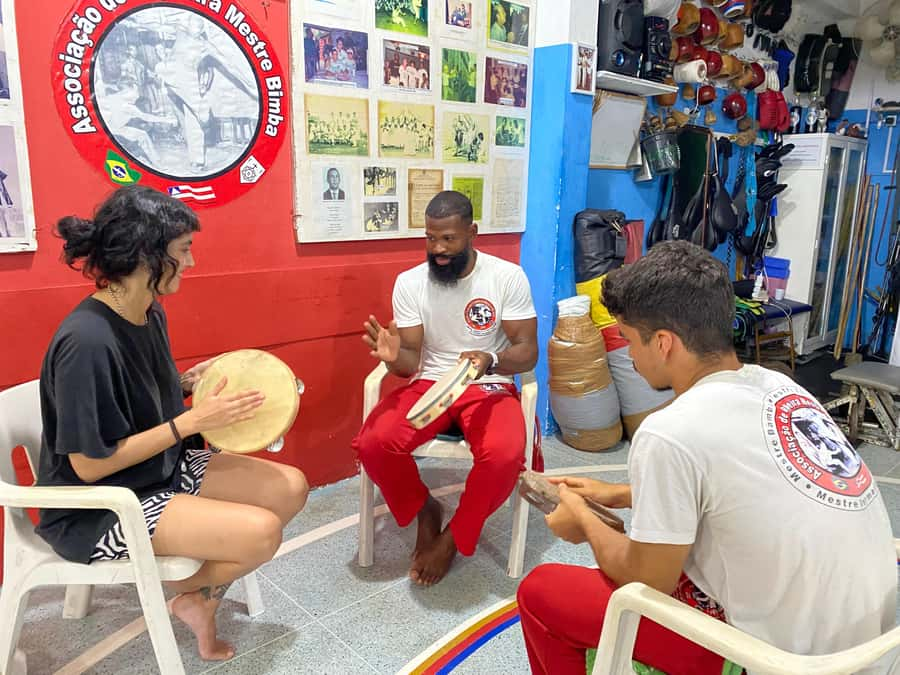
At $43 per person, this is not the cheapest way to fill an hour in Salvador. It is also more than you would pay for simply walking through the area or listening to music in a public setting.
The value comes from access and instruction. You get a structured drumming workshop, a professional instructor, and entry into a culturally important school. You also receive hands-on time with percussion instruments, rather than only watching a performance.
The small group improves the value. A 10-person maximum gives the class a more personal feel than a large demonstration. The experience can be especially worthwhile if you are nervous about trying music in front of others, since the format is designed for beginners.
I would consider the price fair for visitors who want a meaningful activity, particularly if they are already spending time in Pelourinho. It is less compelling if you only want casual entertainment or if you dislike participatory classes.
The price does not include meals, drinks, hotel transfers, or drop-off. Those omissions are easy to manage, but you should include them in your planning. Pair the class with your own lunch or dinner nearby rather than expecting the booking to cover a full outing.
You can reserve now and pay later, which is useful if your schedule is still taking shape. Free cancellation is available up to 24 hours before the activity for a full refund.
Who will enjoy this workshop most?
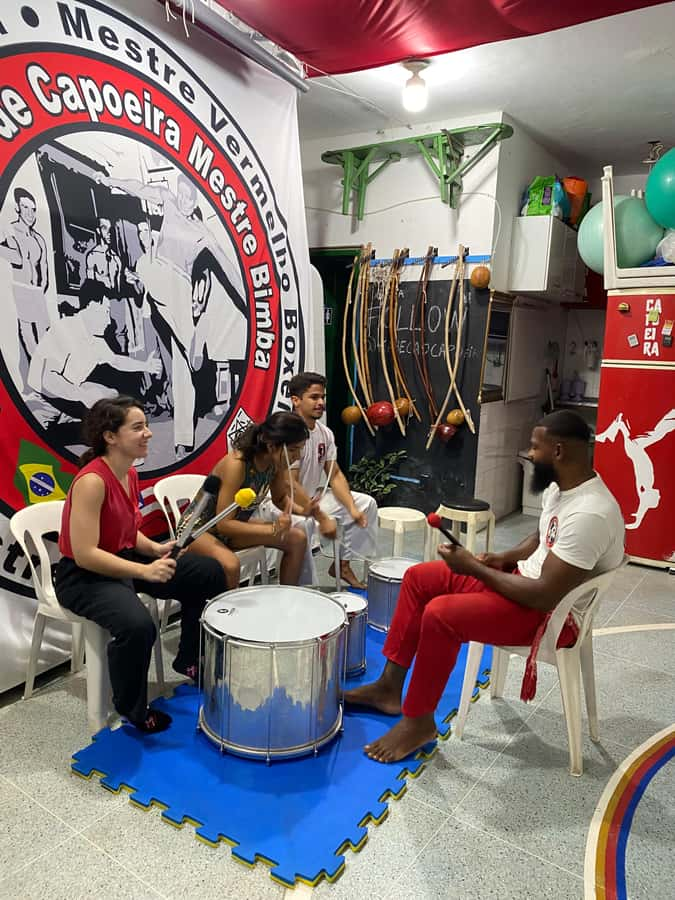
I would recommend this class to first-time visitors who want a direct introduction to Afro-Brazilian culture. You do not need to know anything about music, capoeira, or Brazilian percussion before arriving.
It is also a good fit for couples, solo visitors, and families with older children who enjoy trying something active. The short duration keeps the commitment manageable, and the lesson does not demand a full day.
Music lovers may appreciate the chance to compare instruments and rhythms. You should not expect advanced instruction, but you can gain a clearer sense of how these patterns are built and how much coordination they require.
History-minded visitors will value the setting and the discussion of cultural restrictions. The school is not just a convenient venue. Its connection to Mestre Bimba and the idea of a Quilombo of resistance gives the class a meaningful local frame.
I would be more cautious if you need a guaranteed English-speaking instructor, want hotel transportation, or prefer a polished performance to active participation. The activity asks you to take part, make mistakes, and follow directions.
Practical advice for getting the most from the hour
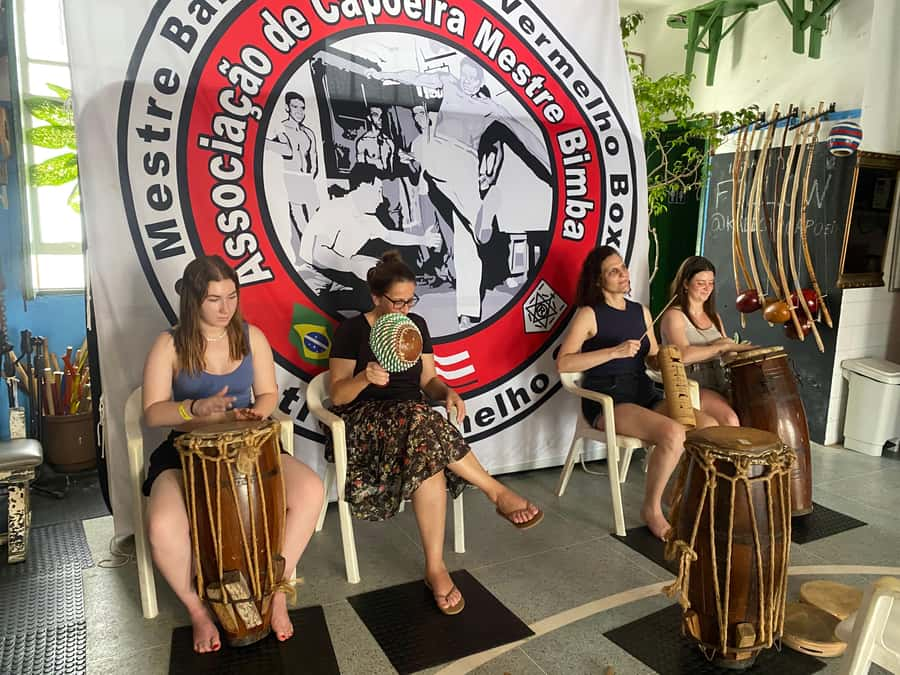
Arrive early enough to find the school near the listed landmarks. With only 60 minutes available, every late minute matters.
Wear something that lets you sit, stand, and move your arms comfortably. The supplied information does not specify a dress code, but the class involves posture, gestures, and playing instruments, so comfort is more useful than formal clothing.
Keep your expectations realistic. You may learn several rhythms and try different forms of percussion, but you will not master the instruments in one session. The worthwhile result is a better feel for the music and a personal connection to the tradition.
Listen closely to corrections. One of the most useful parts of the instruction is the attention to proper gestures and posture. Those details help you produce a cleaner sound and make the activity more than random tapping.
If your instructor is Yasmin, you can expect the kind of patient guidance that helped one beginner feel surprisingly capable. Instructor assignments can change, so do not assume she will lead every class.
Finally, leave room in your schedule for Pelourinho before or after the workshop. The class works best as part of a wider afternoon or morning in the historic center, not as an isolated trip across Salvador.
Should you book this drumming workshop?
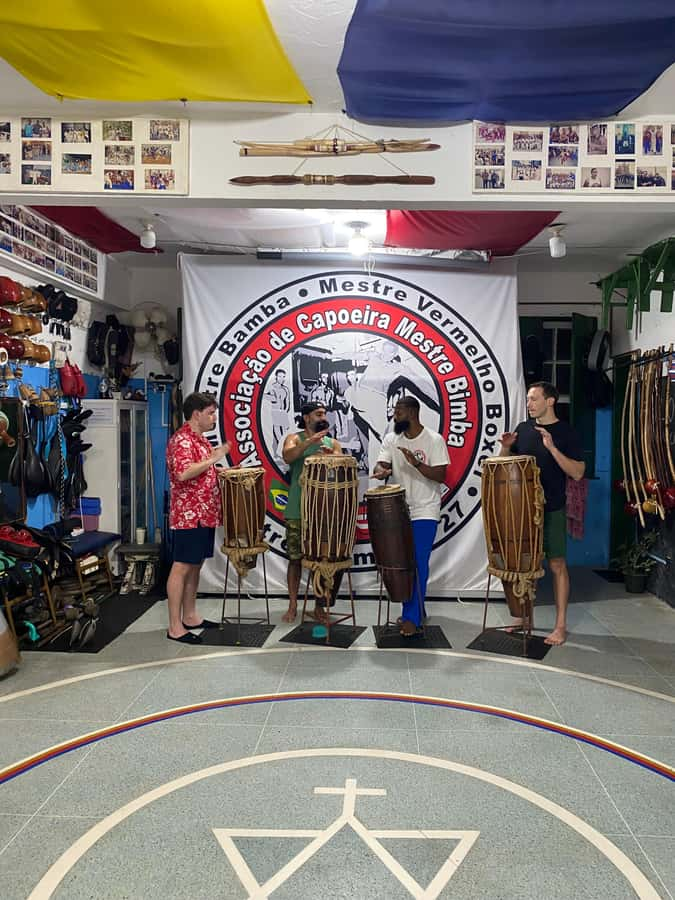
Book it if you want an active, compact way to learn about Afro-Brazilian traditions in a meaningful Salvador setting. The one-hour format, beginner-friendly teaching, central location, and small group size make it easy to add to a day in Pelourinho.
The strongest reasons to go are the school itself, the chance to play several percussion instruments, and the cultural context behind the rhythms. The $43 price is reasonable when you value instruction and access rather than simply looking for free entertainment.
Think twice if fluent English is essential, since that has not been consistent for every session. Also skip it if you want transportation or a longer, advanced music course.
For most independent visitors with an interest in music, history, or local culture, this is a worthwhile one-hour appointment. You leave with more than a few beats in your hands. You also gain a clearer sense of how Afro-Brazilian traditions moved from being restricted practices to essential parts of Brazil’s public identity.
FAQ
Where does the drumming workshop take place?
The workshop takes place at Associação de Capoeira Mestre Bimba in Salvador’s Pelourinho area. Nearby landmarks include Ó Paí Ó Restaurante and São Domingos Gusmão Church in Largo do Terreiro de Jesus.
How long does the activity last?
The workshop lasts one hour. Starting times vary, so you should check availability when booking.
Do I need musical experience?
No. The class is designed for people without previous musical experience.
Is hotel pickup included?
No. The activity does not include hotel pickup or drop-off, so you must make your own way to the meeting point.
What languages are offered?
The activity is offered in Portuguese and English. Because English ability may vary by instructor, confirm the language when you arrive if detailed English instruction is important to you.
How large is the group?
The group is limited to 10 participants. Some sessions may provide very close instruction, including one-to-one guidance.
What is included in the price?
The price includes the drumming workshop and an instructor. Meals, beverages, hotel pickup, and hotel drop-off are not included.
Can I cancel the booking?
Yes. You can cancel up to 24 hours in advance for a full refund. You can also reserve now and pay later.
Just added in Salvador
- Salvador: Schooner Cruise with Pickup and Itaparica Stop★ 3.8 · 5 reviews
- Salvador by Night: Cultural Show and Dinner.★ 4.4 · 17 reviews
- Salvador: 3-Hour Percussion Class★ 4.9 · 10 reviews
- Salvador: Walking Tour Through Pelourinho★ 5.0 · 49 reviews
- Salvador: Cultural Treasure – Samba de Roda.★ 4.9 · 51 reviews
- Salvador: Capoeira Class at Mestre Bimba’s 1st Ever School.★ 4.9 · 34 reviews
- Salvador: Cultural Night of Capoeira, Samba, and Drumming★ 4.9 · 17 reviews
- Salvador: CAPOEIRA CLASS – CULTURAL★ 4.6 · 13 reviews
Workshops, compared.

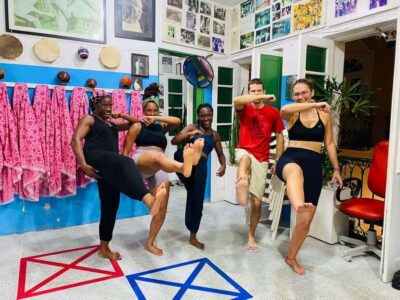
Capoeira Class at Mestre Bimba’s 1st Ever School.
Read our review →
Surf lessons with local instructors in Copacabana/ipanema!
Read our review →
Surf Lesson with Qualified Instructor in Florianópolis
Read our review →Browse the lists this tour appears in