
Reviewed · WORKSHOPS
Surf lessons with local instructors in Copacabana/ipanema!
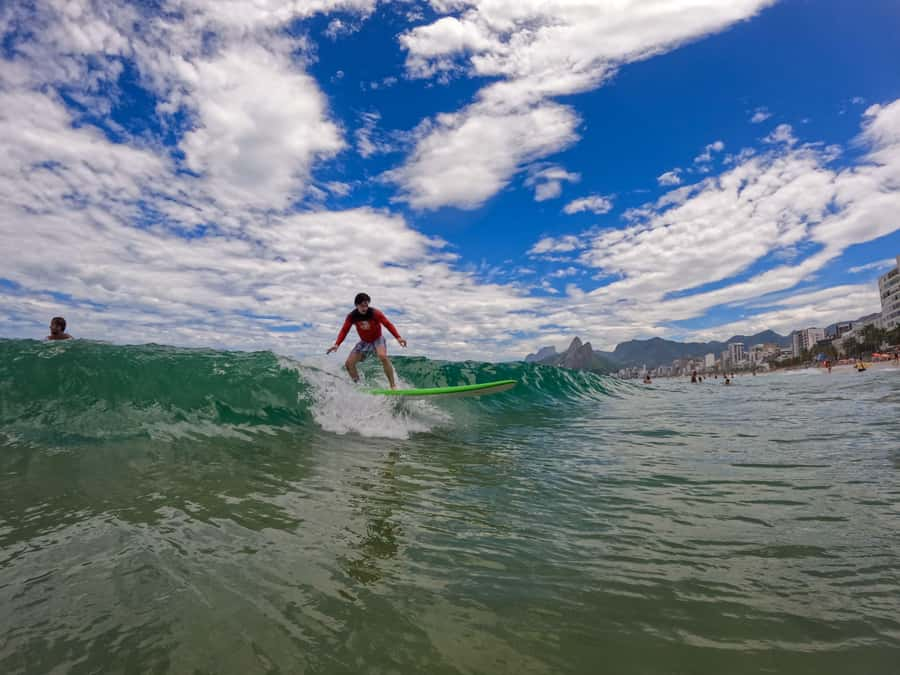
Surfing in Rio starts with a board, a beach, and a short lesson on staying calm when the sea pushes back. This experience takes you from basic stretching on the sand to catching your first wave, with local instructors showing you how to stand, paddle out, and return safely.
I like the hands-on local instruction and the fact that the class covers more than simply standing on a board. You also get the use of a surfboard, leash, surf clothing, storage for your bag, and plenty of encouragement. The main drawback is the unclear price and meeting arrangement: a 200-real payment per person is required at the beach, despite the low headline price, and one customer had trouble finding the instructor.
Key points at a glance
- One hour in the sea: The lesson moves from sand-based preparation to guided practice in the water.
- Copacabana or Ipanema setting: You learn a Rio beach sport in the city’s famous coastal neighborhoods.
- Safety is part of the lesson: Instructors explain how to paddle beyond the breaking waves and return safely.
- Group or private formats: You can choose a social class or request more individual attention.
- Equipment is supplied: Board, leash, surf clothing, and a place to leave your bag are included.
- Budget carefully: The teacher charges 200 Brazilian reais per person at the meeting point, with a 5 percent card fee.
From sand stretches to your first wave
The class begins on the beach, where you prepare your body and mind before getting into the water. The warm-up includes stretching and basic movements that help you rehearse the first steps without a wave moving beneath you.
That dry-land practice matters. Standing on a surfboard is a quick movement, and trying it for the first time in the water can feel rushed. On the sand, you can focus on where to place your hands, how to bring your feet underneath you, and how to keep your balance.
You will also learn what to do when you fall. Falling is part of the lesson, not a sign that something has gone wrong. The aim is to make the first attempts feel playful while giving you enough instruction to avoid turning a small wobble into a poor decision in the sea.
The class is designed for beginners, but the description does not promise a particular wave size, beach section, or instructor-to-student ratio. If you want close coaching, ask about a private lesson when you contact the teacher.
More workshops and classes in Rio de Janeiro
- Rio de Janeiro: Beginner Samba Lesson in Ipanema
★ 4.9 · 1,071 reviews - Rio de Janeiro: Samba Class in Copacabana
★ 4.6 · 262 reviews - Rio de Janeiro: Samba Class and Samba Night Tour
★ 4.6 · 115 reviews
Learning the stand-up movement on the beach
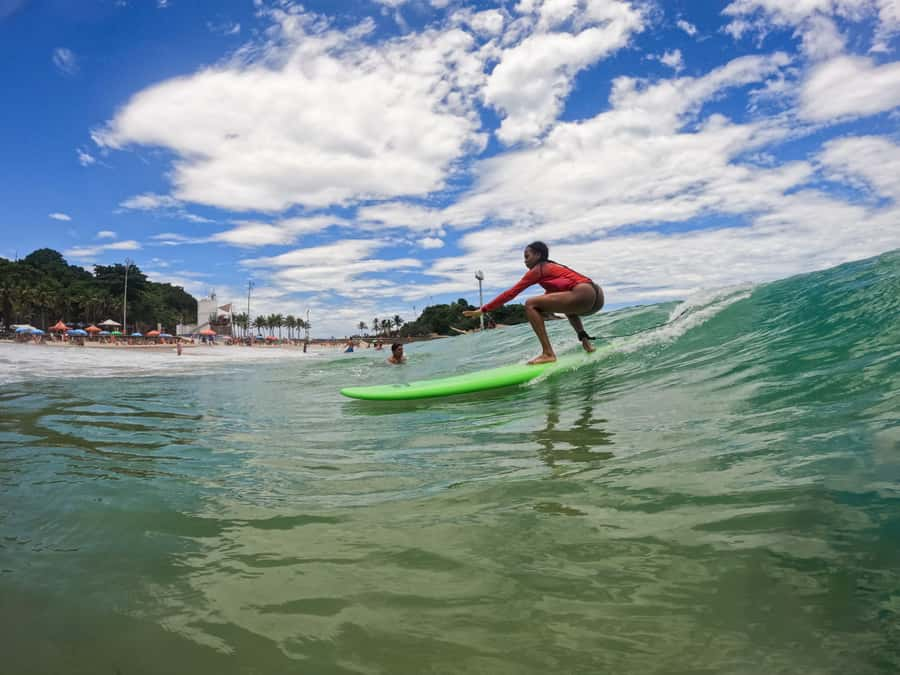
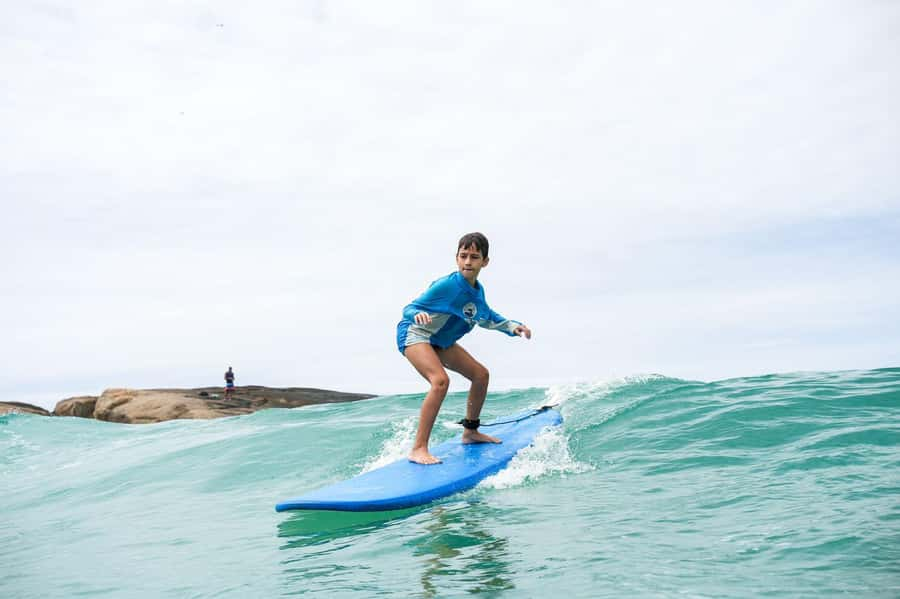
The central skill is the pop-up, the movement that takes you from lying on the board to standing. You practice this before trying to ride a wave, which lets you work on timing and balance with less pressure.
A good beginner lesson should help you understand more than the final pose. You need to know where your feet go, how wide your stance should be, and how to keep your eyes ahead instead of staring down at the board. The supplied details indicate that the instructor teaches how to get up, then helps place you on suitable waves.
The lesson lasts one hour, so expect a focused introduction rather than a full day of surf training. You may get several attempts, but the exact number depends on sea conditions, the group, and how quickly the class moves from the beach into the water.
That short format is useful if you want to test surfing without committing a large part of your Rio schedule. It is less suitable if you expect a long coaching session or advanced technique work.
Paddling beyond the breaking waves
A key part of the lesson is learning how to get outside the breaking waves. The instructor explains how to move through the water, where to go, and how to take care near the break.
This is one of the more valuable parts of the experience. Beginners often focus only on standing, but the trip back out can be tiring and confusing. Knowing how to move safely through the surf gives you a better chance of enjoying the next wave instead of spending the whole class struggling with position.
The class goes together toward the outside, with the instructor helping students reach an area where they can try for better waves. The plan is not simply to send you into the water alone. The instructor then helps place you on waves and teaches you how to return to the outside safely after a ride.
The wording suggests active guidance in the water, but it does not give a detailed safety ratio or describe lifeguard arrangements. You should still pay close attention to the instructor, follow directions, and be honest about your swimming and surfing ability.
What the Copacabana and Ipanema setting adds
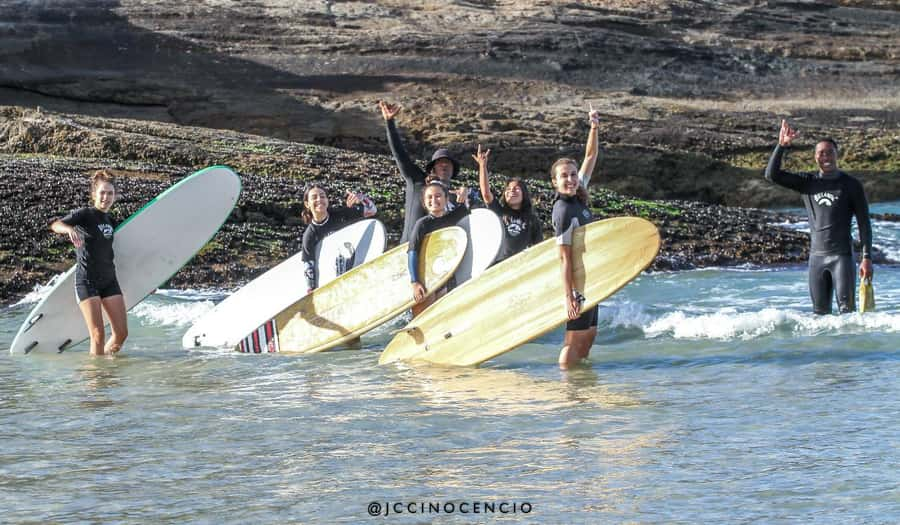
Copacabana and Ipanema give this class a strong sense of place. You are not practicing on an indoor wave machine or at a distant surf camp. You are learning a sport closely tied to Rio’s beach culture, with the city nearby and the Atlantic in front of you.
The exact meeting point needs care. The information says the guide or host will be waiting, but it does not provide a guide’s name in advance. One customer reported arriving and being unable to find the instructor, then paying again for another class. That is a serious practical warning.
Send a WhatsApp message to the teacher at least one day before the lesson. Confirm the beach, meeting point, time, instructor’s name, and a working phone number. Save the conversation and arrive with enough time to find the person on the sand.
This extra step should not be optional in your planning. Beach meeting points can be easy to misunderstand, especially when several surf schools operate in the same area. The experience offers instruction in English, Portuguese, and Spanish, but you should still confirm which instructor will handle your class.
More Tours in Brazil
- Rio de Janeiro: 6-Stop Highlights of Rio with Lunch
★ 4.4 · 5,157 reviews - Christ the Redeemer Entry Ticket by Corcovado Train
★ 4.4 · 4,476 reviews - Rio de Janeiro: Rocinha Favela Walking Tour with Local Guide
★ 4.8 · 3,052 reviews - Rio: Christ the Redeemer, Sugarloaf, Selaron & BBQ Lunch
★ 4.5 · 2,428 reviews
Equipment, changing, and storing your things
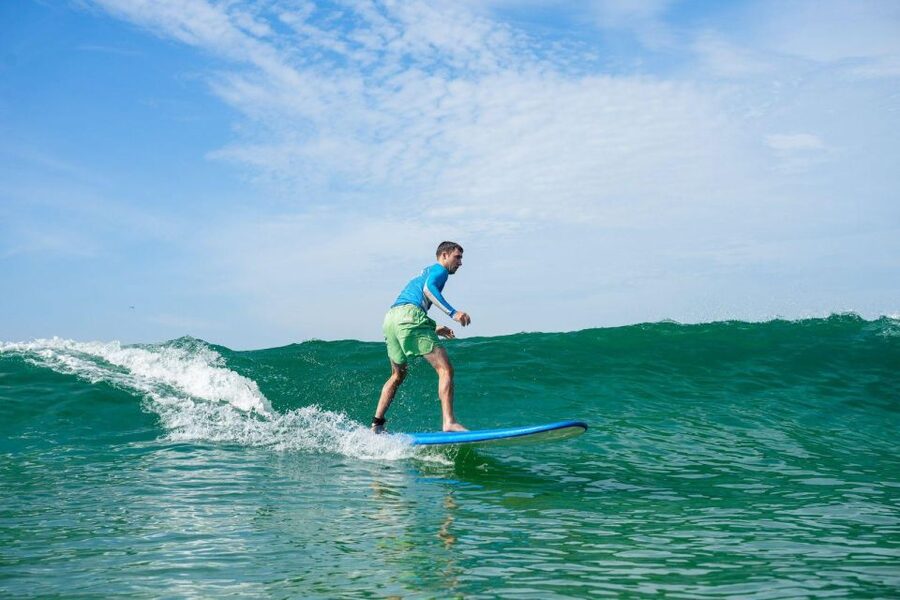
The price includes the main equipment needed for the class: a surfboard, leash, and surf clothing. A stand on the sand is provided for storing your bags while you are in the water.
That is helpful because bringing your own board to Rio would be awkward, and renting equipment separately could add time and cost. The inclusion also makes the class workable for a first attempt, even if surfing is not part of your normal beach routine.
Bring beachwear, a change of clothes, biodegradable sunscreen, and cash. The supplied information does not describe showers, changing rooms, towels, or lockers, so do not count on those services unless the teacher confirms them directly.
Keep your belongings simple. The storage area is useful, but the details do not promise a secure locker or formal baggage service. Bring only what you need for the lesson and keep valuables to a minimum.
Group or private class: choosing the right format
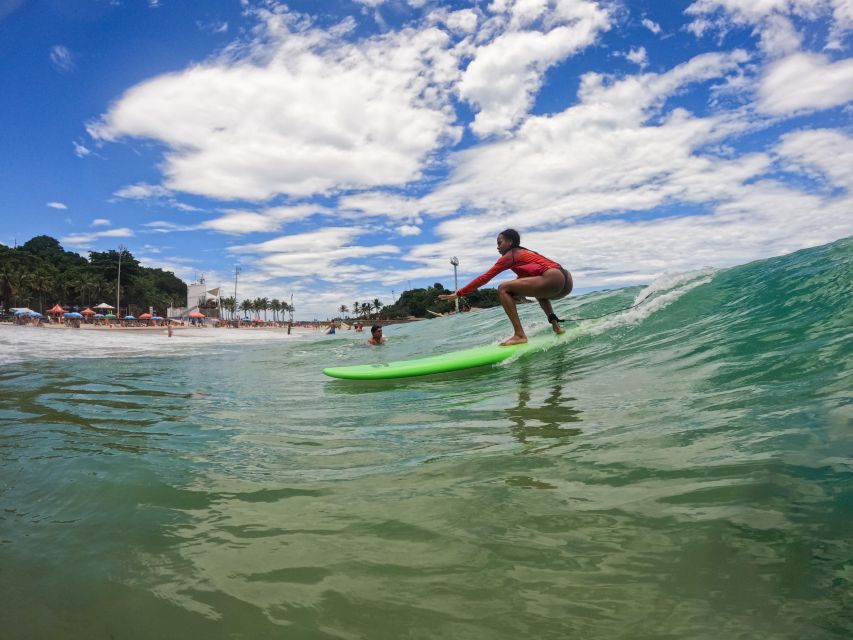
You can take the lesson in a group or arrange a private class. A group may suit you if you want a friendly, social introduction and do not mind sharing the instructor’s attention.
A private lesson makes more sense if you are nervous in the water, want to move at your own speed, or have a specific goal such as improving the pop-up. It may also help if members of your party have very different fitness or surfing levels.
The supplied information does not state the maximum group size or the separate price for private instruction. Ask about both before paying. The 200-real charge is listed per person for the lesson, equipment, and instructor, but any private-class supplement should be confirmed directly.
The one-hour length also affects your choice. In a group, part of the lesson may involve waiting for an instructor to position other students. Private coaching may give you more active practice, but only the teacher can confirm how the time is divided.
The real cost: $10 shown, 200 reais required
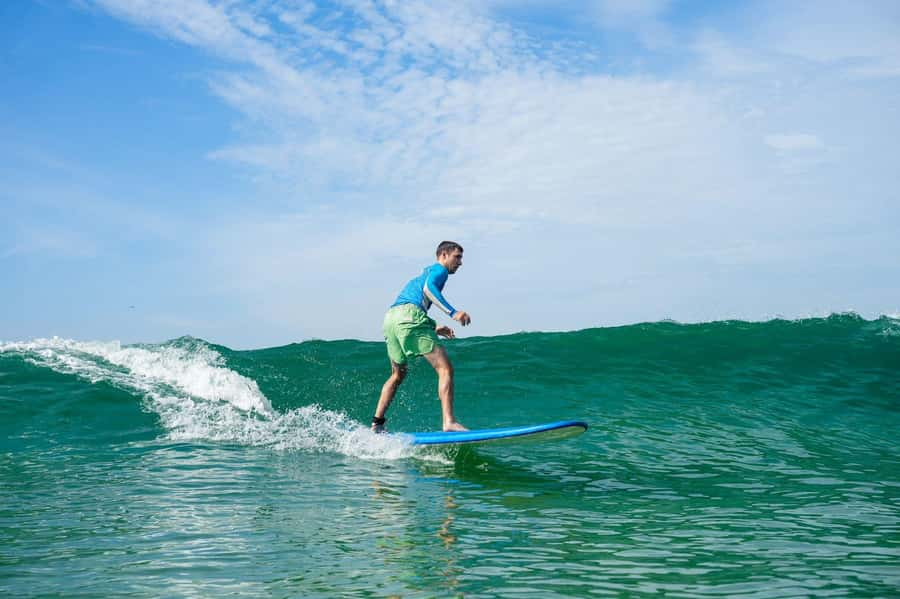
The advertised price is $10 per person, but the practical cost is the required payment of 200 Brazilian reais per person at the meeting point. The information describes this as payment for the instructor and equipment, and says it may be paid in cash or by card.
Card payments carry an additional 5 percent fee. Cash in Brazilian reais is the simplest option if you want to avoid that surcharge, but confirm the payment method with the teacher before the lesson.
This pricing needs to be clear before you book. The low displayed amount can make the class look like an unusually cheap activity, but the 200-real payment is not an optional add-on. Treat it as the actual lesson charge and budget accordingly.
At that price, the value depends on what you want. For a one-hour introduction with equipment, local instruction, and guided practice in the sea, it may suit someone who wants a simple first taste of surfing. It is less compelling if you are comparing it with a longer lesson or a full-day surf program.
Photos and videos may also be available for an extra payment. Ask about the cost before agreeing. They could be a fun record of your first attempt, but they are not part of the included class.
Safety, fitness, and the limits of a beginner lesson
The lesson includes instruction on sea safety, paddling outside the break, catching waves, and returning to the outside. That is a good foundation for a first session, especially if you have never handled a board in moving water.
Still, this is an active beach sport. You should be comfortable following directions in the sea and ready for repeated attempts, paddling, and falling. The activity is not suitable for babies under one year, and the information does not provide a wider list of medical or swimming restrictions.
The instructor can explain how to move safely, but conditions in the ocean can change. If you feel tired, confused, or out of control, tell the instructor. Do not treat the promise of a fun lesson as a reason to ignore instructions or push beyond your ability.
The activity description does not state that the lesson runs in every kind of weather or sea condition. Confirm the start time and any weather-related change with the teacher by WhatsApp.
Language support and the feel of the class
Instruction is available in English, Portuguese, and Spanish. That gives you a better chance of understanding the most important parts of the lesson, especially the directions for getting beyond the break and returning safely.
The mood is meant to be encouraging. The class includes motivation and treats both standing up and falling as part of the fun. That approach is useful because beginners often expect immediate success and feel frustrated when the first attempts end in the water.
You should still ask direct questions if a movement is unclear. Surfing instructions can be brief, and a small misunderstanding about where to paddle or how to position the board can make the next attempt harder.
Who will get the most from this experience
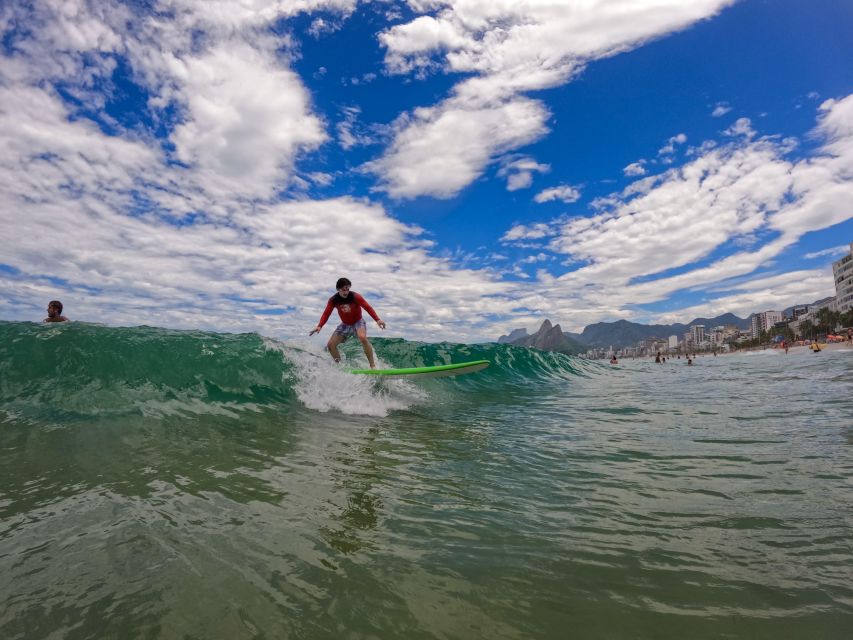
I would consider this class for:
- A first-time surfer who wants a one-hour introduction
- A solo visitor looking for an active beach activity
- A couple or small group that wants to try something together
- Someone who prefers local instruction in English, Portuguese, or Spanish
- A visitor who does not want to carry or rent a board separately
- A beginner who values basic sea-safety instruction, not just a quick photo on a board
I would be more cautious if you need a tightly organized meeting system, a named instructor in advance, a detailed group-size guarantee, or a long lesson. The reported difficulty finding the teacher is not a small matter, so confirm every meeting detail before leaving your accommodation.
The class can also work well as a test. If you have always wondered if surfing is for you, one hour is enough to find out without giving up an entire day. If you already surf, the session may feel too basic unless you arrange private coaching and explain your level ahead of time.
Should you book the Copacabana or Ipanema surf lesson?
Book it if you want a short, local introduction to surfing and you are comfortable taking responsibility for confirming the meeting details. The equipment, beach setting, multilingual instruction, and focus on safety give the experience a useful structure.
I would not book it casually based only on the $10 headline. Plan for the 200-real payment per person, add 5 percent if paying by card, and message the teacher one day before the lesson. Confirm the exact beach, time, meeting point, and phone contact in writing.
The experience earns its value through the chance to practice in the sea with an instructor rather than simply renting a board. Its weak point is organization around the meeting and payment. If the teacher confirms everything clearly, this could be a fun first step into Rio surfing. If you cannot get a clear WhatsApp reply, choose another class with a more reliable contact system.
FAQ
How long is the surf lesson?
The included surf lesson lasts one hour.
What equipment is included?
A surfboard, leash, surf clothing, and a place on the sand to store your bags are included.
How much do I pay for the lesson?
You must pay the teacher 200 Brazilian reais per person at the meeting point. Card payments may include an additional 5 percent fee.
Can I pay by card?
Yes. Payment is possible by card, though a 5 percent additional fee applies. Cash in Brazilian reais is also accepted.
Which languages are available?
The host or instructor can provide the experience in English, Portuguese, or Spanish.
What should I bring?
Bring beachwear, a change of clothes, biodegradable sunscreen, and cash. Send WhatsApp confirmation to the teacher one day before the lesson to confirm the time and meeting details.
Just added in Rio de Janeiro
- Rio de Janeiro: Zip Lining and Canopy Tree Tour★ 3.3 · 6 reviews
- Vidigal Favela Tour★ 4.4 · 26 reviews
- Unforgettable Boat Party★ 5.0 · 3 reviews
- Rio de Janeiro: Attend a Vasco da Gama game with local guide★ 4.8 · 9 reviews
- Hang gliding flight in Rio de Janeiro★ 5.0 · 6 reviews
- Rio Highlights: Christ, Sugarloaf, and More in a Private Tour★ 5.0 · 36 reviews
- Tijuca Forest Hike – Waterfalls & Caves, Nature & Wild Life!★ 5.0 · 51 reviews
- Rocinha Walking Tour: Get a Feel for the Brazil’s Largest Favela (Shared Group)★ 5.0 · 37 reviews
Workshops, compared.



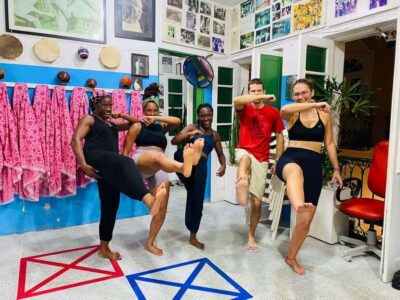
Capoeira Class at Mestre Bimba’s 1st Ever School.
Read our review →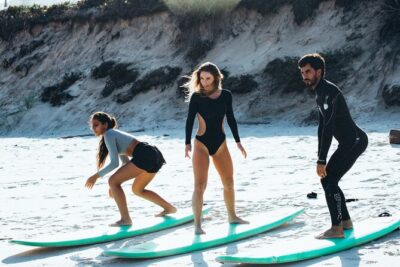
Surf Lesson with Qualified Instructor in Florianópolis
Read our review →
Browse the lists this tour appears in