
Reviewed · WORKSHOPS
Salvador: Capoeira Class at Mestre Bimba’s 1st Ever School.
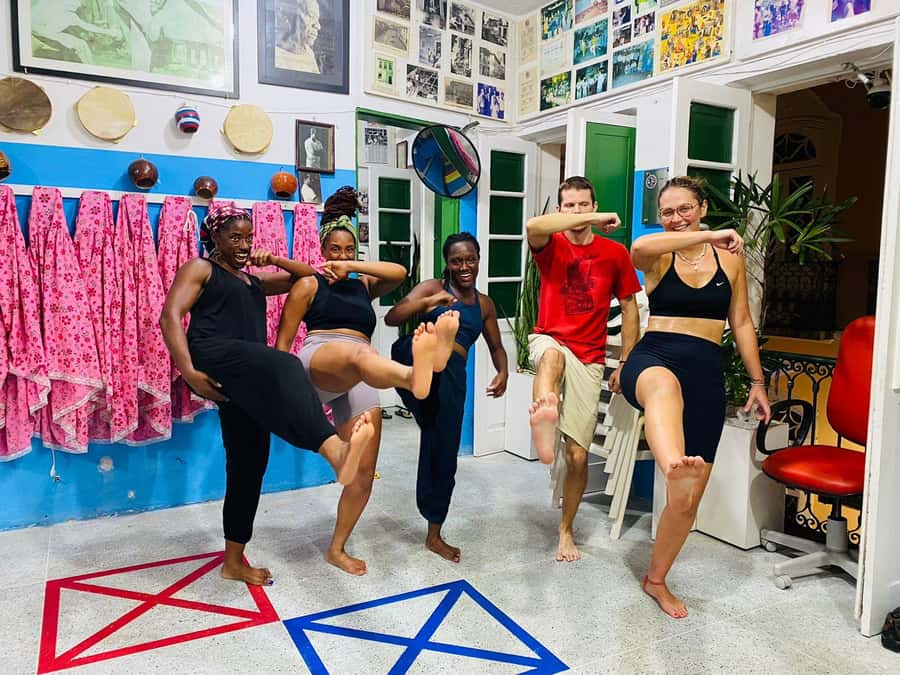
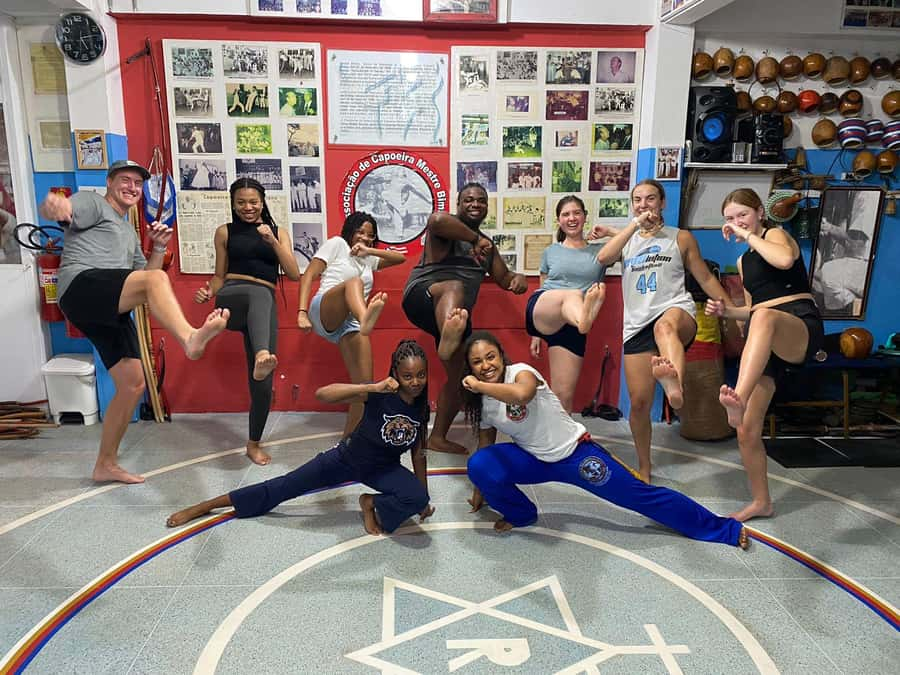
Capoeira began as far more than a set of impressive kicks. At Associação de Capoeira Mestre Bimba, founded in 1937 as Brazil’s first capoeira school, you learn the basic movements while hearing why this Afro-Brazilian art matters. The class is built for people who have never trained before, so you can arrive with no martial arts or dance background.
I like two things right away: the historic setting gives the lesson real meaning, and Yasmin’s patient, clear teaching makes the movements approachable. You also get a short but useful introduction to capoeira’s links with ancestry, music, culture, and self-defense.
The main drawback is the one-hour length. It is enough to learn the basics, but not enough to master the flow or feel fully comfortable in the roda. Expect a proper workout, too, especially in Salvador’s heat.
Key points at a glance
- Brazil’s first capoeira school: Train at the Associação de Capoeira Mestre Bimba, founded in 1937 by Mestre Bimba.
- Made for first-timers: Learn basic attacks, defenses, and flow movements without prior experience.
- Yasmin teaches in English: Instruction is available in English and Portuguese, with demonstrations and patient corrections.
- More than exercise: The class explains capoeira’s Afro-Brazilian roots and its place in Salvador’s culture.
- A short, active lesson: The session lasts one hour, includes bottled water, and can leave your legs feeling the work.
- Easy to pair with sightseeing: The school is in Largo do Terreiro de Jesus, near Ó Pai Ó Restaurante and São Domingos Gusmão Church.
Why this one-hour class matters in Salvador
Salvador is one of the best places in Brazil to encounter capoeira as a living cultural practice, not just a show for visitors. The art combines fighting, dance, music, acrobatics, rhythm, and body control. That mix can look effortless from the outside. For a beginner, it is a lively lesson in coordination and patience.
The setting adds weight to the experience. This school traces its beginnings to Mestre Bimba and 1937, giving you a direct connection to one of the key names in capoeira. You are not simply learning a few kicks in a rented fitness room. You are training at an association linked to the development and teaching of the art in Brazil.
I especially like that the class explains why the movements matter. Capoeira carries Afro-Brazilian ancestry and cultural memory, so the historical introduction helps you see the exercise in context. Without that explanation, the class could feel like a novelty workout. With it, the movements have a clearer purpose.
More workshops and classes in Salvador
- Salvador: CAPOEIRA CLASS – CULTURAL
★ 4.6 · 13 reviews - Salvador: Traditional Drumming and Percussion Workshop
★ 4.4 · 10 reviews - Salvador: 3-Hour Percussion Class
★ 4.9 · 10 reviews
Finding the school in Largo do Terreiro de Jesus
You meet at Associação de Capoeira Mestre Bimba. There is no pickup service, so you need to make your own way to the school.
The meeting point is in Largo do Terreiro de Jesus, a useful part of Salvador’s historic center for planning your route. Ó Pai Ó Restaurante and São Domingos Gusmão Church are nearby landmarks that can help you get oriented. If you are already sightseeing in the area, this class fits neatly into a day spent exploring central Salvador.
Allow enough time to find the entrance and settle in. The supplied meeting instructions do not include hotel pickup, transportation, or a detailed arrival procedure, so do not treat this as a door-to-door activity. Check the confirmed meeting details before setting out.
What Yasmin teaches first
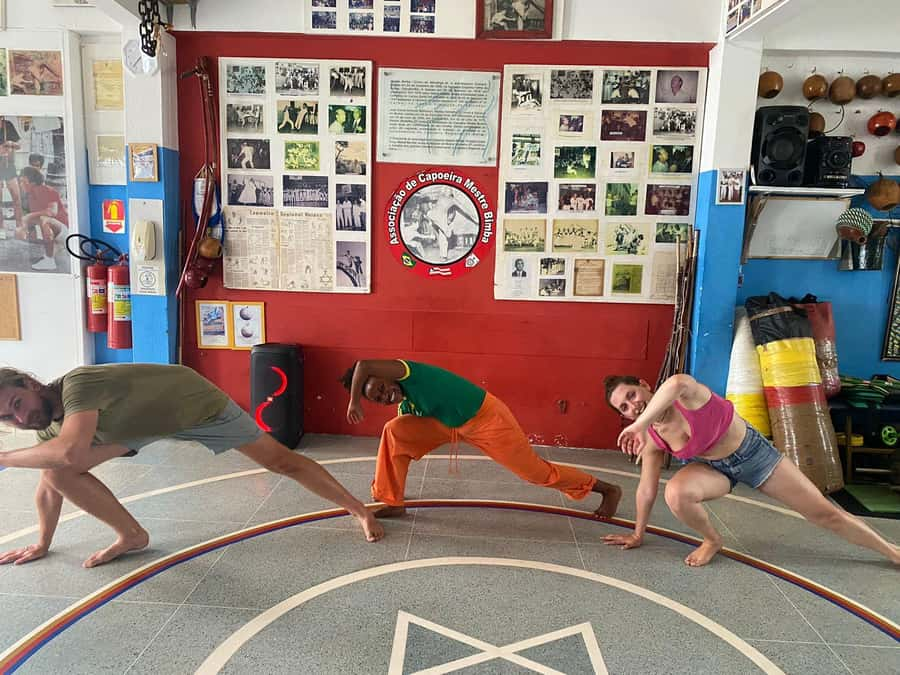
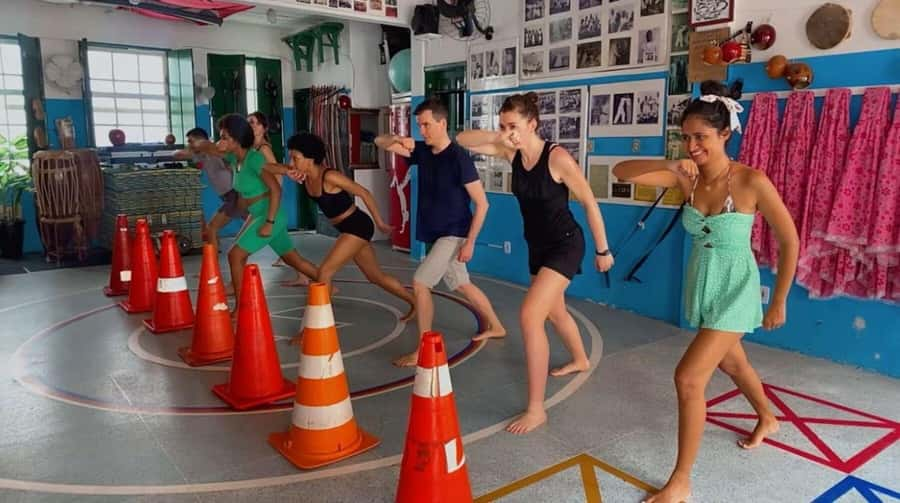
The class is aimed at complete beginners. You do not need previous capoeira, dance, martial arts, or fitness experience. That matters because capoeira can look fast and highly technical when performed by experienced students. The first steps are much more manageable when someone breaks them down slowly.
Yasmin leads the instruction in English and Portuguese. Her approach is based on demonstration, repetition, and making sure the group understands before moving ahead. That is useful for a movement class, where a spoken explanation alone is not always enough.
You can expect to work through three broad areas:
- Basic attacks
- Defensive movements
- Flow movements that connect the techniques
The goal is not to turn you into a capoeira expert in 60 minutes. It is to give you a working feel for the art and enough basic movements to understand how the pieces fit together. The flow is the key part. Capoeira is not a sequence of isolated kicks and blocks. It depends on movement, timing, balance, and responding to another person.
A workout with cultural meaning
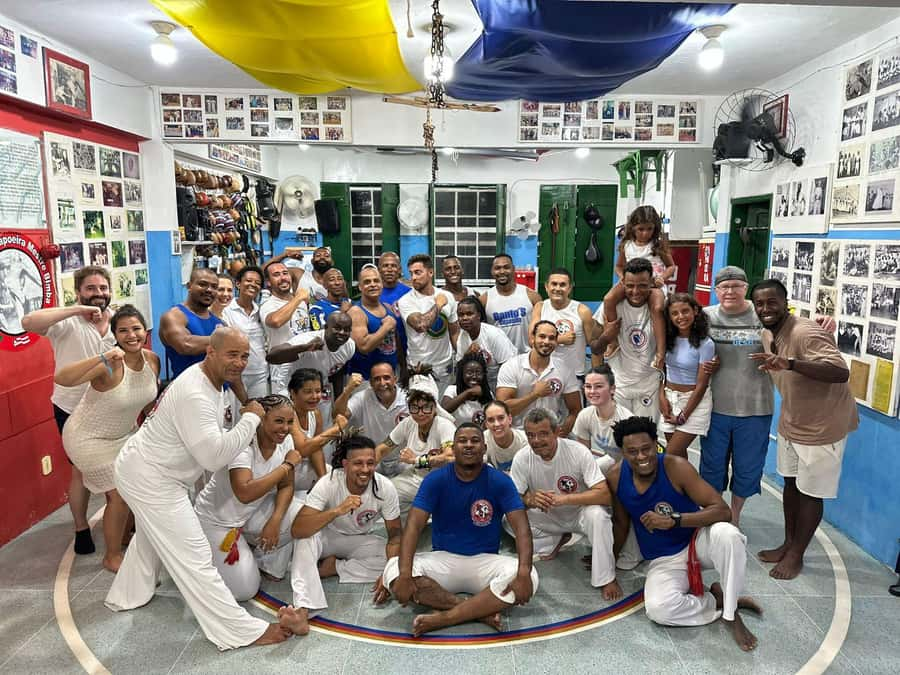
The physical side is real. You will move your legs, shift your weight, lower your body, and repeat unfamiliar patterns. One participant described the session as intense enough to leave sore legs for days. Another advised bringing comfortable sports clothing and preparing to sweat heavily.
That is useful advice, even though the class is beginner-friendly. Beginner-friendly does not mean passive. You should expect to leave warm and a little tired. Wear clothes that let you move freely, and bring a water bottle if you want more than the included bottled water.
The effort also helps you understand capoeira from the inside. A description of the art can only take you so far. Once you try to keep your balance while linking an attack, defense, and flowing movement, you begin to see the control behind the apparent looseness.
Still, this is not presented as a hard-core fitness session. The cultural and historical side is part of the value. You get exercise, but you also learn why capoeira is tied so closely to Afro-Brazilian identity and to Salvador itself.
More Tours in Brazil
- From Salvador: Schooner Tour to Frades Islands and Itaparica
★ 3.9 · 98 reviews - Afro-Brazilian Roots Private City Tour in Salvador
★ 4.7 · 88 reviews - Salvador Historic Walking Tour – Pelourinho
★ 4.8 · 62 reviews - Salvador de Bahia African Culture Tour
★ 4.5 · 60 reviews
The value of learning at Mestre Bimba’s school
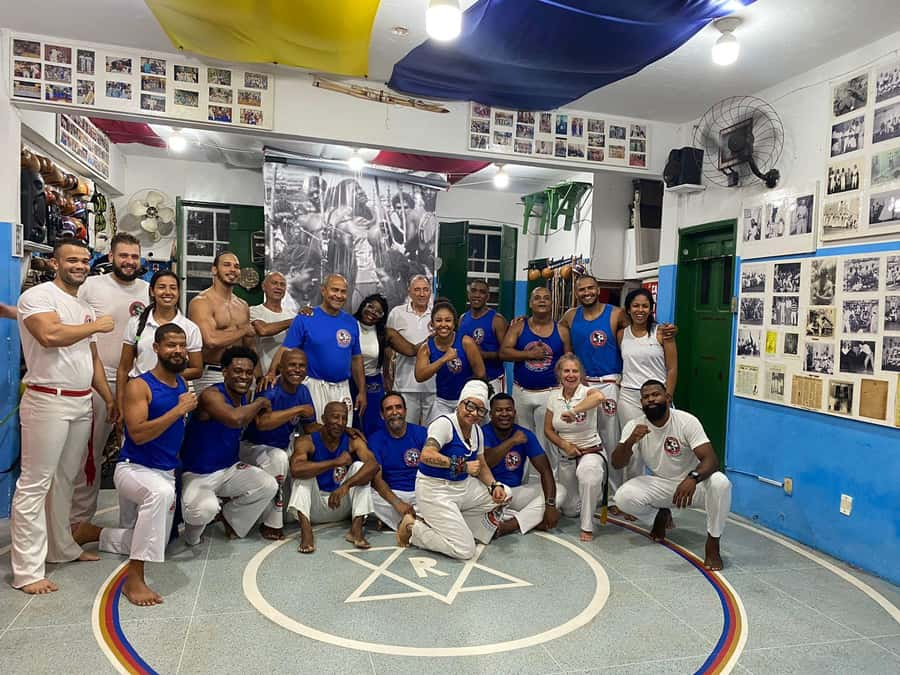
At $43 per person, this is not the cheapest one-hour activity in Salvador. The value comes from the combination of place, instruction, and context rather than from the amount of time alone.
A basic exercise class could be less expensive. A performance might give you more spectacle. This lesson gives you active participation at a school founded by Mestre Bimba, plus an instructor who can teach in English and explain the background. If you want to understand capoeira instead of only watching it, that difference matters.
The short format also makes the price easier to justify for a tightly planned trip. You are not committing half a day to an activity that may not suit you. You get a focused introduction, then remain free to continue sightseeing around Largo do Terreiro de Jesus.
I would see it as good value for someone who places a premium on local culture and hands-on learning. If your only goal is an intense workout, you may find a longer training session more satisfying. If your goal is to connect movement with Salvador’s cultural identity, this one-hour lesson makes better sense.
What the teaching style is like
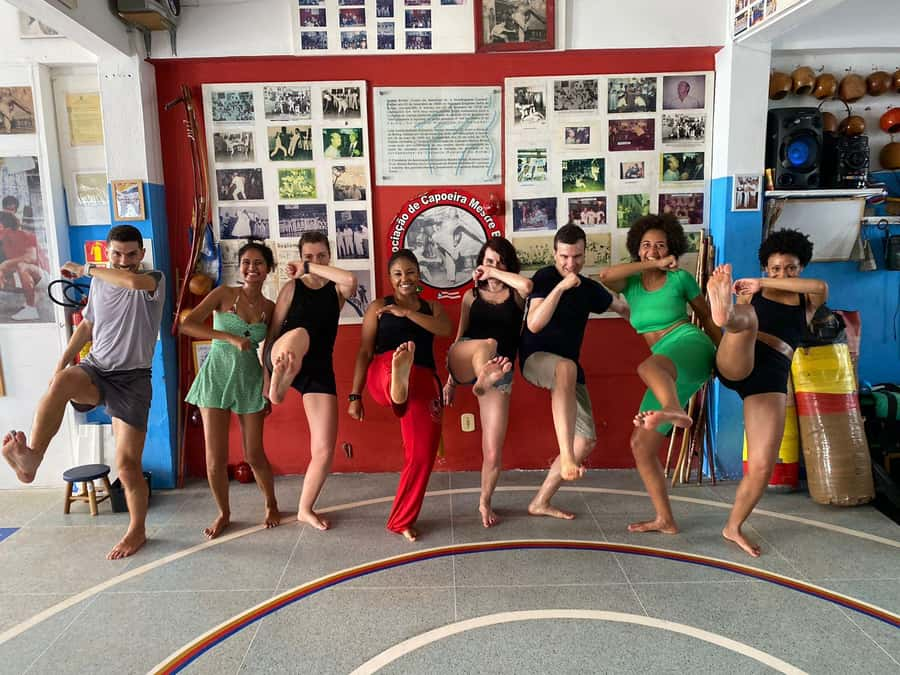
Yasmin receives especially strong praise for being warm, patient, encouraging, and inclusive. Those traits matter more here than flashy technique. A first lesson can become uncomfortable if the instructor rushes, assumes too much, or makes beginners feel clumsy.
The teaching is also suitable for mixed ability levels. One mother and daughter attended as beginners alongside people with more experience and found the atmosphere kind and welcoming. That suggests you do not need to worry about being the least skilled person in the room.
You should still expect to look and feel awkward at first. Capoeira asks your body to move in ways that may not be familiar. The point is not to perform perfectly. It is to learn the basic ideas, keep moving, and enjoy the process.
The class can also suit solo participants, couples, and families with older children, provided everyone is comfortable with an active lesson. The available details do not set a specific age limit, so check the current booking information if age is important for your group.
What to wear and what to bring
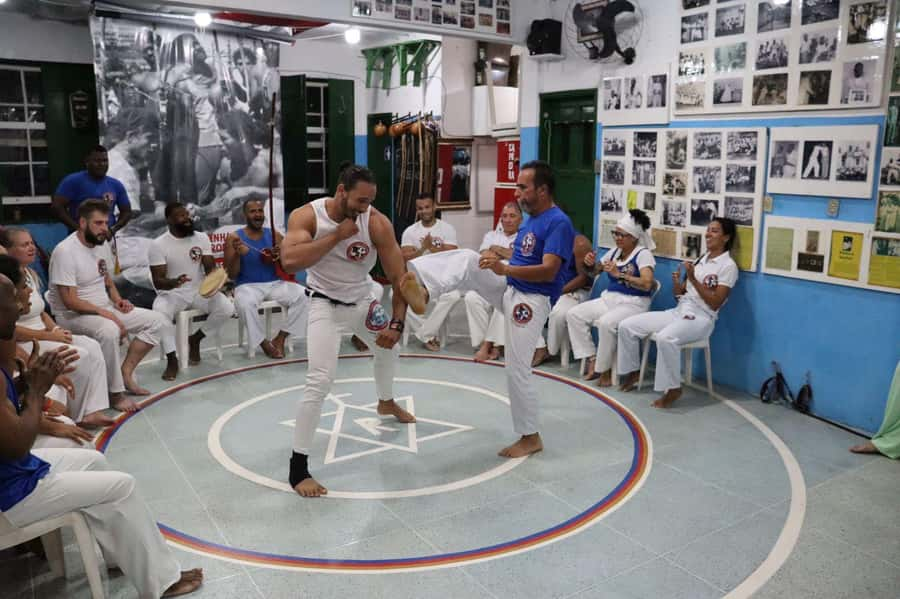
Choose comfortable sports clothes. Loose or flexible clothing will make it easier to practice low movements, defenses, and kicks. Avoid anything that restricts your legs or makes you worry about tearing fabric.
The school includes bottled water, but bringing an extra water bottle is sensible. The class can be sweaty, and one hour of repeated movement in Salvador can feel demanding. You may also want a small towel, although this is not listed as an included item.
Come ready to participate rather than watch. The best part of the session is learning by doing. You will get more from it if you accept that the first attempts may be uneven.
How to fit the class into your day
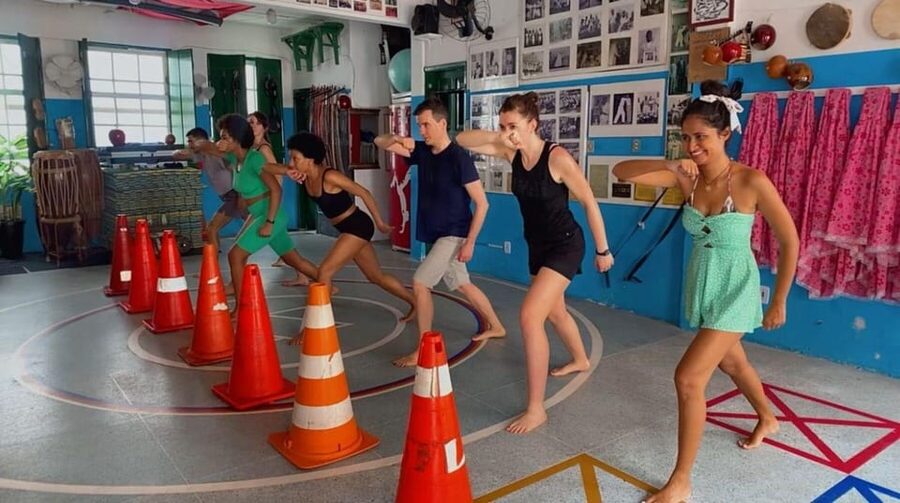
The one-hour duration makes this easy to place between other activities in Salvador’s center. You could plan it around sightseeing near Largo do Terreiro de Jesus, using Ó Pai Ó Restaurante or São Domingos Gusmão Church as nearby reference points.
Because there is no pickup service, plan the route before class. The activity details provide the meeting point but not a transport plan from your hotel. If you are unfamiliar with Salvador, leave extra time so you are not arriving breathless before the warm-up even begins.
The booking terms are practical for a changing holiday schedule. You can cancel up to 24 hours in advance for a full refund, and the reserve-now, pay-later option lets you hold a place without paying immediately. Check the available start times for your date, since the schedule is not fixed in the information provided.
Who will enjoy it most
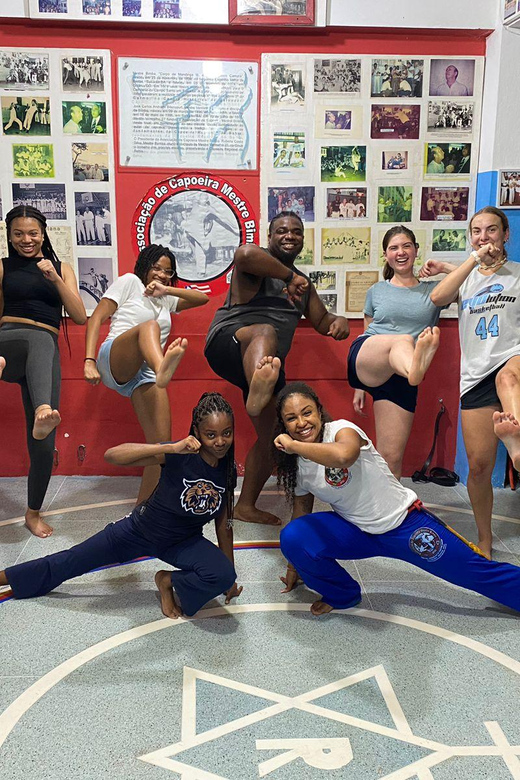
I would recommend this class to you if you want a direct, physical way to learn about Salvador’s culture. It is a good match for first-time capoeira students, curious solo visitors, couples, and parent-child pairs who are happy to move together.
It also works well for people who are not especially fit. You do not need to arrive with a martial arts background. You do need to accept that the class involves effort, repetition, and some soreness afterward.
You may want to skip it if you dislike active lessons, have no interest in cultural context, or want a polished performance rather than instruction. The class is about trying the movements yourself. One hour gives you an introduction, not a complete course.
The school also teaches samba and other dance styles, according to the activity information. If that interests you, ask about those options separately. Do not assume they are part of this capoeira booking.
Should you book this capoeira class?
Book it if you have at least a little time in Salvador and want more than another sightseeing stop. The historic school, beginner-focused teaching, and cultural explanation make this a memorable way to understand capoeira from the inside.
The $43 price is reasonable for a one-hour lesson with English instruction at a school founded in 1937, though you should not expect a full training program. Bring comfortable clothes, plan to sweat, and arrive ready to be a beginner.
If you want a uniquely Salvador experience that combines movement, culture, and a clear introduction to Afro-Brazilian traditions, I would put this high on your list.
FAQ
Is the capoeira class suitable for complete beginners?
Yes. The class is designed for beginners who have never trained capoeira. No previous experience is required.
Where does the class meet?
It meets at Associação de Capoeira Mestre Bimba in Largo do Terreiro de Jesus.
Is hotel pickup included?
No. The school does not offer pickup service.
What landmarks are near the meeting point?
Ó Pai Ó Restaurante and São Domingos Gusmão Church are listed as nearby landmarks.
How long does the class last?
The class lasts one hour.
Who teaches the class?
The class is taught by Yasmin. Instruction is available in English and Portuguese.
What will I learn?
You will learn basic capoeira attacks, defenses, and flow movements, along with information about the art’s cultural and historical importance.
Is water included?
Yes. Bottled water is included.
How much does the activity cost?
The listed price is $43 per person.
Can I cancel for a refund?
Yes. You can cancel up to 24 hours in advance for a full refund.
Just added in Salvador
- Salvador: Schooner Cruise with Pickup and Itaparica Stop★ 3.8 · 5 reviews
- Salvador: Traditional Drumming and Percussion Workshop★ 4.4 · 10 reviews
- Salvador: 3-Hour Percussion Class★ 4.9 · 10 reviews
- Salvador: Walking Tour Through Pelourinho★ 5.0 · 49 reviews
- Salvador by Night: Cultural Show and Dinner.★ 4.4 · 17 reviews
- Salvador: Cultural Night of Capoeira, Samba, and Drumming★ 4.9 · 17 reviews
- Salvador: Cultural Treasure – Samba de Roda.★ 4.9 · 51 reviews
- Salvador: CAPOEIRA CLASS – CULTURAL★ 4.6 · 13 reviews
Workshops, compared.

Surf lessons with local instructors in Copacabana/ipanema!
Read our review →
Surf Lesson with Qualified Instructor in Florianópolis
Read our review →
Browse the lists this tour appears in