
Reviewed · SAMBA AND NIGHTLIFE TOURS
Rio de Janeiro: Samba Class in Copacabana
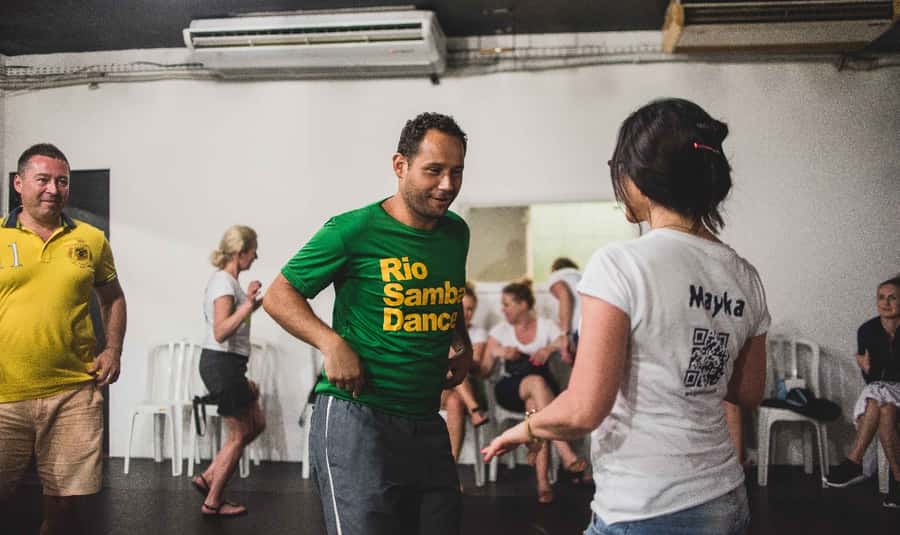
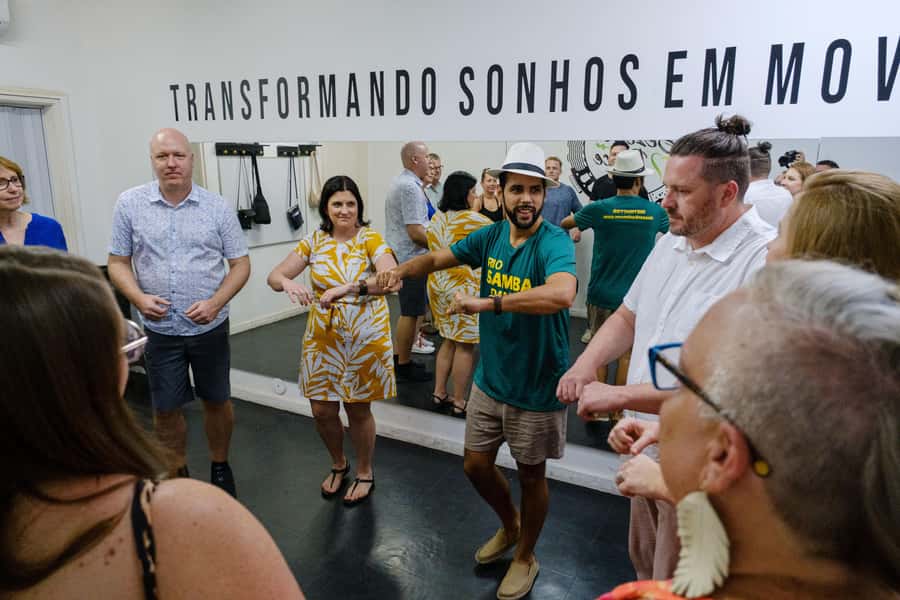
Rio’s samba is not something you only watch from the sidelines. In this one-hour Copacabana class, you learn the basic rhythm, footwork, and body movement, then put it together with a group of fellow dancers. Marco, Thiago, Mauricio, and other instructors are known for patient, upbeat teaching that helps first-timers relax.
I like the easygoing international crowd and the useful Rio tips that can come with the class. I also like the price: at $25 per person, you get a low-risk introduction to a major part of Brazilian culture. The main caution is space. Some sessions can be crowded, making it harder to follow every step or get much individual attention.
Key points at a glance
- Beginner-friendly samba basics: The instructors break down simple steps before building them into a short routine.
- Central Copacabana meeting points: Choose between R. Farme de Amoedo, 125, and Av. Nossa Sra. de Copacabana, 807, sala 603, depending on your booking.
- International social atmosphere: The class brings together people from several countries, which is especially pleasant if you are traveling alone.
- Helpful instructors: Marco, Thiago, Mauricio, Bruno, and Helio are among the teachers praised for patience, energy, and clear demonstrations.
- A lively finish: Many classes end with group dancing, and some sessions include carnival headpieces or flags for photos.
- One-hour commitment: It is short enough to fit before dinner, sightseeing, or a night out in Rio.
One hour to find your samba feet
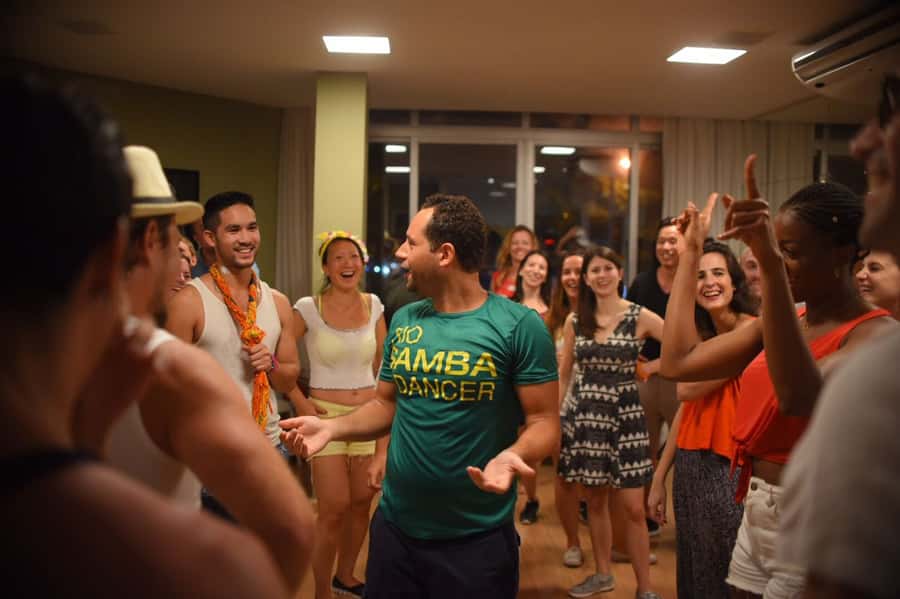
This is a practical introduction to samba, not a full dance-school course. In one hour, you learn enough basic movement to understand the rhythm and join in at a party or samba venue without feeling completely lost.
The class is aimed at all levels, but it is particularly well suited to beginners. You do not need dance experience, a partner, or perfect coordination. The teachers demonstrate the steps, repeat them slowly, and encourage you to keep moving when your feet inevitably go in the wrong direction.
That relaxed approach matters. Samba can look effortless when an experienced dancer performs it, but the rhythm and footwork are not always easy at first. The instruction focuses on getting you moving rather than turning the lesson into a technical exam.
I like that the experience gives you a taste of samba culture through participation. You are not simply taking a photograph near a famous Rio attraction. You are trying the movement yourself, listening to Brazilian music, and sharing the awkward but amusing first attempts with other people.
More samba nights and bar crawls in Rio de Janeiro
- Rio de Janeiro: Beginner Samba Lesson in Ipanema
★ 4.9 · 1,071 reviews - Rio: Pub Crawl in Lapa with Cachaça Tasting and Live Samba
★ 4.7 · 881 reviews - Rio: Carnival Backstage Tour at Samba City with Cocktail
★ 4.6 · 520 reviews
Meeting in Copacabana
The class has two possible starting points:
- R. Farme de Amoedo, 125
- Av. Nossa Sra. de Copacabana, 807, sala 603
Your actual meeting point depends on the option booked, so check the confirmation carefully before setting out. The second address includes a room number, which is useful to note rather than assuming the class takes place at street level.
The Copacabana setting is convenient for many visitors staying in Rio. You can place the lesson between time on the beach, a meal, and an evening out. Transfers are not included, so you are responsible for reaching the correct address.
Communication appears to be one of the stronger practical points. One participant described receiving a picture with an arrow to help locate the entrance. That sort of help can save time in a busy neighborhood, especially when you are unfamiliar with Brazilian addresses or Portuguese building signs.
I would allow enough time to find the room without arriving breathless. The class lasts only one hour, so a late start takes away a noticeable part of the experience.
What happens during the 60-minute lesson
The class begins with basic samba movement. Your instructor introduces the rhythm and shows the footwork in manageable pieces. You repeat the steps, first slowly and then with more music and energy.
The lesson is built for people who have never tried samba. Teachers such as Marco and Mauricio have been praised for explaining the movements patiently, while Thiago has received particularly warm feedback for his friendly guidance. Different instructors may have slightly different personalities and teaching styles, but the central format remains simple and active.
Expect the class to become more difficult as it progresses. Some beginners find the steps easy to follow, while others need several repetitions before the pattern feels natural. That is normal. The goal is not to master every detail in one session. It is to leave with a basic understanding of the rhythm and a few moves you can use again.
The teachers also work to keep reluctant participants involved. One class managed to get even the grumbling men in a family group dancing. That tells you something useful about the tone: you can arrive unsure, shy, or unconvinced and still find a way into the activity.
Near the end, the group often dances together in a circle or a shared routine. This creates a small celebration of what you have learned and gives you a chance to stop concentrating so hard on your feet.
Why the instructors make such a difference
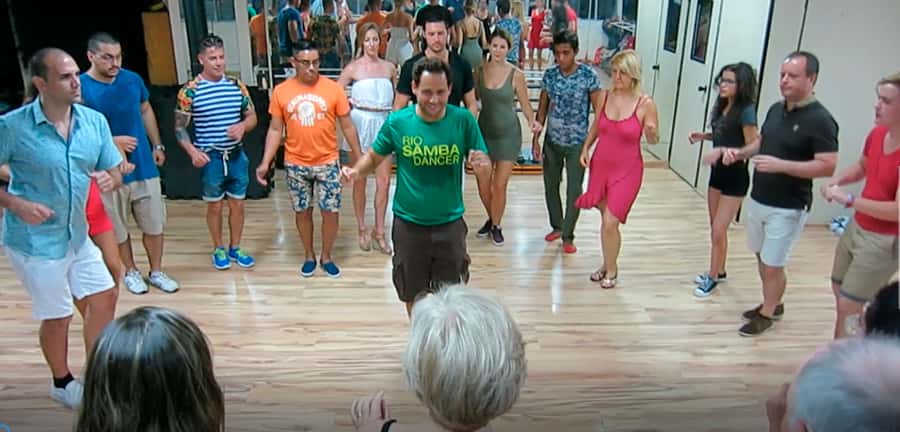
A short dance lesson depends heavily on the teacher. There is not enough time for a poor explanation to be corrected later, so warmth and clarity matter as much as dance ability.
Marco is repeatedly described as friendly, patient, and good at getting everyone involved. Mauricio is praised for his personable style and clear demonstrations. Bruno has been singled out for patience and for making the follow-up social experience memorable, while Helio has helped beginners with suggestions for spending time in Rio.
Those names are useful when comparing available dates, but instructor assignments can change. The important point is the teaching approach: basic movements are shown, repeated, and practiced in a supportive setting. The instructors speak English, Portuguese, and Spanish, so you can select the language that works best for you.
You should still expect some physical demonstration and imitation rather than a long verbal explanation. Dance is taught through seeing and repeating. If you learn best by watching, the format should suit you. If you need one-to-one correction for every step, a crowded session may feel less satisfying.
More workshops and classes in Rio de Janeiro
- Rio de Janeiro: Samba Class and Samba Night Tour
★ 4.6 · 115 reviews - Rio: Caipirinha Workshop and Samba Class
★ 4.8 · 113 reviews - BOXE CLASS – EX BAHIAN CHAMPION (SALVADOR-BA)
★ 5.0 · 7 reviews
Group size is the main variable

The biggest weakness is the possibility of a crowded studio. A few people have found that too many participants in a small space made it difficult to engage fully or learn as much as hoped.
This is not a minor detail. Samba needs room for footwork, arm movement, and personal space. When the class is full, you may not always see the instructor clearly, and it can be harder to move at the same pace as the group.
Other sessions have had a more comfortable number of participants, with enough room for the lesson to feel personal. Since the group size can vary, you should book with realistic expectations. This is a social crash course, not necessarily a private or small-group workshop.
The upside of a larger group is the atmosphere. You meet people from around the world, and a solo visitor can quickly find company. The downside is less individual attention. If learning technique matters more to you than meeting people, ask about group size before booking if that information is available.
A social activity for solo visitors and mixed groups
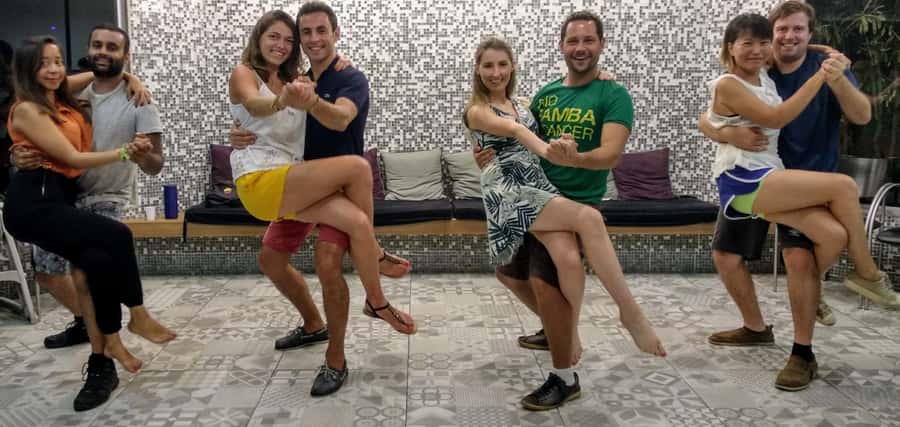
This class works well for solo visitors because the social barrier is low. Everyone is learning at once, so you do not need to arrive with a dance partner or a ready-made group of friends.
It also suits families, couples, and groups with mixed confidence levels. One parent attended with a teenage son and found that the instructor helped him take part. The class can therefore work for a family outing, provided everyone is comfortable with active dancing and a shared group setting.
You may also find it a good way to meet people before an evening in Rio. The activity is short, lively, and naturally conversational during breaks or after the final group dance.
The class is less ideal if you want a quiet cultural lecture. You will learn through motion, music, repetition, and interaction. The cultural element is present in the dance itself and in the instructors’ comments, but this is not a detailed history lesson about samba schools or Carnival.
Carnival touches and the final group dance
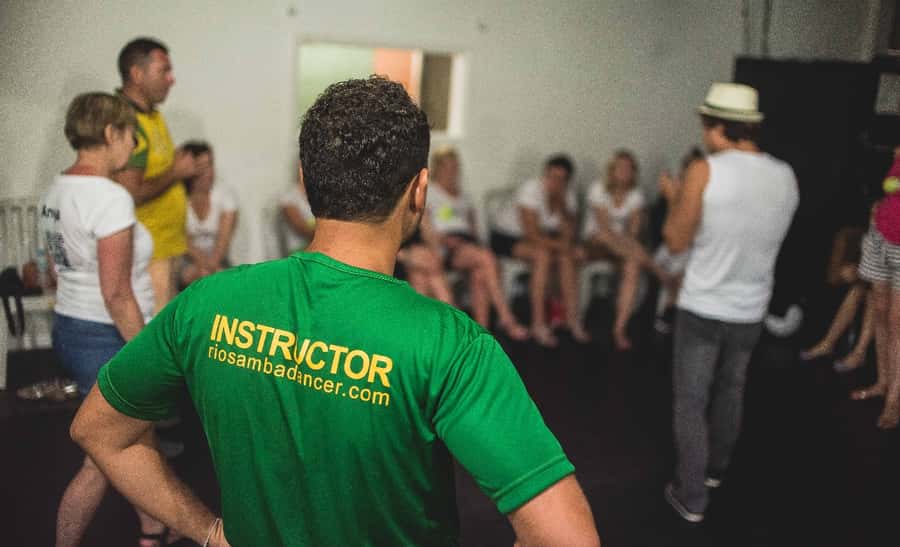
The closing section gives the class its sense of occasion. Instead of simply stopping after the final step, the group often dances together in a circle or shares a brief celebration of the new moves.
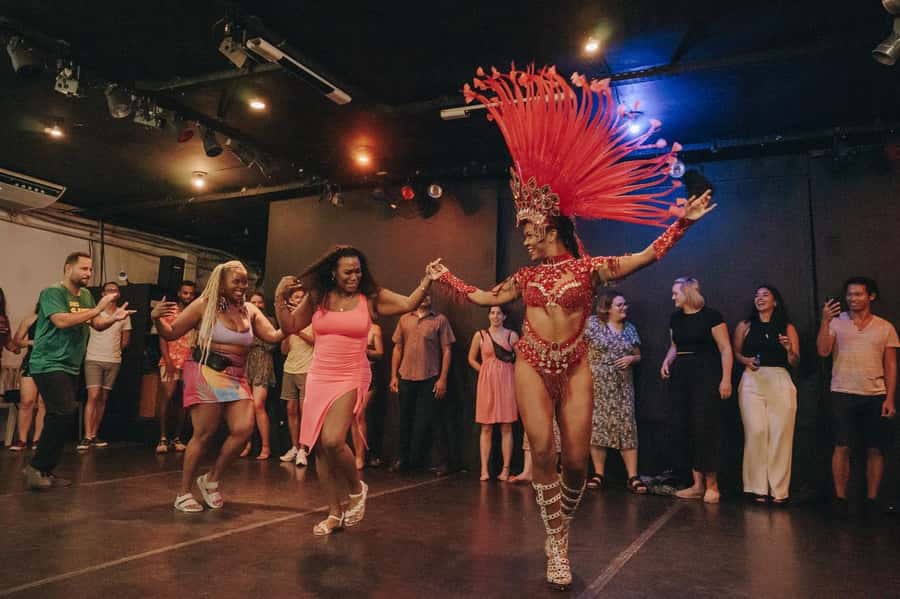
Some sessions have included traditional Carnival headpieces, national flags, and costume pieces for photographs. These details add fun and give you a visual souvenir of the activity. They are not guaranteed, though, so you should not book solely for the costume photos.
One person expected the headpieces shown in promotional images but did not receive them. Another class included headpieces and flags at the end. The sensible approach is to view the photos as a possible extra, not a fixed part of the one-hour program.
The group finish is still worthwhile without costumes. It lets you use the steps with less pressure and more freedom. By then, you have already done the hard work of learning the pattern.
Price and practical value at $25
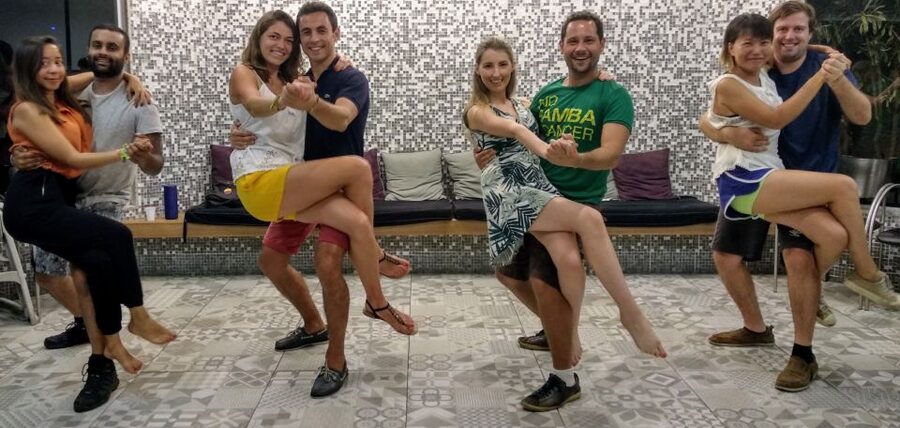
At $25 per person, this is reasonably priced for a one-hour cultural activity in Copacabana. You receive the dance lesson, a bilingual instructor, water, and access to a toilet. The class is also easy to fit into a day because it does not take half a day or require a long transfer.
The value depends on what you want from it. If you are looking for a polished dance course with detailed personal correction, a crowded class may not feel like enough. If you want an affordable introduction to samba and a fun way to meet people, the price is easier to justify.
The class also offers something that a performance cannot: the chance to try the movement yourself. You may not leave dancing like a Carnival performer, but you should understand the basic feel of samba and feel more comfortable joining in later.
Some participants have booked a private lesson afterward because they wanted more instruction. That is a useful clue. The one-hour class works as a first taste. It may also show you that you want a longer or more focused lesson.
Clothing, timing, and what to bring
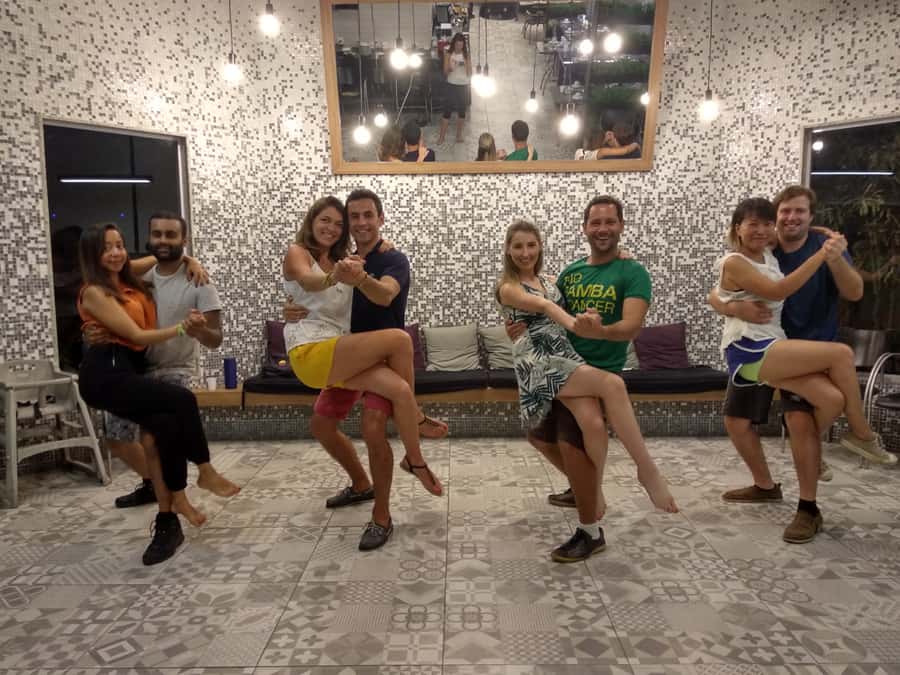
Wear casual clothes that allow you to move comfortably. Samba involves repeated footwork and active body movement, so stiff clothing or uncomfortable shoes could make the hour less enjoyable.
Water is included, which is helpful during an energetic class. You do not need to arrange a transfer, but you do need to get yourself to the selected meeting point.
The experience lasts one hour, with starting times subject to availability. It can fit in the afternoon or evening. If you are pairing it with nightlife, leave yourself enough time to change or freshen up afterward.
The provider also offers a longer four-hour option that combines a samba class with a samba night tour. The one-hour class is the better choice if you only want to test the activity or have a tight schedule. The longer option may suit you if nightlife advice and an extended evening are central to your plans.
Free cancellation is available up to 24 hours in advance, and you can reserve now and pay later. Those policies make it easier to place the class in a flexible Rio schedule, though you should still check the exact meeting point and starting time before the day.
Who should book this samba class?
I would recommend it to first-time visitors who want a direct, playful connection with Brazilian culture. It is especially good for solo visitors, couples, families with older children, and groups where some people are nervous about dancing.
You should also consider it if you want local nightlife suggestions. Several instructors offer practical ideas for enjoying Rio after class, adding value beyond the steps themselves.
I would be more cautious if you dislike group activities, need lots of room, or expect a costume photo package. The class can be crowded, and the headpieces are not assured. Serious dancers may also find the one-hour format too basic.
The 4.6 rating from 262 ratings reflects the main pattern: strong enthusiasm for the fun, instructors, and beginner-friendly approach, balanced by occasional concerns about space. That is a fair picture of the experience.
Should you book the Copacabana samba class?
Book it if you want an inexpensive, active hour that introduces you to samba without demanding prior experience. The best reason to go is not that you will become an expert. It is that you will learn a few real movements, laugh at your own mistakes, meet people from several countries, and gain a little confidence for Rio’s evening scene.
If possible, choose a session with a comfortable group size and confirm the meeting point before leaving. Go in casual clothes, expect to work up some energy, and treat the Carnival accessories as a bonus. For $25, this is a sensible pick for an approachable taste of Rio’s dance culture.
FAQ
How long is the samba class?
The class lasts one hour.
How much does the experience cost?
The listed price is $25 per person.
Where does the class meet?
There are two possible meeting points: R. Farme de Amoedo, 125, or Av. Nossa Sra. de Copacabana, 807, sala 603. The meeting point depends on the option booked.
Is the class held in Copacabana?
Yes. The activity takes place in Copacabana.
Do I need previous dance experience?
No. The class is designed for all skill levels and is particularly suitable for beginners.
What languages does the instructor speak?
Instruction is available in English, Portuguese, and Spanish.
Is a transfer included?
No. Transportation to and from the meeting point is not included.
What is included in the price?
The price includes the one-hour samba class, an instructor, water, and access to a toilet.
What should I wear?
Wear casual clothes that are comfortable for dancing and movement.
Can I cancel the booking?
You can cancel up to 24 hours in advance for a full refund. You can also reserve now and pay later, subject to the booking conditions.
Just added in Rio de Janeiro
- Rio: Fluminense Match at Maracanã with Guide and Ticket★ 4.9 · 22 reviews
- The Best Food Tour: Taste the Most Authentic Flavours of Rio★ 4.7 · 18 reviews
- Explore Santa Teresa: Walking Tour★ 5.0 · 6 reviews
- Explore Fernando de Noronha: 7-Hour Ilhatour★ 4.9 · 3 reviews
- Favela Santa Marta: Walking Tour with local guide★ 4.8 · 41 reviews
- Helicopter flight no doors in Rio de Janeiro★ 4.7 · 22 reviews
- Discover Rocinha: Guided Tour of the Famous Favela★ 4.5 · 3 reviews
- Discover Noronha: 7-Hour Ilhatour Adventure★ 4.8 · 8 reviews
Samba and Nightlife Tours, compared.


Pub Crawl in Lapa with Cachaça Tasting and Live Samba
Read our review →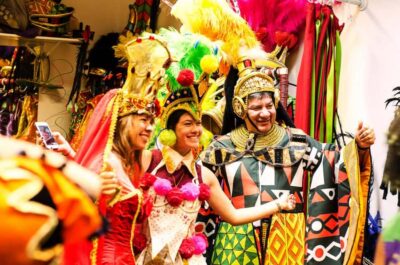
Carnival Backstage Tour at Samba City with Cocktail
Read our review →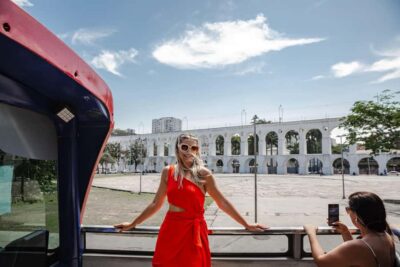
Hop-ON Hop-OFF Sightseeing Bus in Rio de Janeiro – Rio Samba Bus
Read our review →
More than a Pub Crawl: An Authentic Night Experience in Rio
Read our review →
Santa Teresa, Lapa, and Cinelândia with Tram Ride and Selarón Steps
Read our review →
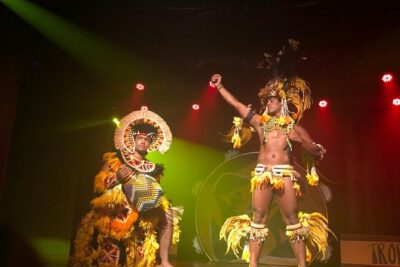
Ginga Tropical – Brazilian Samba and Folklore Show
Read our review →Browse the lists this tour appears in