
Reviewed · SALVADOR
Salvador de Bahia African Culture Tour
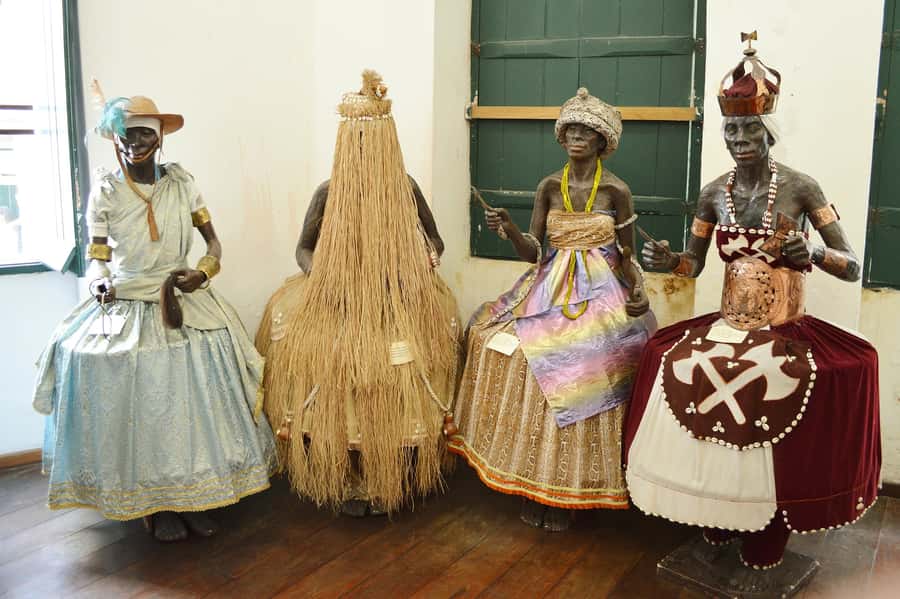
Salvador’s African heritage is not tucked away in a museum. It appears in the churches, music, dance, religious traditions, and public life of the old center. This private walking tour connects those pieces, beginning at the Cathedral Basilica and moving through Terreiro de Jesus, the Cross of São Francisco, and Escola do Olodum. I especially like the focus on African influence in everyday Salvador and the chance to discuss difficult subjects such as slavery and the Black Brazilian experience.
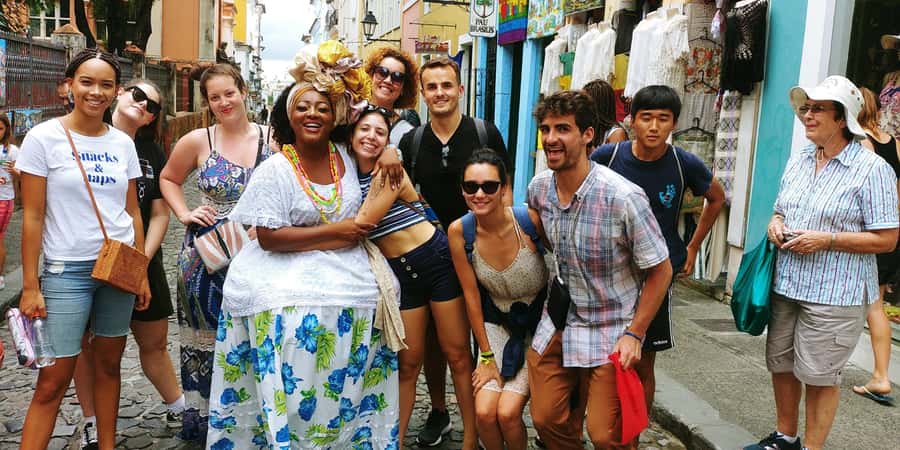
I also like the private format, which lets you ask questions and shape the discussion. Guides such as Eduardo, Sayuri, Adilson, Nilza, Facundo, and Carlos have received strong praise for their warmth and clear explanations. The main concern is value: one visitor found the tour expensive for a walking route using free museums, and the tour ended after two hours instead of the promised three.
Key points to know before you book
- Terreiro de Jesus provides the opening lesson on Portuguese colonization and the Jesuit missions.
- The Cross of São Francisco brings in Black mutual aid, liberation, samba, and capoeira.
- Escola do Olodum explains why Carnival matters so much in Salvador.
- A private guide makes the tour flexible, with time for your questions and interests.
- English, Portuguese, and Spanish are available, and the meeting time is 2 pm.
- The advertised duration is three hours, though you should allow for some variation in the actual finish time.
Why Salvador’s African story matters
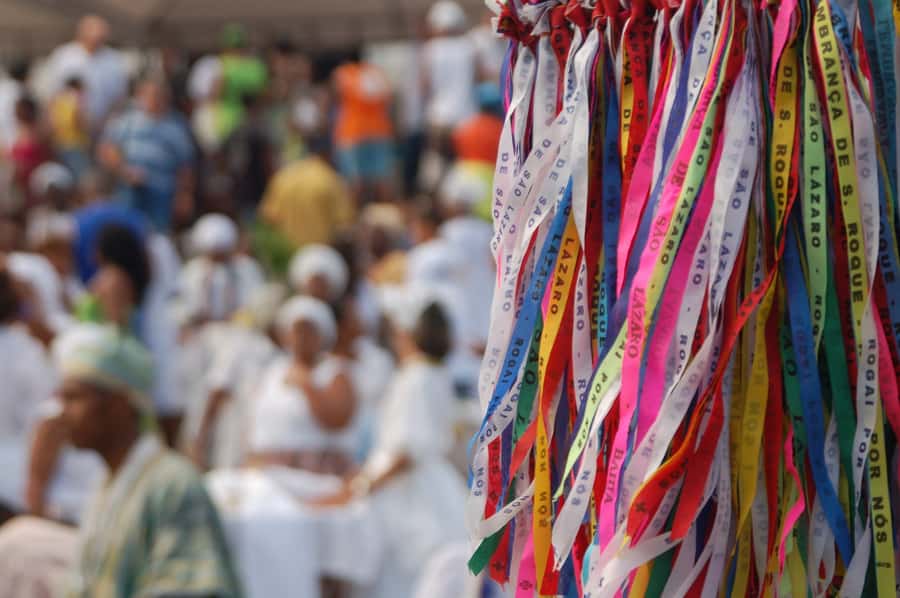
Salvador is one of the best places in Brazil to explore the continuing influence of African culture. This is not only a story about the past. It is also about music, religion, dance, public celebrations, community groups, and the way people understand the city today.
The tour gives you a useful frame for seeing the old center. Instead of treating the churches and squares as pretty backdrops, your guide explains how Portuguese colonization, Jesuit activity, slavery, and Black resistance shaped the city. That context helps you read Salvador’s streets with more care.
I appreciate that the route includes difficult subjects rather than presenting a polished postcard version of Bahia. Past discussions have covered slavery, prostitution, and the Black Brazilian experience in a respectful way. Those topics may be uncomfortable, but they are necessary if you want to understand why Salvador’s African identity is so strong and why cultural expression has often carried social and political meaning.
The tour is also a good choice if you like conversation more than a fixed speech. The private group format gives you room to ask about religion, Carnival, local personalities, music, or the city’s colonial past. Several guides have been praised for answering questions patiently and adapting parts of the walk to personal interests.
More Tours in Brazil
- Rio de Janeiro: 6-Stop Highlights of Rio with Lunch
★ 4.4 · 5,157 reviews - Christ the Redeemer Entry Ticket by Corcovado Train
★ 4.4 · 4,476 reviews - Rio de Janeiro: Rocinha Favela Walking Tour with Local Guide
★ 4.8 · 3,052 reviews
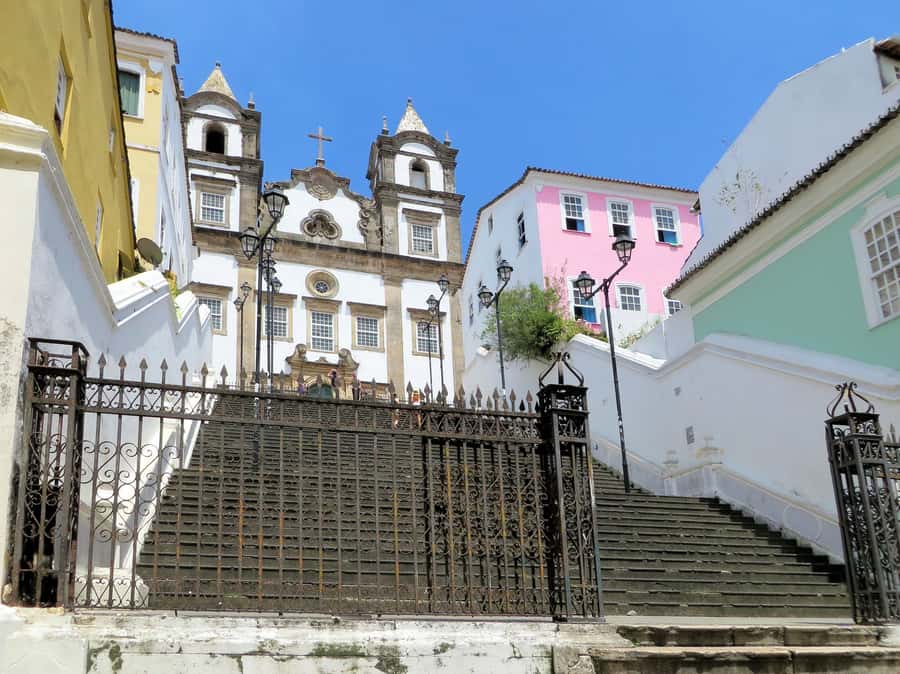
Starting at Salvador Cathedral and Terreiro de Jesus
Meet your guide at 2 pm in front of the Cathedral Basilica of San Salvador. The meeting point is in the historic center, at approximately -12.9728546, -38.5097046. From there, the walk heads to Terreiro de Jesus.
This first stop sets up the colonial story. You’ll hear about the Jesuit missions and Portuguese colonization, and how those forces shaped this part of Brazil. The square is a useful place to begin because the setting brings together religion, power, architecture, and public life in one compact area.
Your guide also discusses African figures connected with Salvador across its history. The available description does not name every person covered, so you should ask your guide about the particular writers, musicians, religious leaders, or public figures included on your day.
For me, the value here is not simply seeing another historic square. It is learning to question who built the city, who controlled it, and whose culture survived despite harsh conditions. If you have already taken a general Salvador sightseeing tour, this section gives familiar places a different meaning.
The walk is only three hours, so the tour cannot offer a complete account of Salvador’s past. Think of Terreiro de Jesus as the starting point for a focused cultural discussion, not a full survey of Brazilian colonial history.
The Cross of São Francisco and Black resistance
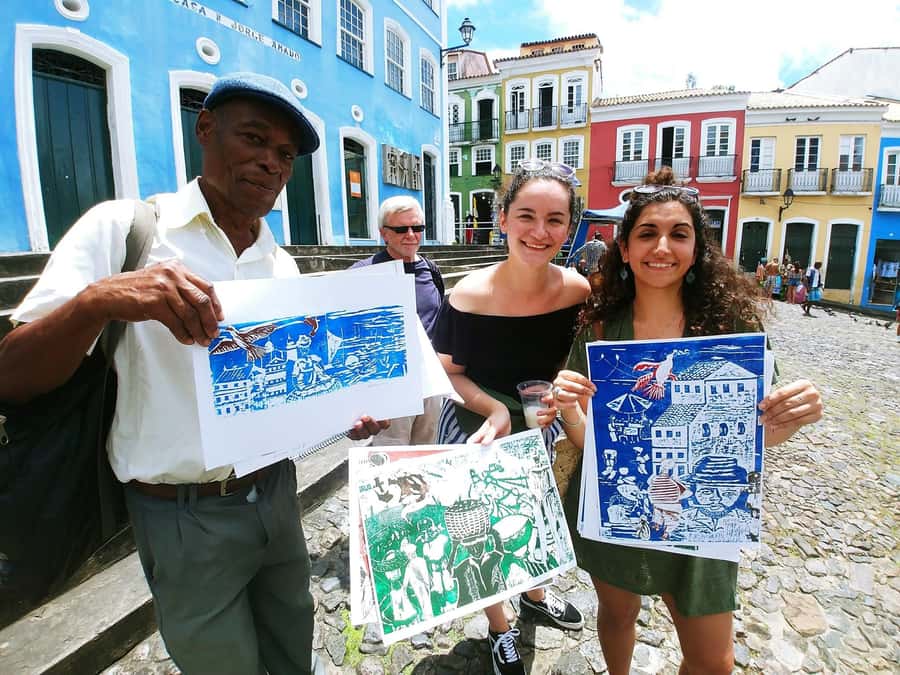
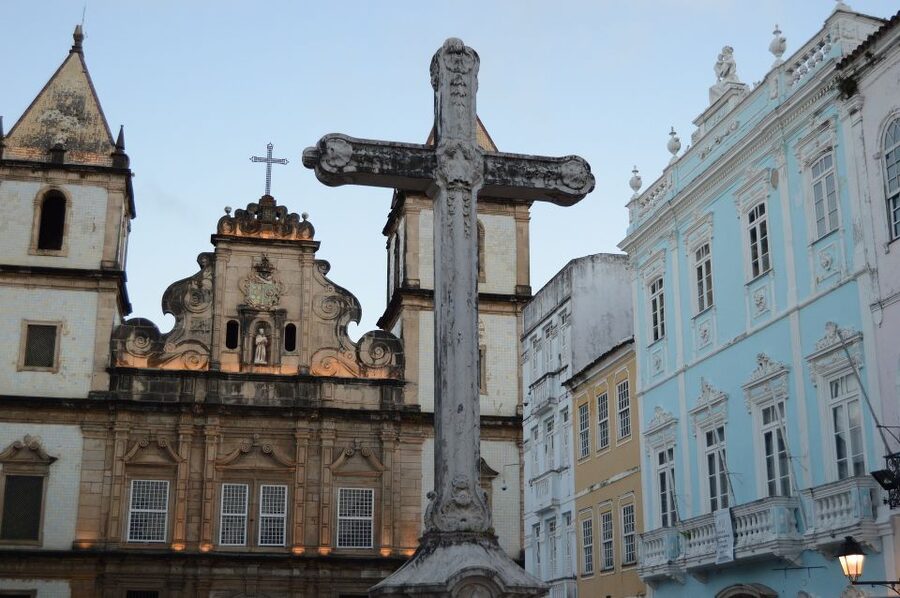
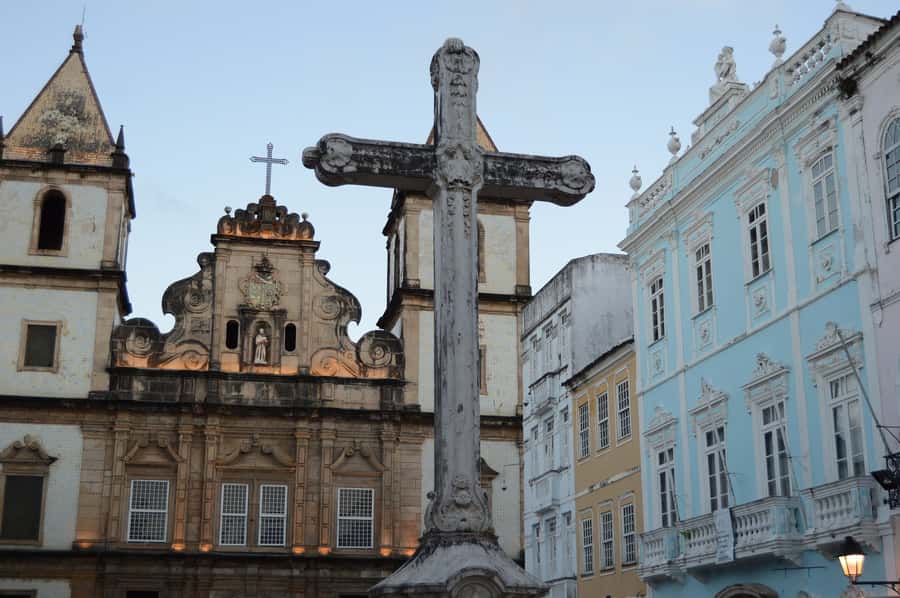
The route continues through the center to the Cross of São Francisco. Here, the guide explains the creation of a 19th-century men’s organization that worked to help Salvador’s Black community in its struggle for liberation.
This is one of the most important parts of the walk because it moves the story from colonial control to community action. You’ll learn about the ways Black residents organized and supported one another. The tour presents liberation as a social process, not just a single event recorded in a textbook.
The Cross of São Francisco is also where the conversation turns toward music and movement. Samba and capoeira are included as key parts of African Brazilian culture. You may find the guide demonstrating rhythms or explaining how these forms relate to identity and resistance, but the information provided does not promise a formal dance or capoeira performance.
That distinction matters. This is a walking history and culture tour, not a staged show. If you want a full evening of drumming, samba, or capoeira, a separate performance-based activity would suit you better. Here, the music discussion helps you understand why these traditions matter before you encounter them elsewhere in Salvador.
Some guides have been described as interactive and easy to talk with. That is useful at this stop, since samba and capoeira invite questions. You can ask how the traditions developed, how they are presented today, and how they connect with the city’s African identity.
Escola do Olodum and the meaning of Carnival
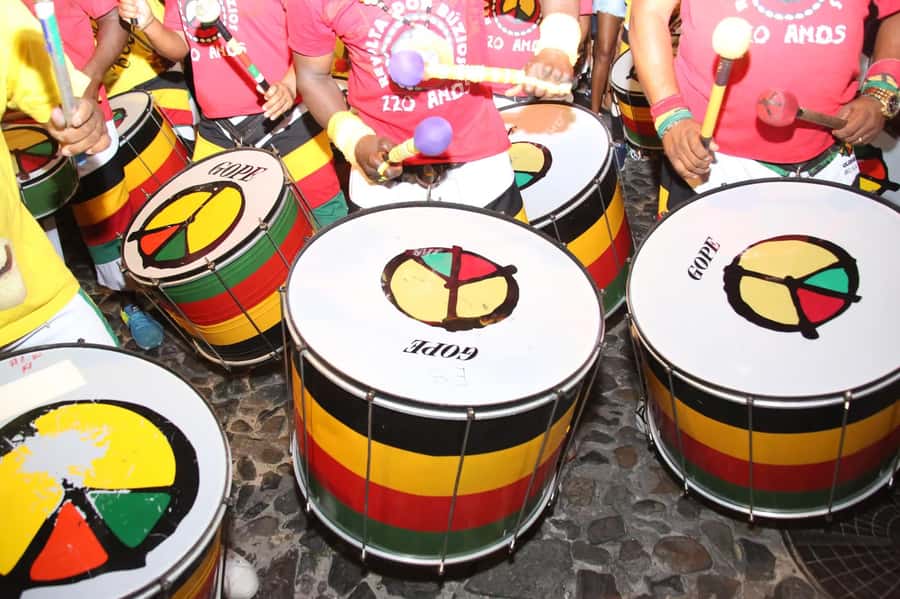
The final major stop is Escola do Olodum, a cultural and educational center connected with African descent. The tour uses this visit to explain the importance of Carnival in Salvador.
Olodum is closely tied to the city’s musical identity, and the stop gives you a chance to see Carnival as more than a large street party. The discussion focuses on its cultural role and its place in public life. You’ll get a better sense of why Carnival matters to Salvador and how music can carry history, pride, and community identity.
This part should be especially useful if you plan to visit during Carnival or already follow Brazilian music. One guide, Sayuri, has helped visitors with Carnival-related questions beyond the tour itself, including ways to understand the celebration during a visit. Still, the tour description does not promise Carnival dates, rehearsals, or a live performance, so book it for the cultural explanation rather than a guaranteed show.
The supplied highlights also mention an Afro-Brazilian Mass. The detailed route clearly names Terreiro de Jesus, the Cross of São Francisco, and Escola do Olodum, but it does not explain when or how a mass fits into the three-hour schedule. If attending a mass is important to you, ask for confirmation before booking.
Same city, a different sort of day:
- Rio de Janeiro: Sugarloaf Cable Car Official Ticket
★ 4.6 · 2,873 reviews - Rio: Christ the Redeemer, Sugarloaf, Selaron & BBQ Lunch
★ 4.5 · 2,428 reviews - Rio De Janeiro: Half-Day Rocinha Favela Walking Tour
★ 4.7 · 2,272 reviews - Rio de Janeiro: Angra dos Reis and Ilha Grande Full-Day Tour
★ 4.6 · 1,673 reviews
A private walk with room for real questions
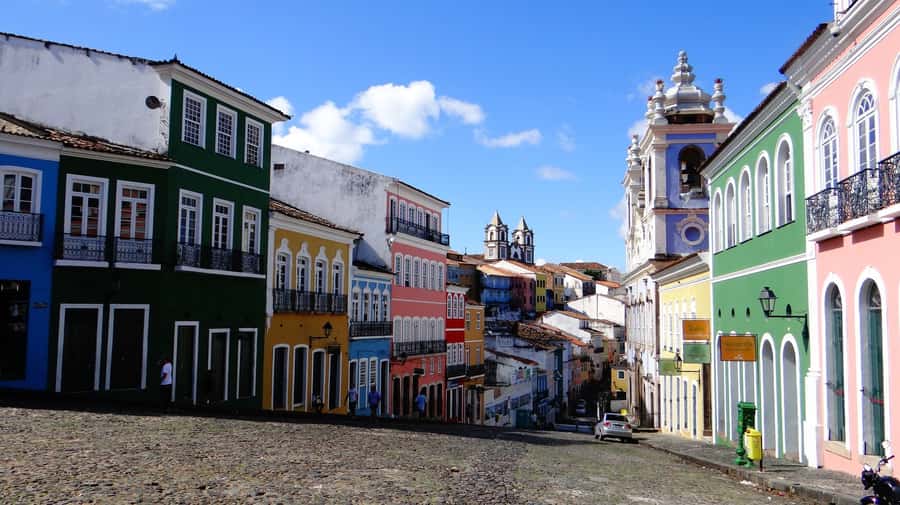
The private group format is one of the strongest features. You are not placed into a large crowd with a fixed script. Your guide can respond to your questions and, according to the experience of past participants, may adjust the emphasis to match your interests.
That flexibility can make a big difference in Salvador. You might want more detail on the Jesuits, more discussion of slavery, or a closer look at Carnival and music. You may also want practical suggestions for food, museums, or other cultural activities. The guides have been praised for offering helpful local tips and for staying in touch around the activity.
Several names have appeared in connection with this experience, including Eduardo, Sayuri, Adilson, Nilza, Facundo, and Carlos. The assigned guide can vary, so you should not book expecting one particular person unless the provider confirms it.
The language choices are English, Portuguese, and Spanish. This makes the walk accessible to a wider range of international visitors, but you should select or confirm your preferred language when reserving.
Timing, walking, and the value question
The planned length is three hours, beginning at 2 pm and ending at the Cross of São Francisco. The activity information says it finishes there, even though the route includes Escola do Olodum. Plan your onward arrangements from the historic center rather than from the cathedral.
Because this is a walking tour, comfortable shoes and water are sensible. That is practical advice rather than a claim about special facilities, as no detailed accessibility information is provided. The route includes historic streets and several cultural stops, so ask the provider about walking conditions if mobility is a concern.
The tour receives a listed rating of 4.5 from 60 reviews, with many strong scores for the guides’ explanations, patience, friendliness, and ability to make the city feel personal. One clear criticism concerns value. The price is not provided here, so I cannot judge whether it is fair in absolute terms. You should compare the cost with other private Salvador walking tours and remember that the route includes free museums or cultural sites.
For me, the price makes more sense if you want a private guide who can discuss sensitive history and answer personal questions. It makes less sense if you mainly want entrance tickets, a performance, or a long list of paid attractions. The tour’s product is interpretation, not admission fees.
There is also a timing issue. The planned duration is three hours, but one person reported being left after two hours. That may have been an unusual case, but it is worth confirming the expected end time on the day, especially if you have dinner plans or another activity booked.
Who will get the most from this tour
I would choose this walk if you want Salvador explained through its African heritage rather than through general sightseeing alone. It suits visitors who enjoy history, music, religion, local culture, and direct conversation with a guide.
It is also a good first or second activity in the city. Early in your stay, it gives you useful context for later visits to churches, museums, music venues, and Carnival events. If you are already familiar with Brazil’s colonial past, you can steer the discussion toward African resistance, capoeira, samba, or present-day cultural life.
The private setting works well for couples, families, and small groups with different interests. A group can ask more questions than it usually could on a large scheduled walk. It may also suit solo visitors who want company without joining a big group, provided the price fits your budget.
I would look elsewhere if you want a formal Afro-Brazilian religious ceremony, a guaranteed live performance, or a tour packed with paid museum admissions. I would also be cautious if you need a precise three-hour schedule and cannot tolerate a possible early finish.
Booking is flexible: you can cancel up to 24 hours ahead for a full refund, and a reserve-now, pay-later option is available. Those policies reduce the risk of fixing your plans too early, but they do not solve the central value question. Compare the price with similar private walks before committing.
Should you book the Salvador African Culture Tour?
Book it if you want the old center to make sense through Salvador’s African cultural legacy. The route is compact, but the subjects are wide: colonization, Black community organization, liberation, samba, capoeira, Carnival, and the work of Olodum.
I especially like the chance to ask direct questions and the guides’ record of explaining difficult subjects with care. Eduardo, Sayuri, Adilson, Nilza, Facundo, and Carlos have all been associated with warm, engaging guiding, though your guide may be different.
Skip it if you are looking for a performance or if the price seems high for a route centered on free public sites. Before booking, confirm the guide language, the three-hour timing, and whether the Afro-Brazilian Mass is actually part of your departure. For the right visitor, this is a thoughtful way to begin understanding why African culture is central to Salvador, not an optional side note.
FAQ
Where does the Salvador African Culture Tour begin?
It begins in front of the Cathedral Basilica of San Salvador in Salvador’s historic center. The listed coordinates are -12.972854614257812, -38.50970458984375.
What time does the tour start?
The meeting time is 2 pm.
How long does the tour last?
The planned duration is three hours. The stated finish point is the Cross of São Francisco, though one reported experience ended after two hours.
What places are included?
The route includes Terreiro de Jesus, the Cross of São Francisco, and Escola do Olodum. The highlights also mention an Afro-Brazilian Mass, but the available details do not explain when that fits into the route.
What languages are available?
The live guide can provide the tour in English, Portuguese, or Spanish.
Is this a private tour?
Yes. The activity is organized for a private group.
What subjects does the guide cover?
You can expect discussion of Portuguese colonization, Jesuit missions, African figures connected with Salvador, Black community organization, liberation, samba, capoeira, and the role of Carnival.
Can I cancel for a refund?
You can cancel up to 24 hours in advance for a full refund.
Can I reserve now and pay later?
Yes. A reserve-now, pay-later option is available, so you do not need to pay at the time of booking.
Just added in Brazil
- From Puerto Iguazu: Itaipu Dam Tour with Entrance Ticket★ 4.7 · 31 reviews
- From Puerto Iguazu: Secret Falls Adventure★ 5.0 · 5 reviews
- Gramado and Canela private trip with English speaking guide★ 5.0 · 6 reviews
- From Natal: Pipa, Cacimbinhas, And Love Beach Full-Day Tour★ 4.5 · 14 reviews
- From Puerto Iguazú: Brazilian Bird Park Tour with Tickets★ 4.7 · 7 reviews
- from Foz do Iguaçu: Private Tour on Argentinean Falls★ 5.0 · 5 reviews
- From Jericoacoara: Preá Beach and Paradise Lagoon Tour★ 3.8 · 51 reviews
- From Manaus: Negro River Half-Day Trip★ 4.7 · 20 reviews
Tours in Salvador, compared.

Afro-Brazilian Roots Private City Tour in Salvador
Read our review →
Browse the lists this tour appears in