
Reviewed · WALKING TOURS
Salvador, Bahia: A amazing Walking Tour!
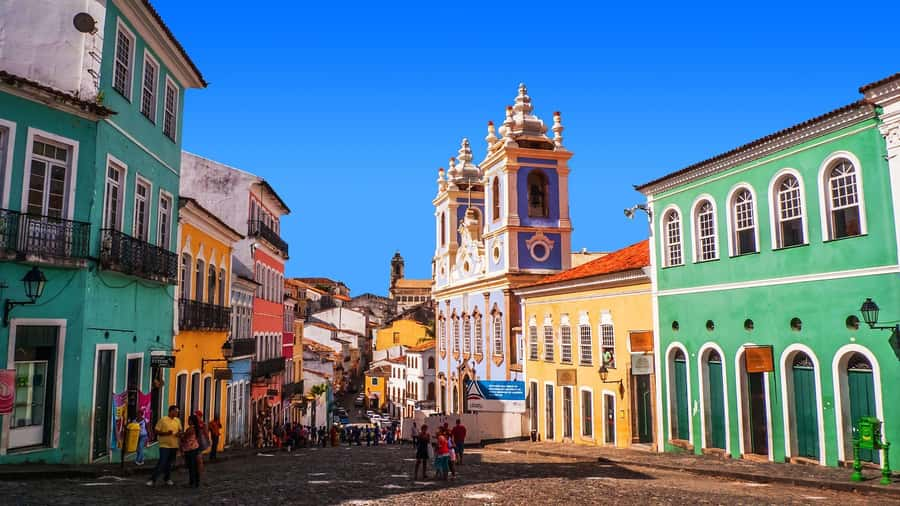
Salvador’s historic center is best understood on foot, one colorful street and church at a time. This private walk links the Lacerda Elevator, Rua Chile, the Cathedral Basilica, Pelourinho, and Santo Antônio Além do Carmo while giving you a guide to explain how colonial Brazil, Afro-Brazilian culture, music, and government shaped the city.
I especially like the private format, which lets you ask questions and set the pace, and the broad language choice, with guides available in English, Portuguese, Spanish, French, German, Italian, and Dutch. I also like that the walk includes the Lacerda Elevator, cathedral entry, and samples of local drinks rather than leaving every paid stop to you.
The main caution is the pace and terrain. Although the activity is listed as wheelchair accessible, it is also marked as unsuitable for people with mobility impairments, so you should confirm the route before paying. Three hours is enough for a strong introduction, not a slow, in-depth visit to every museum and church.
Key points to know before booking
- A private three-hour route through Salvador’s historic core: You move between major landmarks with a guide focused on your interests.
- Gustavo and Wanderley are named guides associated with especially strong experiences: Both are praised for language skills, cultural context, warmth, and useful local recommendations.
- The route includes the Lacerda Elevator and Cathedral Basilica: Tickets for both are covered in the price.
- Pelourinho is treated as a cultural place, not just a photo stop: Expect connections to music, Olodum, Michael Jackson, and Paul Simon.
- A local drink tasting adds a Bahian pause: O Cravinho includes alcoholic and non-alcoholic options.
- Museum and cultural-space tickets cost extra: The walk gives you an overview, but you will pay separately for sites not included.
Starting at the Lacerda Elevator
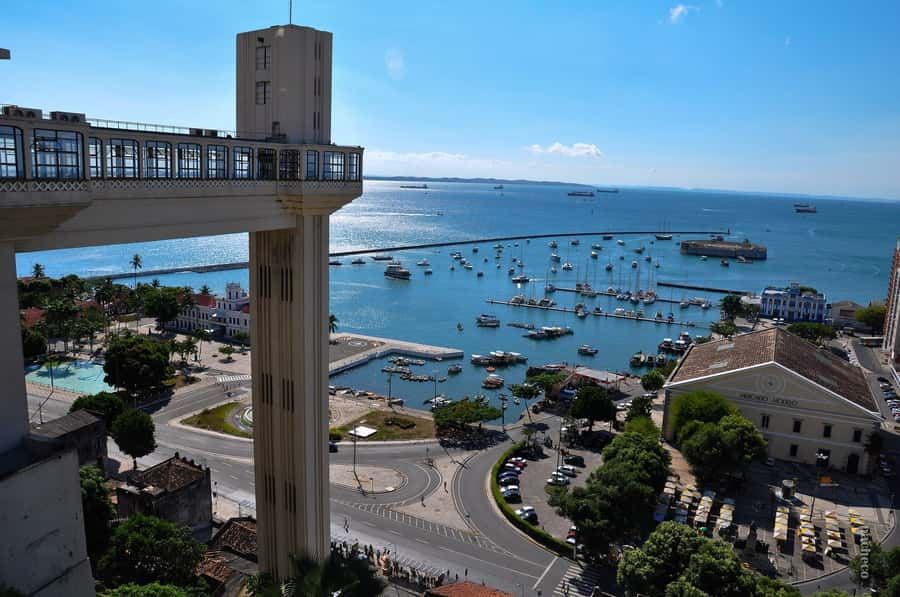
The tour begins at the Lacerda Elevator, one of Salvador’s most recognizable landmarks and a useful meeting point between the Upper and Lower City. From here, you get an immediate sense of Salvador’s unusual shape, with the historic center above and the waterfront area below.
The elevator is not simply a way to move around. It is part of the city’s daily identity and a practical symbol of the connection between its two levels. Your ticket is included, so you do not need to budget separately for this part of the route.
The opening guided segment lasts about 30 minutes, followed by another sightseeing period at the elevator. That gives your guide room to explain the setting rather than rushing you straight into the next street.
This is a good beginning if you are new to Salvador. The city can feel visually intense at first, with steep changes in level, grand buildings, narrow streets, music, and crowds all competing for your attention. A private guide can help you sort out what you are seeing before the walk moves deeper into the historic center.
More walking tours in Salvador
- Salvador Historic Walking Tour – Pelourinho
★ 4.8 · 62 reviews - Salvador: Walking Tour Through Pelourinho
★ 5.0 · 49 reviews - Rio de Janeiro: Rocinha Favela Walking Tour with Local Guide
★ 4.8 · 3,052 reviews
Rua Chile and the colonial city
From the elevator, the route continues toward Rua Chile, described as the first street in Brazil. The street is lined with historic buildings linked to Salvador’s colonial past, government, and early civic life.
The Rio Branco Palace is one of the important buildings in this section. Even if you are mainly interested in architecture, this part gives you a useful framework for understanding Salvador as an old center of political power, not only a postcard district.
The walk between stops is short in places, with one listed segment lasting about 10 minutes. That matters because the tour is built around close-up details: façades, narrow streets, doorways, churches, and public buildings. You are not spending most of the three hours in transport.
I would use this part of the tour to ask questions about the buildings you pass. The guides praised most often, including Gustavo and Wanderley, are noted for explaining individual structures and connecting them to Afro-Brazilian history and the period when Salvador was Brazil’s capital.
The Cathedral Basilica and the churches of Salvador
The Cathedral Basilica of Salvador receives about 30 minutes, including a guided visit. Entry is included, which is useful because churches are one of the main reasons to take a walking tour in this district.
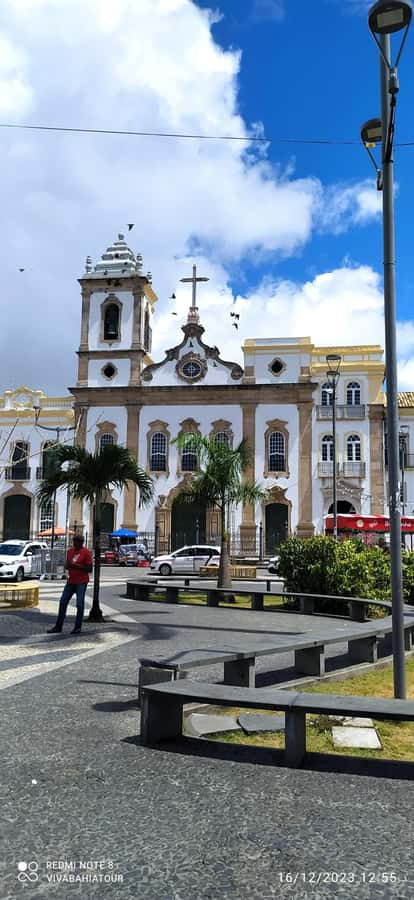
The cathedral gives the route a slower, more focused stop after the early street views. You can look at the interior while your guide explains its place in Salvador’s religious and colonial story. The tour also points you toward the Nossa Senhora do Rosário dos Pretos Church, another important cultural and religious site in the area.
The route information does not say that admission to every church is covered. Only the Cathedral Basilica ticket is specifically included, so ask your guide which additional churches are being viewed from outside and which may require a separate fee.
This is also where the private setup pays off. If you care about religious art, colonial construction, Afro-Brazilian traditions, or the relationship between faith and public life, you can spend more time on that subject. If churches are less important to you, your guide can keep the explanation moving.
O Cravinho and a taste of Bahian life
O Cravinho is listed as a 20-minute visit with a tasting of local drinks. It is described as a famous and traditional Bahian pub, and the tasting includes alcoholic and non-alcoholic choices.
That short pause helps break up the architecture-heavy part of the walk. You get a taste of local social life rather than only hearing about Salvador through monuments. If you do not drink alcohol, you are not left out, since a non-alcoholic option is included.
The tasting is part of the tour price, but it is not a full meal. You should plan to eat separately if you need lunch or a substantial snack around the tour. The information provided does not promise food, so do not book this expecting a restaurant visit.
O Cravinho also gives you a chance to ask for practical advice about Salvador. The strongest guide experiences connected to this walk include recommendations for cafés, neighborhoods, and places beyond the standard sightseeing route. That can make this stop more useful than its 20-minute length suggests.
More Tours in Brazil
- From Salvador: Schooner Tour to Frades Islands and Itaparica
★ 3.9 · 98 reviews - Afro-Brazilian Roots Private City Tour in Salvador
★ 4.7 · 88 reviews - Salvador de Bahia African Culture Tour
★ 4.5 · 60 reviews - Salvador: Praia Do Forte and Guarajuba Beach Day Trip
★ 4.1 · 56 reviews
Pelourinho, music, and public culture
Pelourinho is the emotional center of the walk. The route allows about 40 minutes here, giving you time to see its colorful mansions, steep streets, churches, and public spaces without treating the district as a quick backdrop for photographs.
Music is central to the way this area is presented. Your guide will connect Pelourinho with Olodum, the major percussion group associated with Salvador, as well as appearances by Michael Jackson and Paul Simon. Those references help explain why the district has such a strong place in popular culture.
The point is not simply to collect celebrity facts. Pelourinho works best when you pay attention to the meeting of architecture, music, faith, and Afro-Brazilian identity. A guide can explain how those strands appear in the same few streets.
The route may also include the Jorge Amado Foundation and Casa do Carnaval, along with other museums and cultural spaces. These are not included in the basic ticket package, so treat them as optional additions or places to mark for a later visit. Three hours goes quickly if you try to enter every cultural site.
Santo Antônio Além do Carmo and the return walk
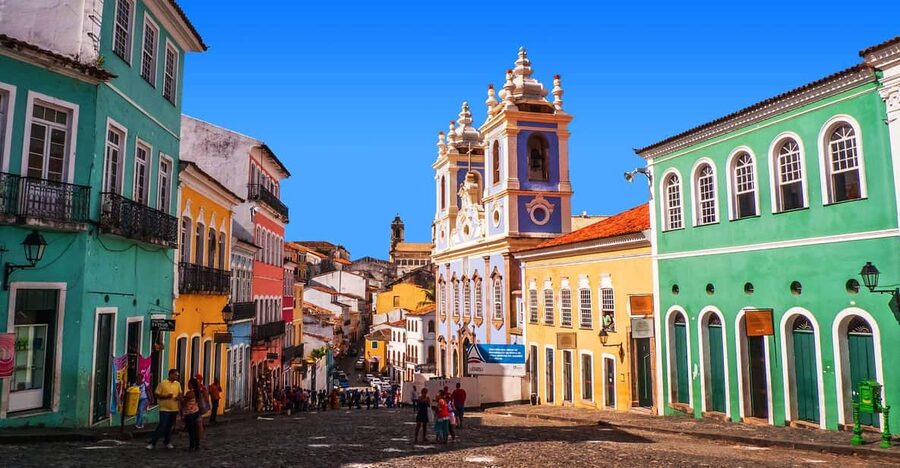
After Pelourinho, the route continues toward Santo Antônio Além do Carmo, with about 30 minutes listed for the walk. This gives the tour a wider view of the historic center instead of ending at Salvador’s most famous square.
The area is part of the same old city, but it adds another stretch of streets and buildings to your understanding of Salvador. You can use this portion to keep discussing the city’s architecture, neighborhoods, and everyday culture while walking back toward the Lacerda Elevator.
The tour ends where it begins, at the elevator. That is convenient if you are using the walk to get oriented on your first day. It also means you finish near one of the city’s main connections between the Upper and Lower City.
The route includes several walking sections, and the schedule adds up to more than a simple point-to-point stroll. Wear comfortable shoes, bring sunglasses, a hat, and sunscreen, and expect the tropical sun to matter even when the walking distances look modest on paper.
What the private guide changes
A private group is the clearest reason to choose this tour over a large shared walk. You can ask for more detail at the cathedral, focus on Afro-Brazilian history, spend less time in museums, or pause for questions without waiting for a busload of people.
The guide is also important because the route covers several kinds of history at once. Salvador’s colonial buildings tell only part of the story. The best version of this walk also explains music, religion, government, public life, and the African influence that remains central to Bahian culture.
Gustavo is praised for bringing the city to life through stories, humor, daily social life, cafés, neighborhoods, and local recommendations. Wanderley is noted for speaking several languages and explaining Afro-Brazilian history with care. You cannot guarantee a particular guide unless the operator confirms one, but these names show the level of personal interpretation available.
The language list is unusually broad for a private city walk. You can request Dutch, French, English, Portuguese, Spanish, German, or Italian when checking availability. That is especially helpful in a history-focused tour where small differences in language can affect how much context you absorb.
Is $141 a fair price?
At $141 per person, this is not a budget stroll. The value depends on how much you want from the guide and how many people are in your private group.
The price includes the guide, tickets for the Lacerda Elevator and Cathedral Basilica, and a tasting of alcoholic and non-alcoholic local drinks. You are also paying for a private service and a multilingual guide, not just admission to a set of monuments.
For a solo visitor or a couple, the cost may feel high compared with a basic group walking tour. For a family or small group, the private format can make the per-person cost easier to justify, especially if you want a flexible pace and direct answers.
The tour is a better value if Salvador is new to you and you want a cultural orientation in one concentrated morning or afternoon. It is less compelling if you already know Pelourinho, plan to visit the cathedral and elevator independently, or prefer to spend several hours inside museums.
Remember that cultural spaces and museum tickets are not included. Add those costs only if you want to turn this introduction into a longer museum-focused outing.
Who should book this walk?

I would recommend it to first-time visitors who want Salvador’s historic center explained rather than simply photographed. It suits people who care about architecture, colonial Brazil, Afro-Brazilian culture, music, churches, and local drinks.
It also works well for families or friends who want a private pace. The multilingual service is useful for mixed-language groups, and the tasting gives the walk a relaxed social pause.
You should think twice if your main goal is a long museum visit. The schedule includes several brief stops, and the full route covers a lot of ground in three hours. It is an overview with substance, not an exhaustive study of every building.
Mobility needs deserve special attention. The activity is labeled wheelchair accessible, but the same information says it is not suitable for people with mobility impairments. Because the route includes walking through the historic center, contact VivaBahiaTour before booking and ask exactly what assistance and route changes are possible.
Free cancellation is available up to 24 hours before the start, and you can reserve now and pay later. Those terms make it easier to keep plans flexible, but they do not remove the need to check the physical demands of the walk.
Should you book Salvador’s private historic-center walk?
Book it if you want a private guide to connect Salvador’s buildings with its music, Afro-Brazilian culture, religious life, and colonial past. The included elevator and cathedral tickets, local drink tasting, and access to a guide such as Gustavo or Wanderley add real value when you want context rather than a self-guided checklist.
Skip it if you want a slow museum day, a full meal, or a low-cost group outing. For most first visits, though, this is a strong way to get your bearings in Salvador’s old center, provided you are comfortable walking and confirm the accessibility details in advance.
FAQ
How long does the walking tour last?
The tour lasts three hours.
Where does the tour start and finish?
It starts and ends at the Elevador Lacerda.
Is the tour private?
Yes. It is offered as a private group experience.
Which languages are available?
Live guides are available in Dutch, French, English, Portuguese, Spanish, German, and Italian.
Are entrance tickets included?
Tickets to the Elevador Lacerda and Cathedral Basilica are included. Tickets for cultural spaces and museums are not included.
Is a drink tasting included?
Yes. The tour includes a tasting of local alcoholic and non-alcoholic drinks, including a visit to O Cravinho.
Can I cancel for a full refund?
Yes. You can cancel up to 24 hours in advance for a full refund. You can also reserve now and pay later.
Just added in Salvador
- Salvador: Schooner Cruise with Pickup and Itaparica Stop★ 3.8 · 5 reviews
- Salvador: Traditional Drumming and Percussion Workshop★ 4.4 · 10 reviews
- Salvador by Night: Cultural Show and Dinner.★ 4.4 · 17 reviews
- Salvador: 3-Hour Percussion Class★ 4.9 · 10 reviews
- Salvador: Walking Tour Through Pelourinho★ 5.0 · 49 reviews
- Salvador: Capoeira Class at Mestre Bimba’s 1st Ever School.★ 4.9 · 34 reviews
- Salvador: Cultural Night of Capoeira, Samba, and Drumming★ 4.9 · 17 reviews
- Salvador: Cultural Treasure – Samba de Roda.★ 4.9 · 51 reviews
Walking Tours, compared.

Sunrise and Sunrise Walk Two Brothers with Local Guide
Read our review →
Downtown-Center History Walking Tour – in English
Read our review →
Downtown-Center Walking Tour | 2 Hours – English
Read our review →
Learn the History of Rio with an Unforgettable City Center Walking Tour
Read our review →Browse the lists this tour appears in