
Reviewed · WALKING TOURS
Paraty: Historic Centre Walking Tour & Cachaça Tasting
Paraty’s old town makes more sense once someone explains why its streets, churches, and doorways were built the way they were. This 90-minute walk links the town’s colonial past and Masonic details with its role in the gold, sugar, coffee, and pau-brasil trades. I especially like the focus on local stories rather than a quick parade of pretty buildings.
I also like the finish: Gabriela cachaça, a sweet Paraty specialty mixed with honey, clove, and cinnamon. Guides such as Thiago are praised for clear explanations and generous answers. The main drawback is the uneven cobblestones, which can be slippery, and a later start may leave you seeing less architecture in fading light.
Key points
- Meet at Santa Rita Church: The tour begins at Largo de Santa Rita, an easy landmark in the old centre.
- History with local context: Learn about colonization, Indigenous peoples, trade cycles, and the influence of Freemasonry.
- Thiago is a frequent guide: His clear storytelling and willingness to answer questions receive especially strong praise.
- A sweet local tasting: Finish at a local bar with Gabriela, a cachaça made with honey, clove, and cinnamon.
- Wear shoes with grip: Paraty’s historic paving can be slippery, so sandals with smooth soles are a poor choice.
- Small groups or private tours: English, Portuguese, and Spanish options are available.
Why a 90-minute walk helps you read Paraty
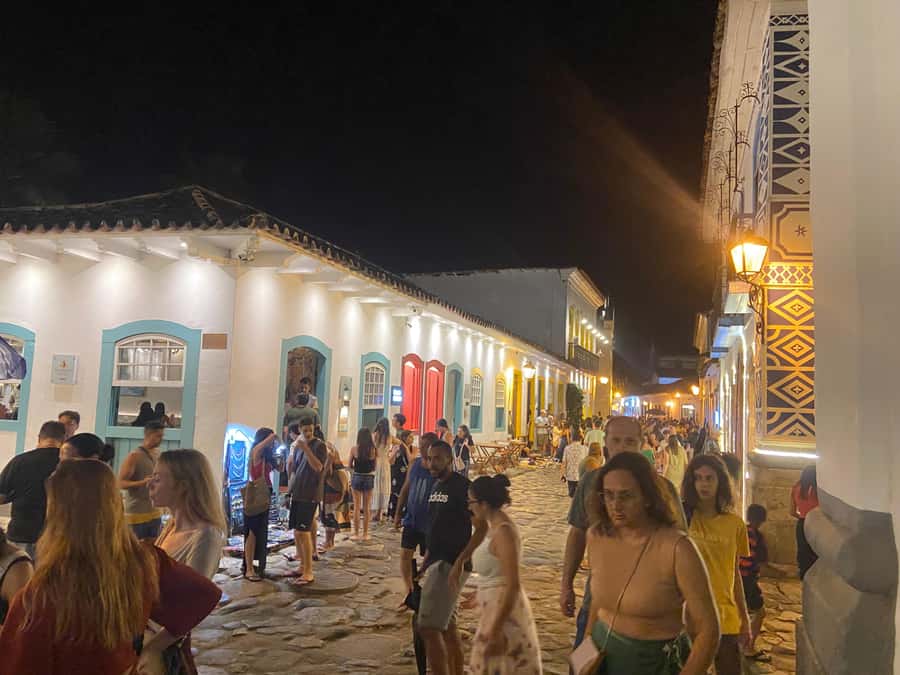
Paraty is easy to admire without a guide. The old centre has handsome colonial façades, churches, and broad cobbled streets that invite a slow wander. But without some explanation, you may miss the reasons behind the town’s layout and the marks left by its past industries.
This tour gives you a useful framework in a short time. You walk through the Historic Centre while learning how colonization affected the town, how original peoples fit into the story, and how gold, sugarcane, coffee, and pau-brasil shaped Paraty’s fortunes.
That matters because Paraty is not only an architectural showpiece. Its buildings reflect trade, wealth, religion, labor, and power. A guide can point out how those forces shaped the town instead of leaving you to notice only colorful doors and old stone.
The activity lasts 90 minutes, a good length for a first look. You get enough time for a proper introduction without committing half a day to a walking tour. I would place it near the start of your stay, since the guide’s explanations can help you make better sense of the town when you explore again on your own.
More food and drink tours in Brazil
- Rio: Pub Crawl in Lapa with Cachaça Tasting and Live Samba
★ 4.7 · 881 reviews - Jolimont Winery Tour – Visitation and Tasting – Canela RS
★ 4.5 · 613 reviews - Sunset Boat Tour with Beer, Water, Soda and Snacks included
★ 5.0 · 227 reviews
Starting at Largo de Santa Rita
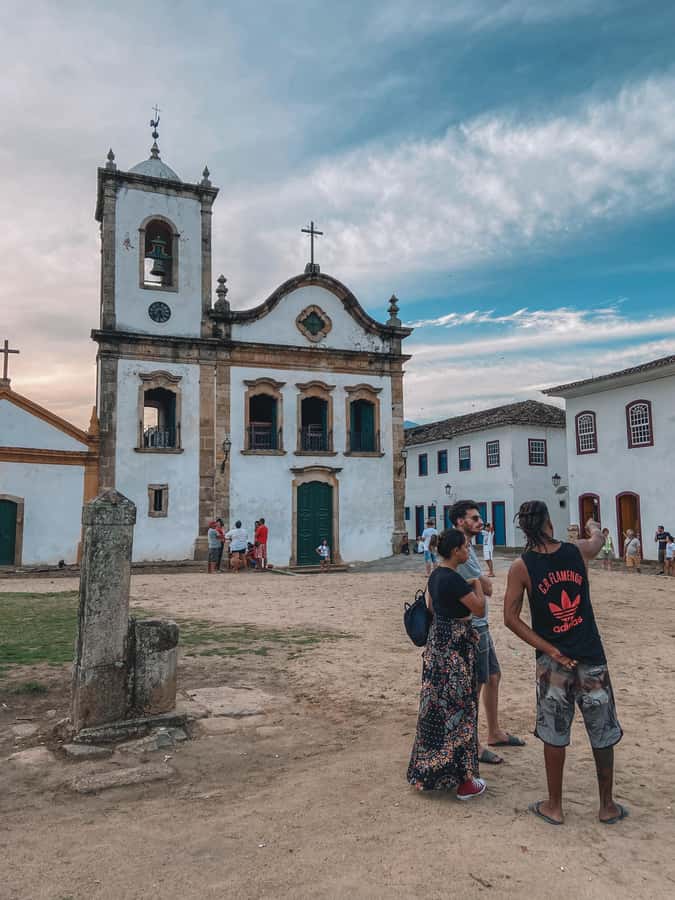
You meet in front of Santa Rita’s Church at Largo de Santa Rita. This gives the tour a clear starting point, though you should allow a few minutes to find the church and arrive ready to walk on stone paving.
The meeting point also sets the tone. Rather than beginning beside a modern transport hub or outside town, you start within the historic centre itself. From there, the guide can move straight into Paraty’s buildings and streets.
The church is a useful landmark for anyone unfamiliar with the old centre. Still, confirm the exact starting time and arrive with comfortable footwear. The provided instructions specifically warn that the streets can be slippery, with anti-slip shoes recommended.
You should also prepare for a walking tour rather than a relaxed seated talk. The route is through the Historic Centre, and the value comes from seeing details in place as the guide explains them.
Colonial streets, original peoples, and trade cycles
The central part of the walk covers several layers of Paraty’s past. You learn about colonization and the original peoples of the area, then move through the economic cycles that helped shape the town.
The gold cycle is an important part of the story, as is the later importance of sugarcane and coffee. Pau-brasil, a valuable native wood, is also included. These subjects give the walk more substance than a simple account of dates and façades.
I like this broad approach because it helps you see Paraty as a town shaped by changing markets. Buildings and streets did not appear in isolation. They were connected to goods, routes, labor, and the ambitions of colonial powers.
The tour also covers gastronomy and biodiversity as part of Paraty’s wider cultural identity. The supplied details do not promise a nature walk, so you should not book this expecting trails or wildlife viewing. Instead, these themes appear as part of the town’s wider story.
The guide’s role is especially important here. A list of industries can feel dry, but a local guide can connect them to what you are looking at. Thiago is repeatedly praised for explaining Paraty’s past clearly, answering questions, and showing real enthusiasm for the town and its culture.
The Masonic clues in Paraty’s architecture
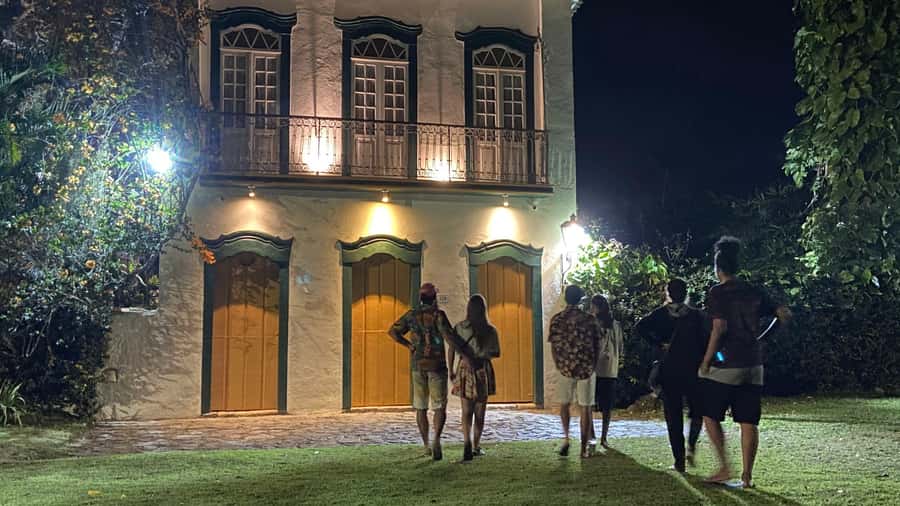
The Freemasonry section appears to be one of the most memorable parts of the tour. Several strong ratings single it out as particularly interesting, and it gives you a different way to look at Paraty’s architecture.
You will hear about the influence of Freemasonry on the town’s development and the meaning behind details in the historic centre. The exact examples can depend on your guide and route, but the point is to read the built environment with more care.
This is where a guided walk earns its price. You can stroll past a doorway or façade many times without knowing why it matters. A guide who explains the local clues turns an attractive street into a place with a story.
I would not expect a museum-style lecture. The activity is a live walk with a local guide, so the experience depends partly on the pace, group size, and questions asked. The available languages are English, Portuguese, and Spanish, and private or small-group formats can make it easier to ask for more detail.
If Freemasonry interests you, this tour seems especially well suited. If you mainly want photographs and little historical explanation, you may find the pace more academic than necessary.
More history walks in Brazil
- Rio de Janeiro: Historic Rio and Santa Teresa Half-Day Tour
★ 4.4 · 228 reviews - São Paulo: Downtown Historical Bike Tour
★ 4.9 · 191 reviews - Scenic Train ride to historical cities of Morretes and Antonina
★ 4.0 · 188 reviews - Rio de Janeiro: Little Africa Heritage Walking Tour
★ 4.9 · 177 reviews
Why the guide makes the difference
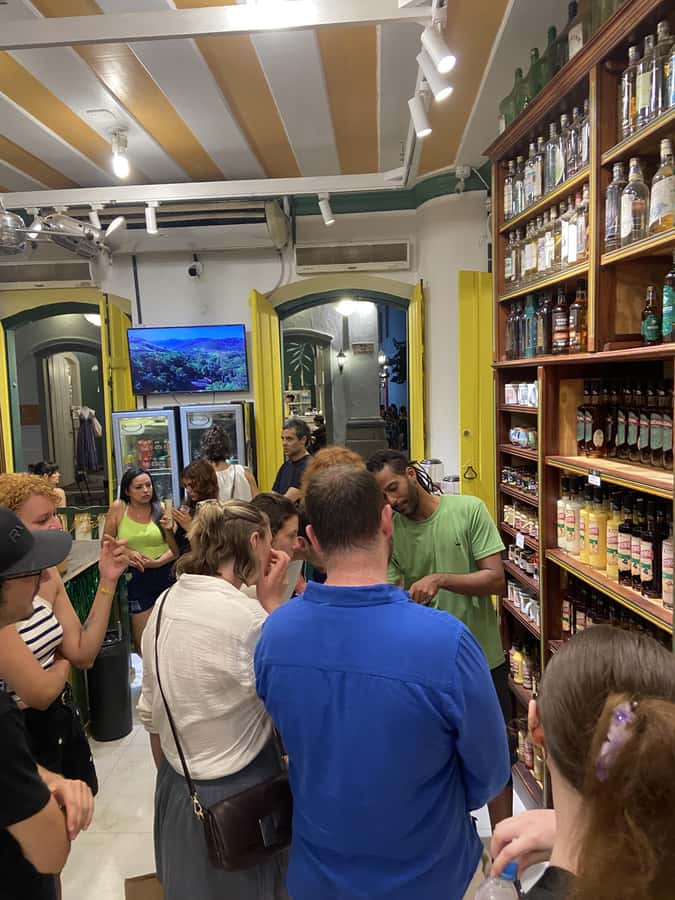
The experience has earned a 4.8 rating from 96 reviews, with particular praise for the guides’ clear explanations, local pride, and patience with questions. Thiago is named often and is described as passionate about Paraty, its history, and its culture.
One useful detail is that the guide may offer suggestions for the rest of your stay. That can be valuable after a short orientation walk, especially if you want help deciding where to return or what parts of Paraty deserve more time.
You should still keep your expectations practical. A 90-minute tour cannot explain every church, street, trade route, and historical period in full. Its job is to give you a strong introduction and a better way to understand what you see afterward.
The best experience will likely come from joining with questions in mind. Ask about the buildings you notice, the town’s construction, or the Masonic details. The available feedback repeatedly points to guides who take time to answer rather than rushing through a fixed script.
Ending with Gabriela cachaça
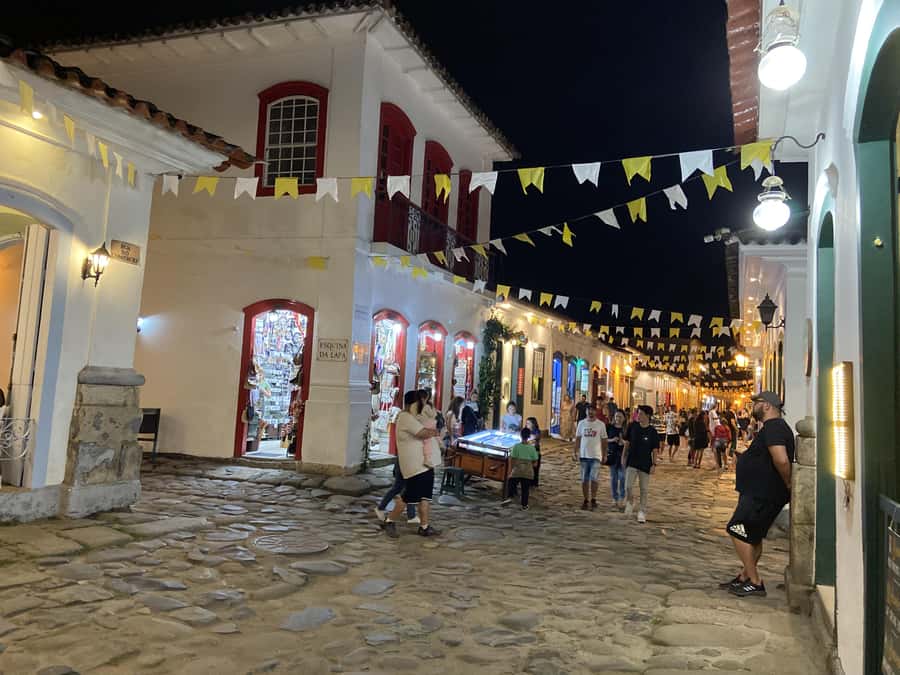
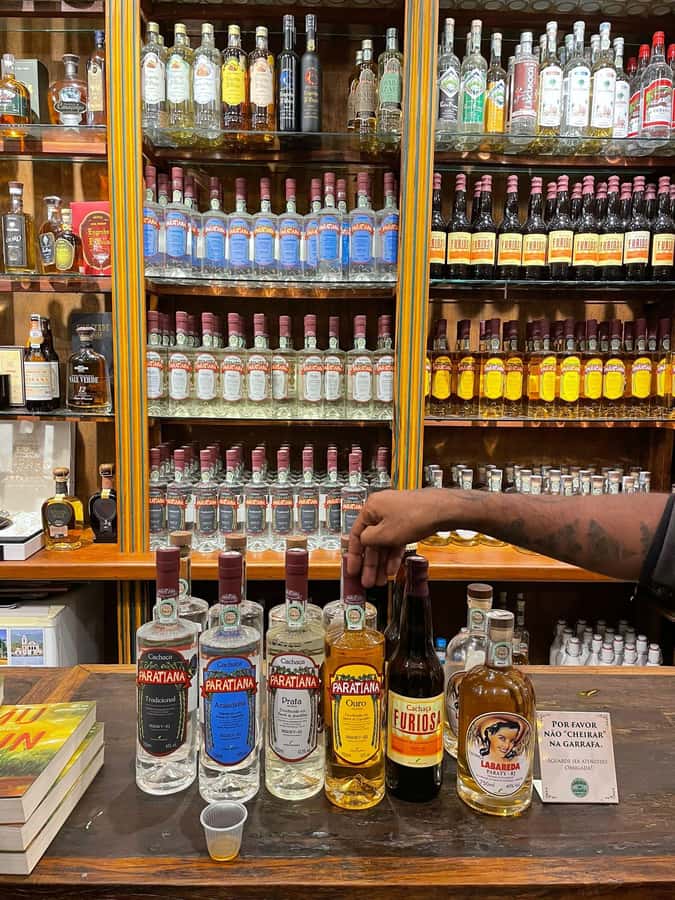
The walk ends at a local bar for a tasting. The main attraction is Gabriela, a Paraty specialty made from white cachaça with honey, clove, and cinnamon.
It is named in honor of Jorge Amado’s literary work Gabriela, Cravo e Canela. The sweet mixture gives it a different character from plain cachaça, and the tasting offers a small but useful connection between local food culture and the town’s history.
The schedule also describes this stop as a wine tasting, while the tour details clearly identify the included tasting as Cachaça Gabriela. If you are booking mainly for the drink, confirm the final tasting arrangement with the provider so you know exactly what will be served.
Food and other drinks are not included. The free tasting is a sample, not a meal or a full bar visit. That is fine for most people, since the point is to try a distinctive local product at the end of the walk rather than spend the afternoon drinking.
I like this ending because it is tied to Paraty rather than added as a random extra. It gives you a flavor to remember and a natural pause after the historical material. If you do not drink alcohol, the tour’s main value remains the walk, but the tasting will not add much for you.
Choosing the right time of day
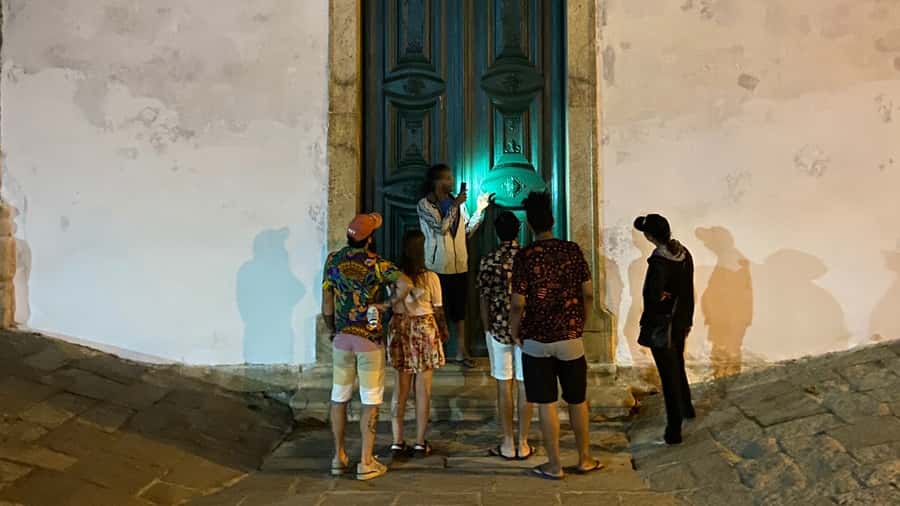
The tour duration is fixed at 90 minutes, but the available starting times vary. The timing matters more than you might expect because the old centre’s architecture is a major part of the experience.
One rating specifically advises booking earlier so you can see the buildings before dark. That is sensible. A later walk may still work well for atmosphere and storytelling, but dim light makes it harder to appreciate façades, street details, and architectural features.
An earlier start is the safer choice if you want the strongest visual experience. It also leaves you with the rest of the day to revisit places the guide points out.
The tour operates on foot, with no transport included or needed during the route. Plan for cobbled streets, some uneven footing, and a pace that allows the guide to stop and explain details.
Price and what you receive for $19
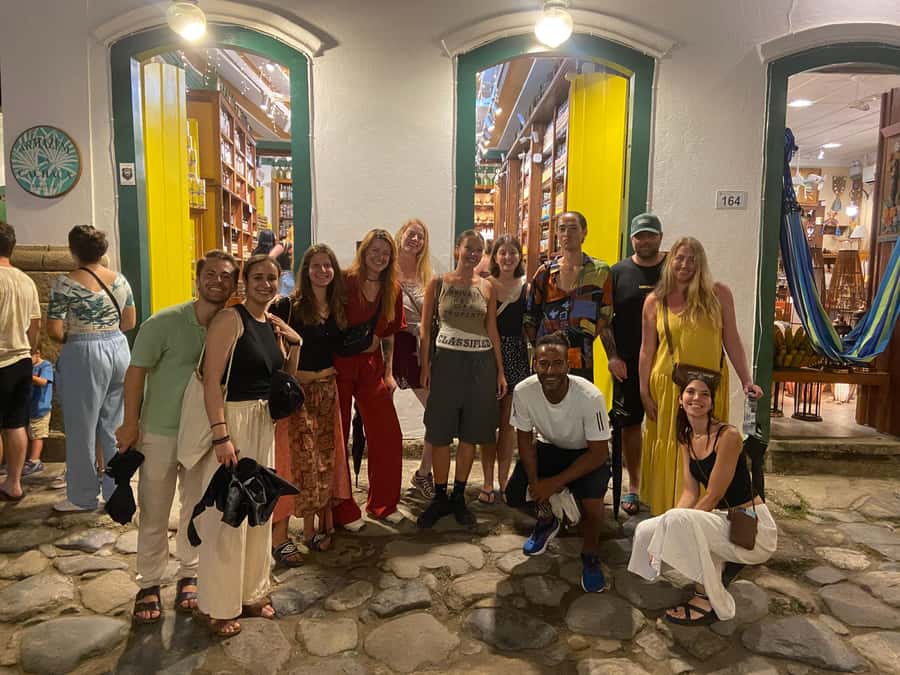
At $19 per person, this is a modestly priced introduction to Paraty. You receive a 90-minute guided walk, a professional local guide, language choices in English, Portuguese, or Spanish, and a complimentary taste of Gabriela cachaça.
The value depends on what you want from a tour. If you only need a quick orientation and are happy to read about Paraty yourself, you could explore the old centre without paying. The town is walkable and attractive enough to reward independent wandering.
The fee becomes easier to justify if you care about context, especially the construction of the town, the trade cycles, and Freemasonry. It also makes sense if you want to ask questions and get practical suggestions for the rest of your stay.
One rating felt the price was slightly above what the experience delivered, though still considered the tour worthwhile. That is a fair caution. This is not a full-day excursion, a food tour, or a museum ticket package. It is a focused walking introduction with a small tasting.
For many visitors, that is exactly the right scale. You spend little time and money, then decide which parts of Paraty deserve a longer visit.
Who should book this walk
I would recommend it to first-time visitors who want to understand Paraty instead of simply photographing it. It is also a good match for anyone interested in colonial architecture, local history, trade routes, Freemasonry, or Brazilian cachaça.
The tour suits people who enjoy asking questions. The strong feedback around Thiago’s explanations suggests that an engaged group can get more from the experience than a silent one.
It is less suitable if you have limited mobility. The activity is not recommended for people with mobility impairments, and the slippery cobblestones may be difficult even for people who normally walk comfortably.
The supplied information also lists age-related restrictions for people over 70, 75, and 95. Since those limits conflict with one another, ask the provider to confirm the current rule before booking if it applies to you.
People with hearing impairments are also listed as unsuitable for the tour. Pets are welcome, which is useful if your dog is part of your trip, though you should still be ready to manage your pet on uneven streets and around other people.
Practical tips for a smoother walk
Wear shoes with a good grip. This is the most important piece of advice, since the historic streets can be slippery.
Book an earlier time if the architecture is your main reason for going. A late tour may reduce the visual side of the experience, even if the history remains easy to follow.
Bring questions. Ask about the buildings, the town’s construction, the Masonic influence, or the trade cycles. The guides are praised for answering questions, so you should use that opportunity.
Do not expect food or a full drinks experience. The included extra is a taste of Gabriela, while meals and other drinks cost extra.
The tour offers free cancellation up to 24 hours before the activity and a reserve-now, pay-later option. Those terms are useful if your schedule in Paraty is still changing.
Should you book the Paraty Historic Centre Walking Tour?
Book it if you want a compact, well-priced introduction to Paraty with more substance than a self-guided stroll. The strongest reasons are the local guides, the clear focus on architecture and history, the unusual Freemasonry angle, and the Gabriela tasting at the end.
Choose an earlier starting time, wear shoes with grip, and treat the tasting as a small local bonus rather than the main event. If you have mobility or hearing concerns, contact the provider before paying.
For $19, this is a sensible first activity in Paraty, particularly if you want the town’s old streets to tell you more than just where to take a photograph.
FAQ
Where does the Paraty walking tour begin?
The meeting point is in front of Santa Rita’s Church at Largo de Santa Rita.
How long does the activity last?
The guided walking tour lasts 90 minutes.
What languages are available?
The tour is available in English, Portuguese, and Spanish.
What does the tour cover?
The walk covers Paraty’s Historic Centre, including colonization, original peoples, Freemasonry, and the gold, sugarcane, coffee, and pau-brasil cycles.
Is the cachaça tasting included?
Yes. A free tasting of Cachaça Gabriela is included.
What is Gabriela cachaça?
Gabriela is a Paraty specialty made with white cachaça, honey, clove, and cinnamon. It was created in honor of Jorge Amado’s work Gabriela, Cravo e Canela.
Are food and other drinks included?
No. Food and drinks other than the included tasting are not included.
What should I wear?
Wear comfortable shoes with good grip. The historic centre’s streets can be slippery.
Are pets allowed?
Yes. Pets are welcome on the tour.
Can I join a private or small group?
Yes. Private and small-group options are available.
Can I cancel the booking?
You can cancel up to 24 hours in advance for a full refund. A reserve-now, pay-later option is also available.
Walking tours in Brazil
- Rio de Janeiro: Rocinha Favela Walking Tour with Local Guide
★ 4.8 · 3,052 reviews - Rio De Janeiro: Half-Day Rocinha Favela Walking Tour
★ 4.7 · 2,272 reviews - Sunrise and Sunrise Walk Two Brothers with Local Guide
★ 5.0 · 193 reviews - Sao Paulo: Downtown-Center History Walking Tour – in English
★ 5.0 · 91 reviews
Just added in Brazil
- From Puerto Iguazu: Itaipu Dam Tour with Entrance Ticket★ 4.7 · 31 reviews
- From Puerto Iguazu: Secret Falls Adventure★ 5.0 · 5 reviews
- Gramado and Canela private trip with English speaking guide★ 5.0 · 6 reviews
- From Natal: Pipa, Cacimbinhas, And Love Beach Full-Day Tour★ 4.5 · 14 reviews
- From Puerto Iguazú: Brazilian Bird Park Tour with Tickets★ 4.7 · 7 reviews
- from Foz do Iguaçu: Private Tour on Argentinean Falls★ 5.0 · 5 reviews
- From Jericoacoara: Preá Beach and Paradise Lagoon Tour★ 3.8 · 51 reviews
- From Manaus: Negro River Half-Day Trip★ 4.7 · 20 reviews
Walking Tours, compared.


Sunrise and Sunrise Walk Two Brothers with Local Guide
Read our review →
Downtown-Center History Walking Tour – in English
Read our review →
Downtown-Center Walking Tour | 2 Hours – English
Read our review →
Learn the History of Rio with an Unforgettable City Center Walking Tour
Read our review →
Rio’s city walking tour: a glimpse of history and olympic legacy
Read our review →Browse the lists this tour appears in