
Reviewed · HISTORICAL TOURS
From Salvador: Quilombo Heritage Daytrip with Lunch
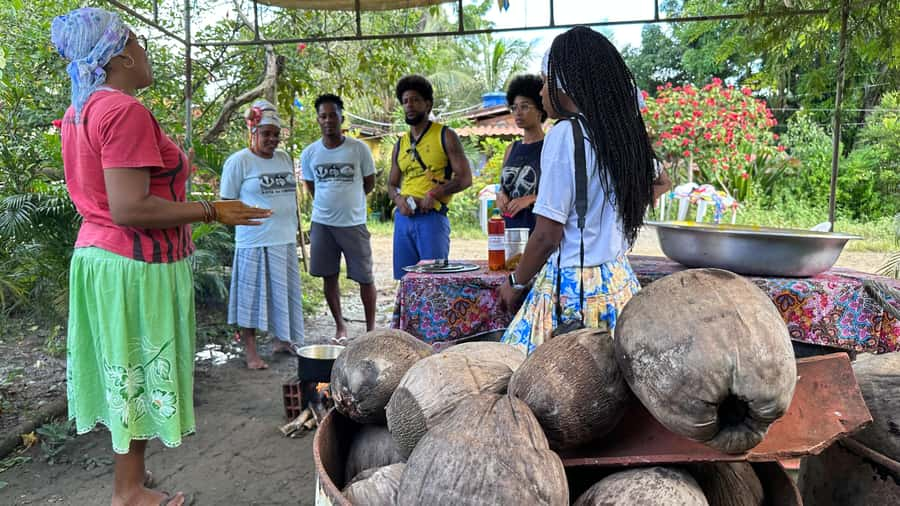
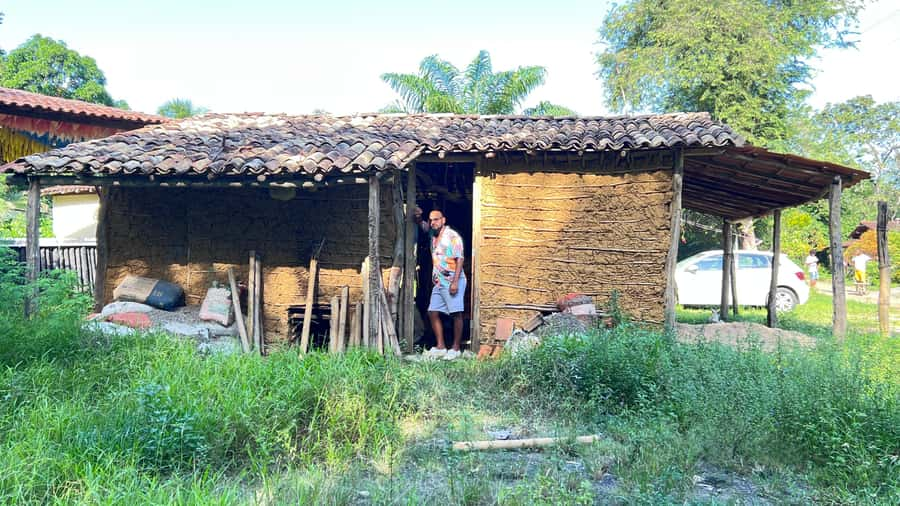
The most meaningful part of this day is the visit to Quilombo Kaonge, a traditional Quilombola community where you can meet an elder, hear about daily life, and take part in making manioc flour and palm oil. This is not just a drive through the countryside. You get a hands-on look at food, work, and memory in the Bahia Recôncavo.
I like the small-group format, listed for no more than four people, and the chance to see Santo Amaro and Cachoeira along with the community visit. I also like that lunch is included and that guide Wilson has been singled out for his engaging, well-informed approach. The main caution is value: at $170 per person, the practical demonstrations may feel too brief if you expect a full day of activities at the quilombo.
Key points at a glance
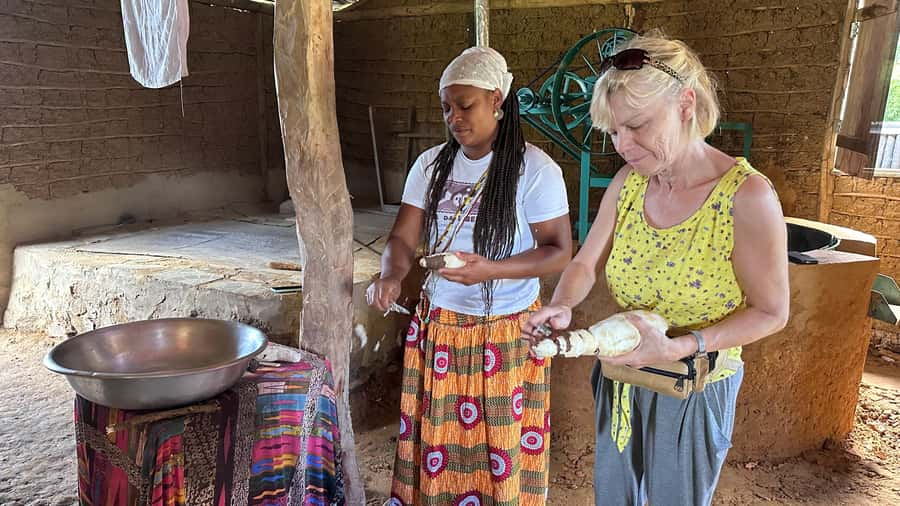
- Make manioc flour by hand: Learn how a basic Brazilian staple is processed and produced.
- Meet a Quilombola elder: Speak with the community griô, or elder, about local wisdom and daily life.
- See Santo Amaro’s old center: Walk around Praça da Purificação, public markets, and secular colonial houses.
- Finish in Cachoeira: Cross the Paraguaçu River on an 1830 bridge and visit the Danneman cigar factory.
- Keep the group small: The activity is advertised for a maximum of four participants, though another description says six, so confirm the number when booking.
- Plan for an eight-hour day: Hotel pickup, transport, lunch, a guide, and drop-off are included, but drinks cost extra.
Why the Recôncavo makes a worthwhile day outside Salvador
Salvador tells much of Bahia’s African and Portuguese story through its churches, music, food, and streets. The Recôncavo gives you another angle. Here, sugar cane, tobacco, manioc, river trade, and enslaved labor shaped towns and communities far beyond the capital.
The region also played an important role in Brazil’s struggle for independence. That story is not presented as a distant chapter in a museum. It is tied to the towns you pass, the old plantation economy, the food on your plate, and the Quilombola communities that preserved their own traditions.
I like this setting because the day connects several pieces that are often separated on standard sightseeing trips. You see a public market, rural farms, community production, a family-style meal, a colonial town, a river crossing, and an old cigar factory. None of these stops is likely to fill an entire day alone, but together they give you a useful picture of the region.
The trade-off is travel time. This is an eight-hour outing from Salvador, so it is not a quick excursion. You should choose it because you want context and local contact, not because you want a relaxed beach day or a long list of major monuments.
More tours with lunch in Salvador
- Salvador: Anthropological City Tour with Lunch IN 6 HOURS
★ 4.9 · 20 reviews - Rio de Janeiro: 6-Stop Highlights of Rio with Lunch
★ 4.4 · 5,157 reviews - Rio: Christ the Redeemer, Sugarloaf, Selaron & BBQ Lunch
★ 4.5 · 2,428 reviews
Santo Amaro and Praça da Purificação
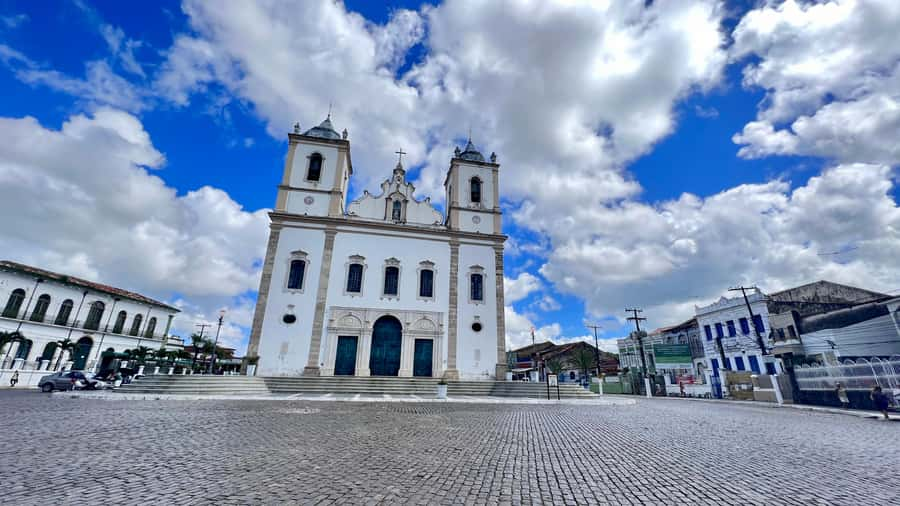
The day begins with pickup at your Salvador hotel. From there, the route heads to Santo Amaro, a town whose past was closely tied to sugar cane plantations and enslaved labor.
The stop centers on Praça da Purificação. You have time for a guided walk, photographs, and a look at the public fair and old secular houses. This is a good opening because it gives you a sense of the town before the route moves into the countryside.
The fair is especially useful for understanding the everyday side of the region. You may see the foods, produce, and goods that connect the town to the surrounding farms. The old houses help show how local wealth once gathered around plantation agriculture and trade.
Do not expect a large museum program here. The stop is listed at about 30 minutes, so it works as an introduction rather than a full historical tour. Your guide does much of the work by explaining what you are seeing and linking Santo Amaro to the wider story of the Recôncavo.
A guide makes a real difference on this part of the day. Wilson has received particularly strong praise for being fun and informative, and a good guide can turn a short walk past old buildings into a clear explanation of why Santo Amaro matters.
Through sugar cane, manioc, and tobacco country
After Santo Amaro, the road continues past farms growing sugar cane, manioc, and tobacco. These crops are not background scenery only. They help explain the food, labor, and economy of the area.
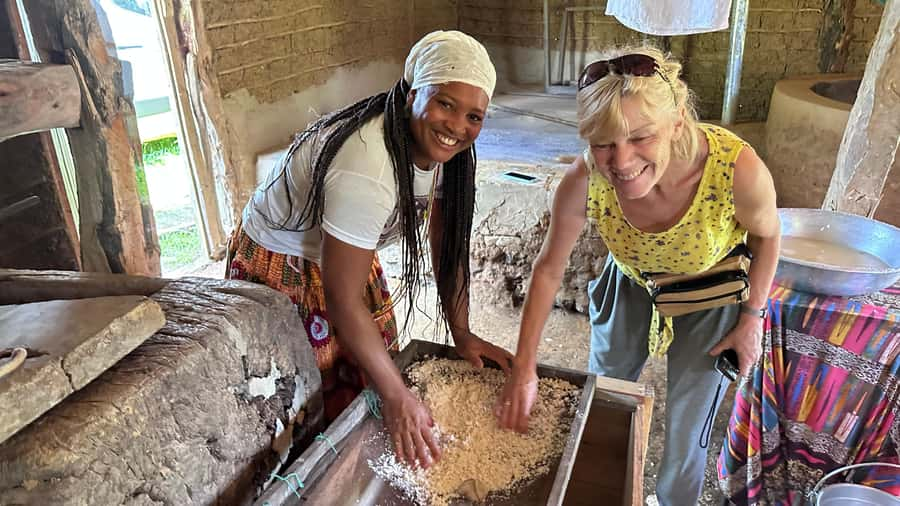
Manioc is especially important. The root becomes farinha de mandioca, or manioc flour, a common ingredient and side dish in Brazilian cooking. It is filling, easy to store, and used across Bahia. Seeing its production in a community setting adds meaning to a food you may already encounter at lunch or in Salvador.
The route also gives you a look at how the plantation past shaped the present. The Recôncavo’s Portuguese colonial economy depended heavily on enslaved labor, while African cultural practices continued through food, religion, music, and community life. The experience does not treat that past as a decorative footnote. It places the Quilombola visit within it.
The drive is part of the experience, but it may feel long if you prefer a tightly packed sightseeing schedule. You are moving from an urban setting into rural communities, and some of the value comes from seeing the change in surroundings rather than stopping at a famous landmark every few minutes.
Time at Quilombo Kaonge
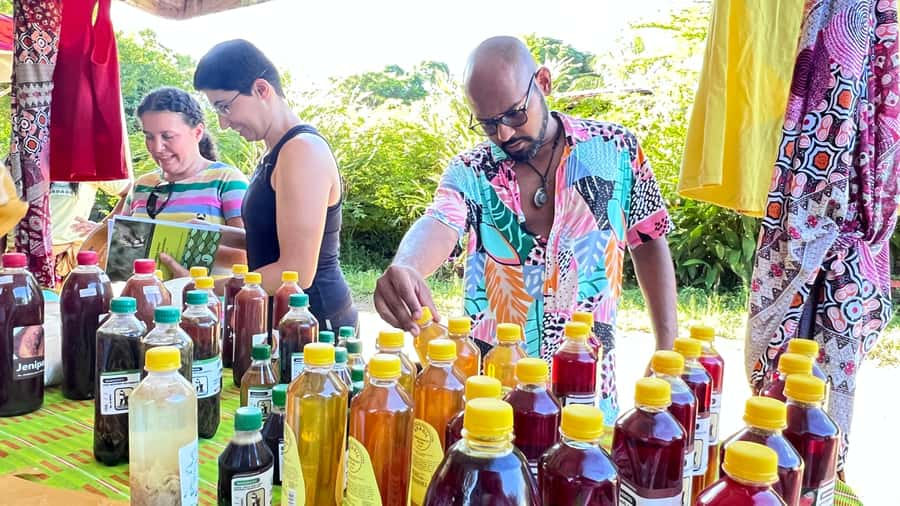
The central stop is Quilombo Kaonge, a traditional Quilombola community. Quilombos were communities formed by people of African descent who resisted slavery and maintained independent social and cultural traditions. This visit offers a chance to meet people connected to that living history rather than only reading about it.
The scheduled time here includes a guided visit, lunch, free time, walking, and regional food. That is a broad block of roughly three and a half hours, so the community visit forms the heart of the day.
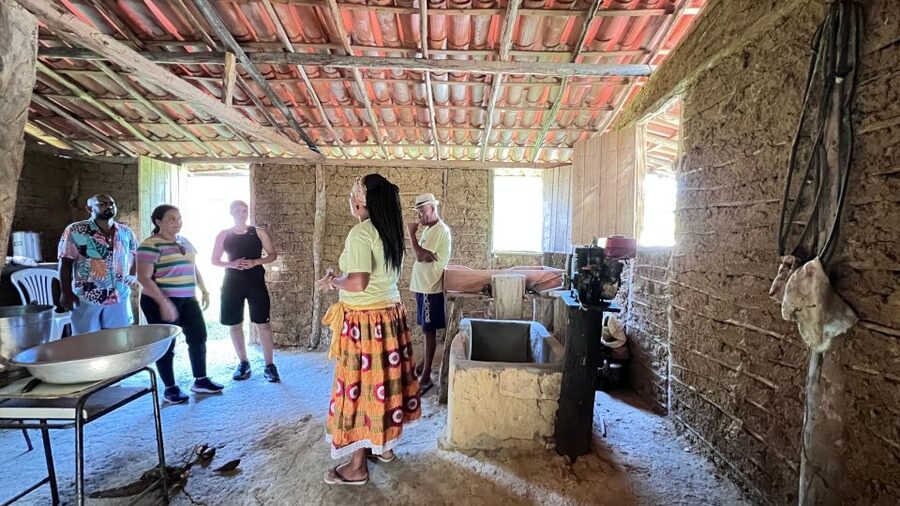
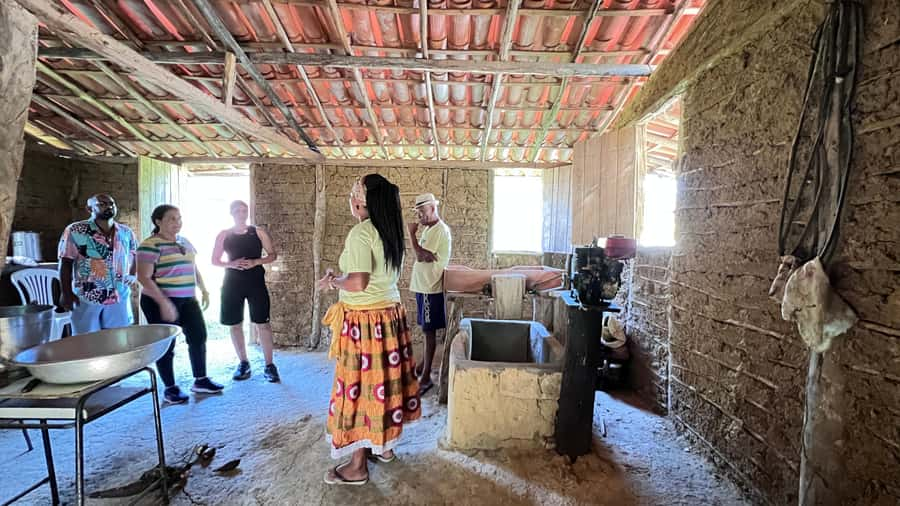
One of the most important parts is the conversation with the community griô, or elder. The word refers to a keeper and transmitter of oral knowledge. This meeting can help you understand the community through its own voice, especially when the subject is daily life, local customs, food, and memory.
You should approach this part with respect and patience. The value is not in collecting a quick photograph or treating the community as a display. Listen to the explanations, ask questions through the guide when appropriate, and pay attention to how food production and cultural knowledge fit together.
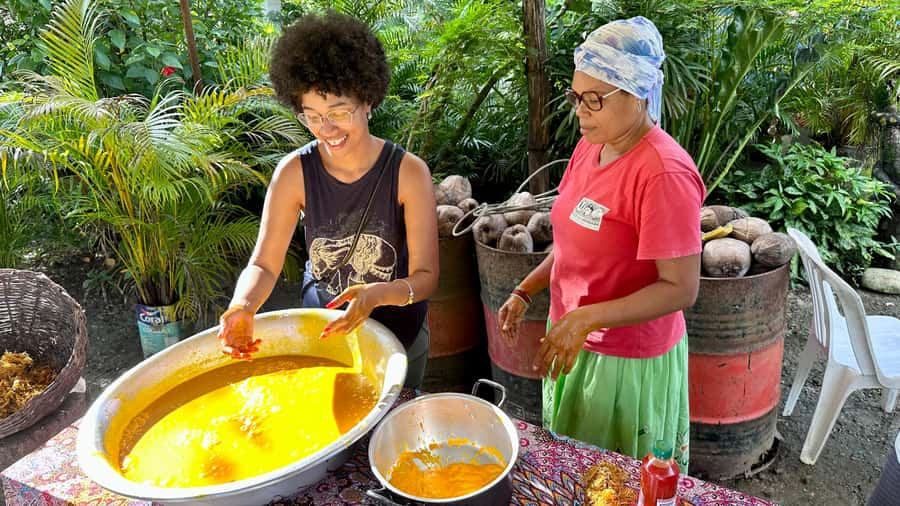
The listing describes hands-on participation in making manioc flour and palm oil. You can expect demonstrations and the chance to put your hands to work. At the same time, the activity may be fairly basic. One recent assessment found the guide excellent but felt the Quilombo activities did not fully match the price because there were only a few simple demonstrations.
That criticism is important. If you picture a long workshop with several stages, multiple craft projects, or hours of active work, you may come away wanting more. If you see the demonstrations as an introduction to a community’s daily practices, the visit makes more sense.
More history walks in Salvador
- Salvador Historic Walking Tour – Pelourinho
★ 4.8 · 62 reviews - Historic City Tour in Salvador
★ 3.6 · 17 reviews - Rio de Janeiro: Historic Rio and Santa Teresa Half-Day Tour
★ 4.4 · 228 reviews - São Paulo: Downtown Historical Bike Tour
★ 4.9 · 191 reviews
Making manioc flour and palm oil
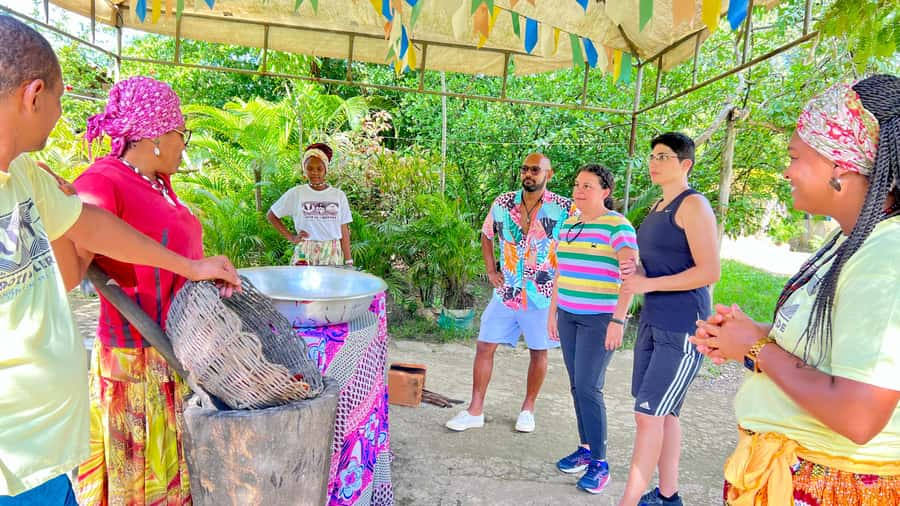
The manioc flour activity is the most distinctive hands-on feature. You learn how the staple is processed and manufactured, rather than simply eating it as part of a meal.
The supplied information does not spell out every stage of production, so you should not expect a detailed technical class. The focus is on seeing the process, trying some of the work, and understanding how local food traditions remain part of community life.
Palm oil is also included in the practical portion after lunch. In Bahia, palm oil is closely linked with regional cooking, and its presence on this itinerary ties the meal to the agricultural setting around you.
The word participate matters here, but keep your expectations measured. The activity is not presented as a professional cooking course. It is a short cultural demonstration with some direct involvement. That can be rewarding, particularly if you enjoy food history and ordinary work, but it may feel light for the cost.
Vegetarian food is available if you request it when booking. Lunch is included, while drinks are not, so bring money for beverages or confirm the arrangements with the provider before departure.
Lunch and the small-group setting
Lunch is part of the Quilombo visit, and regional food is included in the schedule. This gives you another way to understand the area. Food is not an extra stop added to fill time. Manioc, palm oil, and crops from the surrounding region help connect what you eat with what you have seen.
The small group is one of the tour’s strongest practical features. The activity is described in different places as limited to four or six people, so I would confirm the exact group size before paying. Either way, it is intended to be much smaller than a coach excursion.
A compact group makes conversation with the guide easier and gives you a better chance to ask questions at the community. It also helps during the hands-on demonstrations, where a large crowd could make the experience feel distant.
The downside is the price. At $170 per person, you are paying for a full-day private-feeling experience, transport from Salvador, a guide, lunch, and access to a community visit that may be difficult to arrange independently. You are not paying for a long series of costly admissions or a large number of polished attractions.
I would call the price fair for someone who values a small group, hotel pickup, regional context, and direct contact with the community. I would call it less convincing if your main goal is a packed activity schedule. The basic demonstrations are the key value question.
Colonial Cachoeira and the Paraguaçu River
In the afternoon, the route continues to Cachoeira, the Recôncavo’s most important city. This colonial town gives the day a different feel from the rural community visit.
The route crosses the Paraguaçu River on a bridge built by the English in 1830. That crossing is a memorable piece of the itinerary because it connects the river, trade, engineering, and colonial history in one short passage.
Cachoeira is not described as a long walking tour with many formal entries. Instead, it serves as a scenic and historical stop before the return journey. You can expect to see the colonial setting and hear why the city matters within the Recôncavo.
The final visit is to the Danneman cigar factory. The stop adds another layer to the area’s working history and gives you a look at a product associated with the region. The information provided does not state how long you spend inside the factory or what production areas are open, so treat it as a brief visit rather than a guaranteed full factory tour.
After Cachoeira and the cigar factory, you return to Salvador and your hotel. The day’s structure is sensible: town history in the morning, community and lunch around midday, then a colonial city and river crossing in the afternoon.
Guides, languages, and practical details
Guides are available in English, Spanish, and Portuguese. Wilson is the only guide named in the supplied information, and his guidance has received especially strong praise for being fun and informative.
The tour includes hotel pickup and drop-off, transportation, an accredited guide, lunch, and the small-group format. Pickup is from your hotel lobby, which is useful for an early start and removes the need to find a meeting point across Salvador.
The dress code is smart casual. That is easy to follow, but choose clothing and shoes suitable for walking and rural activities. The program includes a public fair, town streets, farm areas, and practical work, so this is not a day for formal clothing or delicate footwear.
The activity is wheelchair accessible. If you require specific assistance, it is still sensible to confirm the details before booking, since the day includes walking and community-based activities.
You can cancel up to 24 hours ahead for a full refund, and you can reserve now and pay later. Those policies make the tour easier to fit into a Salvador itinerary that may change.
Who will get the most from this day
I would recommend this experience to you if you want to look beyond Salvador’s central sights and learn how Bahian food, labor, African heritage, and colonial history meet in one region.
It is a good match for:
- People interested in Quilombola culture and oral history
- Visitors who prefer small groups to large coach tours
- Food-focused travelers who want to see manioc and palm oil production
- Anyone who wants hotel pickup and an included lunch
- Visitors who appreciate a guide-led day with historical context
I would be more cautious if you want an intensive workshop. The community activities may consist of a few short demonstrations rather than a long series of tasks. You should also think twice if eight hours of driving and sightseeing sounds tiring or if you want to spend your limited time in Salvador only within the city.
Should you book the Quilombo Heritage Daytrip?
Book it if your priority is meaningful regional context, a small group, and contact with a traditional Quilombola community. The strongest elements are the elder’s perspective, the manioc flour activity, the included lunch, and the way Santo Amaro and Cachoeira frame the visit.
Before booking, confirm the group limit, ask how much hands-on time is planned at the Quilombo, and request a vegetarian meal if needed. At $170, the tour earns its price through access, transport, and interpretation rather than a long list of elaborate activities.
If you want a thoughtful introduction to the Bahia Recôncavo and are comfortable with a modest, community-based program, I would book it. If you expect a full workshop with extensive demonstrations, look closely at the exact schedule first.
FAQ
How long does the Quilombo Heritage Daytrip last?
The experience lasts eight hours, including pickup from Salvador and return to your hotel.
Where does the tour begin?
Pickup is included from your hotel lobby in Salvador.
What is included in the price?
Transportation, hotel pickup and drop-off, a small-group tour, an accredited guide, and lunch are included.
Are drinks included with lunch?
No. Drinks are not included.
Is a vegetarian lunch available?
Yes. A vegetarian option is available, but you should request it when booking.
Which languages are available?
The live guide may speak English, Spanish, or Portuguese.
How many people are in the group?
The activity is described as a small group limited to four participants, while another description says a maximum of six. Confirm the exact group size before booking.
Is the tour wheelchair accessible?
Yes. The activity is listed as wheelchair accessible.
What places do you visit?
The route includes Santo Amaro and Praça da Purificação, Quilombo Kaonge, Cachoeira, the Paraguaçu River bridge, and the Danneman cigar factory.
Can you cancel for a refund?
Yes. You can cancel up to 24 hours in advance for a full refund.
Just added in Salvador
- Salvador: Schooner Cruise with Pickup and Itaparica Stop★ 3.8 · 5 reviews
- Salvador: Traditional Drumming and Percussion Workshop★ 4.4 · 10 reviews
- Salvador by Night: Cultural Show and Dinner.★ 4.4 · 17 reviews
- Salvador: 3-Hour Percussion Class★ 4.9 · 10 reviews
- Salvador: Walking Tour Through Pelourinho★ 5.0 · 49 reviews
- Salvador: Cultural Treasure – Samba de Roda.★ 4.9 · 51 reviews
- Salvador: Capoeira Class at Mestre Bimba’s 1st Ever School.★ 4.9 · 34 reviews
- Salvador: Cultural Night of Capoeira, Samba, and Drumming★ 4.9 · 17 reviews
Historical Tours, compared.

Scenic Train ride to historical cities of Morretes and Antonina
Read our review →
From Foz do Iguazu: Triple Frontier Landmark Ticket
Read our review →
Explore Little Africa : Unveiling Afro Heritage in Rio de Janeiro
Read our review →
Downtown-Center History Walking Tour – in English
Read our review →Browse the lists this tour appears in