
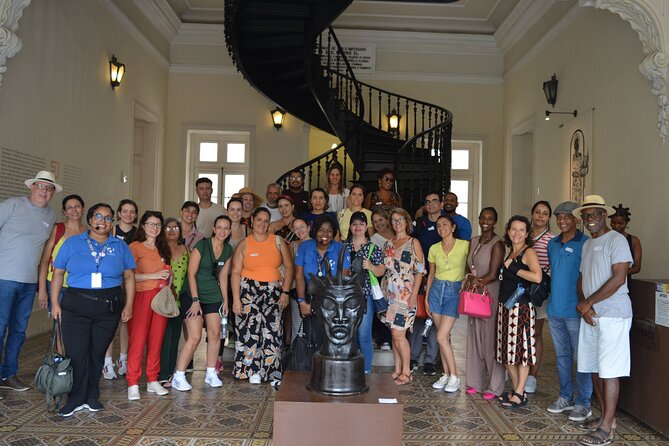
Reviewed · HISTORICAL TOURS
Explore Little Africa : Unveiling Afro Heritage in Rio de Janeiro
Rio’s Little Africa is not a themed attraction or a quick photo stop. It is a real part of central Rio where churches, port sites, squares, and archaeological remains help explain the lives of African people brought to Brazil, their survival, and their lasting influence on the city. This tour connects those places in a way that a standard Rio sightseeing route usually misses.
I like the careful, decolonial approach and the way the tour links painful history with living culture. I also like the guides’ personal style: Carolina, Rafael, Malu, Carol, and others are praised for clear explanations, warmth, humor, and the ability to adjust their pace. The main drawback is physical: you walk for much of the three-and-a-half-hour tour, and afternoon light can fade before the final stops.
Key points about Rio’s Little Africa tour
- Six meaningful stops: Visit Santa Rita Church, the Pretos Novos Institute, MUHCAB, Valongo Wharf, Pedra do Sal, and Largo São Francisco da Prainha.
- A serious look at slavery: The tour explains Brazil’s African past without softening the violence or skipping its connection to inequality today.
- The Pretos Novos Institute matters: This archaeological site helps make the forced arrival of Africans in Rio more tangible and personal.
- A short VLT ride is included: You do not need to arrange separate transport between parts of the route.
- Guides shape the experience: Carolina, Rafael, Malu, Carol, and other guides have been praised for their subject knowledge, English ability, patience, and care.
- Plan for walking: Comfortable shoes matter, and the route may not suit people with limited mobility.
Why Little Africa belongs on your Rio plans
Rio is often presented through Christ the Redeemer, Sugarloaf Mountain, beaches, and samba. Those sights deserve their place, but they can leave out the people and events that shaped the city long before its postcard image took form.
This tour shifts your attention to the port district and nearby neighborhoods. Here, the story of Rio becomes a story of African arrival, forced labor, faith, music, community, resistance, and memory. You are not simply checking off monuments. You are learning how a city was built and whose lives were often pushed out of the official story.
The subject is difficult. The route deals directly with the slave trade and the cruelty imposed on African people in Brazil. Yet the tone is not bleak for its own sake. Guides connect the past with religious practice, music, neighborhood life, and the continuing presence of Black culture in Rio.
That balance is one of the tour’s strengths. You get the facts, but you also get interpretation. Guides explain why a site matters, what is visible today, and how Afro-Brazilian identity remains part of the city’s daily life.
More history walks in Rio de Janeiro
- Rio de Janeiro: Historic Rio and Santa Teresa Half-Day Tour
★ 4.4 · 228 reviews - Rio de Janeiro: Little Africa Heritage Walking Tour
★ 4.9 · 177 reviews - Learn the History of Rio with an Unforgettable City Center Walking Tour
★ 5.0 · 82 reviews
Santa Rita Church begins the story
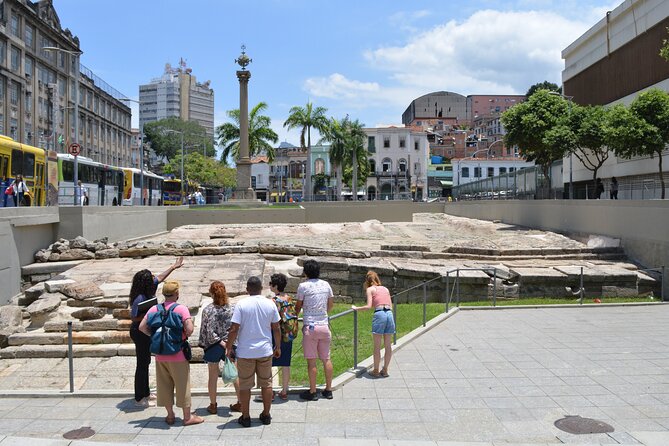
The meeting point is the Santuário de Santa Rita, at Largo de Santa Rita in central Rio. The first stop is an external visit lasting about 20 minutes, with cultural and heritage content built around a decolonial reading of the area.
Do not expect a long church tour here. The value is in the setting and the conversation. The church helps introduce the relationship between Catholic institutions, African people, and the social order of colonial and postcolonial Brazil.
This opening also gives your guide a chance to frame the rest of the walk. The tour does not treat history as a list of dates. It asks you to consider who recorded the past, who was left out, and how public spaces can preserve memories that official accounts once ignored.
The Pretos Novos Institute brings the past close
The Instituto de Pesquisa e Memoria Pretos Novos, usually known as IPN, is one of the most important stops. You spend about 40 minutes at this archaeological and memory institution.
The site is connected to Pretos Novos, the name given to Africans who had recently arrived in Brazil. The institute helps you understand the human cost behind Rio’s development. Archaeology here is not abstract. It is tied to individual lives and to a system that treated people as cargo.
This is likely to be the most emotionally demanding portion of the tour. Give yourself room to listen rather than rushing through it. The included admission is useful because it brings an indoor museum element into a route that otherwise relies heavily on outdoor interpretation.
One practical point matters: the information lists a ticket for the New Black Institute as included, while the stop is also described as an external visit. Your guide will direct the group through the part of the institution available that day. Opening conditions can change, so check the date carefully, especially if you plan to go on Sunday.
MUHCAB gives the story a wider frame
The MUHCAB, or Museum of Afro-Brazilian History and Culture, is a territory museum in Gamboa. The visit lasts about 40 minutes and is listed with free admission.
The phrase territory museum is useful here. The museum is not separate from the neighborhood’s story. It helps place Afro-Brazilian history within the streets, buildings, port, and communities around you.
I like this stop because it broadens the focus beyond slavery. The tour can move into culture, identity, memory, and the many African origins that shaped Brazil. One guide may explain details differently from another, but the central purpose remains the same: to show that Afro-Brazilian life is not a footnote to Brazilian history.
Several guides have been praised for making this material approachable. Carolina is noted for being thorough and warm. Rafael is described as both informed and fun. Malu is praised for making the subject clear and enjoyable. Those qualities matter, since a museum visit can become dry if the guide simply repeats labels.
More Tours in Brazil
- Rio de Janeiro: 6-Stop Highlights of Rio with Lunch
★ 4.4 · 5,157 reviews - Christ the Redeemer Entry Ticket by Corcovado Train
★ 4.4 · 4,476 reviews - Rio de Janeiro: Rocinha Favela Walking Tour with Local Guide
★ 4.8 · 3,052 reviews - Rio: Christ the Redeemer, Sugarloaf, Selaron & BBQ Lunch
★ 4.5 · 2,428 reviews
Valongo Wharf is the route’s hardest site
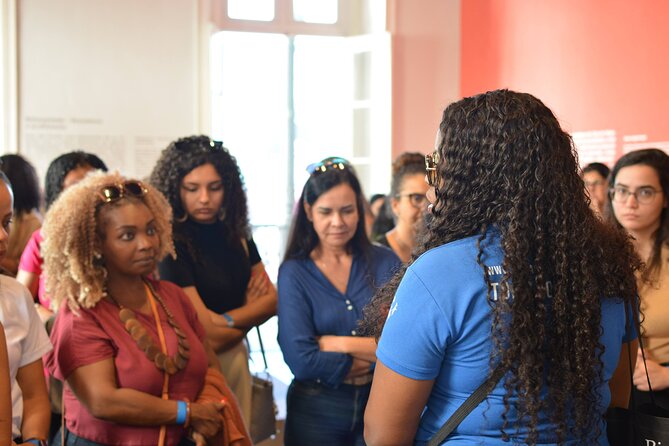
Cais do Valongo was a former wharf in Rio’s port district, between the present-day Coelho e Castro and Sacadura Cabral streets. You spend roughly 30 minutes here, with no separate admission charge.
The wharf is a central place for understanding the scale of the Atlantic slave trade in Rio. A walk across an ordinary-looking urban area can feel very different once you know what happened there. The power of the site comes partly from what is visible and partly from what is absent.
Your guide supplies the context that the stones alone cannot provide. You learn why this port mattered, how Africans reached Rio, and how the city’s economy depended on their forced labor. The explanation also helps connect Valongo with the nearby sites you have already seen and those still ahead.
This is not a cheerful sightseeing stop, and it should not be treated as one. Bring a respectful attitude. The tour handles the subject directly, including the long shadow that slavery still casts through institutional inequality.
Pedra do Sal connects history with living culture
Pedra do Sal, in the Saúde neighborhood near Largo da Prainha, is an external visit lasting about 25 minutes. It is both a historical and religious landmark.
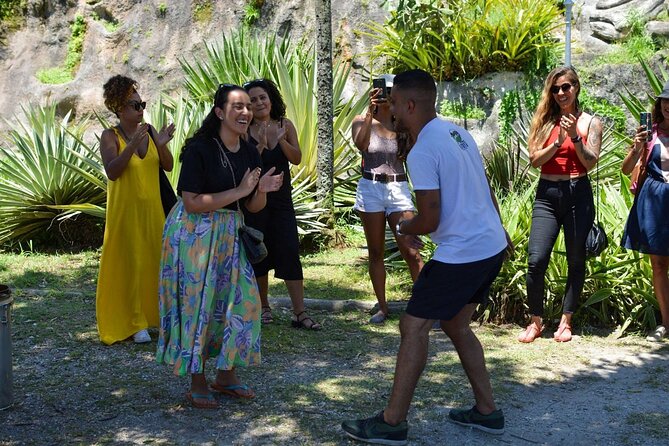
The name refers to the stone formation and the place’s role in Afro-Brazilian life. Your guide explains its relationship to Black communities, faith, music, and the development of samba culture. This is where the tour’s focus can shift from suffering alone toward survival and cultural creation.
The stop also helps you see why history in Rio is not locked inside museums. A place can be a religious landmark, a neighborhood meeting point, and a reminder of the past at the same time. Pedra do Sal gives the tour a more personal and social feel after the difficult material at the port.
Because this is an outdoor stop, the experience depends on weather and on your ability to keep walking. The tour requires good weather, and poor conditions can lead to a new date or a full refund.
Largo da Prainha closes the walk
The final stop is Largo São Francisco da Prainha, a square once associated with Black presence and the zungus, communal spaces connected with Black urban life. The visit lasts about 20 minutes.
Today the square has a stylish reputation and is often listed among Rio’s appealing places to spend time. The tour asks you to look past that modern image. You learn how the area functioned as part of Little Africa and how its meaning changed over time.
This is a good final stop because it leaves you with a living neighborhood rather than a single museum display. The tour ends at R. São Francisco da Prainha, 7, in Saúde. You can continue exploring the area afterward, but lunch is not included, so plan your meal separately.
The VLT ride is short but useful
The route includes a brief ride on Rio’s VLT public transport, and the fare is already included in the price. It is not a major attraction by itself, but it gives your feet a break and connects sections of the central route.
You do not need to organize a taxi or work out the transit system during the tour. That makes the route easier to follow, particularly if you are new to Rio. The ride also adds a small piece of ordinary city life to a tour otherwise built around historic sites.
The group can contain up to 20 people. That is not a private experience, but it is small enough for questions if the guide manages the group well. The best moments in the supplied feedback came from guides who welcomed obvious questions, explained difficult points patiently, and adjusted their pace for older relatives.
What the $82.53 price includes
At $82.53 per person, this is not the cheapest way to spend a half-day in Rio. The price includes all fees and taxes, the ticket connected with the New Black Institute, and the VLT ride. Admission at the other listed stops is free.
The real value is the guide. You could walk near several of these sites on your own, but the meaning would be easy to miss. Valongo Wharf, in particular, requires context. The same is true of Santa Rita Church, Pedra do Sal, and Largo da Prainha.
The price makes more sense if you want a structured history experience rather than a self-guided neighborhood walk. You are paying for the route, interpretation, transport connection, and access to an institution that may not be easy to understand without help.
There is no lunch included, and tips are not included. Since the tour lasts about three and a half hours, eat beforehand or plan a meal after finishing at Largo da Prainha. The afternoon start is intentional: in Rio’s heat, an earlier departure can become tiring, while a later start may make walking and listening easier.
The tradeoff is light. One person specifically noted that the end of the tour became darker, which made photographs less successful. If photos matter to you, ask about the start time before booking. Private groups may have other timing options.
Walking, pacing, and accessibility
You should wear comfortable shoes. The tour includes several outdoor stops, street walking, museum visits, and the VLT ride. It is not described as suitable for people with disabilities, so anyone with limited mobility should contact the operator before booking.
That said, guides have shown flexibility. Carol was praised for pacing the tour carefully for older relatives in their seventies, and another guide adjusted the route so a family member who could not manage all the walking could still take part. This is encouraging, but it should not replace an accessibility check in advance.
Service animals are allowed, and the meeting point is near public transportation. Confirmation arrives when you book. Free cancellation is available up to 24 hours before the start time. If bad weather cancels the tour, you are offered another date or a full refund.
The museums close on Sundays. They also close from December 16 through January 5 and during Carnival season. Those dates are especially important because the museum portions give the route much of its depth.
Who will get the most from this tour
I would recommend this experience to you if you want more than Rio’s famous viewpoints. It suits people interested in African diaspora history, Brazilian culture, urban development, religion, music, and the difficult truths behind the city’s wealth.
It also works well for families and couples, provided everyone is comfortable discussing slavery and walking through central Rio. The guides have been effective with solo participants, families, and people who do not usually choose history tours.
English-language ability can vary by guide, but several guides have been praised for explaining the subject clearly in English. If language is especially important to you, confirm the guide and language before the day of the tour.
You may want to skip it if your ideal Rio outing is light, fast, and mostly photographic. This is a serious cultural tour. It asks you to listen, reflect, and accept that some stops will be painful.
Should you book Rio’s Little Africa tour?
I would book it if you want to understand Rio beyond its postcard sights. The strongest reasons are the route’s specific sites, the careful treatment of Afro-Brazilian history, and the guides’ ability to make difficult material human and understandable.
Book with comfortable shoes, an open mind, and enough time for the story to unfold. Choose a date when the museums are open, eat before you go, and do not expect every stop to produce a perfect photograph. If you want a thoughtful connection to Rio’s Black heritage, this three-and-a-half-hour route offers real value for the price.
FAQ
How long does the Little Africa tour last?
The tour lasts approximately three hours and 30 minutes.
Where does the tour begin and end?
It begins at Santuário de Santa Rita, at Largo de Santa Rita in central Rio. It ends at Largo São Francisco da Prainha in Saúde, at R. São Francisco da Prainha, 7.
Is transportation included?
Yes. The tour includes a short ride on Rio’s VLT public transport, and the cost is included in the final price.
Is lunch included?
No. Lunch is not included, so you should eat before the tour or plan to have lunch after it ends.
Are the museums open every day?
No. The New Black Institute is closed on Sundays. All museums are also closed from December 16 through January 5 and during Carnival season.
Can I cancel for a full refund?
Yes. You can cancel up to 24 hours before the experience begins for a full refund. Changes or cancellations made less than 24 hours before the start time are not accepted for a refund.
Just added in Rio de Janeiro
- Rio: Fluminense Match at Maracanã with Guide and Ticket★ 4.9 · 22 reviews
- Explore Santa Teresa: Walking Tour★ 5.0 · 6 reviews
- The Best Food Tour: Taste the Most Authentic Flavours of Rio★ 4.7 · 18 reviews
- Favela Santa Marta: Walking Tour with local guide★ 4.8 · 41 reviews
- Explore Fernando de Noronha: 7-Hour Ilhatour★ 4.9 · 3 reviews
- Helicopter flight no doors in Rio de Janeiro★ 4.7 · 22 reviews
- Discover Rocinha: Guided Tour of the Famous Favela★ 4.5 · 3 reviews
- Discover Noronha: 7-Hour Ilhatour Adventure★ 4.8 · 8 reviews
Historical Tours, compared.


Scenic Train ride to historical cities of Morretes and Antonina
Read our review →
From Foz do Iguazu: Triple Frontier Landmark Ticket
Read our review →
Downtown-Center History Walking Tour – in English
Read our review →
Learn the History of Rio with an Unforgettable City Center Walking Tour
Read our review →Browse the lists this tour appears in