
Reviewed · WALKING TOURS
Salvador: Walking Tour Through Pelourinho
Salvador’s past is written into its hills, churches, squares, and sharply changing views. This 90-minute Pelourinho walk gives you a quick but meaningful introduction, beginning at Praça Castro Alves and ending on the famous Ladeira do Pelô. Along the way, you connect colonial power, slavery, Afro-Brazilian resistance, religion, music, and everyday city life.
I like the small group limit of seven, which makes it easier to hear the guide and ask questions. I also like the way the route mixes big sights, such as the Lacerda Elevator and Igreja de Ouro, with important markers like the statue of Zumbi dos Palmares and the Monument to the Fallen Cross. The main drawback is time: 90 minutes passes quickly, and entrance fees are not included.
Key points to know
- Begin with a bay view: Praça Castro Alves offers a broad look across Baía de Todos os Santos and its islands.
- Follow Salvador’s historic spine: The route uses Rua Chile, described here as Brazil’s first street, before reaching Praça Thomé de Souza.
- Hear difficult history clearly: The walk addresses slavery, the destruction of Igreja da Sé, and the resistance led by Zumbi dos Palmares.
- See major landmarks from outside: The route includes the Lacerda Elevator, Museu da Misericórdia, churches, and the first Faculty of Medicine in Brazil.
- Finish with music and popular culture: You pass Olodum’s house and the Ladeira do Pelô, where Michael Jackson filmed They Don’t Care About Us.
- Plan for the heat: Comfortable shoes, light clothing, water, a hat, and sunscreen will make the walk far easier.
Starting at Praça Castro Alves above the bay
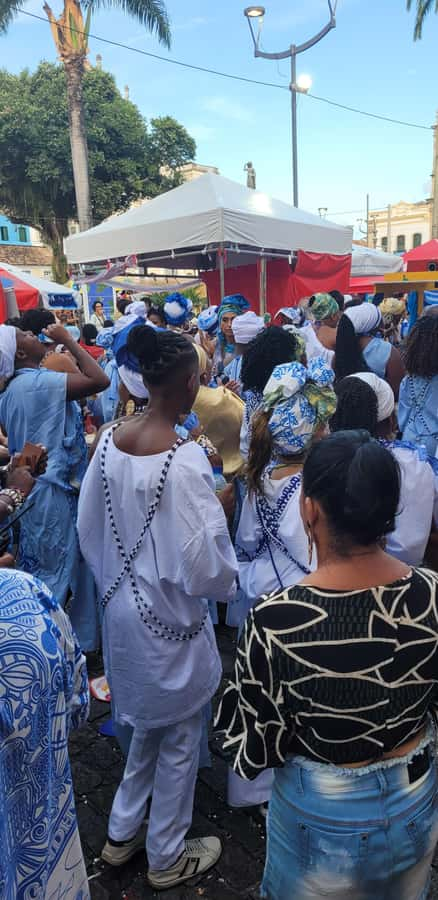
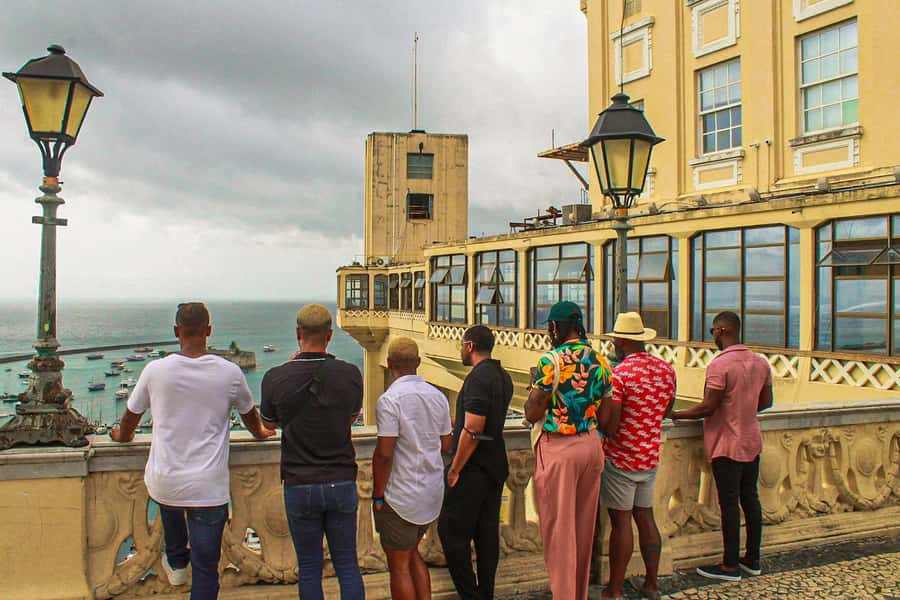
Meet your guide at Praça Castro Alves, where the guide will be holding a credential. This is a sensible starting point because the square gives you an immediate sense of Salvador’s geography. The city’s historic center sits above the lower port area, and Baía de Todos os Santos spreads out below with its islands in the distance.
The view helps you understand the city before the history begins. Salvador is not a flat place, and the division between Cidade Alta and Cidade Baixa is central to how the city developed. You will return to that idea shortly when you reach the Lacerda Elevator.
This first stop is also useful for orientation. If you arrive early, take a moment to look across the bay, then find the guide holding the credential. Hotel pickup is not included, so you need to make your own way to the square.
More walking tours in Salvador
- Salvador Historic Walking Tour – Pelourinho
★ 4.8 · 62 reviews - Salvador, Bahia: A amazing Walking Tour!
★ 5.0 · 14 reviews - Rio de Janeiro: Rocinha Favela Walking Tour with Local Guide
★ 4.8 · 3,052 reviews
Rua Chile and the view from Pau da Bandeira
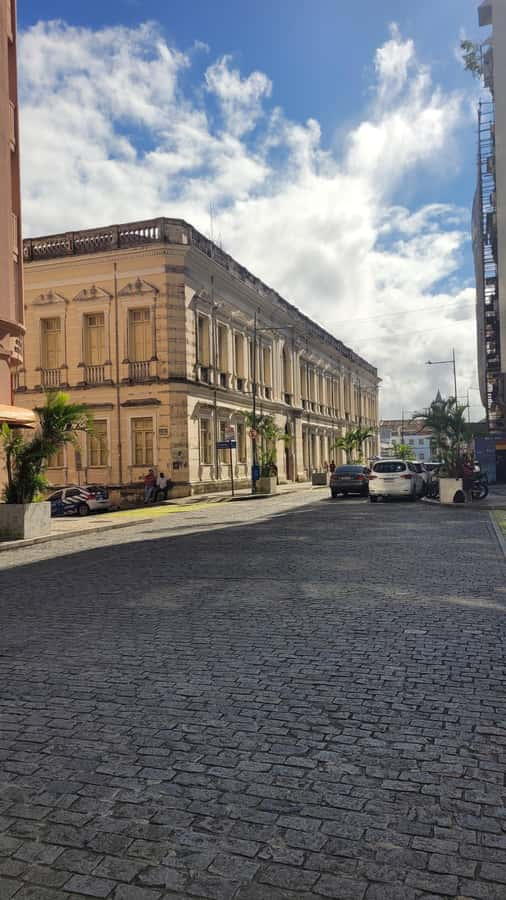
From Praça Castro Alves, the walk continues along Rua Chile, identified as the first street in Brazil. The street leads you into the historic center and gives the guide a natural way to explain Salvador’s early role in Brazil.
Do not expect this part to be a long museum-style lecture. The tour moves on foot, with the guide connecting buildings, streets, and public squares as you go. That format works well if you want context without spending your whole morning indoors.
A photo stop at Pau da Bandeira street adds another strong view across the bay. It is one of the places where you can pause, take pictures, and see how Salvador’s upper city sits above the water. Bring a camera, but also keep your attention on the guide. The useful part of this stop is not only the photograph, but the chance to connect the city’s physical shape with its past.
Praça Thomé de Souza and the Lacerda Elevator
The next major stop is Praça Thomé de Souza, named for Brazil’s first General Governor. This square brings together several layers of government and public life.
Here you will see the Palácio do Primeiro Governo. The building was also used as Brazil’s first prison, a detail that gives the square a darker edge. It is a good example of why a local guide helps. A building can look elegant or official from the outside, but its former use tells you something different about power and punishment.
The Lacerda Elevator is the square’s best-known landmark. It connects Cidade Alta with Cidade Baixa, allowing people to move between Salvador’s upper historic center and lower area. You will see the elevator as part of the tour, but entrance fees are not included, so do not assume the walk covers a ride.
Even without taking the elevator, this stop explains Salvador better than a string of isolated monuments can. The city’s steep change in level is not just a sightseeing detail. It shaped how people moved, worked, traded, and met one another.
From Rua Chile to Praça da Sé
Continuing along Rua Chile, you pass the Museu da Misericórdia before reaching Praça da Sé. The museum is part of Salvador’s religious and civic story, but this activity does not include admission to attractions. Think of the stop as an exterior introduction rather than a museum visit.
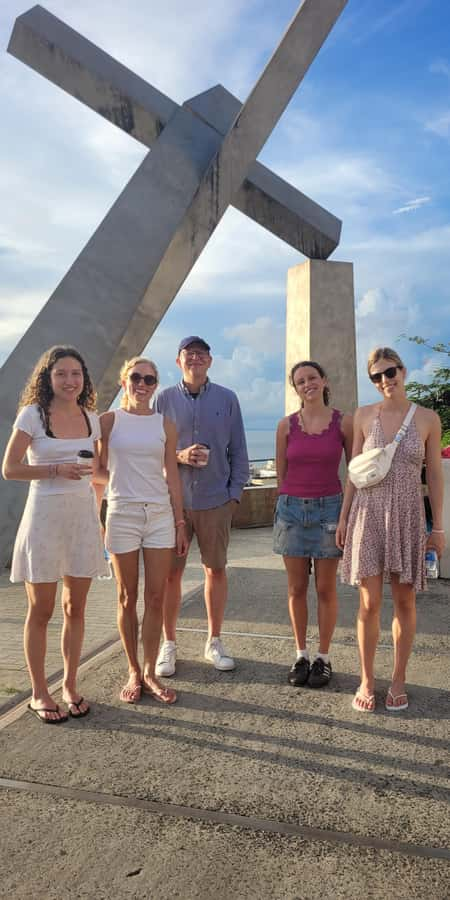
Praça da Sé brings the tour into more serious territory. Here you see the Monument to the Fallen Cross, erected in protest after the demolition of Igreja da Sé. The monument is not simply decorative. It records a dispute over the loss of a major church and shows how Salvador’s historic center has changed, sometimes at the cost of important buildings.
The guide also points out the statue of the first Bishop of Brazil and explains his tragic end. This is the sort of compact story that can make a short walking tour worthwhile. You are not only collecting names and dates. You are learning why certain figures and places still matter in the city’s public spaces.
More Tours in Brazil
- From Salvador: Schooner Tour to Frades Islands and Itaparica
★ 3.9 · 98 reviews - Afro-Brazilian Roots Private City Tour in Salvador
★ 4.7 · 88 reviews - Salvador de Bahia African Culture Tour
★ 4.5 · 60 reviews - Salvador: Praia Do Forte and Guarajuba Beach Day Trip
★ 4.1 · 56 reviews
Zumbi dos Palmares and the story of resistance
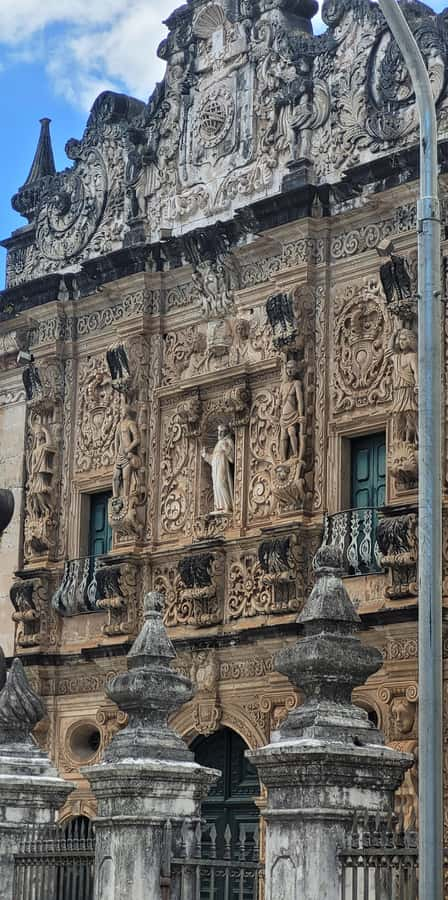
Another stop in Praça da Sé is the statue of Zumbi dos Palmares, a leader of resistance against slavery. His presence shifts the focus from colonial authority to Black resistance and memory.
That balance matters. A tour of Pelourinho can easily become a parade of ornate churches and colorful facades, leaving out the people whose labor built Salvador and the people who fought the system that oppressed them. This walk includes that harder subject directly.
You should expect the guide to place the monument within the wider story of Salvador and Brazil. The supplied information does not promise a set length for this explanation, but the route clearly gives the subject a place alongside architecture and sightseeing. If the history of slavery and resistance is important to you, this is one of the most valuable parts of the experience.
Largo Terreiro de Jesus and the first Faculty of Medicine
Leaving Praça da Sé, you walk to Largo Terreiro de Jesus. The square is known for its churches and for the first Faculty of Medicine in Brazil.
The faculty building gives the guide another way to explain Salvador’s importance. This is not simply a pretty old structure. It connects the city to the development of formal medical education in the country. You will see the building from the route, but entrance fees to attractions are not part of the price.
The churches around the square add a very different mood. Their presence shows how strongly religious institutions shaped the historic center. Your guide can help you notice the relationship between the buildings rather than treating each church as a separate photo stop.
I appreciate this section because it keeps the tour from focusing only on the most famous name, Pelourinho. Terreiro de Jesus broadens the story and shows how education, religion, public life, and colonial history overlap in a small area.
Igreja de Ouro and the churches of Black brotherhoods
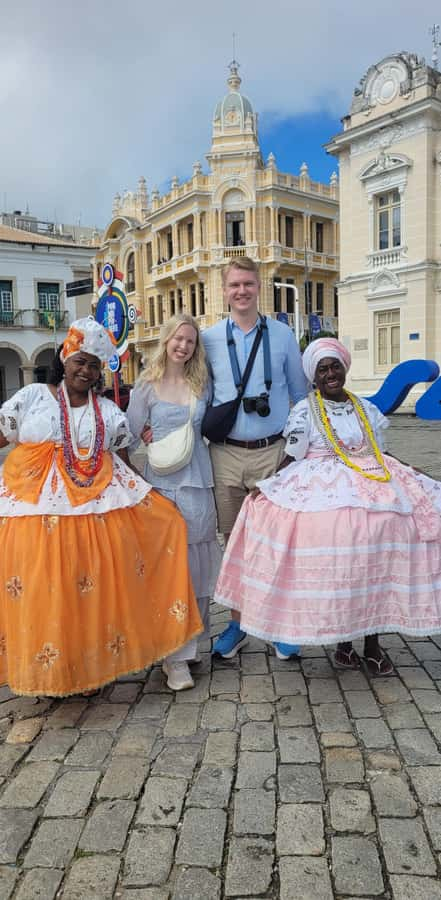
Next comes Largo do Cruzeiro de São Francisco, where you see the impressive Igreja de Ouro. Its nickname points to the lavish gold decoration associated with the church. Even from outside, the building gives you a strong sense of the wealth and visual drama used in Salvador’s religious architecture.
The tour also covers the church of Black people and the brotherhood of Black men in Brazil. These sites are essential to understanding that Black communities were not only subjects of colonial history. They built institutions, maintained religious traditions, and created places for mutual support and public identity.
This is a good moment to listen for the guide’s explanation rather than rush toward the next photograph. The gold churches are easy to admire, but the social meaning of these religious spaces is at least as important as their decoration.
If you want to enter any church or museum, check the admission arrangements for the day. The walking tour includes the guide and the route, but not entrance fees.
Olodum’s house and the Ladeira do Pelô
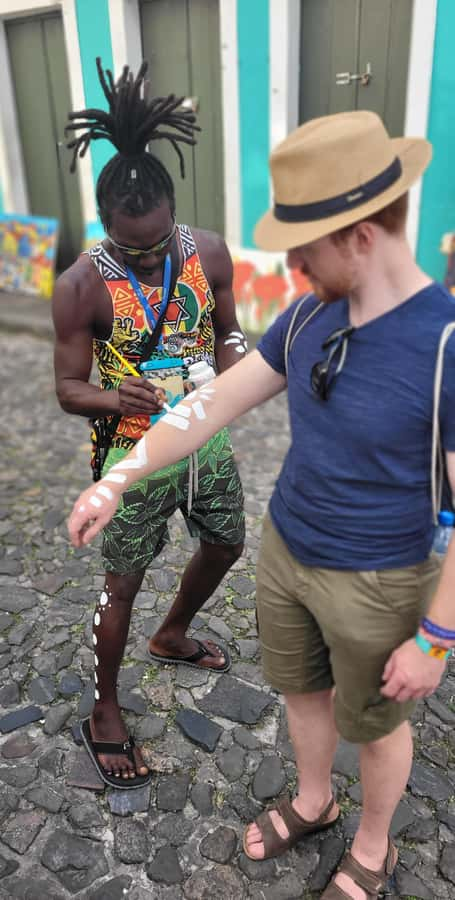
Near the end, the route passes Olodum’s house. This brings the tour into Salvador’s modern cultural life, especially its connection with Afro-Brazilian music and public performance.
The final destination is the famous Ladeira do Pelô. Michael Jackson filmed the music video for They Don’t Care About Us here, making the street familiar far beyond Brazil. The location is photogenic, but its value is not limited to pop culture. It is part of the wider Pelourinho setting, where music, history, tourism, and local identity meet.
The route finishes with a useful mix of old and new. You have seen government buildings, churches, monuments, educational institutions, and places linked to music and international popular culture. That range makes the walk feel like an introduction to Salvador rather than a single-theme architecture tour.
What the 90-minute format really gives you
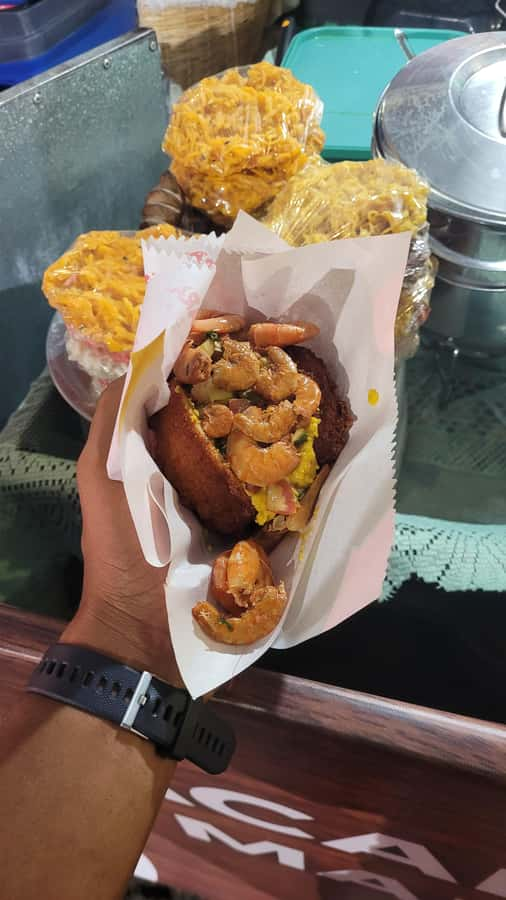
Ninety minutes is enough to cover many of the historic center’s main reference points, but it is not enough for long interior visits or unhurried exploration. You will walk from place to place, pause for explanations, and make selected photo stops.
That pace suits you if you want to get your bearings early in a Salvador visit. It also works well if you prefer a guide to explain the area before you return on your own. Several people who took the walk found the pace balanced, while one person wished the tour were longer. That is a fair warning: you receive a strong overview, not a full-day study of Pelourinho.
The group size helps. With no more than seven participants, the guide can answer questions and adjust explanations more easily than on a large coach tour. Adriano is the guide most often associated with this experience, and he is described as friendly, clear in English, patient, and willing to offer food, nightlife, and sightseeing suggestions. Your exact guide may vary, so treat those personal recommendations as a possible benefit rather than a guarantee.
Is $80 a fair price?
At $80 per person, this is not the cheapest way to see Pelourinho. You are paying for a small-group English-language walk with a local guide, rather than transport or attraction tickets.
The value depends on how much context you want. If you only need a route through the main squares, you could walk many of these streets independently. If you want the story behind the Fallen Cross, Zumbi dos Palmares, the Lacerda Elevator, the Black brotherhoods, and the old government buildings, the guide adds real value.
The small group matters here. A low-cost large-group tour may cover similar ground, but it may offer less time for questions and less personal advice. This activity also has strong feedback, with a 5 out of 5 rating from 49 reviews, and repeated praise for Adriano’s English, warmth, historical explanations, and practical suggestions.
You can cancel up to 24 hours before the activity for a full refund, and the reserve-now, pay-later option gives you some flexibility. Those terms do not make the tour cheaper, but they reduce the risk of booking it early.
Practical advice before you go
Wear comfortable walking shoes. The tour is entirely on foot, and light clothing will be more pleasant in Salvador’s sun.
Bring water, sunscreen, and a hat. The route includes open squares and viewpoints, and the instructions specifically warn you to prepare for changing weather. A camera is useful for the bay views, the Ladeira do Pelô, and the church exteriors.
Smoking is not allowed during the activity. The tour is not suitable for wheelchair users or people with mobility impairments, so consider that limitation carefully before booking.
Because food and drinks are not included, eat beforehand or carry what you need. The guide may suggest places to eat and drink afterward, which can be especially useful if this is your first day in Salvador.
Who should book this Pelourinho walk?
I would choose this tour if you want a quick, guided introduction to Salvador’s historic center, especially if you are visiting for the first time. It suits people who care about history, architecture, Afro-Brazilian culture, and practical local advice.
It is also a good fit if you want an English-speaking guide and prefer a small group over a large organized outing. The repeated praise for clear explanations, personal attention, and food and nightlife recommendations makes the experience more useful than a simple walk between photo stops.
I would look elsewhere if you need step-free access, want to spend time inside every church and museum, or prefer a slow full-day tour. The 90-minute route covers a lot, but it moves quickly and does not include admission fees.
For most independent visitors, this is a strong first look at Pelourinho. Book it early in your Salvador stay, then use the guide’s suggestions to decide where to return, eat, or explore at your own pace.
FAQ
Where does the walking tour meet?
Meet your guide at Praça Castro Alves. The guide will be standing in the square with a credential.
How long does the tour last?
The walking tour lasts 90 minutes.
What language is the tour in?
The live guide speaks English.
How large is the group?
The tour is limited to seven participants.
Is hotel pickup included?
No. Hotel pickup and drop-off are not included.
Are food, drinks, and entrance fees included?
No. Food, drinks, and entrance fees to attractions are not included.
Is the tour suitable for wheelchair users?
No. The activity is not suitable for wheelchair users or people with mobility impairments.
What should I bring?
Bring comfortable shoes, light clothing, water, a hat, sunscreen, and a camera. Be ready for varying weather conditions.
Just added in Salvador
- Salvador: Schooner Cruise with Pickup and Itaparica Stop★ 3.8 · 5 reviews
- Salvador: Traditional Drumming and Percussion Workshop★ 4.4 · 10 reviews
- Salvador by Night: Cultural Show and Dinner.★ 4.4 · 17 reviews
- Salvador: 3-Hour Percussion Class★ 4.9 · 10 reviews
- Salvador: Capoeira Class at Mestre Bimba’s 1st Ever School.★ 4.9 · 34 reviews
- Salvador: Cultural Night of Capoeira, Samba, and Drumming★ 4.9 · 17 reviews
- Salvador: Cultural Treasure – Samba de Roda.★ 4.9 · 51 reviews
- Salvador: CAPOEIRA CLASS – CULTURAL★ 4.6 · 13 reviews
Walking Tours, compared.

Sunrise and Sunrise Walk Two Brothers with Local Guide
Read our review →
Downtown-Center History Walking Tour – in English
Read our review →
Downtown-Center Walking Tour | 2 Hours – English
Read our review →
Learn the History of Rio with an Unforgettable City Center Walking Tour
Read our review →Browse the lists this tour appears in