
Reviewed · SAMBA AND NIGHTLIFE TOURS
Salvador: Cultural Treasure – Samba de Roda.
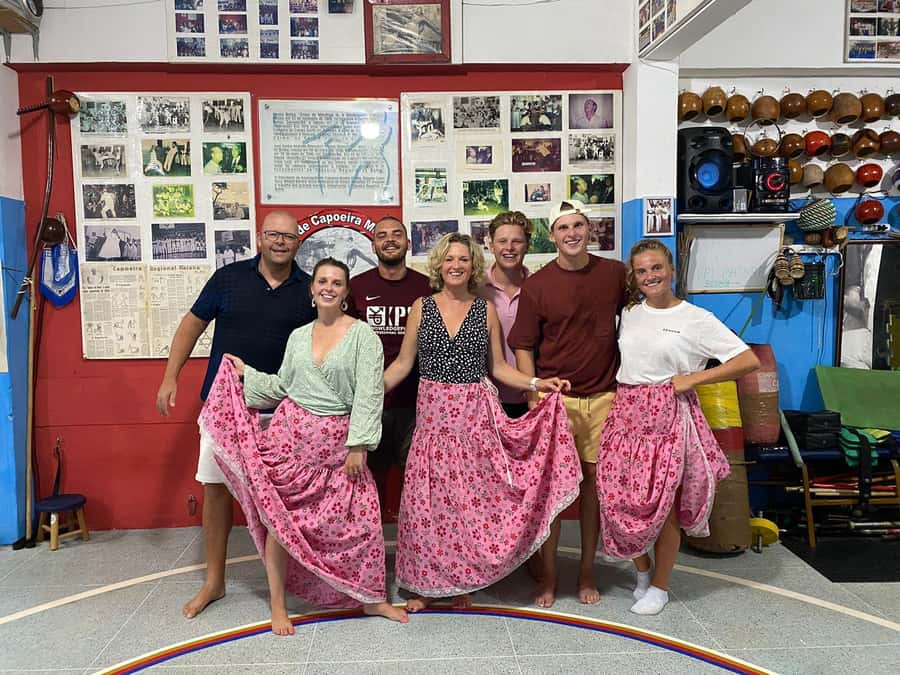
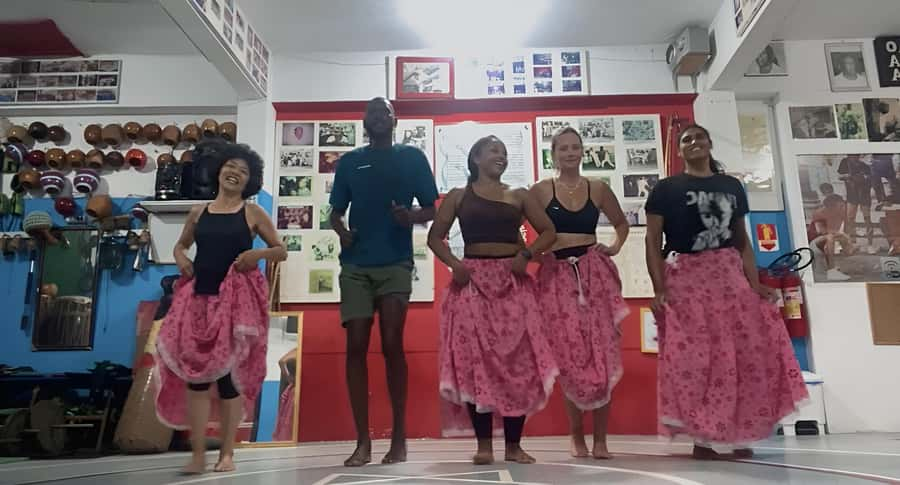
Salvador’s samba class takes place inside the first capoeira school in Brazil, founded by Mestre Bimba in 1937. You learn basic steps, follow the rhythm, and hear how an Afro-Brazilian art once treated as suspicious became a symbol of Brazil and a UNESCO-recognized cultural tradition.
I like the small, practical scope: one hour is enough to learn useful movements without making this an all-day commitment. I also like the setting and the English instruction, especially when guides such as Yasmin explain the connection between samba, capoeira, music, and Salvador’s past.
The main consideration is that this is an introductory lesson, not a full dance course. You may leave smiling and sweaty, with a few good steps, but serious dancers will want more time. There is no hotel pickup, so you must reach the school yourself.
Key points to know before booking
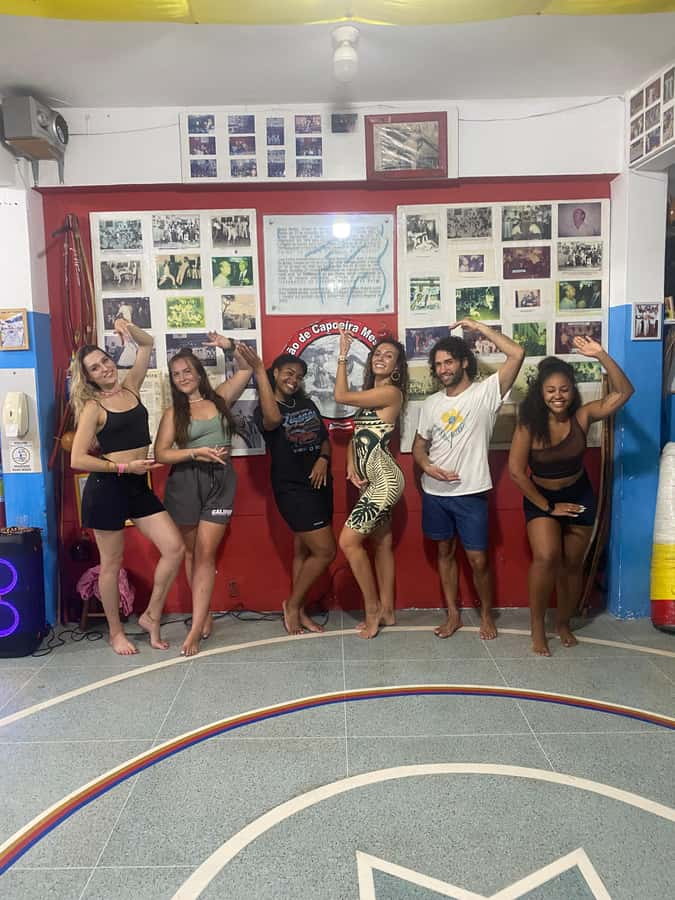
- Historic setting: The lesson takes place at Associação de Capoeira Mestre Bimba, linked to Mestre Bimba and his Capoeira Regional tradition.
- Beginner-friendly format: No dance experience or partner is needed.
- English support: The instructor speaks English and Portuguese, making both the movements and cultural explanations easier to follow.
- More than footwork: You learn about samba’s Afro-Brazilian roots, its suppression, and its role in Brazilian identity.
- One-hour commitment: The class fits neatly into a day of exploring central Salvador.
- Central meeting point: Meet at the school near Largo do Terreiro de Jesus, with Ó Pai Ó Restaurante and São Domingos Gusmão Church as useful landmarks.
Why this samba class matters in Salvador
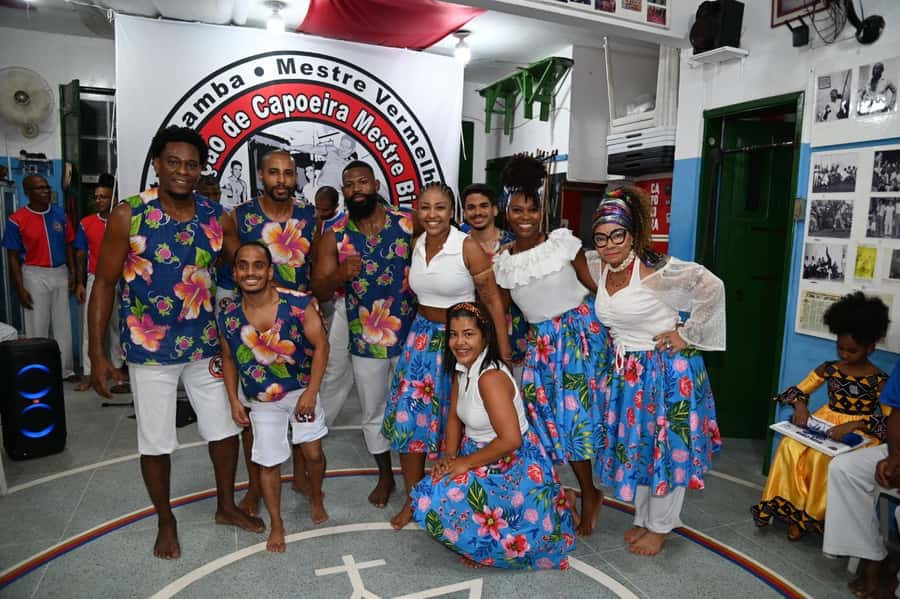
Samba is not simply a cheerful dance for a party. Its story reaches into Brazil’s treatment of African cultural expression, and that gives this lesson more weight than a standard tourist dance class.
The experience explains that samba developed in Afro-Brazilian communities in Bahia in the late 19th century. Like capoeira and Candomblé, it was viewed with suspicion and was criminalized. That history helps you understand why learning the dance in Salvador is meaningful: you are not just copying steps, but encountering a tradition shaped by resistance and persistence.
Samba later moved from a persecuted cultural practice to a national symbol. UNESCO now recognizes it as an Intangible Cultural Heritage of Humanity. The class gives you a compact introduction to that change without asking you to sit through a long academic lecture.
I appreciate this balance. You get cultural background, but the class remains active. The information helps you hear the music differently, then the movement gives you a physical way to connect with it.
More samba nights and bar crawls in Salvador
- Salvador: Cultural Night of Capoeira, Samba, and Drumming
★ 4.9 · 17 reviews - Rio de Janeiro: Beginner Samba Lesson in Ipanema
★ 4.9 · 1,071 reviews - Rio: Pub Crawl in Lapa with Cachaça Tasting and Live Samba
★ 4.7 · 881 reviews
Arriving at Mestre Bimba’s capoeira school
You meet at Associação de Capoeira Mestre Bimba. There is no pickup service, so plan to arrive at the stated meeting point rather than waiting at your hotel.
The school is close to Largo do Terreiro de Jesus. If you need help finding it, Ó Pai Ó Restaurante and São Domingos Gusmão Church are useful nearby landmarks. This advice matters because a historic center meeting point can be easier to locate by a recognizable building or restaurant than by an address alone.
Give yourself enough time to find the entrance calmly. The class lasts only one hour, so arriving late can take a noticeable bite out of the lesson. The exact start time depends on availability when you book.
The venue itself is a major part of the experience. This is not a rented studio with generic mirrors and a playlist. It is connected to Mestre Bimba, the creator of Capoeira Regional, and to a school founded in 1937. The school was regarded as a place of resistance, protecting and teaching cultural practices in Salvador.
That setting gives the hour a sense of place. You are learning samba in a location tied to another Afro-Brazilian art that developed under pressure. Even if you know little about capoeira, the connection makes the class feel rooted in Salvador rather than portable to any city.
The first part of the lesson: history before movement
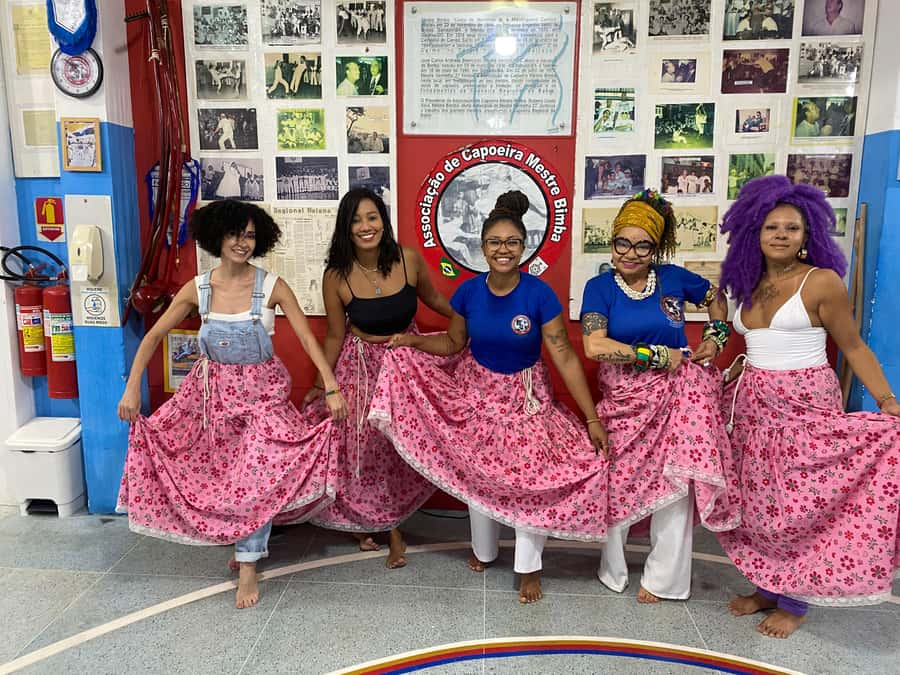
Your English-speaking instructor introduces samba, its cultural role, and its connection to Bahia. The explanation is designed for people who may know samba mainly from Carnival but have little idea how the tradition developed.
You will hear about the relationship between samba and capoeira, and about the cultural forces that shaped both. This is especially helpful if you combine the samba class with a capoeira class. One participant described the combination as a significant workout, so plan for more physical effort if you book both.
The history section also sets a respectful tone. The school is not just a backdrop for photographs or dance practice. You are asked to recognize the importance of the place and the traditions taught there.
Instructors speak English and Portuguese. Yasmin, also referred to as Yasmine in some class information, has been praised for calm, clear teaching and practical help. Her approach suits beginners who want explanations without feeling rushed or embarrassed.
The instructor may adjust the emphasis depending on the class. You should expect cultural context, but this is still a dance lesson rather than a formal history tour. If you want a long discussion of Brazilian music, you may find the background brief. Its value is that it gives you enough context to make the physical lesson more meaningful.
Learning the basic samba steps
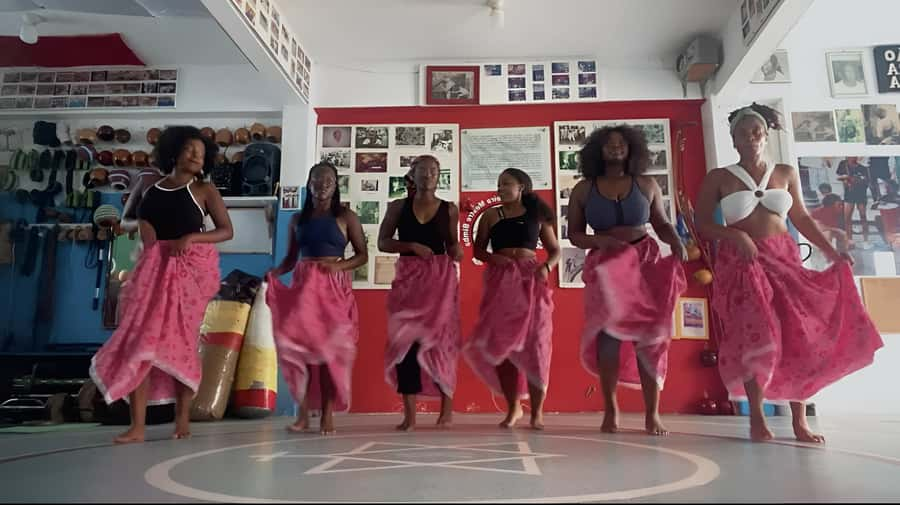
The practical portion begins with fundamental movements. You do not need prior dance training, and you do not need to bring a partner. That makes this a good choice for solo visitors, couples with different confidence levels, parents and teenagers, or anyone who thinks they have two left feet.
The instructor breaks the dance into manageable actions. You learn how to place your feet, shift your weight, and respond to the rhythm before trying to link the movements together. Clear demonstrations and repetition matter here, and the teaching style described for Yasmin is patient and encouraging.
Do not expect to master every samba variation in an hour. The realistic goal is to gain a few basic steps and enough confidence to move with the music. One class participant found that even as a beginner, an hour provided enough movements to get into the rhythm. That is a fair measure of success.
You may also sweat more than expected. This is not an intense fitness class, but samba asks you to keep moving, bend into the rhythm, and coordinate your feet with your upper body. Wear clothing that lets you move comfortably.
The lack of a required partner is a real advantage. You can focus on your own timing instead of worrying about whether you are leading or following someone else. Couples can still take the class together, but no one is left out if a companion prefers to watch or cannot attend.
More Tours in Brazil
- From Salvador: Schooner Tour to Frades Islands and Itaparica
★ 3.9 · 98 reviews - Afro-Brazilian Roots Private City Tour in Salvador
★ 4.7 · 88 reviews - Salvador Historic Walking Tour – Pelourinho
★ 4.8 · 62 reviews - Salvador de Bahia African Culture Tour
★ 4.5 · 60 reviews
Music, rhythm, and the moment the class clicks
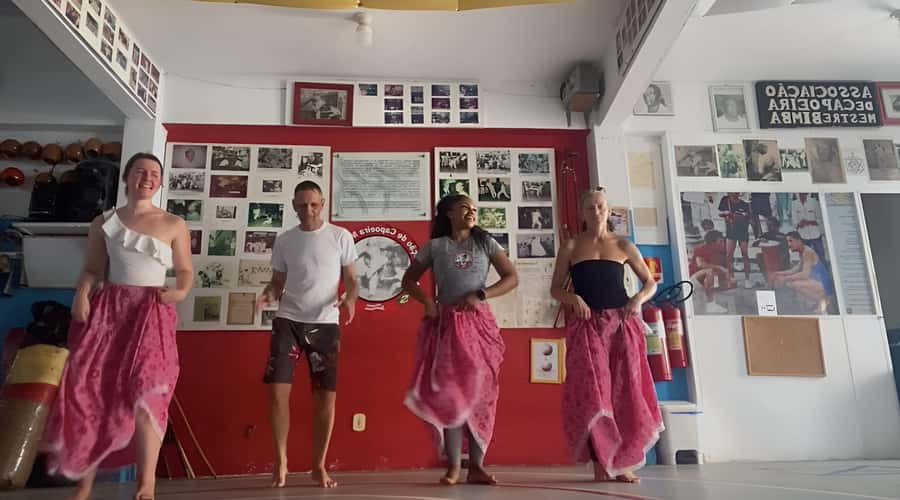
Samba only makes sense once the rhythm reaches your body. The instructor uses music while teaching so that you do more than memorize a silent sequence of steps.
At first, you may think about every foot placement. That is normal. The class gradually shifts your attention from instructions to the beat. Once the basic pattern settles in, you can add the movements with less concentration and more ease.
This is where the lesson becomes fun rather than technical. The aim is not polished stage performance. It is to understand the pulse and feel comfortable enough to keep moving.
The class has been especially well received for its positive, encouraging tone. That matters because beginner dance lessons can become uncomfortable when the instructor moves too quickly or treats mistakes as a problem. Here, you should expect correction, repetition, and encouragement rather than pressure to perform.
You may leave with a grin, a little sweat, and a handful of steps you can try again later. That is a good result from a one-hour class.
What the venue adds to the experience
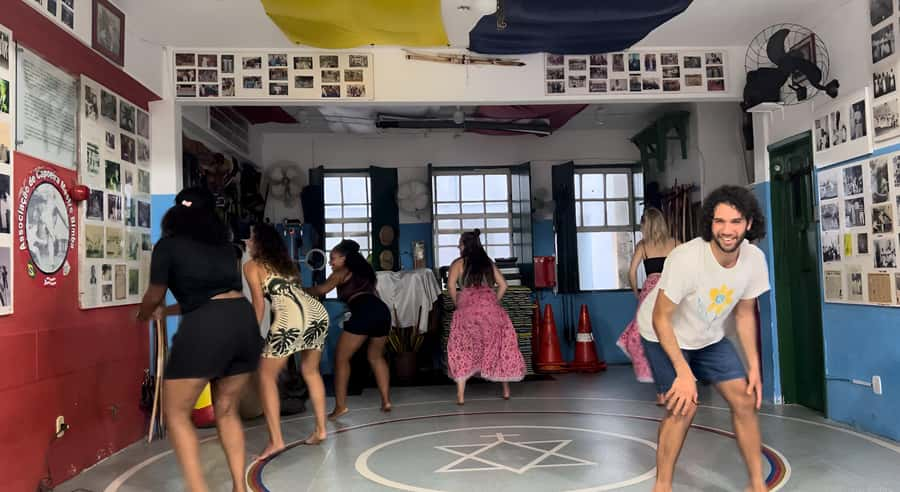
Mestre Bimba’s connection to Capoeira Regional gives the class a stronger cultural setting than a stand-alone dance workshop. Mestre Bimba founded the school and created Capoeira Regional, an important chapter in capoeira’s development.
The school has long been respected as a place where Salvador’s cultural practices could be taught and protected. The supplied information describes it as a great quilombo of resistance, a phrase that points to the importance of communities preserving African cultural elements under hostile conditions.
You do not need to be a capoeira expert to appreciate this. The instructor explains the connection in accessible terms, showing how dance, music, physical expression, and social history overlap.
This also makes the experience useful for visitors who want more than Salvador’s major sightseeing stops. A church or viewpoint can show you part of the city’s story. A class lets you take part in one small piece of its living culture.
That distinction is worth paying for. You are not simply observing samba from the edge of a performance. You are being taught a basic form and given context for why it matters.
How the $43 price compares with the time involved
At $43 per person, this is not the cheapest one-hour activity in Salvador. The value depends on what you want from the class.
If you measure the price only by dance instruction, the cost may feel high for sixty minutes. If you include the English-speaking teaching, the cultural explanation, access to a historic capoeira school, and the convenience of a guided introduction, the price makes more sense.
You are paying for a focused cultural activity, not a long tour with several stops. There is no transport, meal, or extended performance included. That keeps the format simple, but it also means you should book it because you want this particular encounter, not because you expect a full afternoon of entertainment.
I see the strongest value for someone spending several days in Salvador and looking for an activity that connects directly with Bahia. It is also a good first-day option. One participant took the class on the first day in Brazil and found it a useful introduction to local culture and practical advice.
If your budget is tight, compare this with free music and dance encounters you may find in the city. But those do not necessarily give you a structured lesson, an English-speaking instructor, or an explanation of the school’s history. The $43 buys structure and access.
Who will enjoy this most
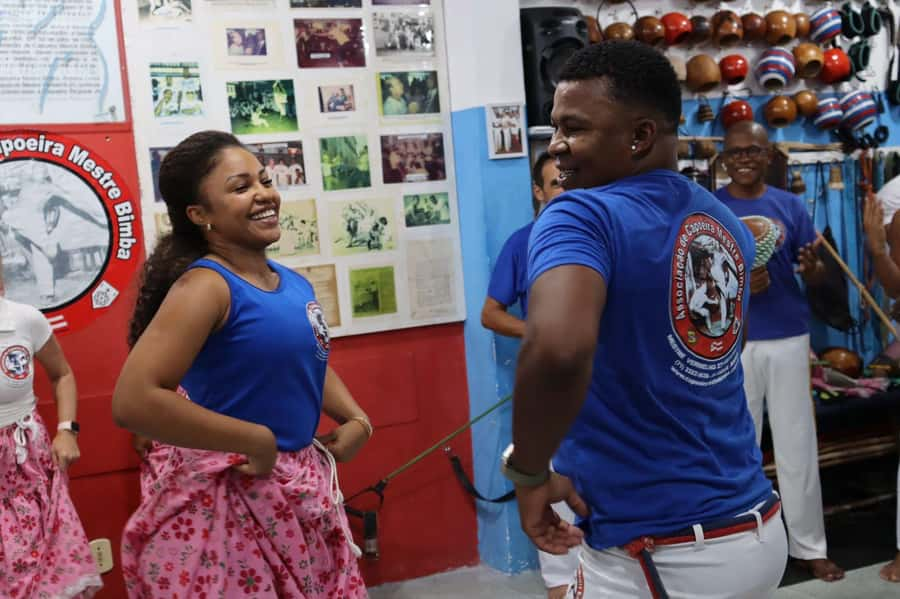
I would recommend the class to first-time visitors who want an active introduction to Salvador. It works particularly well for:
- Beginners who have never danced samba
- Solo visitors who do not have a partner
- Couples or parent and teenager pairs
- People interested in Afro-Brazilian culture
- Visitors curious about the link between samba and capoeira
- Anyone wanting a short activity between sightseeing plans
The class also suits people who are nervous about dance. The basic steps are taught at an accessible pace, and the instructor’s calm manner can make the first attempt less intimidating.
You may want to skip it if you dislike physical participation or want a long, advanced dance session. This is not designed for experienced samba dancers seeking complex choreography. It is an introduction, with history and cultural explanation built around the movement.
The one-hour format helps families and busy sightseers, though younger participants should be comfortable following instructions and taking part in a physical class. The activity information does not set a specific age range, so confirm any age concerns when booking.
Practical planning for your hour
Book the class at a time that lets you reach the meeting point without rushing. Since there is no pickup, allow time to navigate to the school near Largo do Terreiro de Jesus.
Wear something comfortable for movement. You do not need special dance equipment, a partner, or previous experience. Bring the attitude of a beginner. Trying to look polished will only make the first few minutes harder.
If you are considering a capoeira lesson as well, know that the combination can be a solid workout. You may prefer to schedule the classes with a break between them rather than treating them as one continuous burst of activity.
Cancellation is free up to 24 hours before the experience for a full refund. You can also reserve now and pay later, which is useful if your Salvador schedule is still shifting. Starting times depend on availability, so check the options that fit your day.
The school asks you to respect the cultural and historical importance of the venue. That means listening during the background explanation, treating the space carefully, and approaching the lesson as more than a photo opportunity.
Should you book the Salvador samba class?
I would book it if you want a short, active way to connect with Salvador’s Afro-Brazilian culture. The historic school, English instruction, beginner-friendly steps, and clear link to capoeira give the class more substance than a generic dance lesson.
I would pass if you want advanced choreography, a long performance, or included transportation. The hour goes quickly, and the meeting point requires your own way there.
For most first-time visitors, the strongest reason to book is the combination of movement and context. You learn enough samba to feel the rhythm, then leave with a clearer sense of why this music and dance carry such importance in Bahia. At $43, it is a worthwhile cultural add-on for anyone who wants to do more than look at Salvador from the sidelines.
FAQ
How long does the samba class last?
The class lasts one hour.
What does the activity cost?
The price is $43 per person.
Do I need previous dance experience?
No. The class is suitable for beginners, and no dance experience is necessary.
Do I need to bring a dance partner?
No. A partner is not required.
Is the instructor able to speak English?
Yes. The instructors speak English and Portuguese.
Where does the class meet?
The meeting point is Associação de Capoeira Mestre Bimba, near Largo do Terreiro de Jesus. Ó Pai Ó Restaurante and São Domingos Gusmão Church are nearby landmarks.
Is transportation or hotel pickup included?
No. Pickup service is not offered, so you must reach the meeting point yourself.
Can I cancel the booking for a refund?
Yes. You can cancel up to 24 hours in advance for a full refund.
Just added in Salvador
- Salvador: Schooner Cruise with Pickup and Itaparica Stop★ 3.8 · 5 reviews
- Salvador: Traditional Drumming and Percussion Workshop★ 4.4 · 10 reviews
- Salvador by Night: Cultural Show and Dinner.★ 4.4 · 17 reviews
- Salvador: 3-Hour Percussion Class★ 4.9 · 10 reviews
- Salvador: Walking Tour Through Pelourinho★ 5.0 · 49 reviews
- Salvador: Capoeira Class at Mestre Bimba’s 1st Ever School.★ 4.9 · 34 reviews
- Salvador: Cultural Night of Capoeira, Samba, and Drumming★ 4.9 · 17 reviews
- Salvador: CAPOEIRA CLASS – CULTURAL★ 4.6 · 13 reviews
Samba and Nightlife Tours, compared.
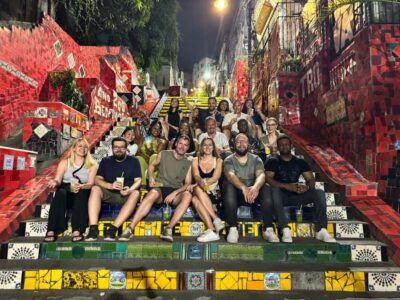
Pub Crawl in Lapa with Cachaça Tasting and Live Samba
Read our review →
Carnival Backstage Tour at Samba City with Cocktail
Read our review →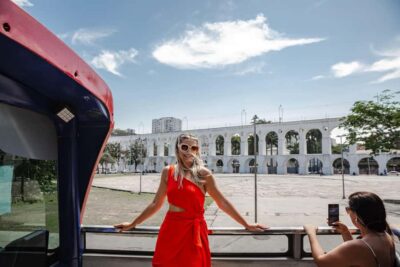
Hop-ON Hop-OFF Sightseeing Bus in Rio de Janeiro – Rio Samba Bus
Read our review →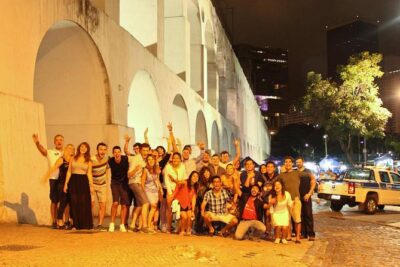
More than a Pub Crawl: An Authentic Night Experience in Rio
Read our review →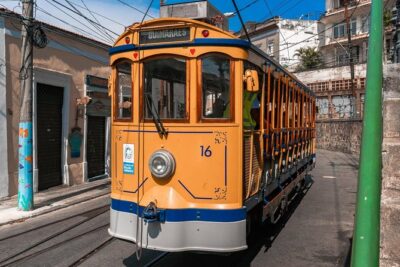
Santa Teresa, Lapa, and Cinelândia with Tram Ride and Selarón Steps
Read our review →
Browse the lists this tour appears in