
Reviewed · WORKSHOPS
Rio de Janeiro: Brazilian Cooking Class with Hotel Pickup
Brazilian cooking is at its best when it comes with a story, and this Copacabana kitchen class gives you both. You choose between feijoada, the famous black bean and pork stew, or seafood moqueca with coconut milk, then prepare the meal with a local chef. I like the cultural context and the fact that you actually cook, rather than simply sit down for a tasting.
I also like the round-trip hotel transfer, which takes some of Rio’s traffic and navigation work off your plate. The class includes more than one main dish: you may make coalho cheese with pepper jelly, sausage flambéed in cachaça, brigadeiro, caipirinha, and coconut shake. The main caution is that traffic can stretch the four-hour schedule, especially in high season, and the dessert inclusion needs confirming because the details list brigadeiro but also say dessert is not included.
Key points to know before booking
- Choose your main dish: Pick feijoada or seafood moqueca before cooking begins.
- Cook with a local chef: Recent classes were led by Carina and Simone, both praised for patience and clear explanations.
- Make more than dinner: Side dishes, cocktails, and a coconut shake are part of the hands-on work.
- Hotel pickup covers key areas: Pickup is available in Leblon, Ipanema, Copacabana, Leme, Botafogo, Flamengo, Centro, and at the cruise port.
- Plan for Rio traffic: High-season transfers may take longer than the advertised four hours.
- Check the dessert detail: Brigadeiro is described in the cooking plan, but dessert is also listed as an extra.
A Brazilian dinner starts with a choice
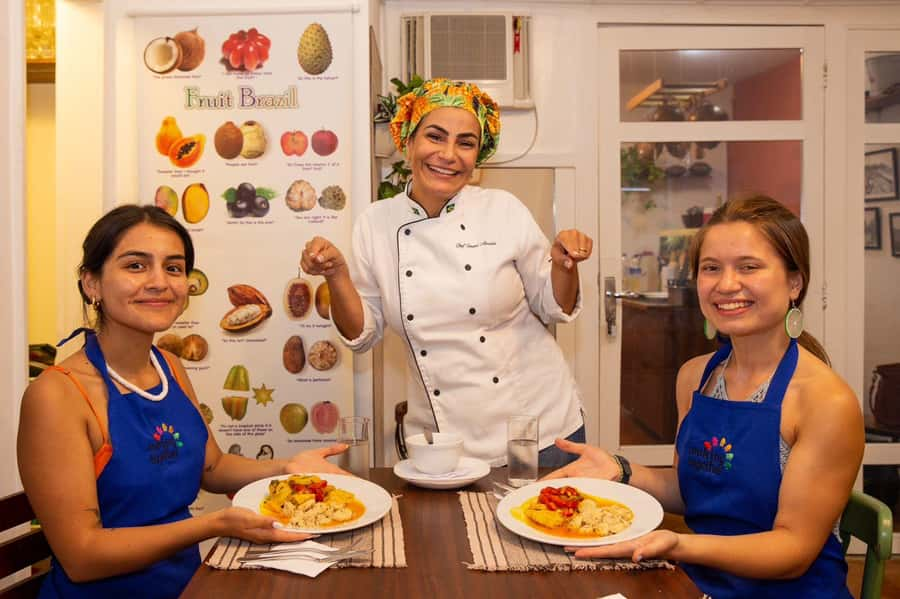
The class begins in the afternoon with pickup from your hotel or the cruise port. The covered pickup areas include the main visitor districts along Rio’s central and southern shore, from Leblon and Ipanema through Copacabana and Leme, as well as Botafogo, Flamengo, and Centro.
You need to send your hotel location in advance and confirm the pickup time. That small step matters in Rio, where similar street names and heavy traffic can make a simple transfer take longer than expected. In one recent booking, the driver was easy to spot and got the couple safely to the kitchen.
Once you arrive, the chef presents the ingredients and explains how to choose good produce. The class then turns on a key decision: feijoada or seafood moqueca.
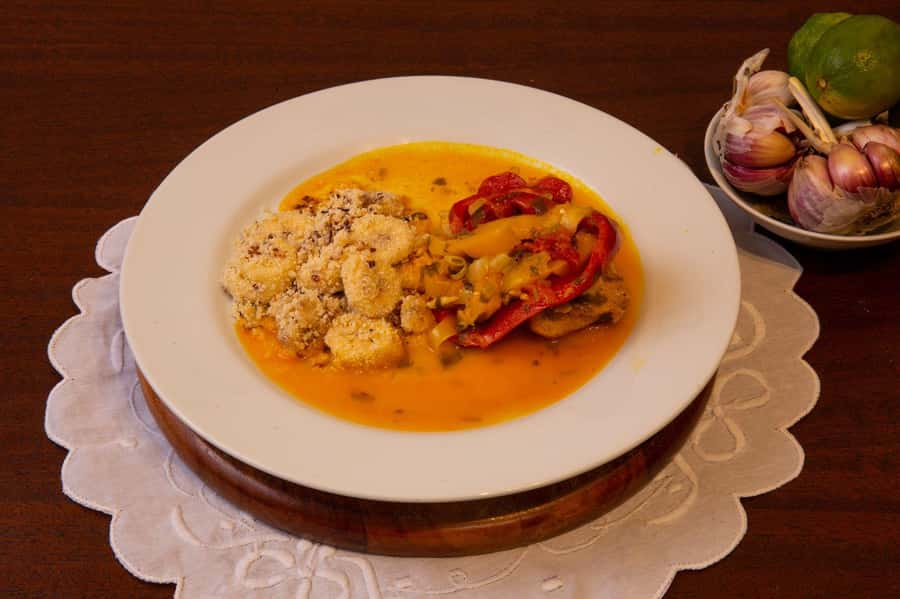
Feijoada is the heavier choice. It is a black bean stew made with pork, and it speaks to the hearty, slow-cooked side of Brazilian food. Moqueca is lighter in feel, built around fish, coconut milk, and the flavors of Brazil’s coastal cooking. If you enjoy seafood and prefer a stew with a softer, coconut-based finish, moqueca may suit you better. If you want one of Brazil’s best-known national dishes, choose feijoada.
The choice gives the class a useful focus. Instead of rushing through a long menu, you spend time understanding one major dish and the ingredients that make it work.
A few more things to do in Rio de Janeiro
- Rio de Janeiro: Brazilian Cooking Class in Rio de Janeiro
★ 5.0 · 4 reviews
What you actually cook in the Copacabana kitchen
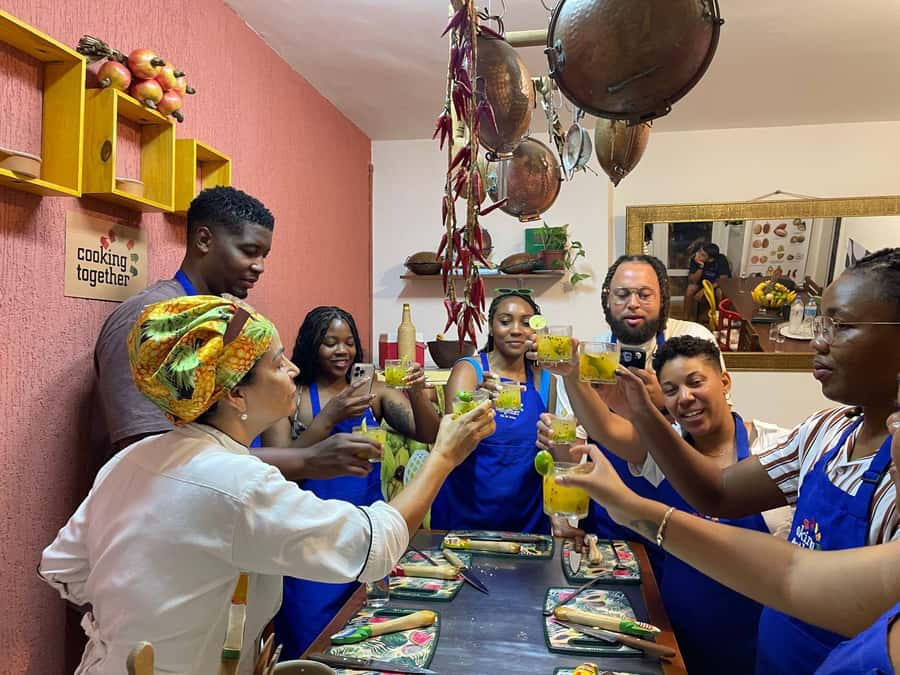
This is not a demonstration where you watch a chef do everything. You take part in preparing the meal, with the chef guiding you through each stage. That makes the class useful for home cooks, but it is also designed for people who do not cook often.
Recent classes with Carina and Simone received especially strong praise for patient instruction and cultural explanations. Carina was described as both a fine chef and a fun teacher. Simone explained the meaning of the dishes before the cooking began and was thoughtful during the class. Those details matter because Brazilian recipes can be unfamiliar, and a good teacher makes the process feel manageable rather than technical.
The exact amount of hands-on work can depend on the group and the chef. One booking for a married couple was a private class, which allowed them to prepare several dishes at their own pace. You should not assume every departure is private, but it is worth asking if that setup matters to you.
Alongside your selected main dish, the cooking plan includes several smaller preparations:
- Coalho cheese with pepper jelly
- Sausage with onion flambéed in cachaça
- Brigadeiro
- Caipirinha
- Coconut shake
The coalho cheese is a particularly good introduction to Brazilian ingredients. It brings a salty, firm cheese together with sweet and spicy pepper jelly. The sausage dish adds a bit of theater when cachaça is used to flambé the onions, though you should follow the chef’s instructions closely around the flame.
Brigadeiro is a classic Brazilian sweet made for sharing, and making it yourself gives the meal a proper finish. There is one point to clear up before you book: the activity details describe brigadeiro as part of the class, but the inclusion list says dessert is not included. Ask Rio Carioca Tours & Service to confirm whether the dessert preparation is included in your departure or treated as an extra.
The stories behind feijoada and moqueca
The food is only half the point. The chef also explains the history and cultural meaning behind the dishes, which gives you a better sense of what you are eating.
Feijoada is more than a stew on a plate. It is closely tied to Brazil’s food culture and is recognized far beyond Rio. In the class, the dish becomes a way to discuss cooking traditions, ingredients, and the role of shared meals. You do not need a long lecture to understand its place in Brazilian life, but the context makes the final bowl more meaningful.
Moqueca connects the meal to Brazil’s coast. Fish, coconut milk, and the chef’s preparation method create a different profile from feijoada, and the dish gives you a chance to see how regional ingredients shape Brazilian food. The choice between the two main courses is also a choice between two food traditions: one earthy and filling, the other coastal and fragrant.
I value this kind of explanation because it helps you recreate the dish later. A recipe tells you what to add. A chef who explains why a dish matters helps you remember how it should taste and when it belongs on the table.
Mixing caipirinha and a coconut shake
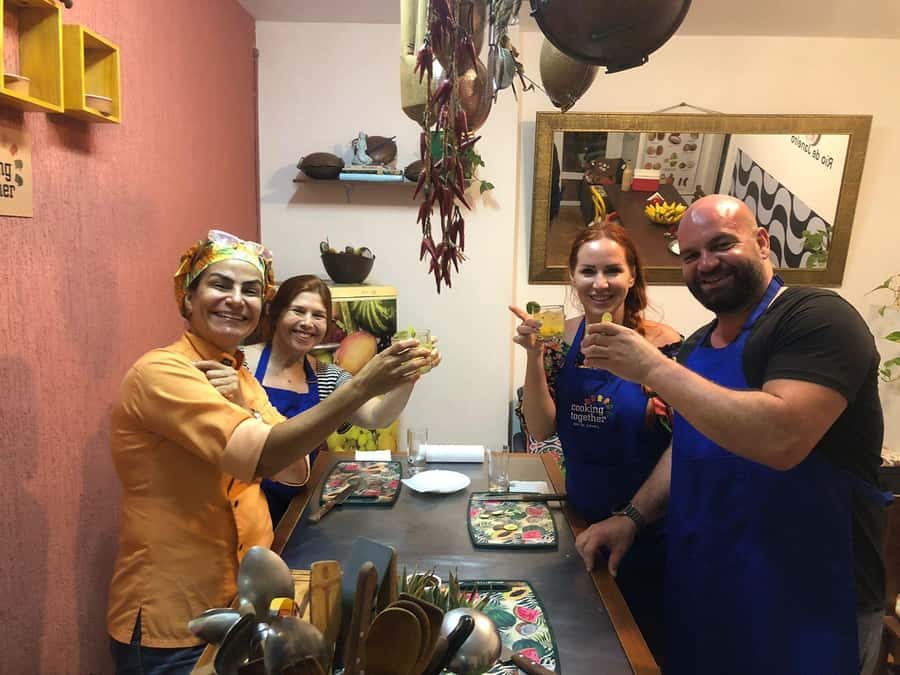
The drinks are part of the cooking, not just something handed to you at the end. You mix a traditional caipirinha and prepare a coconut shake to go with the meal.
Caipirinha is one of Brazil’s signature drinks, made with cachaça. The class gives you the chance to learn the basic balance for yourself, rather than ordering one without knowing how it was put together. The coconut shake offers a cooler, nonalcoholic contrast.
Additional drinks are not included, so you should not assume that every beverage beyond the listed preparations comes with the price. The included drink-making is enough to add variety to the meal, but anyone wanting more alcohol or other beverages should budget separately.
Because the class takes place in a kitchen, you also get a better feel for how drinks fit into a Brazilian meal. The caipirinha is not treated as a separate bar stop. It becomes part of the rhythm of cooking, eating, and talking.
More workshops and classes in Rio de Janeiro
- Rio de Janeiro: Beginner Samba Lesson in Ipanema
★ 4.9 · 1,071 reviews - Rio de Janeiro: Samba Class in Copacabana
★ 4.6 · 262 reviews - Rio de Janeiro: Samba Class and Samba Night Tour
★ 4.6 · 115 reviews - Rio: Caipirinha Workshop and Samba Class
★ 4.8 · 113 reviews
Sitting down to eat what you made
After the cooking, you sit down for the meal in a friendly setting. This is where the four-hour experience pays off. You have seen the ingredients, handled the preparation, and learned the stories, so the final meal feels more personal than a restaurant order.
One recent couple described preparing several dishes and making their own cocktails, with everything tasting excellent. That kind of result depends partly on the chef and partly on your own willingness to participate. You do not have to be an experienced home cook, but you should expect to chop, stir, mix, and follow instructions.
The meal also gives you time to share stories with the chef and other people in the class. The class can be a good choice if you have already seen Rio’s main sights and want an activity that connects you with local food. It is less suitable if you want a quick meal or a formal restaurant setting.
The schedule ends with a transfer back to your hotel. In high season, allow extra time. Rio traffic and the city’s heavy visitor numbers can extend both the pickup and the return journey, so avoid booking a tight evening flight, show, or dinner reservation immediately afterward.
Is $117 a fair price?
At $117 per person, this is not a budget meal. The value comes from combining several services into one afternoon: round-trip transportation, a four-hour cooking class, the chef’s instruction, the ingredients, the meal, and the listed drink preparations.
If you only want to taste feijoada or moqueca, a restaurant will likely be a simpler option. You are paying here for the process, the cultural explanation, and the convenience of pickup. The transfer is especially useful if you are staying outside easy walking distance from the kitchen or do not want to arrange a taxi in an unfamiliar part of the city.
The price also looks stronger for people who will use the cooking skills later. You leave with a better understanding of Brazilian ingredients and dishes, rather than only a pleasant dinner. I would consider it good value for a couple, a food-focused solo visitor, or a small group that wants a structured afternoon.
There are extra charges to note. Pickup from Barra da Tijuca or Recreio dos Bandeirantes costs an additional $10 or 40 BRL per person. An adapted vehicle costs an additional $100 or 500 BRL. Additional drinks are not included, and the dessert wording should be clarified before payment.
Who will enjoy this class most?
I would choose this experience if you like food, want direct contact with local cooking, and have four hours to spare in the afternoon. It suits both skilled home cooks and beginners because the chef provides instruction throughout the process.
It is also a good option for a repeat visitor to Rio. One couple booked it after already seeing the city and wanted a different kind of afternoon. A cooking class gives you a new way to understand the place without adding another viewpoint, museum, or organized sightseeing stop.
Families and mixed-ability groups should contact the provider before booking. The activity asks you to take part in kitchen work, and the operator requests advance notice for reduced mobility or wheelchair use. An adapted vehicle can be arranged for an added fare.
You should think twice if you dislike fixed schedules, shared meals, or strong food traditions. You also need to be comfortable with the chance that traffic will lengthen the day. This is a hands-on class, not a quick tasting with a guaranteed end time.
Practical details that make the day easier
The class is offered in Portuguese, Spanish, and English. When you book, confirm your preferred language and provide the full hotel location. Pickup is available from most hotels in Leblon, Ipanema, Copacabana, Leme, Botafogo, Flamengo, and Centro, plus the cruise port.
You may bring your own set of knives if you prefer. That is optional, not a requirement. The chef provides the ingredients for the included dishes.
The activity offers free cancellation up to 24 hours in advance for a full refund, and you can reserve now and pay later. Starting times vary, so check availability rather than assuming the afternoon begins at a fixed hour.
Recent scores were perfect across five verified bookings, with the strongest praise aimed at the chef’s patience, clear teaching, cultural explanations, and the quality of the food. Five reviews are a small sample, so I would treat that record as encouraging rather than a guarantee. The actual chef may be Carina, Simone, or another instructor.
Should you book this Rio cooking class?
Book it if you want to do more than photograph Rio’s food. You will choose a major Brazilian dish, prepare several sides, mix drinks, hear the stories behind the recipes, and sit down to eat your own work. The hotel transfer adds real convenience, especially for a first visit or a cruise-port arrival.
I would skip it if your schedule is tight, you want the lowest-cost way to eat Brazilian food, or you need a guaranteed finish time. For most food-focused visitors, though, the combination of instruction, local dishes, and a relaxed meal makes $117 a reasonable splurge. Confirm the dessert policy, pickup time, group format, and any mobility needs before booking.
FAQ
How long does the Brazilian cooking class last?
The advertised duration is four hours. High-season traffic and large crowds in Rio can make the full outing take longer.
Which main dishes can I choose from?
You can choose between feijoada, a black bean stew with pork, and seafood moqueca, a fish stew prepared with coconut milk.
Is hotel pickup included?
Yes. Round-trip transfer is included from most hotels in Leblon, Ipanema, Copacabana, Leme, Botafogo, Flamengo, and Centro, as well as from the cruise port. You need to provide your hotel location and confirm the pickup time.
Is pickup available from Barra da Tijuca or Recreio dos Bandeirantes?
Yes, but there is an additional charge of $10 or 40 BRL per person.
What languages does the chef or instructor speak?
The activity is offered in Portuguese, Spanish, and English.
Are drinks included?
The class includes preparing a caipirinha and a coconut shake. Additional drinks are not included.
Is dessert included?
The cooking plan mentions brigadeiro, but the inclusion details say dessert is not included. Confirm the dessert policy with Rio Carioca Tours & Service before booking.
Just added in Rio de Janeiro
- Rio de Janeiro: Zip Lining and Canopy Tree Tour★ 3.3 · 6 reviews
- Vidigal Favela Tour★ 4.4 · 26 reviews
- Rio de Janeiro: Attend a Vasco da Gama game with local guide★ 4.8 · 9 reviews
- Unforgettable Boat Party★ 5.0 · 3 reviews
- Hang gliding flight in Rio de Janeiro★ 5.0 · 6 reviews
- Rio Highlights: Christ, Sugarloaf, and More in a Private Tour★ 5.0 · 36 reviews
- Tijuca Forest Hike – Waterfalls & Caves, Nature & Wild Life!★ 5.0 · 51 reviews
- City Tour Full VIP – Corcovado Train + Churrascaria Rodízio★ 5.0 · 43 reviews
Workshops, compared.



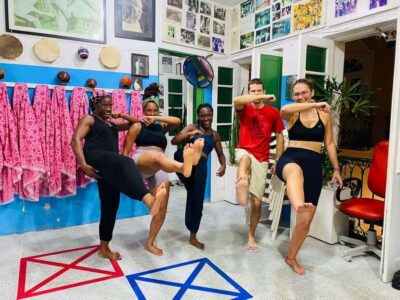
Capoeira Class at Mestre Bimba’s 1st Ever School.
Read our review →
Surf lessons with local instructors in Copacabana/ipanema!
Read our review →
Surf Lesson with Qualified Instructor in Florianópolis
Read our review →Browse the lists this tour appears in