
Reviewed · SAMBA AND NIGHTLIFE TOURS
Salvador: Cultural Night of Capoeira, Samba, and Drumming
The most striking part of this Salvador evening is its setting: the first Capoeira school in Brazil, founded in 1937 by Mestre Bimba, the creator of Capoeira Regional. Instead of watching a distant stage production, you sit close to a living tradition built around rhythm, movement, song, and participation.
I like the range of Brazilian arts packed into one short visit, from fast capoeira rodas to samba, Maculelê, drumming, and acrobatics. I also like the unpolished quality. This is presented as an organic association gathering, not a perfectly timed tourist show. The tradeoff is real: the room can get very hot, and the performances may vary in polish because they are not all part of one rehearsed routine.
Key points to know before you book
- Mestre Bimba’s 1937 school: The event takes place at the historic Associação de Capoeira Mestre Bimba in Salvador.
- More than capoeira: The program also includes samba, Maculelê, traditional drumming, live music, and acrobatics.
- An active cultural setting: Expect a spontaneous celebration with fast movements and changing performers, not a formal theater production.
- Short but full evening: The advertised duration is one hour, while the itinerary also lists a 1.5-hour concert and dance presentation, so confirm the exact timing.
- A hot room: Wear light, comfortable clothes and shoes. One attendee specifically found the room very warm.
- Simple logistics: The $30 ticket includes admission and the performance, but not food, drinks, or transportation.
Why Mestre Bimba’s school changes the experience
Many cultural performances in Salvador are designed for an audience that arrives, sits down, and leaves. This one has a stronger sense of place. You are visiting an association linked to Mestre Bimba, the capoeira master who founded the school in 1937 and developed Capoeira Regional.
That setting gives the night some useful context. Capoeira is not just acrobatics set to drums. It combines martial movement, music, ritual, improvisation, and social exchange. The performers face one another in a roda, or circle, where movement can be quick, playful, intense, and difficult to predict.
Mestre Bimba’s name matters here because his work helped shape the form of capoeira known as Capoeira Regional. The school is presented as a symbol of cultural resistance and resourcefulness, so your visit connects a lively evening show with a broader part of Salvador’s Afro-Brazilian culture.
I would not expect a museum lecture or a detailed history lesson. The value comes from being in a respected capoeira setting and seeing the art in motion. If you want a polished performance with a clear plot and fixed choreography, this may feel loose. If you want to see how music, martial art, and community work together, the setting is a strong reason to go.
More samba nights and bar crawls in Salvador
- Salvador: Cultural Treasure – Samba de Roda.
★ 4.9 · 51 reviews - Rio de Janeiro: Beginner Samba Lesson in Ipanema
★ 4.9 · 1,071 reviews - Rio: Pub Crawl in Lapa with Cachaça Tasting and Live Samba
★ 4.7 · 881 reviews
What happens when the capoeira roda begins
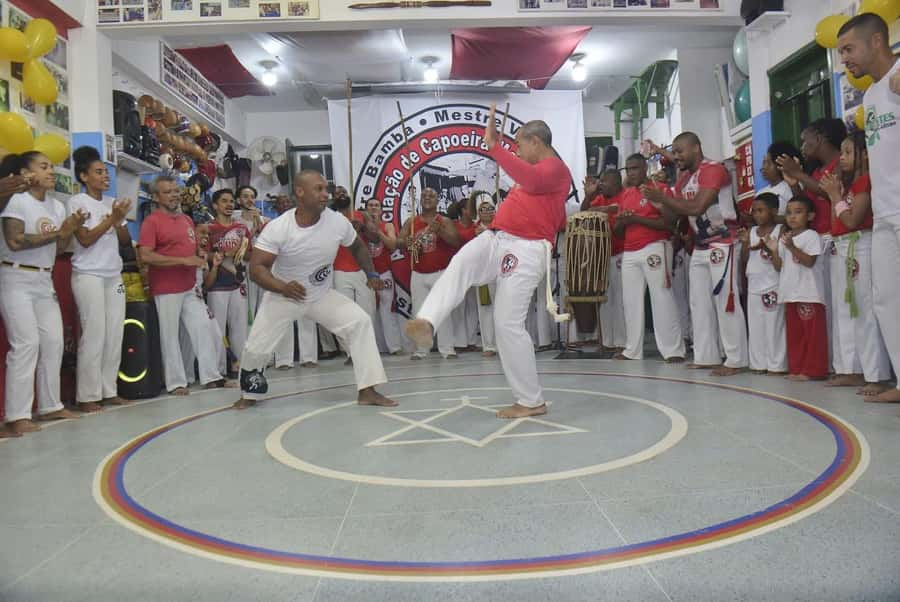
The evening opens with capoeira, the part most likely to set the tone. The action centers on a roda, with players moving inside a circle while musicians and singers establish the rhythm around them.
You can expect fast, intense movements, low sweeps, sudden changes of direction, kicks, spins, and acrobatic elements. The point is not simply to show off flexibility. The players respond to one another, and the action has a conversational quality. One person offers a movement, and the other answers with timing, balance, or a clever escape.
That spontaneity is one of the strongest reasons to choose this experience. The performers are not simply repeating a stage routine from beginning to end. Different ages and genders may take part, and the evening can show several styles of capoeira. The result feels more like a working cultural practice than a display made only for tourists.
It also means the quality and pace can change from one moment to the next. One part may be especially fast and polished, while another may feel more like an association training session. That is not necessarily a flaw, but you should know what you are buying. You are paying for access to a genuine capoeira environment, not a tightly edited theater spectacle.
Samba brings a different kind of rhythm
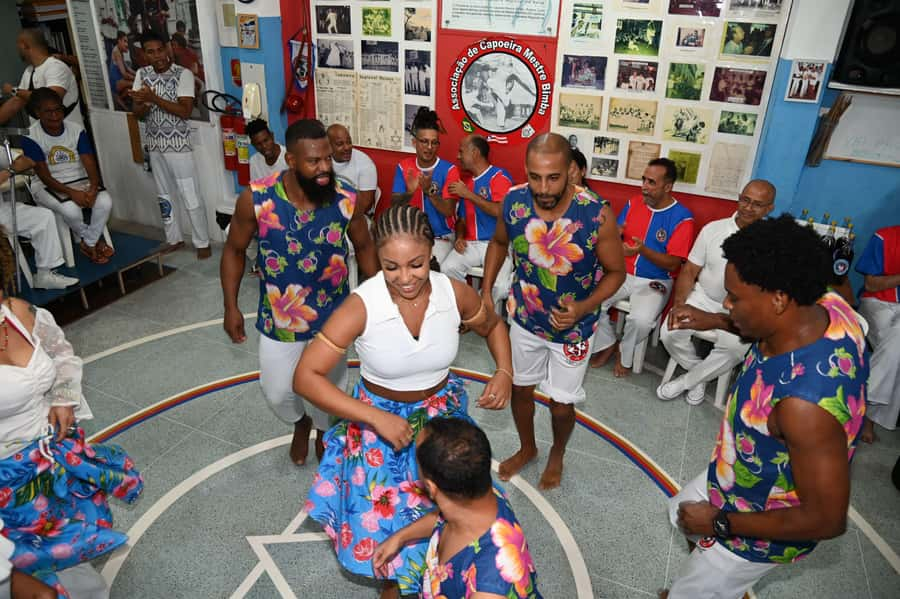
After the martial intensity of the roda, samba changes the mood. The movement becomes more social and dance-centered, while the music keeps the room moving.
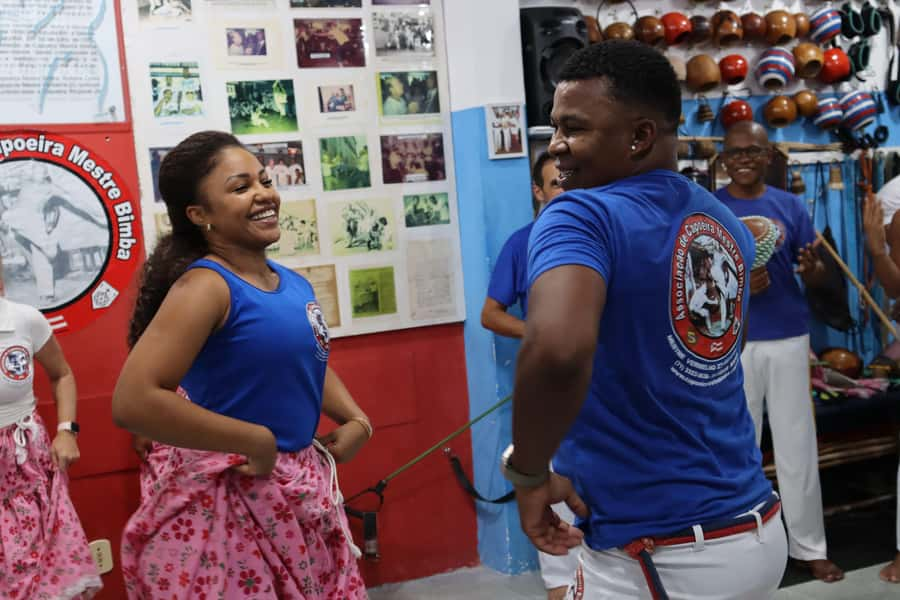
The samba segment includes both men and women, and it helps show the range of Brazilian performance traditions in a compact format. Capoeira asks you to watch timing, balance, and strategy. Samba asks you to watch rhythm, posture, footwork, and the connection between dancers and musicians.
You do not need to know the steps to enjoy this part. The presentation is designed as a show, but it remains tied to the live music around it. That matters because samba is best understood through its relationship with rhythm, not as a silent dance routine performed over a recording.
For me, the contrast between the two forms is useful. Capoeira can feel focused and competitive, while samba opens the evening outward. Together, they prevent the hour from becoming a single repeated sequence of kicks and flips.
Maculelê adds sticks, speed, and spectacle
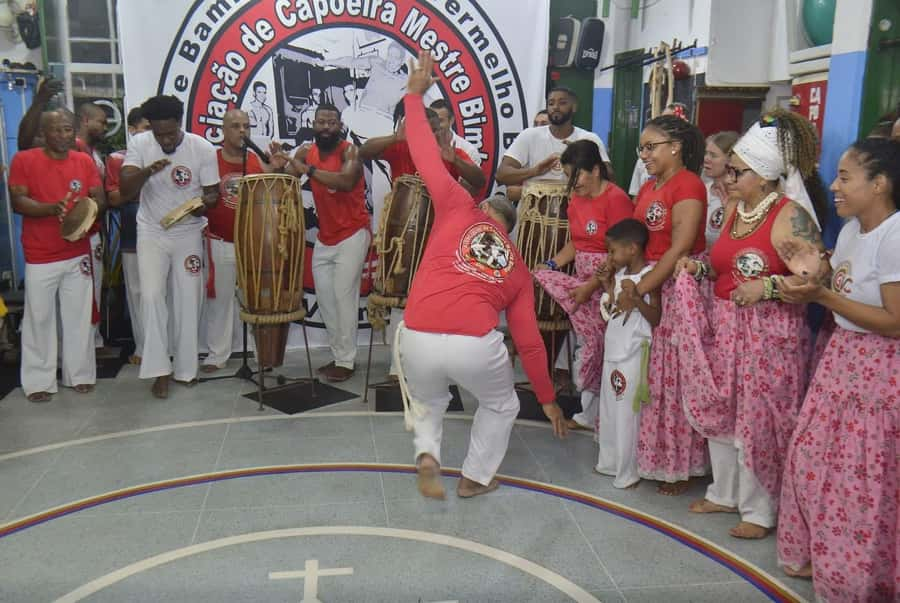
Maculelê provides another sharp change. This traditional Afro-Brazilian performance is associated with rhythmic movement and the use of sticks, giving the segment a more percussive and dramatic feel.
The combination of movement, drumming, and coordinated strikes creates some of the clearest visual moments of the evening. It also shows how dance, music, and physical skill overlap in Brazilian cultural performance. You are not watching separate boxes labeled dance, music, and martial art. The forms share a common sense of beat and group timing.
The available information does not give a detailed explanation of the Maculelê segment, so I would not book this expecting a formal lesson. Think of it as a live presentation that lets you see another tradition alongside capoeira and samba. Its value is in the contrast and the momentum it adds to the program.
More evening tours in Salvador
- Salvador by Night: Cultural Dinner and Show
★ 4.7 · 27 reviews - Salvador by Night: Cultural Show and Dinner.
★ 4.4 · 17 reviews - Salvador by Night: Pelourinho & Old Town Tour
★ 4.3 · 8 reviews - Rio de Janeiro: Sunset Sailing Tour
★ 4.8 · 994 reviews
Drumming and live music hold the night together
The drums are not background decoration. They provide the pulse that connects the different sections, from capoeira to samba and Maculelê.
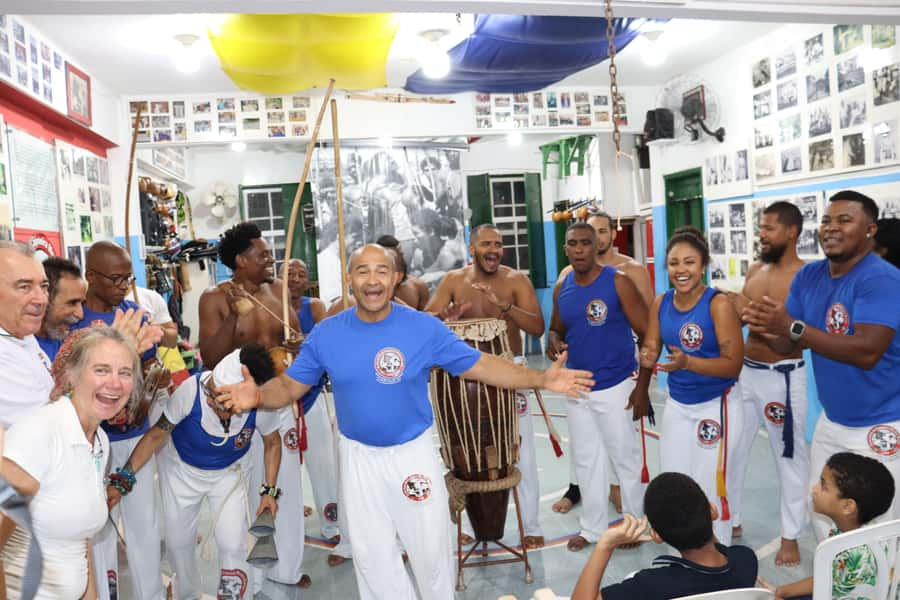
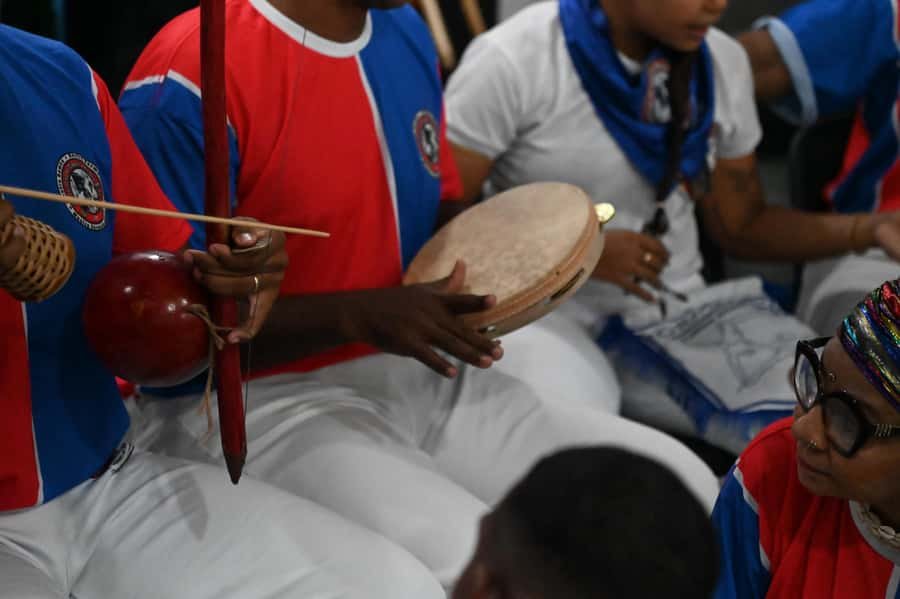
Traditional drumming and live music give the evening a stronger sense of occasion than a show using recorded tracks. You can watch the performers respond to the sound in real time. The music also explains why the program feels communal rather than like a sequence of isolated acts.
Singing is part of the capoeira atmosphere as well. The combination of voices and drums can make the room feel close and intense, especially when the performers are moving at speed. One practical point is worth taking seriously: that same closeness, along with the physical activity, can make the room hot. Choose breathable clothing and do not arrive dressed for a formal concert.
There is no food or drink included in the $30 price. One attendee received a refreshing treat afterward, but that should be regarded as an occasional extra rather than something guaranteed. Bring only what you need and plan to eat separately before or after the event.
Acrobatics are exciting, but the show is not polished theater
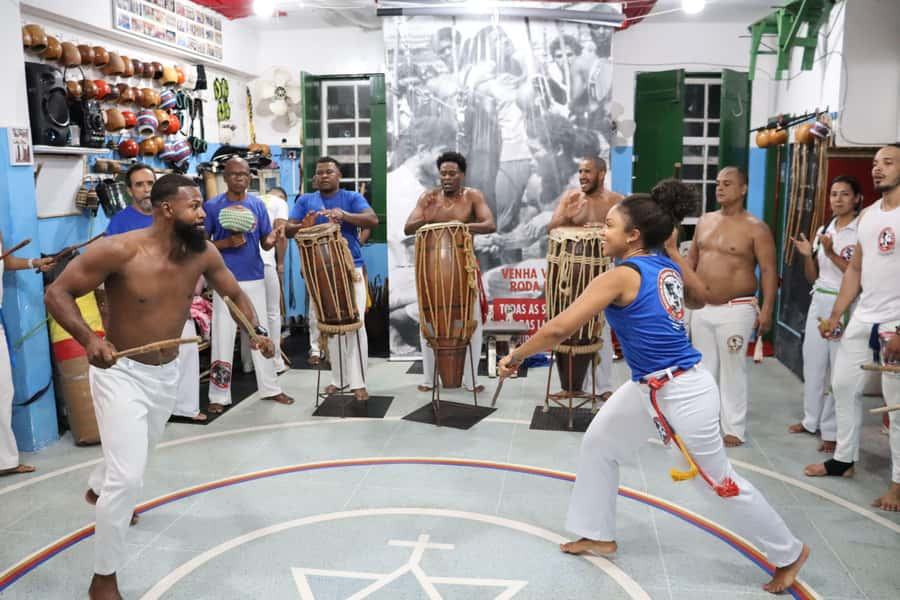
Acrobatics add the biggest visual punch. Expect jumps, spins, flexibility, and fast changes in level within the capoeira and related performances.
The acrobatics work best when they grow out of the music and the movement around them. You are not simply watching isolated tricks. They are part of a physical language that includes martial arts, dance, balance, and play.
At the same time, this is not a professional theater production with every moment calibrated for maximum effect. The association setting is part of the appeal, but it also means the performance can feel uneven. Some sequences may be thrilling, while others may look more like practice or community participation.
I see that as an honest trade. A polished show offers consistency. This event offers a closer look at a living activity, with the risk that not every section will have equal impact. The description specifically emphasizes spontaneity, and the practical meaning is simple: arrive ready for something real rather than perfectly packaged.
The timing needs a little clarification
The experience is advertised as one hour, but the itinerary also lists a 1.5-hour concert and dance presentation. That difference is small but important when you are planning dinner, transportation, or another evening activity in Salvador.
Check the available starting time and the expected length when you reserve. If your schedule is tight, allow extra time rather than assuming you will be out exactly 60 minutes after the start.
The program itself appears compact but varied. You begin at the Associação de Capoeira Mestre Bimba, then watch the performance in Salvador, with capoeira, samba, Maculelê, traditional dance, drumming, live music, and acrobatics forming the main parts. There is no separate transfer between stops. This is one venue and one cultural presentation.
That simplicity is helpful. You do not spend the evening getting on and off transport. You arrive, watch, and leave. It also means the quality of the room and the atmosphere matter more than they would on a large production with elaborate staging.
Getting to the Associação de Capoeira Mestre Bimba
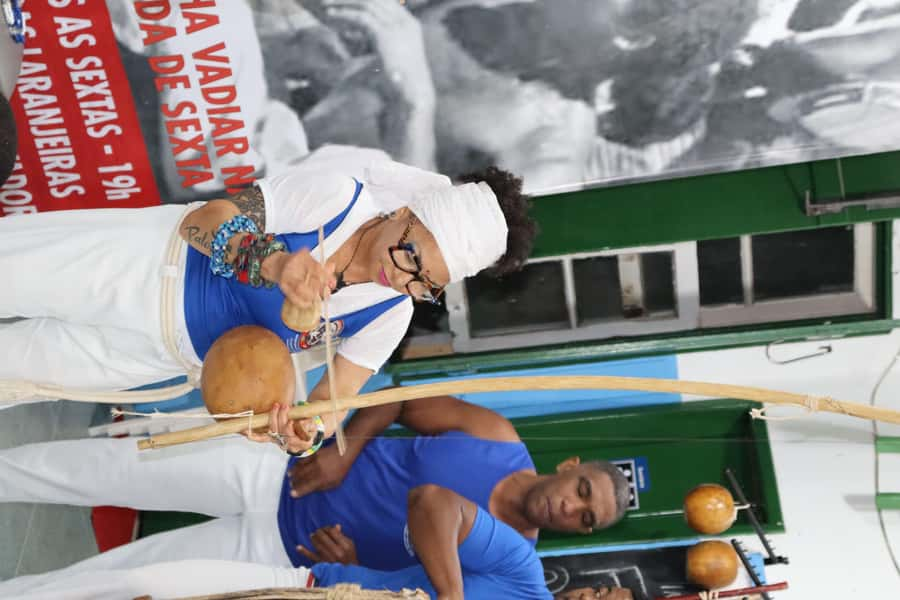
There is no pickup service, so you must make your own way to the meeting point. The listed location is the Associação de Capoeira Mestre Bimba in Salvador.
The nearby landmarks provided for orientation are Ó Paí Ó Restaurante and São Domingos Gusmão Church, both in Largo do Terreiro de Jesus. These are useful reference points when you are finding the association, especially if you are already spending time in the historic center.
Because no transport is included, factor the cost and time of reaching the venue into the $30 price. The ticket covers entry and the cultural program, but not your ride, meal, or drinks.
Wear comfortable shoes and clothes. You may be sitting for part of the event, but the atmosphere involves active movement, close musicians, and a warm room. Smoking is not allowed.
The event is not suitable for pregnant women or people with back problems. The physical action is performed by the artists, but the setting and the heat may still make the experience uncomfortable or unsuitable for some people.
Is $30 a fair price?
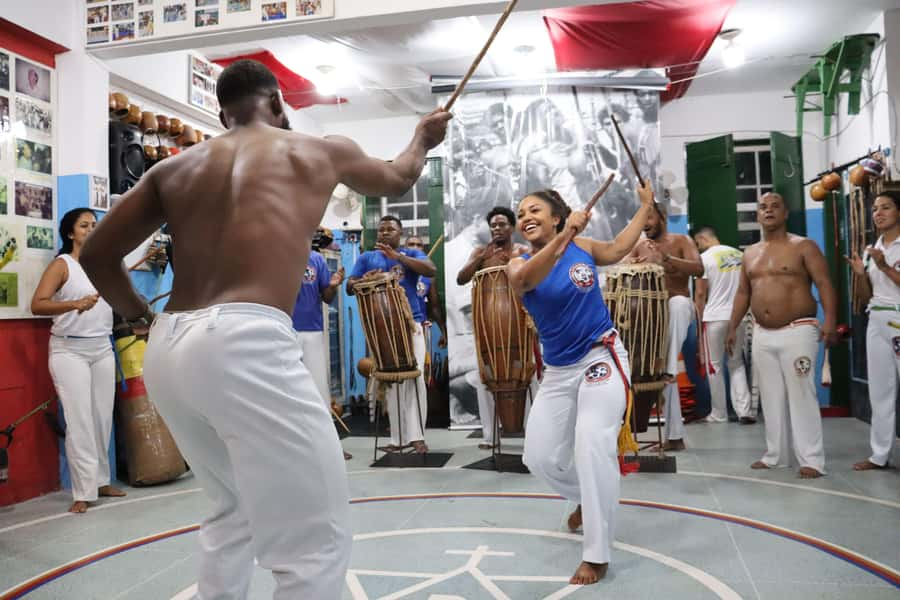
At $30 per person, this is a reasonable price if you value the location and the cultural setting as much as the entertainment itself.
You are not paying for a long evening. The advertised duration is short, and the program may last one hour or possibly closer to 1.5 hours depending on the actual schedule. If you judge the ticket only by minutes of performance, you may find it less compelling than a longer concert.
The better comparison is what the ticket gives you access to. You see several forms in one visit, including capoeira, samba, Maculelê, drumming, music, and acrobatics. You also enter a school connected with Mestre Bimba, a name central to Capoeira Regional. For someone interested in Afro-Brazilian culture, that combination gives the price more weight.
The value is weaker if you want a seated, formal show with guaranteed polish. The performances can be uneven, and the room can become hot. It is a good price for a compact cultural encounter, not necessarily for a grand production.
The booking terms are flexible: you can reserve and pay later, and cancellation is allowed up to 24 hours before the activity for a full refund. Those terms help if your Salvador schedule is still changing.
Who will enjoy this most?
I would recommend this experience to you if you want to see capoeira in a place connected to its tradition rather than only watching it as a tourist attraction. It suits visitors who enjoy live rhythm, physical performance, and cultural events with some unpredictability.
It is also a good choice if you have only one evening available and want several Brazilian forms in one stop. The short format makes it easier to fit around a day in Salvador, though the timing difference means you should leave room in your plans.
Families and mixed-age groups may appreciate the range of performers. The program includes participation from different ages and genders, and the mix of music, dance, and acrobatics gives people several ways to connect with it.
I would be more cautious if you dislike heat, loud drumming, sudden movement, or informal performance spaces. The room can become very warm, and the lack of polished choreography is part of the deal. Pregnant women and people with back problems should not book.
English and Portuguese are available for the live guide element. Still, the main communication comes through movement, rhythm, and music, so you do not need advanced language skills to follow the performance.
Should you book this Salvador cultural night?
Book it if you want a real capoeira setting, a compact introduction to several Afro-Brazilian performance forms, and an evening driven by live sound rather than stage polish.
Skip it if your priority is a cool, air-conditioned theater, a fixed running time, or perfectly rehearsed choreography. The room may be hot, the show may vary from one section to another, and the advertised duration needs checking.
For the right audience, the rough edges are useful. They remind you that capoeira, samba, drumming, and Maculelê are not just items on a tourist menu. They are active practices, carried by people in a place with a direct link to Mestre Bimba. At $30, that makes this a worthwhile short stop in Salvador, especially when you want culture with a pulse.
FAQ
Where does the cultural night take place?
It takes place at Associação de Capoeira Mestre Bimba in Salvador, near Ó Paí Ó Restaurante and São Domingos Gusmão Church in Largo do Terreiro de Jesus.
How long does the experience last?
The activity is advertised as one hour, while the itinerary also lists a 1.5-hour concert and dance presentation. Check the exact timing when you reserve.
What performances are included?
The program includes capoeira, samba, Maculelê, traditional drumming, live music, and acrobatics.
Is transportation to the venue included?
No. You must make your own way to the Associação de Capoeira Mestre Bimba, as pickup service is not offered.
Is food or drink included?
No. Food and drinks are not included in the ticket price. A refreshing treat may sometimes be offered afterward, but it is not listed as a standard inclusion.
What languages are available?
The live tour guide element is available in English and Portuguese.
Can I cancel or pay later?
Yes. You can reserve now and pay later, and you can cancel up to 24 hours in advance for a full refund.
Just added in Salvador
- Salvador: Schooner Cruise with Pickup and Itaparica Stop★ 3.8 · 5 reviews
- Salvador: Traditional Drumming and Percussion Workshop★ 4.4 · 10 reviews
- Salvador by Night: Cultural Show and Dinner.★ 4.4 · 17 reviews
- Salvador: 3-Hour Percussion Class★ 4.9 · 10 reviews
- Salvador: Walking Tour Through Pelourinho★ 5.0 · 49 reviews
- Salvador: Capoeira Class at Mestre Bimba’s 1st Ever School.★ 4.9 · 34 reviews
- Salvador: Cultural Treasure – Samba de Roda.★ 4.9 · 51 reviews
- Salvador: CAPOEIRA CLASS – CULTURAL★ 4.6 · 13 reviews
Samba and Nightlife Tours, compared.
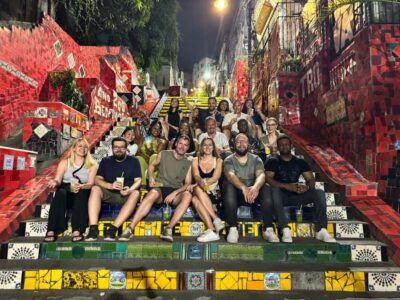
Pub Crawl in Lapa with Cachaça Tasting and Live Samba
Read our review →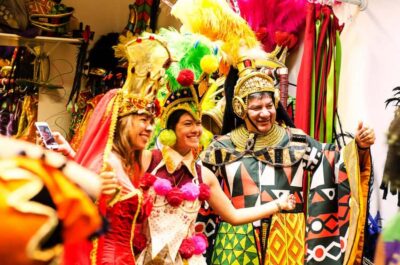
Carnival Backstage Tour at Samba City with Cocktail
Read our review →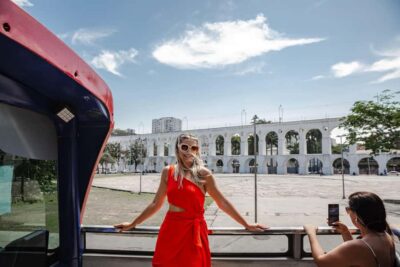
Hop-ON Hop-OFF Sightseeing Bus in Rio de Janeiro – Rio Samba Bus
Read our review →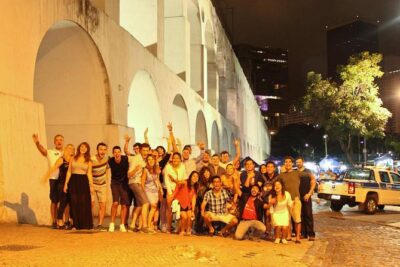
More than a Pub Crawl: An Authentic Night Experience in Rio
Read our review →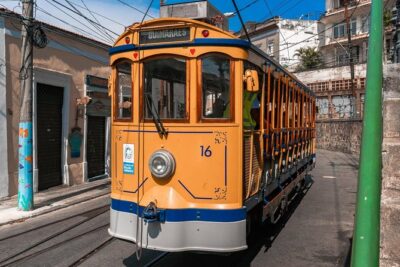
Santa Teresa, Lapa, and Cinelândia with Tram Ride and Selarón Steps
Read our review →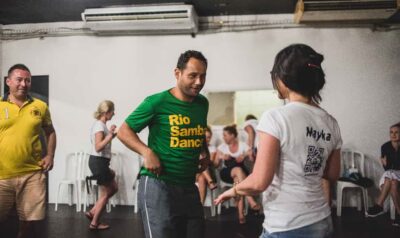
Browse the lists this tour appears in