
Reviewed · WALKING TOURS
Rio: Historical Walking Tour
Rio’s historic center is best understood at street level, where grand churches, government buildings, old arcades, and everyday city life sit close together. This four-hour tour links the main sights by subway and on foot, beginning at Cinelândia and working toward Praça XV, Teles Arch, and Candelária.
I especially like the small-group format, which gives you a better chance to ask about Brazil’s politics, economy, and past. I also like the practical route: subway transport gets you downtown without spending the morning in traffic, and the walk connects buildings that are easy to miss on your own.
The main drawback is the amount of walking on cobbled streets and city sidewalks. This is not a good choice if you have mobility difficulties, and some interiors may be closed when you visit.
Key points to know before booking
- Cinelândia sets the tone: Start among grand buildings shaped by French architectural influence.
- The route is packed with landmarks: See Confeitaria Colombo, Tiradentes Palace, Praça XV, Teles Arch, Candelária Church, and several cultural centers.
- Subway transport is included: You travel downtown from the Copacabana area and return by subway.
- Guides handle several languages: Tours are offered in English, Spanish, or Portuguese.
- Small groups help with questions: Guides such as Lucien, Monique, Ernani, and Mathilda have been praised for clear explanations and flexibility.
- Plan for a steady walk: The tour lasts four hours and is not suitable for wheelchair users or people with mobility impairments.
Why downtown Rio deserves a walking tour
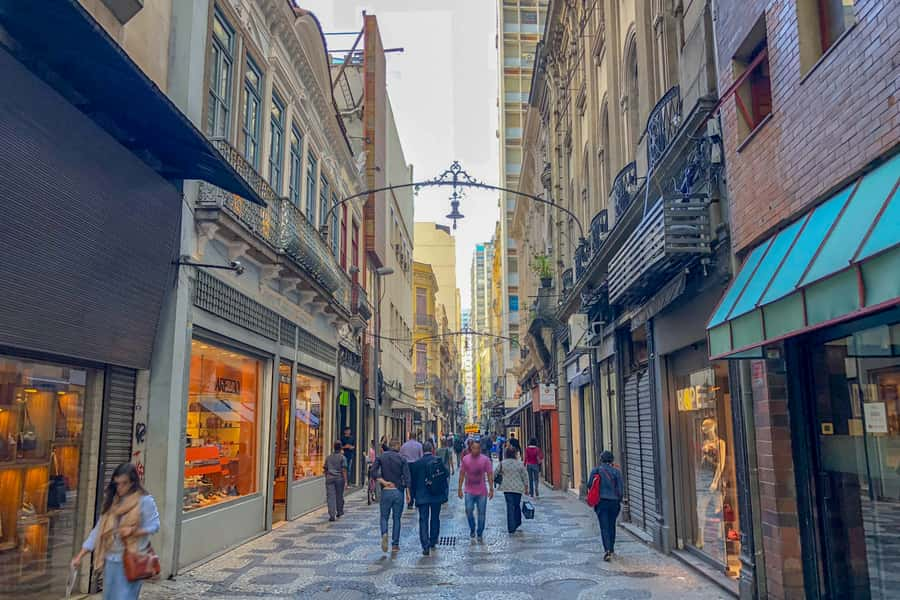
Rio is often sold through beaches, mountains, and sweeping views. Those are good reasons to visit, but the city center explains how Rio became Brazil’s former national capital and how its public life developed around churches, government buildings, ports, banks, and commercial streets.
The center makes more sense when you walk between the sights. A building that looks impressive from a bus window becomes more interesting when you can pause at its entrance, notice the stonework, and hear how it fits into the city’s past.
This tour takes that approach. You use the subway to reach downtown, then continue mostly on foot with a guide. The route is not simply a list of photo stops. It moves through squares, lanes, churches, cultural buildings, and old commercial spaces, giving you a broad look at central Rio in four hours.
The price is $79 per person. That is not a bargain basement walking tour, but it includes subway transport, entrance fees, a professional guide, and a small group. If you want someone to connect the buildings and explain Brazil’s political and cultural story, the cost can be reasonable. If you only want to stroll through the center and take exterior photos, you could find the price harder to justify.
More history walks in Rio de Janeiro
- Rio de Janeiro: Historic Rio and Santa Teresa Half-Day Tour
★ 4.4 · 228 reviews - Rio de Janeiro: Little Africa Heritage Walking Tour
★ 4.9 · 177 reviews - Explore Little Africa : Unveiling Afro Heritage in Rio de Janeiro
★ 5.0 · 97 reviews
Starting at Cinelândia by subway

The listed starting option is the Copacabana Palace at Avenida Atlântica, 1702, though the exact meeting point can vary with the option you book. From there, you travel by subway to downtown Rio and arrive at Cinelândia Station.
That opening ride matters. You avoid arranging separate transport into the center, and the subway gives you a direct transition from the beach district to the older civic core. It also means the experience begins as a local city outing rather than a coach excursion.
Cinelândia is a strong place to begin because the area carries visible traces of French architectural influence. Your guide can provide the background that turns decorative façades and formal public buildings into part of a larger story.
The early section includes the Naval Club, the Monastery Church of Santo Antônio, and the Ordem Terceira de São Francisco da Penitência. These stops show how military, religious, and civic institutions shaped the center side by side.
You should expect some time outside and on your feet right away. Wear practical shoes, since the day includes sidewalks and cobbled streets rather than a smooth museum route.
From Carioca Square to Confeitaria Colombo
The walk continues toward Carioca Square, with more historic buildings along the way. This part of the tour is useful because the guide can point out details you might pass without noticing, especially where several important sites sit close together.
One of the main stops is Confeitaria Colombo, built in 1894. Its age and grand interior make it more than a place associated with food. It reflects the period when Rio’s central districts served as important stages for business, politics, social life, and public ceremony.
The tour includes entrance fees, but drinks and meals are not included. That distinction matters at Confeitaria Colombo. You may see the interior as part of the visit, but you should not assume that a pastry, coffee, or other purchase is part of the $79 price.
I like this stop because it gives the itinerary a change of pace. After churches and formal public buildings, a historic confectionery helps you picture how people spent time in the city’s old center.
Praça XV and the former Imperial Palace
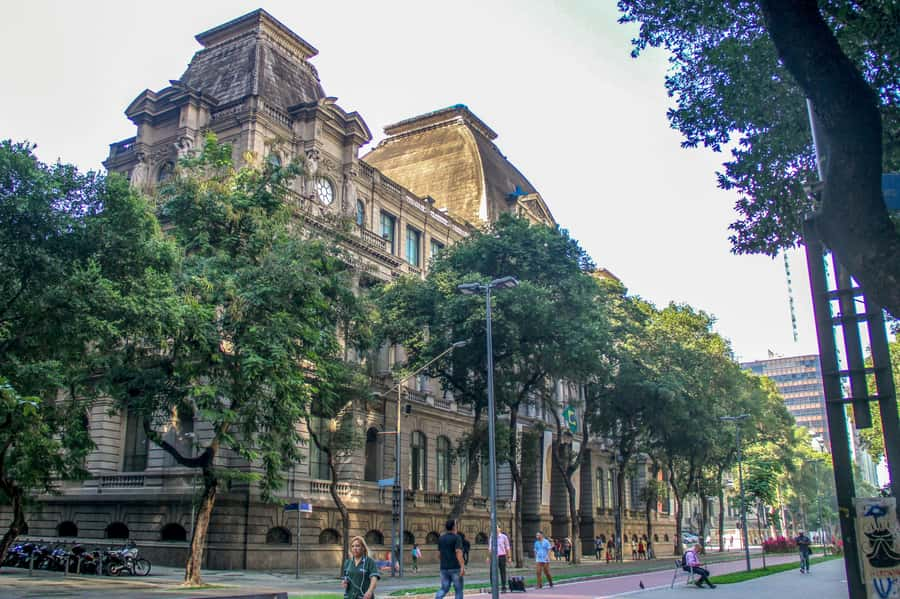
The route then reaches Praça XV, one of the center’s key public spaces. Here you see the Imperial Palace, the statue of General Osório, and Mestre Valentim’s Fountain.
This section connects Rio’s streets with Brazil’s imperial past. The palace gives the square political weight, while the statue and fountain add the kind of public art and street detail that make a walking tour worthwhile.
A guide is especially useful here because the meaning of a square is not always obvious from its appearance. You can ask about the people represented by the monuments and how the area functioned during different periods of Brazilian history.
The tour does not promise a long interior visit at every building. Some stops are viewed from outside, and the pace must allow the group to cover a large number of sites in four hours. If you want an extended museum visit, this is not that kind of tour. If you want a connected overview of central Rio, the pace should suit you better.
More walking tours in Rio de Janeiro
- Rio de Janeiro: Rocinha Favela Walking Tour with Local Guide
★ 4.8 · 3,052 reviews - Rio De Janeiro: Half-Day Rocinha Favela Walking Tour
★ 4.7 · 2,272 reviews - Sunrise and Sunrise Walk Two Brothers with Local Guide
★ 5.0 · 193 reviews - Learn the History of Rio with an Unforgettable City Center Walking Tour
★ 5.0 · 82 reviews
Teles Arch and Travessa do Comercio
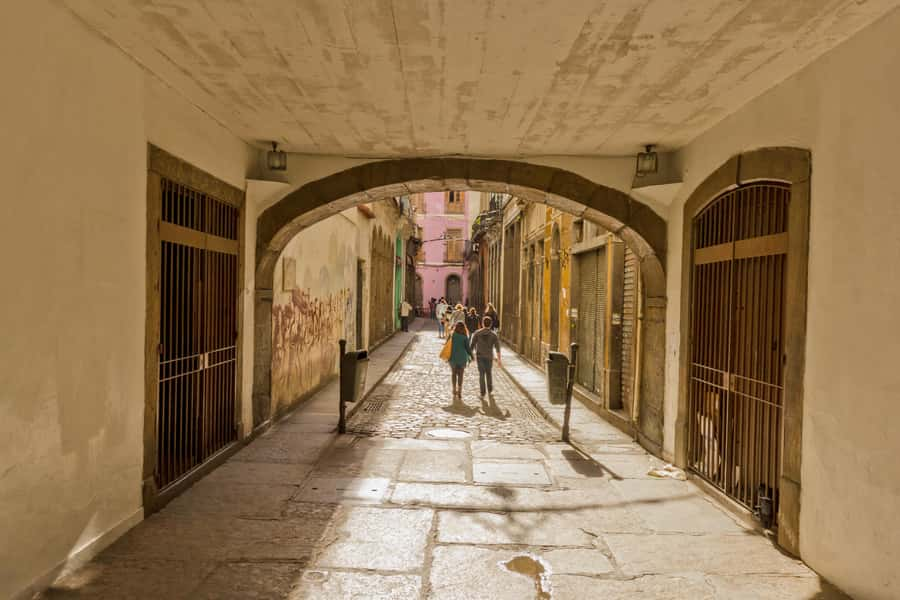
From Praça XV, the route reaches Teles Arch and the cobbled Travessa do Comercio. These narrower spaces offer a sharp contrast with the large squares and formal façades earlier in the morning.
Teles Arch acts as a passage into an older part of the city. Travessa do Comercio gives you a closer look at small-scale streets that can disappear when you focus only on Rio’s major monuments.
The route also passes the former residence of Carmen Miranda. This adds a personal and cultural note to the tour, linking the city’s architecture with one of Brazil’s best-known performers.
I find this part particularly valuable for visitors who want more than the standard postcard version of Rio. You are not only seeing major civic buildings. You are also moving through lanes and addresses that help the center feel lived in.
The cobbled surface is one reason to take the mobility warning seriously. Even people who walk comfortably on paved streets may prefer sturdy shoes and a slower pace here.
Churches and cultural centers near Candelária
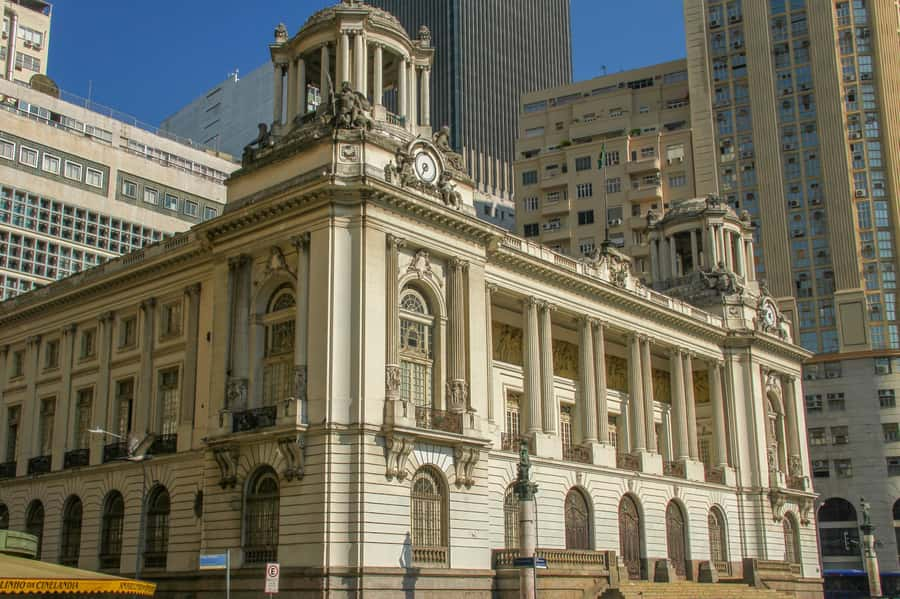
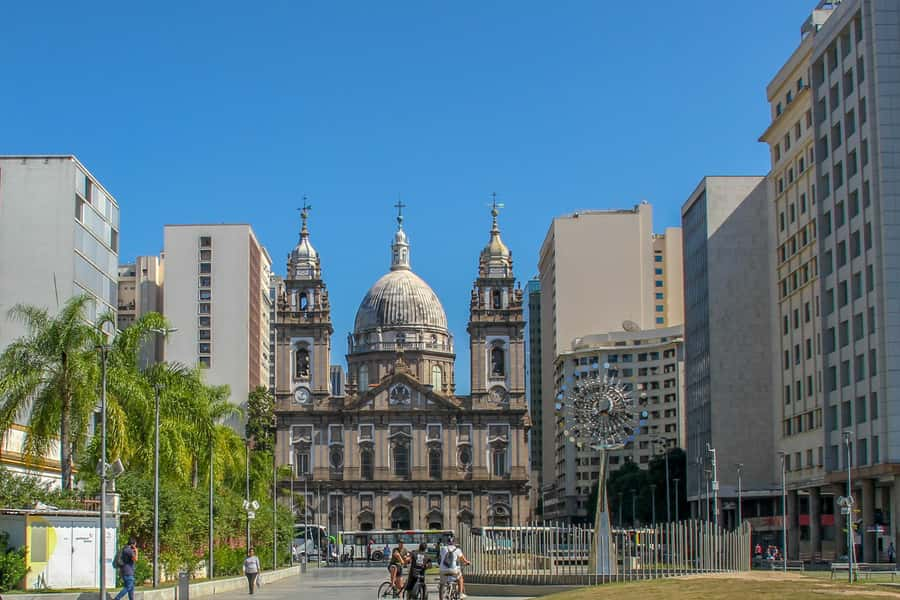
The later section brings together several important religious and cultural sites. You visit the Church of Our Lady of the Merchants, the Post Office Cultural Center, France-Brazil House, the Bank of Brasil Cultural Center, and Candelária Church.
This is a strong finish because the buildings serve different purposes. Churches reveal the city’s religious traditions, while the cultural centers show how older structures continue to be used for exhibitions and public programs.
France-Brazil House and Candelária Church are visited when open. The same condition applies to the Bank of Brasil Cultural Center and some other interiors, so the exact indoor experience depends on opening hours and access on the day.
That caveat is normal for a city walking tour, but it is worth keeping in mind. You should book this for the route and the guide’s explanations, not on the assumption that every listed building will offer a full interior visit.
The Post Office Cultural Center and Bank of Brasil Cultural Center add variety to the final stretch. Their inclusion also makes the tour useful for visitors interested in how Rio uses historic buildings today, not only how they were used in the past.
What the guide adds to the experience
The guide is the main reason to choose this tour instead of following a map. The route contains enough landmarks to keep you occupied, but the buildings become more memorable when someone explains their role in Brazil’s political, religious, and economic life.
The guides associated with this experience include Lucien, Monique, Ernani, and Mathilda. Your guide depends on the date and availability, but the feedback points to a strong pattern: clear historical commentary, good preparation, and willingness to answer questions.
One especially useful feature is the chance to ask about more than architecture. The guide may discuss history, politics, and the country’s economy, which helps you place the center in modern Brazil rather than treating it as a collection of old façades.
A small group can make a real difference here. In a large group, it is harder to hear explanations in a busy square and harder to stop for questions. With fewer people, a guide may also be able to adjust the order or spend more time on a subject that interests you, although you should not assume every guide will customize the route to the same degree.
Four hours on foot, with a subway return
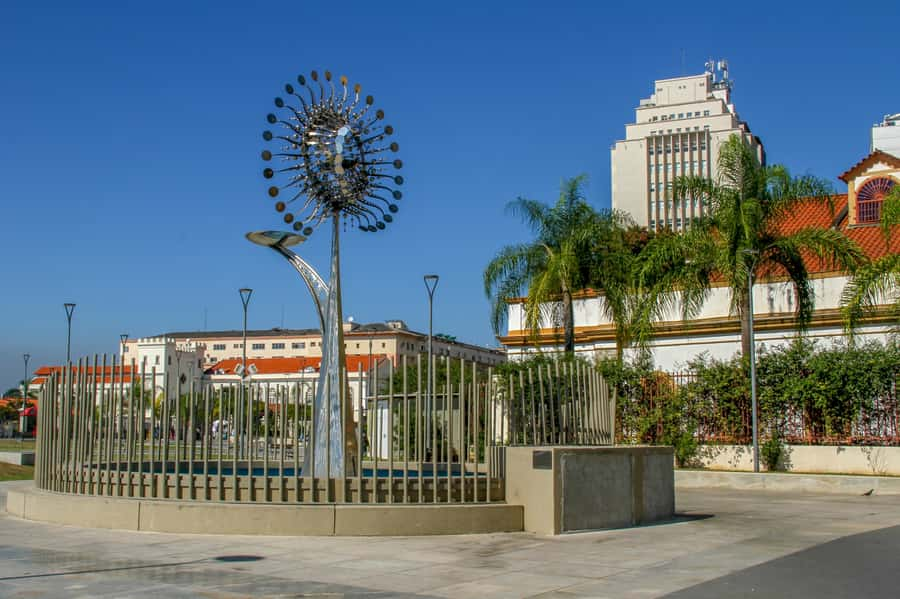
The advertised duration is four hours, including the downtown visit and subway transport. The return takes you back to the Copacabana Palace, A Belmond Hotel, according to the listed itinerary.
That length gives you enough time to see a wide selection of sites without turning the outing into a full-day commitment. You still need to manage your energy. The tour includes extended walking, city streets, churches, squares, cultural buildings, and cobbled lanes.
Wear comfortable walking shoes and bring whatever you normally need for a half-day outdoors. Drinks and meals are not included, so plan accordingly. The supplied information does not specify meal breaks, so do not book this expecting lunch to be built into the schedule.
The subway portion is included in the tour price. This is useful both for convenience and for keeping the group together between Copacabana and downtown.
Who will get the most from this tour
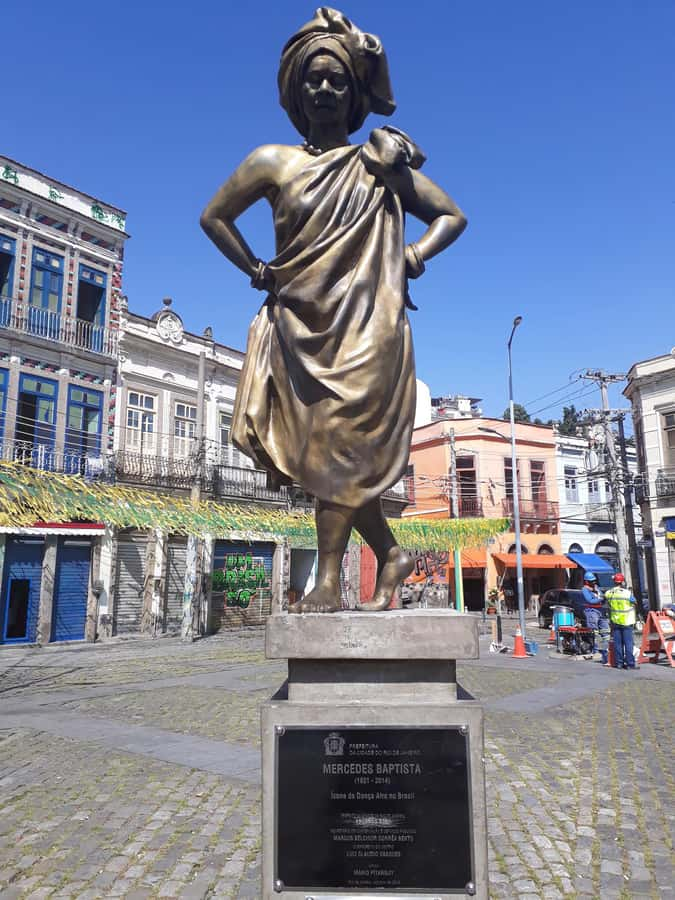
I would choose this experience if you are visiting Rio for the first time and want a clear introduction to the central city. It is also a good fit if beaches and viewpoints are not enough for you and you want architecture, public squares, churches, cultural buildings, and Brazilian history in one outing.
It suits curious visitors who like to ask questions. The comments about guides such as Mathilda and Lucien suggest that the experience can be especially rewarding when you want discussion rather than a quick recital of dates.
It is less suitable if you dislike city walking, prefer a relaxed café-centered day, or need step-free access. The tour is not recommended for people with walking difficulties and is not suitable for wheelchair users.
You should also be comfortable with some uncertainty around interiors. France-Brazil House, Bank of Brasil Cultural Center, and Candelária Church are included when open, so closures may change what you see inside.
Is $79 a fair price?
At $79, the tour is priced above a basic self-guided walk, but it includes several useful extras. You receive a professional guide, subway transport, entrance fees, and a small-group experience.
The value depends on how you use the guide. If you listen closely, ask questions, and care about the links between imperial buildings, churches, public squares, and cultural centers, the tour gives you a solid half-day introduction.
If you are mainly looking for photographs, you may prefer exploring independently and spending the money on food or museum visits. The tour also does not include drinks or meals, so those costs remain yours.
The free cancellation policy allows cancellation up to 24 hours before the activity for a full refund, and you can reserve now and pay later. Those terms are useful if your Rio plans are still changing, but the more important decision is whether four hours of walking suits your interests and fitness.
Should you book this Rio walking tour?
Book it if you want downtown Rio explained by a guide rather than simply photographed from a distance. The subway connection, small group, broad mix of landmarks, and multilingual guiding make it a practical choice for a first visit.
I would be especially inclined to book if you enjoy architecture, Brazilian political history, churches, and questions about how the country developed. The strongest guide experiences appear to come when visitors engage with the guide and allow room for discussion.
Skip it if you need accessible routes, want a food-focused experience, or prefer to spend your day at Rio’s outdoor attractions. For everyone else, this is a useful way to meet the city behind the beaches, with enough structure to make four hours count.
FAQ
How long does the Rio Historical Walking Tour last?
The tour lasts four hours, including the subway journey and guided walking tour in downtown Rio.
Where does the tour start?
One listed starting option is the Copacabana Palace, A Belmond Hotel, at Avenida Atlântica, 1702. The meeting point may vary depending on the option booked.
Where does the tour finish?
The listed finishing point is the Copacabana Palace, A Belmond Hotel.
Is subway transport included?
Yes. Transport by subway is included, including the journey to downtown Rio and the return to the hotel area.
Which languages are available?
Live guiding is available in English, Spanish, and Portuguese.
What places does the tour visit?
The route includes Cinelândia, Carioca Square, Confeitaria Colombo, Tiradentes Palace, Praça XV, the Imperial Palace, Teles Arch, Travessa do Comercio, Candelária Church, and several churches and cultural centers.
Are entrance fees included?
Yes, entrance fees are included. Access to some locations depends on whether they are open when you visit.
Are food and drinks included?
No. Drinks and meals are not included in the tour price.
Is the tour suitable for wheelchair users?
No. The tour is not suitable for wheelchair users or people with mobility impairments.
Can I cancel the booking?
Yes. You can cancel up to 24 hours in advance for a full refund. The reserve now and pay later option is also available.
Just added in Rio de Janeiro
- Rio de Janeiro: Zip Lining and Canopy Tree Tour★ 3.3 · 6 reviews
- Vidigal Favela Tour★ 4.4 · 26 reviews
- Rio de Janeiro: Attend a Vasco da Gama game with local guide★ 4.8 · 9 reviews
- Unforgettable Boat Party★ 5.0 · 3 reviews
- Hang gliding flight in Rio de Janeiro★ 5.0 · 6 reviews
- Rio Highlights: Christ, Sugarloaf, and More in a Private Tour★ 5.0 · 36 reviews
- Tijuca Forest Hike – Waterfalls & Caves, Nature & Wild Life!★ 5.0 · 51 reviews
- Rocinha Walking Tour: Get a Feel for the Brazil’s Largest Favela (Shared Group)★ 5.0 · 37 reviews
Walking Tours, compared.



Sunrise and Sunrise Walk Two Brothers with Local Guide
Read our review →

Downtown-Center History Walking Tour – in English
Read our review →
Downtown-Center Walking Tour | 2 Hours – English
Read our review →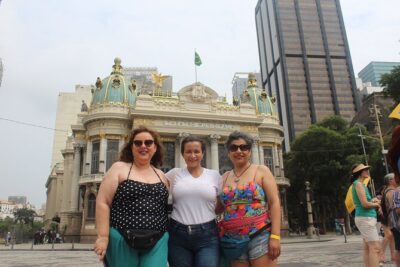
Learn the History of Rio with an Unforgettable City Center Walking Tour
Read our review →Browse the lists this tour appears in