

Reviewed · SAMBA AND NIGHTLIFE TOURS
Historical Downtown and Lapa – Walking Tour
Rio’s story comes alive on foot, from the grand cultural buildings around Praça Floriano to the colorful Selarón Steps and the market at Praça XV. This three-hour history walk gives you a useful counterpoint to Rio’s famous beaches and viewpoints.
I like the strong historical focus, especially for anyone curious about Brazil’s political past. I also like the human touch: guides such as Rafael and Juliana have been praised for answering questions, suggesting places to eat, and helping visitors feel at ease in the city.
The main consideration is the price and format. The tour is listed at $40 per person, yet some of the tour wording and past experiences describe it as a free walk supported by tips. Confirm exactly what you are booking, and note that the three-hour route can cover about three miles.
Key points to know before you go
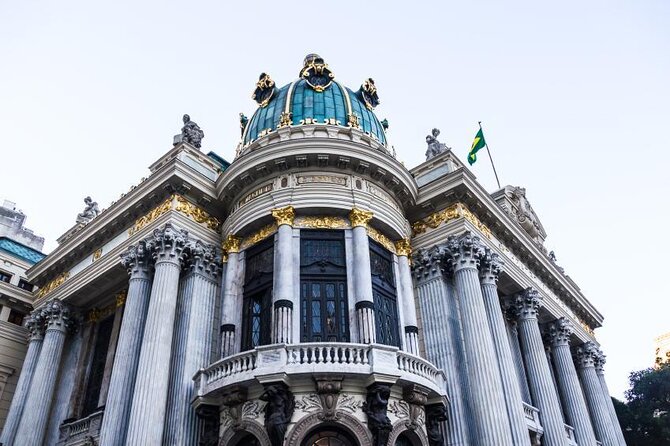
- Start at Praça Floriano: Meet near the Theatro Municipal in central Rio, at Praça Floriano, 1.
- History comes first: Expect explanations of Brazilian political history, public buildings, squares, and the development of central Rio.
- Selarón Steps are a highlight: The famous tiled staircase provides one of the route’s best photo stops.
- Finish at Praça XV: The walk ends near Feira da Praça XV, where you can browse the market if it is operating.
- Small but not private: The maximum group size is 20, and the guide may lead in more than one language.
- Plan for city walking: Wear comfortable shoes, carry water, and leave room for a short stop to refill your drink or use a restroom.
Why this walk is a smart introduction to central Rio
Most first-time visits to Rio focus on Copacabana, Ipanema, Sugarloaf Mountain, and Christ the Redeemer. Those places deserve their fame, but they do not explain how Rio became Brazil’s political and cultural center.
This route takes you into Centro and Lapa, where the city’s public life is written into plazas, monuments, government buildings, cultural institutions, and old streets. I like that the walk is not just a parade of photo stops. The guide’s role is to connect buildings and places to Brazil’s past, particularly its political changes.
That makes this a good first or second activity in Rio. You can ask questions as the city unfolds, then use the guide’s suggestions for food and other sights later in your stay. Rafael, one of the named guides, is praised for turning the route into something like a lively history class. Juliana is described as energetic, friendly, and comfortable speaking both English and Portuguese.
The group limit of 20 matters. It is not a private tour, but it is small enough for questions to be practical, especially if the guide keeps the group together. The exact language mix can vary, since the experience may be led by a multilingual guide.
More samba nights and bar crawls in Rio de Janeiro
- Rio de Janeiro: Beginner Samba Lesson in Ipanema
★ 4.9 · 1,071 reviews - Rio: Pub Crawl in Lapa with Cachaça Tasting and Live Samba
★ 4.7 · 881 reviews - Rio: Carnival Backstage Tour at Samba City with Cocktail
★ 4.6 · 520 reviews
Praça Floriano and the opening view of Rio’s civic center
The meeting point is Praça Floriano, 1, in Centro, near the Theatro Municipal. Some directions identify the meeting area as the Theatro Municipal and suggest looking for guides in green shirts, so check your confirmation carefully before setting out.
This is a useful place to begin because the square introduces Rio as a city of public institutions, not only beaches and carnival. The surrounding cultural buildings give the guide plenty to explain before the group heads toward the Biblioteca Nacional and the Museu Nacional de Belas Artes.
I would arrive a little early. Central Rio can feel confusing if you are still learning the street layout, and a walking tour works best when you are not rushing in at the last minute. The tour does not include hotel pickup unless you select an option that does, so you need to reach the meeting point on your own.
The area is near public transportation, which helps. Still, allow extra time if you are coming from the beach neighborhoods or arriving by cruise ship. The cancellation terms specifically warn that missing the tour because a cruise ship arrives late does not qualify for a refund.
Biblioteca Nacional: 25 minutes with Brazil’s cultural record
The first named stop is the Biblioteca Nacional, where the group spends about 25 minutes viewing the building from outside. The library is an important symbol of Brazil’s cultural life, and the stop gives the guide a chance to explain why Rio’s center gathered so many major institutions.
The listing describes admission as included, although the stop itself is marked external. Read that detail as a sign that you should expect an exterior visit rather than a scheduled interior library tour. The value here is the commentary and the building’s place in the city, not time spent browsing shelves.
Twenty-five minutes is enough for photographs and a focused explanation without making the walk feel like a slow architectural survey. If you enjoy old civic buildings, listen closely and ask questions. The guide’s strongest role on this route is interpretation: explaining what you are looking at and why it matters.
This is also one of the better stops for visitors who want political context. Brazil’s national institutions are tied to changes in government, public power, and the country’s changing identity. The guide can give you a clearer framework than a quick photograph from a passing taxi.
Museu Nacional de Belas Artes and the war memorial
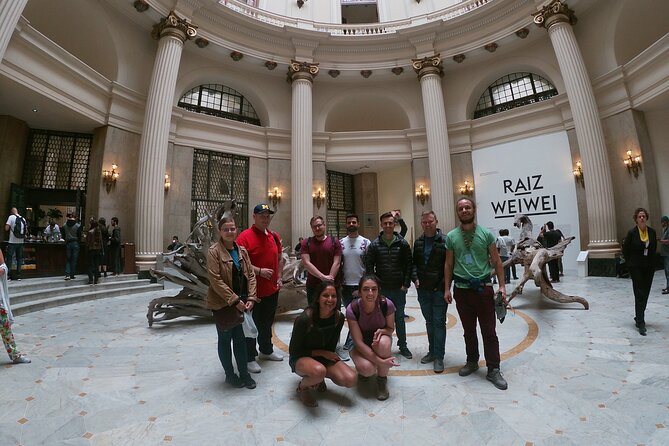
The next stop is the Museu Nacional de Belas Artes, with about 15 minutes outside. The itinerary also names the National Monument to the Dead of the Second World War. The supplied details do not make clear how much time is assigned to each site, so expect a brief exterior explanation rather than a museum visit.
That distinction matters. If you want to see the museum’s collections, this walking tour does not promise an interior visit. You are getting an outside look and historical context as part of a larger route.
The war memorial adds another layer to the city’s public memory. A short stop here can help you see how Rio’s monuments reflect Brazil’s place in world events, not just its local story. This is exactly the sort of detail that can be missed when you explore Centro alone.
The pace is likely to feel brisk. Fifteen minutes passes quickly when a guide is explaining a building, answering questions, and leaving time for the group to move on. I would save detailed museum visits for another part of your itinerary rather than expecting this tour to cover them.
More history walks in Rio de Janeiro
- Rio de Janeiro: Historic Rio and Santa Teresa Half-Day Tour
★ 4.4 · 228 reviews - Rio de Janeiro: Little Africa Heritage Walking Tour
★ 4.9 · 177 reviews - Explore Little Africa : Unveiling Afro Heritage in Rio de Janeiro
★ 5.0 · 97 reviews - Learn the History of Rio with an Unforgettable City Center Walking Tour
★ 5.0 · 82 reviews
Avenida Rio Branco shows Rio at city scale
The walk along Avenida Rio Branco lasts about 20 minutes. This broad central avenue helps you understand the scale of Rio’s downtown and the way major streets organize the historic core.
Avenida Rio Branco is less about one single attraction and more about seeing how the city functions around its cultural and civic buildings. The guide can point out details you might otherwise pass without noticing, while the walking time keeps the route connected rather than turning it into a series of isolated stops.
This is where comfortable shoes become important. One past experience describes a route of roughly three miles at an average pace. That distance is manageable for most people, but the heat can change the experience quickly. One guide-led walk took place on a cool day, and the same pace might feel harder under strong sun.
Bring water and use the opportunity for the short restroom or drink refill break mentioned in the tour experiences. This is a simple practical detail, but it can make a three-hour city walk far more pleasant.
Lapa and the Selarón Steps
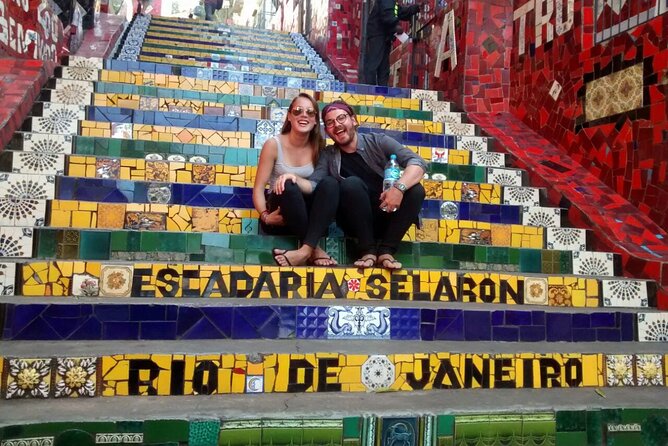
The route then reaches Escadaria Selarón, usually called the Selarón Steps. This is likely the most instantly recognizable photo stop on the walk.
The staircase’s colorful tile work gives the route a welcome change of mood after the formal libraries, museums, avenues, and monuments. It also connects the historical center with Lapa, an area known for its artistic street life and strong visual character.
You should allow time for photographs, but remember that the group has a schedule. The guide may explain the steps, help position the stop within Rio’s larger story, and then move everyone onward. If photography is your main goal, you may want to return independently later, since a group walk cannot wait for every possible angle.
The steps can also be tiring for anyone with mobility concerns. The supplied information says most people can participate, but it does not provide a detailed accessibility assessment. If stairs or uneven city streets are difficult for you, ask the provider before booking.
This is also a place where the guide’s personality matters. Juliana is described as high-energy and fun, while Rafael is praised for making historical material easy to follow. A lively guide can keep a group engaged when the route shifts from formal history to street-level Rio.
Republic Square and the final approach to Praça XV
The itinerary lists a stop connected with the Republic, though it does not give a separate duration or a fully specific location. Treat this as part of the broader historical walk through central Rio rather than a guaranteed long visit at a single named attraction.
The route ends at Praça Quinze de Novembro, usually called Praça XV. This is a practical finish because you are left in a central part of Rio rather than returned to the starting point. You can continue exploring, find food, or use public transportation from there.
The final stop is Feira da Praça XV, visited from outside for about 15 minutes. Admission is not included, which makes sense for a public market or street setting. The market may add a more everyday side of Rio to a route otherwise focused on major institutions and monuments.
One useful detail is timing. A Saturday walk may coincide with open markets, adding more activity and browsing to the final section. Since the schedule and market operation can vary, do not book the tour solely for the fair. Think of it as a bonus at the end of a historical route.
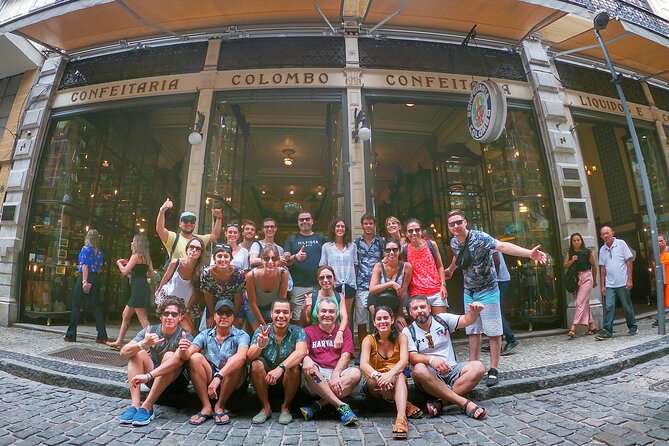
The tour experiences also mention visits near cathedrals, squares, and an old Rio café, but the supplied itinerary does not assign these as formal stops. You may hear about or pass related sites, yet you should not assume a café visit or cathedral interior is guaranteed.
The guide makes the difference
The strongest part of this experience is the guide’s explanation of Rio’s past. Rafael, also referred to as Raffael, is praised for his historical understanding, calm answers, and practical suggestions. Juliana is described as warm, energetic, and easy to talk with, using both English and Portuguese.
Those details tell you what kind of tour this is meant to be. You are not simply following a flag through the center. You are encouraged to ask about Brazil’s political history, local food, and other places to visit.
The guide may operate in more than one language, so the exact rhythm of the commentary can vary. If the group includes English and Portuguese speakers, explanations may take longer or alternate between languages. That can be useful if you want a bilingual setting, but it may reduce the amount of time spent on each site.
There is also an important booking warning. At least one English-language tour was cancelled a few hours before departure because fewer than three people had booked. The details state that a minimum of three may be required, even though the maximum is 20. If your time in Rio is tight, ask about the minimum group requirement and keep a backup plan.
Is $40 a fair price?
At $40 per person, the tour is reasonably priced if you want a guided three-hour introduction to central Rio and prefer having historical context explained as you walk. The value is strongest for first-time visitors, history fans, and anyone who wants to ask questions rather than read a guidebook while moving between sights.
The price needs clarification because some descriptions call this a free walking tour where you tip the guide at the end, with no required minimum. The supplied booking information, however, lists a $40 charge per person. That may reflect a different booking option, a change in the product, or a paid version of a formerly tip-based walk.
Do not assume that $40 includes food, drinks, hotel transfers, or museum interiors. Food and drinks are excluded, hotel pickup and drop-off are excluded unless selected, and the route’s named visits are mainly exterior stops.
A small group of up to 20 keeps the price more attractive than a private tour. You get a fixed route, a guide, and the chance to ask questions without paying private-guide rates. If you want a completely flexible schedule or long visits inside museums, you would get better value from exploring independently and paying separate admission where needed.
Who will enjoy this route most?
I would recommend it to you if you:
- Want context for Rio beyond Copacabana and Christ the Redeemer
- Enjoy political and cultural history
- Prefer walking to riding between monuments
- Like asking guides about food, neighborhoods, and local customs
- Have about three hours and can manage roughly three miles at an average pace
- Want a central starting point and an ending near Praça XV
Families can join, but children must be accompanied by an adult. The route is not designed as a children’s attraction, so young kids who dislike long walks or historical commentary may lose interest.
It is also a good choice for a return visit. One experience came from someone visiting Rio for a second time with parents and looking for an economical way to reconnect with Brazil. The route offers a different side of the city than the usual beach and mountain circuit.
You may want something else if you need a private guide, guaranteed interior museum visits, extensive free time for photographs, or a fully confirmed departure for a strict cruise schedule. The minimum group issue deserves special attention in that last case.
Booking details that affect your day
Confirmation is provided at booking. The tour is near public transportation, and most people can take part, but you should still plan for outdoor walking, stairs at the Selarón Steps, and Rio’s heat.
The maximum group size is 20. Guides may be multilingual, and the experience is operated by Rio by Foot Tours.
Free cancellation is available when you cancel at least 24 hours before the start time. Cancellations or changes made inside that window are not refunded, and missing the tour because a cruise ship arrives late is specifically excluded from refund protection.
These rules are easy to overlook when planning a busy day in Rio. If you are arriving by ship, leave a generous buffer. If you are booking close to departure, ask whether the minimum of three participants has been met.
Should you book the Historical Downtown and Lapa walk?
Book it if you want a clear introduction to Rio’s political and cultural center, and if you enjoy learning while walking. The route links the Biblioteca Nacional, Museu Nacional de Belas Artes, Avenida Rio Branco, Lapa, the Selarón Steps, and Praça XV in a manageable half day.
The best reason to choose it is the guide. Rafael and Juliana are specifically associated with the qualities you want here: strong historical explanations, friendly conversation, useful local suggestions, and answers to detailed questions.
Before paying $40, confirm whether you are booking the paid version or a tip-based free walk, and check the minimum group requirement. With those points clear, this is a worthwhile way to see a side of Rio that many first-time visitors miss.
FAQ
How long does the walking tour last?
The tour lasts approximately three hours.
Where does the tour start?
It starts at Praça Floriano, 1, Centro, Rio de Janeiro, near the Theatro Municipal.
Where does the tour end?
The tour ends at Praça Quinze de Novembro, also called Praça XV, in Centro.
What sites are included on the route?
The route includes exterior visits to the Biblioteca Nacional, Museu Nacional de Belas Artes, Avenida Rio Branco, Escadaria Selarón, a stop connected with the Republic, and Feira da Praça XV.
Is food or drink included?
No. Food and drinks are not included, although time may be available for a quick drink refill or restroom break during the walk.
Can I cancel for a refund?
Yes, if you cancel at least 24 hours before the experience starts. Cancellations made less than 24 hours in advance are not refunded.
Walking tours in Rio de Janeiro
- Rio de Janeiro: Rocinha Favela Walking Tour with Local Guide
★ 4.8 · 3,052 reviews - Rio De Janeiro: Half-Day Rocinha Favela Walking Tour
★ 4.7 · 2,272 reviews - Sunrise and Sunrise Walk Two Brothers with Local Guide
★ 5.0 · 193 reviews - Rio’s city walking tour: a glimpse of history and olympic legacy
★ 4.5 · 78 reviews
Just added in Rio de Janeiro
- Rio de Janeiro: Zip Lining and Canopy Tree Tour★ 3.3 · 6 reviews
- Vidigal Favela Tour★ 4.4 · 26 reviews
- Rio de Janeiro: Attend a Vasco da Gama game with local guide★ 4.8 · 9 reviews
- Unforgettable Boat Party★ 5.0 · 3 reviews
- Hang gliding flight in Rio de Janeiro★ 5.0 · 6 reviews
- Rio Highlights: Christ, Sugarloaf, and More in a Private Tour★ 5.0 · 36 reviews
- Tijuca Forest Hike – Waterfalls & Caves, Nature & Wild Life!★ 5.0 · 51 reviews
- Rocinha Walking Tour: Get a Feel for the Brazil’s Largest Favela (Shared Group)★ 5.0 · 37 reviews
Samba and Nightlife Tours, compared.


Pub Crawl in Lapa with Cachaça Tasting and Live Samba
Read our review →
Carnival Backstage Tour at Samba City with Cocktail
Read our review →
Hop-ON Hop-OFF Sightseeing Bus in Rio de Janeiro – Rio Samba Bus
Read our review →
More than a Pub Crawl: An Authentic Night Experience in Rio
Read our review →
Santa Teresa, Lapa, and Cinelândia with Tram Ride and Selarón Steps
Read our review →

Browse the lists this tour appears in