
Reviewed · WALKING TOURS
Rio’s city walking tour: a glimpse of history and olympic legacy
Rio’s old center is where grand churches, imperial buildings, market streets, museums, and modern Olympic projects meet. This tour gives you that wide view in one afternoon, beginning with hotel pickup and moving through the city with a local guide. São Bento Monastery is the star for many people, thanks to its gilded carvings, paintings, and quiet Portuguese-style interior.
I like the way the route connects old Rio with the renewed waterfront around Mauá Square, rather than treating history as a string of isolated buildings. I also like the chance to ask practical questions about the city while walking, and guides such as JB, Melanie, and André have made the experience personal for many groups. The main caution is that traffic, group size, and the guide can affect the balance between riding and walking.
Key points to know before booking
- São Bento Monastery delivers the richest interior detail: Look for gilt woodwork, paintings, and the famous Benedictine setting.
- Mauá Square links Rio’s past and present: The Olympic-era renewal brought the Museum of Tomorrow, Rio Art Museum, and large Cobra murals.
- The tour is not only a walking tour: Hotel transfers and traffic can add driving time, and one account found there was less walking than expected.
- Small groups can change the whole afternoon: When only a few people book, guides have adapted the route and pace to personal interests.
- Confeitaria Colombo adds a classic downtown pause: You see the celebrated bakery and may spend around 20 minutes there.
- Book early if your plans are fixed: The experience averages about eight days of advance booking and can be canceled if the minimum group size is not reached.
Why Old Rio makes a good first afternoon
Rio is often sold through beaches, mountain views, and samba. Downtown gives you a different city: Portuguese colonial traces, imperial government buildings, churches with lavish interiors, and broad public squares shaped by Brazil’s political past.
I like this tour for a first or second day because it helps you understand where the center sits in relation to the neighborhoods on the coast. You get a practical orientation, then can decide which places deserve a longer return visit.
The advertised duration is about four hours, with a 1:00 pm start. That is long enough to cover a useful stretch of central Rio without giving you a full day of monuments. The group limit is 35 people, although some departures have been much smaller, even private. A small group may allow the guide to slow down, change the route, or answer more questions.
The tour is priced at $60.77 per person. That is not the cheapest way to see downtown, especially since many churches and exterior sights do not charge admission. You are paying for hotel transportation, a guide, the route planning, and the ease of seeing several areas in one afternoon. The value improves if you are staying in Copacabana, Ipanema, Leblon, or São Conrado and do not want to arrange your own transport into the center.
More history walks in Rio de Janeiro
- Rio de Janeiro: Historic Rio and Santa Teresa Half-Day Tour
★ 4.4 · 228 reviews - Rio de Janeiro: Little Africa Heritage Walking Tour
★ 4.9 · 177 reviews - Explore Little Africa : Unveiling Afro Heritage in Rio de Janeiro
★ 5.0 · 97 reviews
Candelária Church and São Bento Monastery
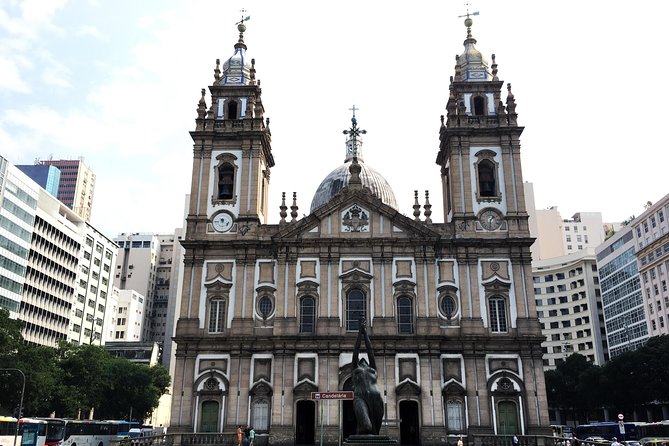
The first listed stop is the Church of Our Lady of Candelária, known in Portuguese as Nossa Senhora da Candelária. Construction began in 1630 and continued until 1775, producing a large neoclassical church with a long construction story that reflects Rio’s changing fortunes.
You have about 10 minutes here, and admission is free. That is enough for a quick look and an explanation from the guide, but not a leisurely architectural study. If you care about church interiors, keep your expectations sensible: this is an introduction rather than a specialist visit.
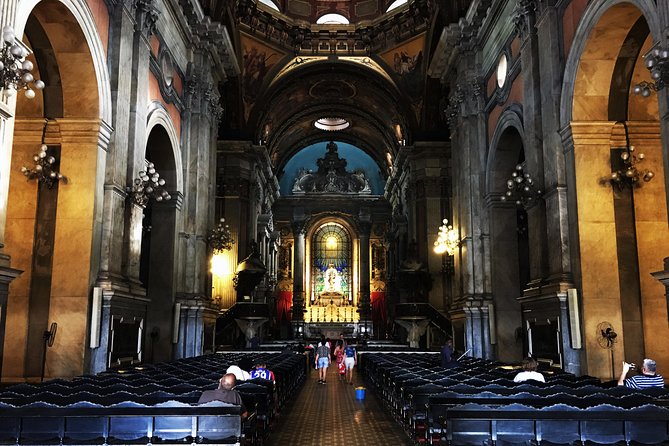
São Bento Monastery is the stronger stop. It was founded in 1590 by two monks from Bahia and is regarded as one of Brazil’s important architectural monuments. Inside, the combination of painted surfaces and gilded carvings gives you the kind of visual detail that photographs rarely capture well.
The listed visit is also about 10 minutes, though the actual time can depend on the group and the guide. This is one place where a patient guide matters. JB, also known as Juan Bautista, has been praised for explaining the historic sites with energy and for pointing out views that are easy to miss, including a photograph toward the Museum of Tomorrow from the monastery area.
If church art interests you, ask the guide about the Benedictine interior before you arrive. The route includes several religious buildings, but São Bento is the one most likely to reward close attention.
Mauá Square and Rio’s Olympic-era waterfront
From the older center, the route reaches the renewed Mauá Square. The area was reshaped as part of Rio’s Olympic legacy, creating a new public zone for culture and entertainment.
The square is home to the Rio Art Museum and the Museum of Tomorrow, along with the large Cobra murals. These modern attractions give the tour a useful change of pace. You are not simply moving from one old church to another. You see how Rio has tried to give new purpose to its waterfront.
The Museum of Tomorrow is viewed from the outside. Depending on timing and traffic, the guide may arrange a shuttle ride around the museum area rather than having you walk every section. That can be useful on a hot afternoon or when the roads are slow, but it also explains why this experience may feel partly like a sightseeing drive.
The tour does not include food or drinks, and museum admission is not listed as part of the experience. Treat Mauá Square as a chance to understand the setting and see the buildings, not as a museum ticket package.
A local guide can add value here by explaining how the Olympic project altered the area. Without that context, you may simply see a modern square, striking murals, and two unusual museums. With context, the stop becomes a contrast between Rio’s imperial center and its newer cultural ambitions.
Imperial Palace, public squares, and the center’s working streets
Praça XV de Novembro is one of the route’s most important historical spaces. Brazil’s emperors were crowned here in the 1800s, and the square has witnessed major events in the country’s political story.
The Paço Imperial, or Imperial Palace, faces the square. It was built in the 1700s as a residence and workplace for Brazil’s rulers. It later became associated with the Portuguese Royal Family when it arrived in Brazil. The building’s Portuguese style helps you picture how government and royal life once occupied this part of the city.
This portion of the walk is valuable because it puts the buildings into a civic setting. You are not only looking at a palace facade. You are standing in a public square where power was displayed, ceremonies took place, and Rio’s political identity was shaped.
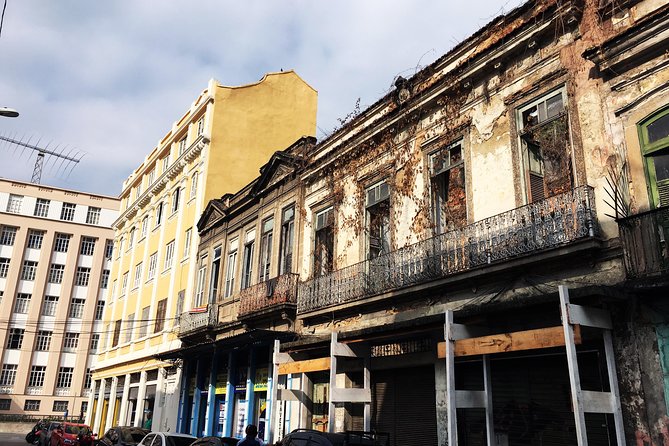
The route also passes Tiradentes Palace from the outside. You go through market streets and along Uruguaiana Street, one of the busier commercial parts of downtown. This is where the tour can feel more like a city walk than a monument circuit. You see ordinary commerce, narrow streets, and the working center between major sights.
There is a trade-off. Traffic in downtown Rio can be heavy, and one afternoon reportedly included more driving and less walking than expected. The operator has indicated that unusually bad traffic can cause this. If you specifically want long stretches on foot, tell the guide early. If you prefer a lighter pace, the vehicle sections may be welcome.
More walking tours in Rio de Janeiro
- Rio de Janeiro: Rocinha Favela Walking Tour with Local Guide
★ 4.8 · 3,052 reviews - Rio De Janeiro: Half-Day Rocinha Favela Walking Tour
★ 4.7 · 2,272 reviews - Sunrise and Sunrise Walk Two Brothers with Local Guide
★ 5.0 · 193 reviews - Learn the History of Rio with an Unforgettable City Center Walking Tour
★ 5.0 · 82 reviews
Confeitaria Colombo and the old café tradition
Confeitaria Colombo is scheduled for about 20 minutes. The famous bakery is one of the route’s most appealing pauses, even for people who are not especially interested in formal architecture.
The stop gives you a look at a long-established downtown institution and a chance to break up the churches and squares. Food and drinks are not included, so you should expect to pay separately if you choose something. The tour information does not promise a meal or a tasting, and 20 minutes is better understood as a visit than a full dining stop.
Some guides have also taken groups to an old Portuguese library or Portuguese-style library building. This is not clearly listed as a guaranteed stop, so do not book solely for it. Still, it shows how the route may change when the guide has room to respond to your interests or when a small group allows extra time.
This is a good moment to ask for local suggestions. Guides have helped people identify less tourist-focused places to eat and markets near the cathedral. You may not receive the same additions on every departure, but a direct question can make the afternoon more useful for the rest of your stay.
Uruguaiana Street, Carioca Square, and the cathedral
The route continues along Uruguaiana Street toward the Metropolitan Cathedral and Carioca Square. This section gives you a sense of how the historic center shifts from formal imperial spaces to commercial streets and transport links.
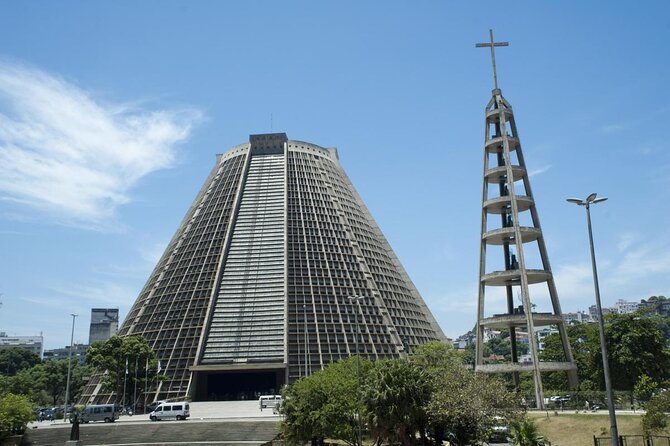
The Metropolitan Cathedral of Saint Sebastian is unlike the ornate colonial churches earlier in the tour. Its cone-shaped design is modern and imposing, with a 96-meter internal diameter, a 106-meter external diameter, and an overall height of 75 meters.
You have about 10 minutes at the cathedral. That is enough to step inside, look up at the structure, and hear the basic story of its design. It is not enough for a slow examination of every detail, particularly if the group arrives late or the guide has had to adjust the route.
The tour is described as concluding in this area, where you can continue exploring or return to your hotel if transport is arranged for your departure. One account found the walk ended a block short of the cathedral and Teatro Municipal, so confirm the exact finishing point with your guide on the day. The route information does include the Metropolitan Cathedral, but the wording about the final drop-off is not perfectly consistent.
If you have energy, the center around Carioca Square gives you a useful base for continuing on your own. If not, the hotel transfer makes the afternoon easier, especially after several hours on city streets.
How the guides shape the experience
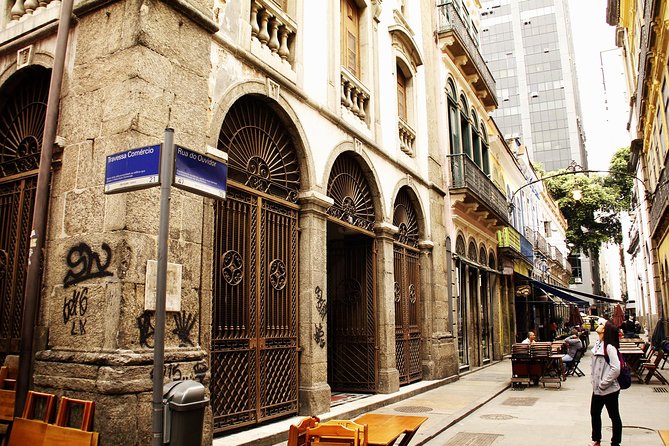
The strongest part of this tour is the guide rather than any single building. JB, or Juan Bautista, has led departures described as energetic, flexible, and deeply interested in Rio. He has adjusted routes around places already visited and given practical advice about getting around the city.
Melanie has also guided several departures, including groups speaking different languages. She has been described as friendly and easygoing, with the ability to move between Spanish and English while keeping the group together.
André has handled hotel pickup and tailored a route when people shared their plans for the rest of their stay. These examples point to a useful strategy: tell the guide what you care about. Mention architecture, churches, markets, books, street art, food, or transport. A small group may make that request especially effective.
The experience is not perfectly uniform. One poor account described a guide who spent too much time on a phone and rushed through the checklist. Another account described repeated explanations as tiring. These are important warnings because a four-hour city tour depends heavily on the person leading it.
The group maximum is 35, so a full departure may feel less personal. On the other hand, several departures have had only one, two, or three people. You cannot count on a private tour, but a smaller booking can produce a more flexible afternoon.
Walking level, transfers, and useful planning
You need moderate physical fitness. The route includes several hours around downtown, and at least one person found the walking demanding. A different account described the pace as easy and the walk as not especially hard. The safest reading is that the physical effort varies with traffic, route changes, heat, and how much time you spend on foot.
Wear practical shoes and carry water. Food and drinks are not included, so plan for your own refreshment. The information provided does not specify how much free time you receive at each stop, so do not assume you can browse every market street at leisure.
Pickup and drop-off are included for most hotels in São Conrado, Leblon, Ipanema, and Copacabana. If you are meeting the tour at a hotel where you are not staying, go inside to reception rather than waiting outside. One useful tip is that the guide may check the lobby first.
The tour begins at 1:00 pm. Hotel pickup times can depend on your location, so make sure your accommodation details are correct and keep your phone available. A previous departure had a problem involving the wrong hotel and timing, with confusion among the transport company, booking service, and guide. That kind of mix-up is uncommon but worth guarding against by confirming the pickup details in advance.
The experience is offered by Gray Line Brazil. Confirmation is received at booking, and free cancellation is available up to 24 hours before the start time. Poor weather or too few bookings can lead to cancellation, in which case you are offered another date or a full refund.
Is the $60.77 price fair?
The price makes sense for a visitor who wants a guided introduction without managing transport into downtown. You receive hotel transfers, a planned route, and explanations at several major sites. The churches and outdoor landmarks themselves generally do not add an admission cost, so the guide and convenience are the main parts of what you are buying.
The value is weaker if you are already comfortable navigating Rio, speak Portuguese well, or have plenty of time to visit the center independently. You could spend less using public transport and visiting the exteriors on your own. You would also be able to stop longer at Confeitaria Colombo, the museums, or the market streets.
I would choose this tour early in a Rio visit, especially if you want a clear introduction to downtown and practical tips for later days. I would not choose it as a dedicated museum tour, food tour, or long walking expedition. The route covers many sights, but the short stop times mean you get a broad picture rather than a close study.
Should you book Rio’s city walking tour?
Book it if you want a guided first look at old Rio, value hotel transport, and like a mix of churches, royal buildings, public squares, markets, and modern waterfront projects. It suits first-time visitors, history fans, and people who prefer local explanations to wandering alone.
Choose it with realistic expectations. Traffic may reduce walking time, the final route can vary, and the quality depends strongly on the guide. Ask for JB, Melanie, or another guide with a flexible approach if that is possible, and tell the guide what you hope to see.
At $60.77, I find it worthwhile for orientation and convenience, particularly when the group is small. If you want maximum independence or long, uninterrupted walks, save the money and explore downtown at your own pace.
FAQ
How long does the tour last?
The tour lasts approximately four hours and starts at 1:00 pm.
What sights are included?
The route includes Candelária Church, São Bento Monastery, Mauá Square, the Museum of Tomorrow from the outside, cultural centers, Praça XV de Novembro, the Imperial Palace, Uruguaiana Street, Tiradentes Palace from the outside, Confeitaria Colombo, Carioca Square, and the Metropolitan Cathedral.
Is hotel pickup included?
Yes. Pickup and drop-off are included for most hotels in São Conrado, Leblon, Ipanema, and Copacabana.
Is food included in the price?
No. Food and drinks are not included. You may visit Confeitaria Colombo, but any purchase there is separate.
How large can the group be?
The maximum group size is 35 people. Some departures may be much smaller, but a private tour is not guaranteed.
How much walking is involved?
You need a moderate level of physical fitness. The tour includes walking through downtown, although traffic and route conditions can affect how much of the experience is on foot.
What happens if the tour is canceled?
If poor weather or too few bookings causes cancellation, you can choose another date or experience, or receive a full refund. You can also cancel for a full refund if you do so at least 24 hours before the start time.
Just added in Rio de Janeiro
- Rio: Fluminense Match at Maracanã with Guide and Ticket★ 4.9 · 22 reviews
- Explore Santa Teresa: Walking Tour★ 5.0 · 6 reviews
- The Best Food Tour: Taste the Most Authentic Flavours of Rio★ 4.7 · 18 reviews
- Explore Fernando de Noronha: 7-Hour Ilhatour★ 4.9 · 3 reviews
- Favela Santa Marta: Walking Tour with local guide★ 4.8 · 41 reviews
- Helicopter flight no doors in Rio de Janeiro★ 4.7 · 22 reviews
- Discover Rocinha: Guided Tour of the Famous Favela★ 4.5 · 3 reviews
- Discover Pedra do Telégrafo: Scenic Hike with Expert Guide★ 5.0 · 9 reviews
Walking Tours, compared.


Sunrise and Sunrise Walk Two Brothers with Local Guide
Read our review →
Downtown-Center History Walking Tour – in English
Read our review →
Downtown-Center Walking Tour | 2 Hours – English
Read our review →
Learn the History of Rio with an Unforgettable City Center Walking Tour
Read our review →Browse the lists this tour appears in