
Reviewed · HISTORICAL TOURS
African Heritage: Gastronomy and Musicality Experience
Rio’s African heritage is not a side note in this tour. It is the main story, told through memorials, public art, food, music, and the streets of the old port district. You move from the Museu de Arte do Rio to Cais do Valongo and Pedra do Sal, places that connect Brazil’s past to the culture you hear and taste today.
I like the way the tour puts Afro-Brazilian food and percussion beside difficult history. I also like its small, private format, which lets guides such as Isabella or Jaíse adjust the conversation to your interests. The main drawback is that this is not a light sightseeing stroll. Some stops address enslavement, death, and racial injustice, and the food tasting is not suitable for people with dietary restrictions.
Key points to know before booking
- The tour connects several important sites in Rio’s port district, including the Pretos Novos memorial and Cais do Valongo.
- Morrinho at MAR offers a more human view of favela life, focusing on daily life, creativity, and community rather than stereotypes.
- Pedra do Sal is the heart of the food and music portion, with Afro-Brazilian and Yoruba dishes followed by percussion.
- The three-hour Pedra do Sal visit is the main event, so expect this to feel more like a cultural workshop than a standard city tour.
- The tour costs $110 per person, with food and IPN admission included, but drinks cost extra.
- You finish at Largo de São Francisco da Prainha, a square known for samba, funk, jazz, chorinho, bars, and Portuguese-era buildings.
Why this five-hour tour matters in Rio
Rio is often sold through beaches, mountain views, and carnival images. Those are real parts of the city, but they tell only a small piece of the story. This experience focuses on the Black communities and African traditions that helped shape Rio’s food, music, religion, neighborhoods, and public life.
The route stays mainly around the port area, often called Little Africa. That name matters. The district carries the memory of Africans brought to Brazil by force, as well as the traditions that survived and grew through enormous hardship.
You are not simply moving from one attraction to another. The guide links the sites together. A museum model introduces the complexity of favela life. An archaeological memorial confronts the human cost of the slave trade. A historic pier shows where enslaved Africans arrived. Pedra do Sal then shows how culture continued through food, rhythm, worship, and community life.
That progression gives the tour its strongest quality. You learn about painful events, but the day does not end there. It also shows creativity and resistance in the present.
The experience is private, meaning only your group takes part. That is useful here. The subject can raise personal questions, and a private setting gives you room to ask them without trying to keep up with a large crowd. The guides named in the tour material, Isabella and Jaíse, are described as warm, passionate, and clear in their explanations.
More history walks in Rio de Janeiro
- Rio de Janeiro: Historic Rio and Santa Teresa Half-Day Tour
★ 4.4 · 228 reviews - Rio de Janeiro: Little Africa Heritage Walking Tour
★ 4.9 · 177 reviews - Explore Little Africa : Unveiling Afro Heritage in Rio de Janeiro
★ 5.0 · 97 reviews
Starting at MAR with Morrinho’s view of the favela
The meeting point is outside Museu do Amanhã at Praça Mauá at 10 a.m. From there, the experience includes the Museu de Arte do Rio, known as MAR. The stop at MAR lasts about 25 minutes, and admission to the Morrinho installation is free.
Morrinho began as a miniature representation of the Pereira da Silva favela. At MAR, the model shows streets, residents, buildings, and everyday activity in careful detail. Its value is not just visual. It asks you to see a favela as a lived-in community rather than a symbol of danger.
I like this opening because it complicates the usual Rio postcard. You see how a neighborhood can contain work, friendship, family life, creativity, and social problems at the same time. The model cannot replace a visit to a real community, but it gives you a thoughtful starting point and avoids reducing favela life to a single stereotype.
The visit is short, so do not expect a full museum tour. The Morrinho display works best as a focused introduction to the city’s social fabric. The guide’s explanation is important, especially if you want to understand how urban inequality and community identity fit into Rio’s larger story.
Eduardo Kobra’s mural and the public face of ancestry
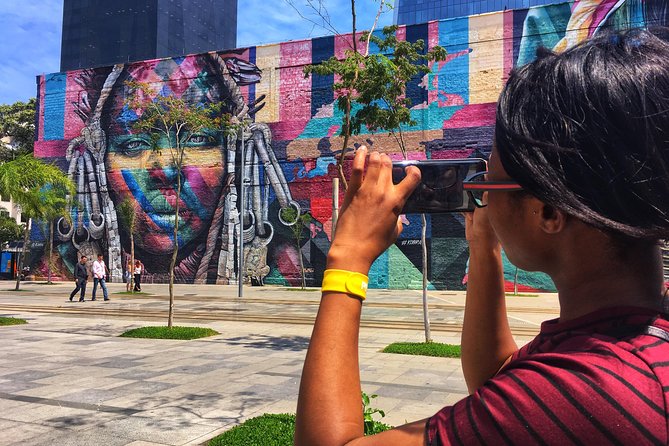
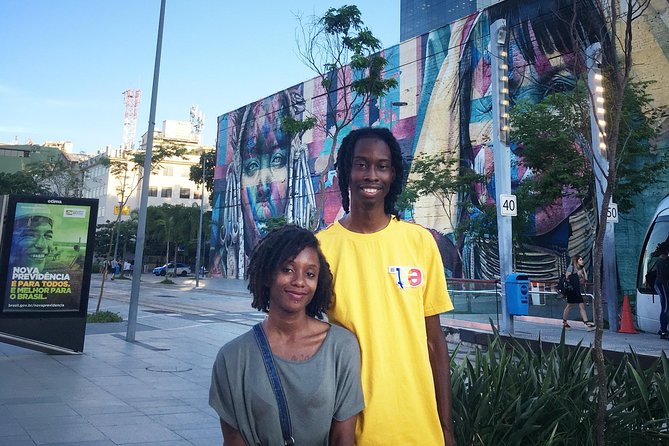
The route also includes time to look at Eduardo Kobra’s enormous graffiti mural. The artwork presents figures and references connected to ancestral ethnic groups and old cultures that form part of Brazil’s story.
This is a quick visual stop rather than a long museum visit, but it adds a different tone. The MAR section is a detailed miniature world. Kobra’s mural is public, oversized, and meant to be read from the street. Together, they show how Rio discusses identity through both formal institutions and open-air art.
You should have your camera ready, but the real value is in the guide’s explanation of the mural’s references. The work is not presented simply as a colorful backdrop. It becomes a prompt for talking about ancestry, representation, and the cultures carried into Brazil.
IPN and the difficult evidence beneath Rio
The Instituto de Pesquisa e Memória Pretos Novos, or IPN, is one of the most serious stops. The visit takes about 40 minutes, and admission is included.
Here you see an archaeological site and a permanent exhibition containing bones of Africans found at the location. The material makes the slave period immediate in a way that textbooks often do not. Instead of discussing forced migration only through dates and numbers, the site confronts you with physical evidence of people who suffered and died in Rio.
This part can be emotionally heavy. That is not a flaw, but you should know what kind of experience you are choosing. The tour does not turn painful history into a polished attraction. It asks you to pay attention.
The IPN is also important because it helps explain why the port district matters to the African diaspora. The story is not separated from the streets outside. The memorial, the pier, the neighborhood, and the living traditions at Pedra do Sal all belong to the same historical conversation.
Admission to IPN is included in the $110 price. That helps the value, especially because this is one of the tour’s central sites rather than an optional extra.
More Tours in Brazil
- Rio de Janeiro: 6-Stop Highlights of Rio with Lunch
★ 4.4 · 5,157 reviews - Christ the Redeemer Entry Ticket by Corcovado Train
★ 4.4 · 4,476 reviews - Rio de Janeiro: Rocinha Favela Walking Tour with Local Guide
★ 4.8 · 3,052 reviews - Rio: Christ the Redeemer, Sugarloaf, Selaron & BBQ Lunch
★ 4.5 · 2,428 reviews
Cais do Valongo and the meaning of Little Africa
The stop at Cais do Valongo lasts about 15 minutes. This historic site was the principal landing point for enslaved Africans brought to Rio, and it is part of the area known as Little Africa.
The visit is brief, but the place carries enormous weight. Here, the guide can connect the forced arrival of Africans with the culture that later developed around the port. The key lesson is that African influence was not added to Brazil from the outside. It became part of the country’s language, cooking, religion, music, labor, and social life.
You may find this stop more powerful after visiting IPN. The memorial gives you evidence of individual lives and suffering. Cais do Valongo places that story on the ground where arrival happened. The two stops reinforce each other without being identical.
Because the visit is only 15 minutes, do not expect a long archaeological presentation. Treat it as a concentrated pause in the route. Listen closely, then allow yourself a moment to consider what the location represents.
Pedra do Sal brings history into the present

Pedra do Sal receives about three hours, by far the longest portion of the day. This is where the tour shifts from historical sites to living culture.
Pedra do Sal is connected with a remaining quilombo community and with the preservation of Afro-Brazilian heritage. It is also associated with outdoor samba sessions, making it one of the clearest places on the route to see culture functioning as community practice rather than museum material.
The word quilombo refers to communities formed by people who resisted enslavement and created spaces of independence. In this setting, the idea is tied to cultural survival. Music, food, faith, and shared memory all help carry identity forward.
This is the section that gives the tour its strongest sense of participation. You do not only listen to a guide explain African influence. You taste food connected to Afro-Brazilian and Yoruba traditions, then take part in a percussion workshop.
Tasting Afro-Brazilian and Yoruba food
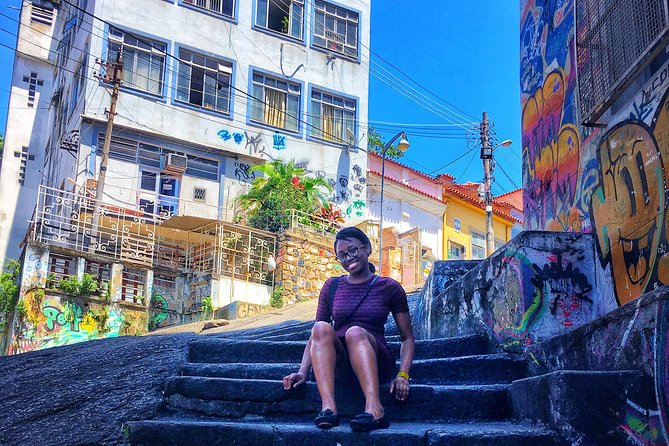
The food tasting is included, while drinks are not. The dishes are described as typical of Afro-Brazilian and Yoruba cuisine and connected to the daily practices of religions with African origins.
That connection is important. You are not being handed a random plate of Brazilian snacks. The food is presented as part of a larger cultural system, one shaped by migration, adaptation, belief, and family tradition.
Food can make a complicated subject easier to approach, but it should not make the history feel comfortable or decorative. The best way to experience this portion is to stay curious and listen to the explanation behind each dish.
The tour is specifically not suitable for people with food restrictions. If you cannot eat the tasting menu, a major part of the Pedra do Sal experience will be unavailable to you. The tour information does not provide a list of dishes or ingredients, so you should not book it assuming substitutions are available.
Drinks cost extra, so budget for that if you want beer, soft drinks, or another beverage during the food portion. The included meal and tasting help support the price, but the final cost can rise slightly once drinks are added.
Learning rhythm through the percussion workshop
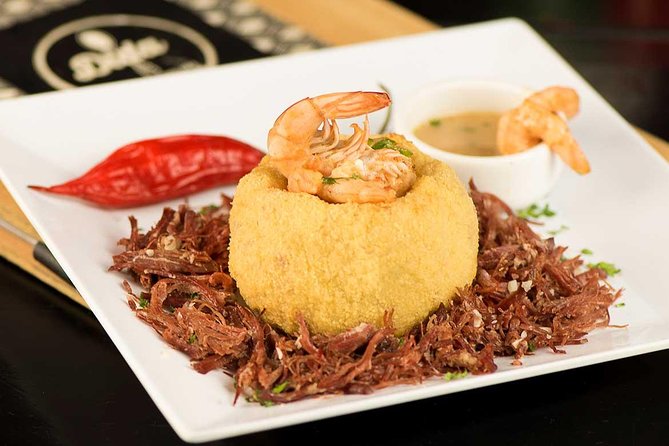
The percussion workshop is led by an instructor and drummer from the African continent. It focuses on the musical traditions that continue to influence Brazilian culture.
This is a smart choice for a history tour. Rhythm is not treated as background entertainment. You use it to understand how cultural memory can move through the body, through group participation, and through repeated practice.
You should expect hands-on instruction rather than a polished concert. The supplied details do not specify the instruments, skill level, or exact format, so do not assume you need musical experience or that you will see a full performance. The point is participation and context.
For many people, this may be the most memorable part of the day. It changes your role from listener to participant. It also helps explain why samba and other musical forms are tied to identity and public celebration in Rio.
Ending at Largo de São Francisco da Prainha
The final stop is Largo de São Francisco da Prainha, about 15 minutes from the formal schedule. The tour ends here, at Largo São Francisco da Prainha in the Saúde district.
The square sits near Morro da Conceição and is surrounded by Portuguese-style buildings. At sunset, the area can fill with samba, funk, jazz, and chorinho. Local bars offer outdoor seating, cold beer, and snacks, so you may want to stay after the tour rather than leave immediately.
This ending works because it returns you to ordinary city life. After memorials and historical sites, you finish in a public square where music and social activity carry the story forward.
The final 15 minutes are not enough to experience every musical style or guarantee a particular performance. The description presents the square as a lively evening setting, but the exact atmosphere can depend on the day and weather. Still, it is a useful place to continue the night on your own.
Is $110 a fair price?
At $110 per person, this is not a bargain-priced walking tour. The value comes from what is included: a private guide, IPN admission, an Afro-Brazilian food tasting, and a three-hour cultural session at Pedra do Sal.
You are also paying for interpretation. The sites themselves may be free, but their meaning is not always obvious when you visit alone. A guide helps connect the memorial, the port, the mural, the favela model, the food, and the music.
The price makes the most sense if you want a focused education in Afro-Brazilian culture rather than a general introduction to Rio. It is less suitable if your main goal is to cover many famous sights quickly.
The tour is usually booked well in advance, with an average booking lead time of 69 days. That suggests you should plan early, especially if your dates in Rio are fixed.
Who should book this experience?
I would choose this tour if you want to understand Rio beyond beaches and famous viewpoints. It suits solo visitors, couples, families, and small groups who are willing to spend several hours on history, identity, and culture.
It is especially useful if you want an Afro-diasporic perspective on Brazil. The guides focus on the experience of Black people in Brazil, the effects of the slave trade, and the ways African traditions shaped modern life.
You should think twice if you want a relaxed food tour with only light historical commentary. The IPN and Cais do Valongo are serious places, and the subject matter can be painful. You should also reconsider if you have food restrictions, since the tasting is a central part of the day and the tour is not suitable for those needs.
The private format is a strong advantage. You can ask direct questions, take your time at difficult sites, and speak openly with the guide. Past feedback also highlights the guides’ ability to explain social and economic issues in clear language, not just list dates and monuments.
Should you book the African Heritage experience?
Book it if you want a thoughtful, personal look at how African culture shaped Rio through memory, food, music, and community. The route is well balanced: MAR and Kobra provide art, IPN and Cais do Valongo provide hard evidence, and Pedra do Sal gives you living traditions to hear and taste.
Skip it if your interests are limited to scenery, architecture, or a quick tour of central Rio. This experience asks for attention and emotional openness.
For the right visitor, the combination is unusually strong. You leave with more than a set of historical facts. You gain a clearer sense of why Rio sounds the way it does, eats the way it does, and celebrates the way it does.
FAQ
How long does the African Heritage experience last?
The experience lasts approximately five hours.
Where does the tour begin?
It begins at Museu do Amanhã, Praça Mauá, 1, Centro, Rio de Janeiro.
What time does the tour start?
The start time is 10 a.m.
Where does the tour end?
It ends at Largo de São Francisco da Prainha in the Saúde district.
Is the tour private?
Yes. Only your group participates in the private tour or activity.
Is food included?
Yes. An Afro-Brazilian gastronomy tasting is included.
Are drinks included?
No. Drinks are not included in the price.
Can I cancel for a full refund?
Yes, if you cancel at least 24 hours before the experience starts. Cancellations made less than 24 hours in advance are not refunded. The tour may also be rescheduled or refunded if poor weather or an insufficient number of participants causes cancellation.
Just added in Rio de Janeiro
- Rio de Janeiro: Zip Lining and Canopy Tree Tour★ 3.3 · 6 reviews
- Vidigal Favela Tour★ 4.4 · 26 reviews
- Rio de Janeiro: Attend a Vasco da Gama game with local guide★ 4.8 · 9 reviews
- Unforgettable Boat Party★ 5.0 · 3 reviews
- Hang gliding flight in Rio de Janeiro★ 5.0 · 6 reviews
- Tijuca Forest Hike – Waterfalls & Caves, Nature & Wild Life!★ 5.0 · 51 reviews
- Rio Highlights: Christ, Sugarloaf, and More in a Private Tour★ 5.0 · 36 reviews
- Rocinha Walking Tour: Get a Feel for the Brazil’s Largest Favela (Shared Group)★ 5.0 · 37 reviews
Historical Tours, compared.

Scenic Train ride to historical cities of Morretes and Antonina
Read our review →
From Foz do Iguazu: Triple Frontier Landmark Ticket
Read our review →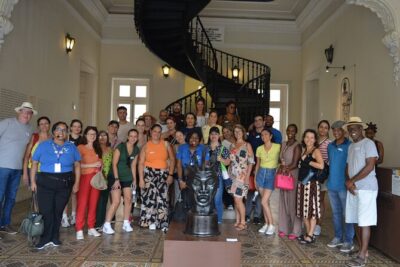
Explore Little Africa : Unveiling Afro Heritage in Rio de Janeiro
Read our review →
Downtown-Center History Walking Tour – in English
Read our review →Browse the lists this tour appears in