
Reviewed · HISTORICAL TOURS
São Paulo Highlights: Culture, History, and Vibrance by Bike
São Paulo reveals itself best at street level, and this private bike tour gives you a lively sweep through the city’s art, architecture, politics, and Japanese Brazilian culture. You pedal from quiet Vila Mariana toward Avenida Paulista, then roll downhill into the old center and finish among the signs, shops, and public spaces of Liberdade.
I like the mix of major sights and local context, from MASP’s bold concrete design to the Jesuit origins of the Historic Triangle. I also like the practical care: helmets, water, rain protection, bike lights when needed, and guides such as Lucas, Renato, and Pedro who have been praised for clear language and useful city tips.
The main drawback is the pace. In 210 minutes, you can cover a remarkable amount of São Paulo, but many stops are viewing points rather than long museum visits. The optional extension to Luz may also make the ride more demanding, so you should be ready to keep moving.
Key points to know before you book
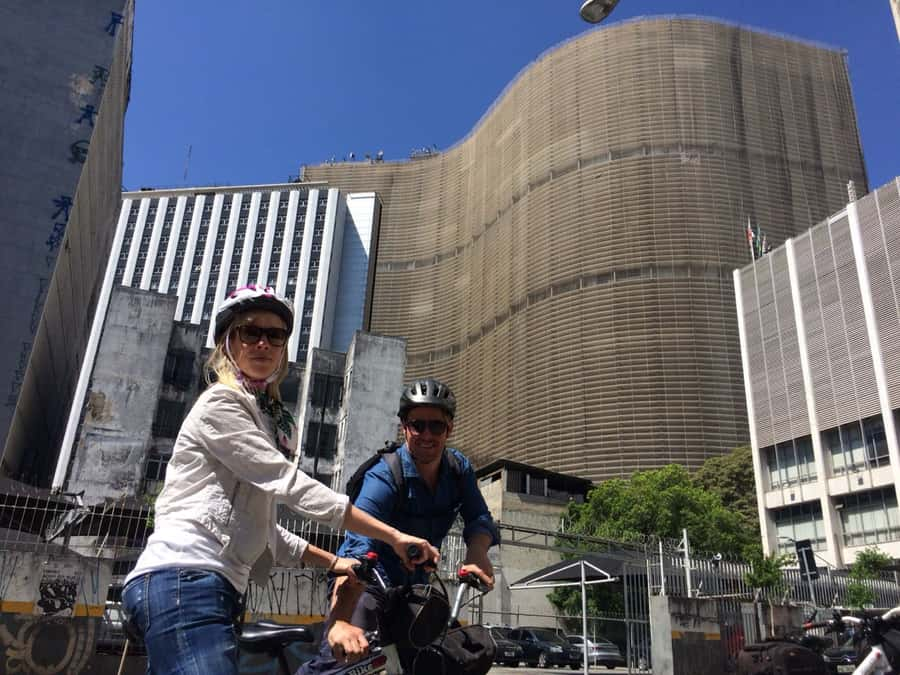
- Avenida Paulista begins the story: See Casa das Rosas, MASP, Parque Trianon, and Conjunto Nacional along São Paulo’s main cultural avenue.
- The route runs downhill into the old center: Praça Roosevelt, Parque Augusta, Republic Square, Theatro Municipal, and Vale do Anhangabaú come in quick succession.
- The Historic Triangle explains São Paulo’s origins: Jesuit foundations and old civic buildings show how a small settlement grew into Brazil’s largest city.
- Liberdade adds a different cultural layer: The Japanese district brings multicultural history and a very different street atmosphere near the end of the ride.
- The tour is private and multilingual: You can book a private group with a guide speaking Portuguese, English, or Spanish.
- The meeting point is easy to reach: Portinha 183 on Rua França Pinto is about 600 meters, or eight minutes on foot, from Ana Rosa Metro Station.
Starting in Vila Mariana with a bike and a city-sized plan
The tour begins at Portinha 183, Rua França Pinto, 183, in Vila Mariana. You should arrive 15 minutes before departure, giving you time to meet the guide and get set with the bicycle and helmet.
Ana Rosa Station, served by Line 1, the Blue Line, is the closest metro stop. From there, the meeting point is about 600 meters away. There is no hotel pickup or drop off, so you need to make your own way to Vila Mariana and arrange your return after the tour.
That starting point helps the ride build naturally. You do not begin in the thick of downtown traffic and immediately face a long list of monuments. Instead, the route heads toward Avenida Paulista, where São Paulo’s modern identity comes into view through high rises, cultural buildings, and older mansions.
A private format matters here. You can ask the guide to explain architecture, politics, or city history as you go, rather than simply following a large group from one stop to the next. English, Portuguese, and Spanish are available, and the named guides connected with past departures include Lucas, Renato, and Pedro. Lucas has been praised for excellent English and for offering suggestions about places to see beyond the ride. Renato has been noted for clear explanations and careful attention to comfort.
More bike tours in São Paulo
- São Paulo: Downtown Historical Bike Tour
★ 4.9 · 191 reviews - Street Art and Park Bike Tour
★ 5.0 · 56 reviews - Sao Paulo: The Coolest Urban Scenes Bike Tour
★ 5.0 · 22 reviews
Avenida Paulista, from Casa das Rosas to MASP
Avenida Paulista is the first major stretch, and it gives you a quick lesson in São Paulo’s contrasts. Historic buildings sit near tall office towers, while museums, public spaces, and shops keep the avenue tied to the city’s cultural life.
Casa das Rosas is an especially good early stop. This preserved mansion, set among gardens, offers a glimpse of an older São Paulo, before the avenue became lined with skyscrapers. The contrast is the point. You see how quickly the city changed, but also how some earlier buildings remain part of daily urban life.
Then comes MASP, the Museu de Arte de São Paulo. Its famous building is supported above the ground by large red structures, leaving an open space below. Even if you do not enter the museum, the architecture gives you a strong visual marker and a good setting for the guide to explain São Paulo’s art scene.
Do not expect a full museum visit during the standard route. The tour is built around seeing the city by bicycle, with stops for explanation and photographs. If MASP is a priority for you, plan a separate visit when you can give its collection the time it deserves.
A green pause at Parque Trianon
Parque Trianon offers a short change of rhythm along Avenida Paulista. The park is a pocket of greenery in one of the city’s busiest corridors, and it gives you a chance to pause before continuing.
I like this stop because it keeps the tour from becoming a parade of buildings. São Paulo can feel huge and fast, especially on a first visit. A small green space helps you notice the city’s scale and gives the guide room to connect the avenue’s public life with its architecture.
The pause is not presented as a long nature walk. Think of it as a short breather within a city ride. You will still cover substantial ground afterward.
Conjunto Nacional and the ride toward downtown
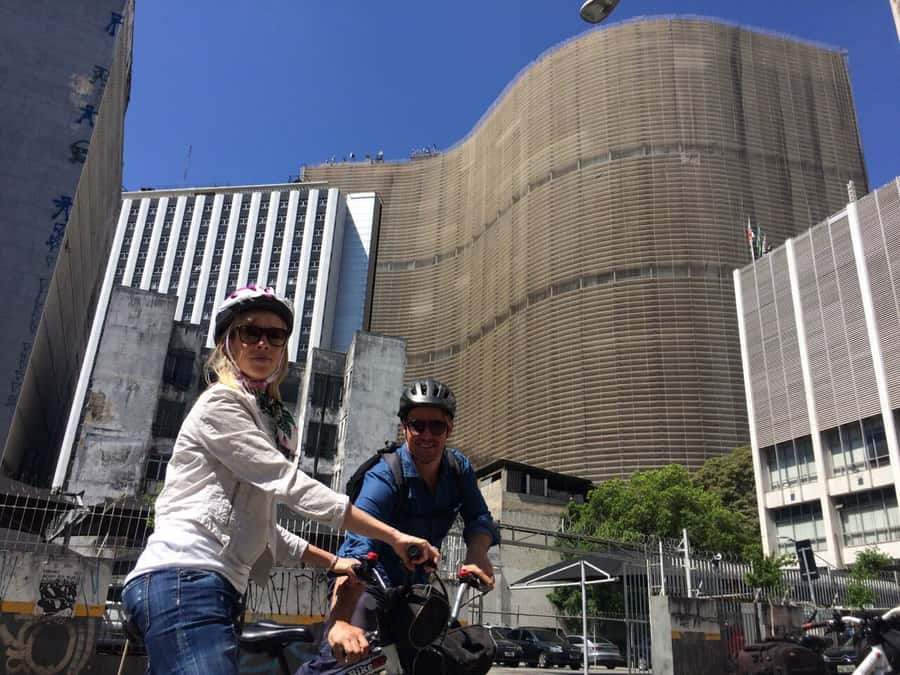
Conjunto Nacional is another important Paulista landmark. It is a cultural and community center rather than just another office building, and its location makes it a useful point for understanding the avenue as a place for public life.
From here, the route heads down through the Consolação Bike Lane toward downtown. This section changes the feel of the tour. The modern cultural corridor gives way to older buildings, public squares, and neighborhoods with more visible layers of São Paulo’s past.
The downhill direction is helpful, but cycling in a large city still calls for attention. You should be comfortable riding for several hours and staying with the guide. The exact balance between riding and stopping can vary, particularly if you choose the optional extension to Luz.
More history walks in São Paulo
- Sao Paulo: Downtown-Center History Walking Tour – in English
★ 5.0 · 91 reviews - Gastronomic Tour São Paulo – Culture & History Through The Art Of Food – Private
★ 5.0 · 50 reviews - Full Day Private Beach Tour Santos – Culture, History & Beach (Pickup São Paulo)
★ 5.0 · 47 reviews - Full Day Private Beach Tour Santos & Guarujá – Combine Culture, History & Beach
★ 5.0 · 37 reviews
Praça Roosevelt, Parque Augusta, and Republic Square
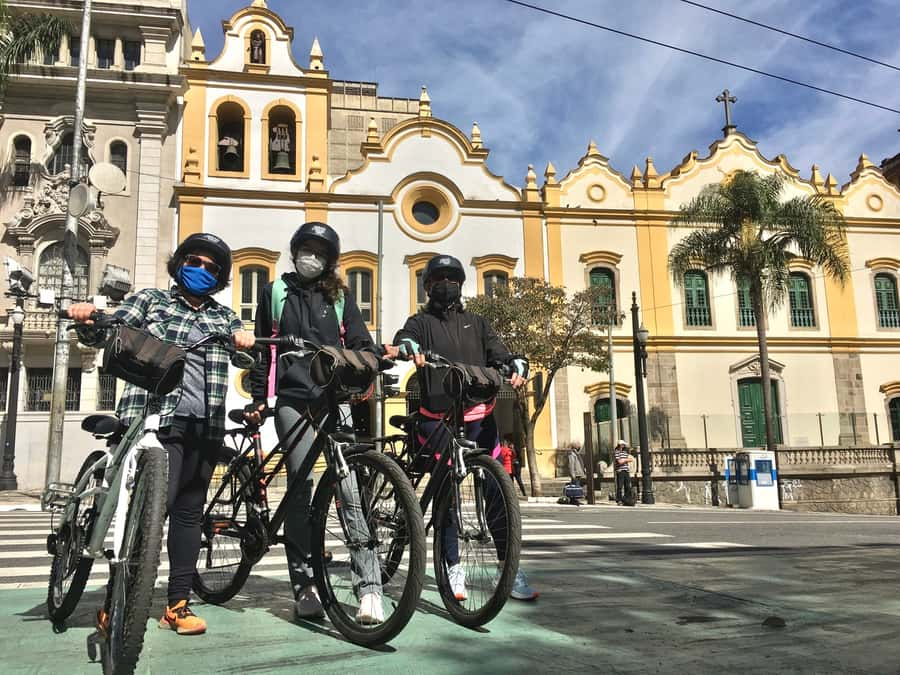
The route continues through Praça Roosevelt, Parque Augusta, and Republic Square. These places help you see how São Paulo uses open space in the middle of a dense city.
Praça Roosevelt has a strong public character, with room for gatherings and urban activity. Parque Augusta provides another break from the concrete streets, while Republic Square brings you closer to the grand civic architecture of the old center.
These stops are useful because they show more than postcard landmarks. You get a sense of how people move through the city, meet friends, attend events, and use central public areas. Your guide can also help link the spaces to São Paulo’s social and political life.
The route does not treat downtown as a museum frozen in time. You will see grand buildings alongside ordinary street scenes, active squares, and the practical energy of a working city. That mix is one reason the bicycle format works well here.
Theatro Municipal and the grand old center
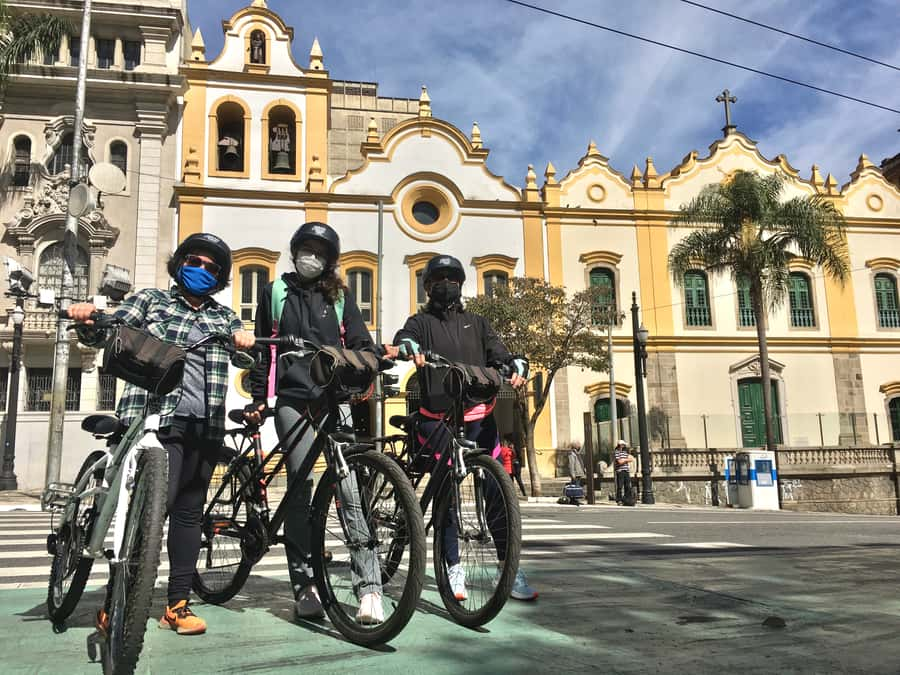
Theatro Municipal is one of the most impressive architectural stops on the route. Its scale and formal design reflect the ambitions of São Paulo’s older elite, while its location places it firmly in the city’s public center.
You will likely stop to look at the exterior and hear the story behind the building. The tour does not promise a performance or an interior visit, so you should not book it expecting a theater tour. Instead, this is a chance to understand how culture and power were displayed in the growing city.
From Theatro Municipal, the route reaches Vale do Anhangabaú. This broad central space has long served as one of São Paulo’s key urban settings. It helps you read the center as a connected area rather than a list of isolated monuments.
A bike gives you a useful advantage here. You can move between the sites without relying on a vehicle or spending the whole afternoon underground on the metro. You also get a better sense of how close, or surprisingly far apart, the main downtown areas actually are.
The Historic Triangle and São Paulo’s first chapter
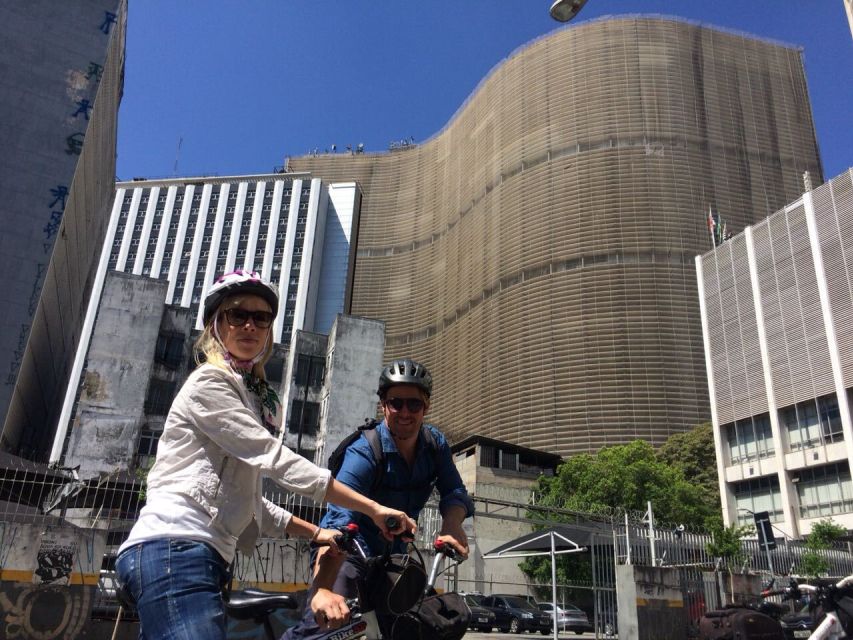
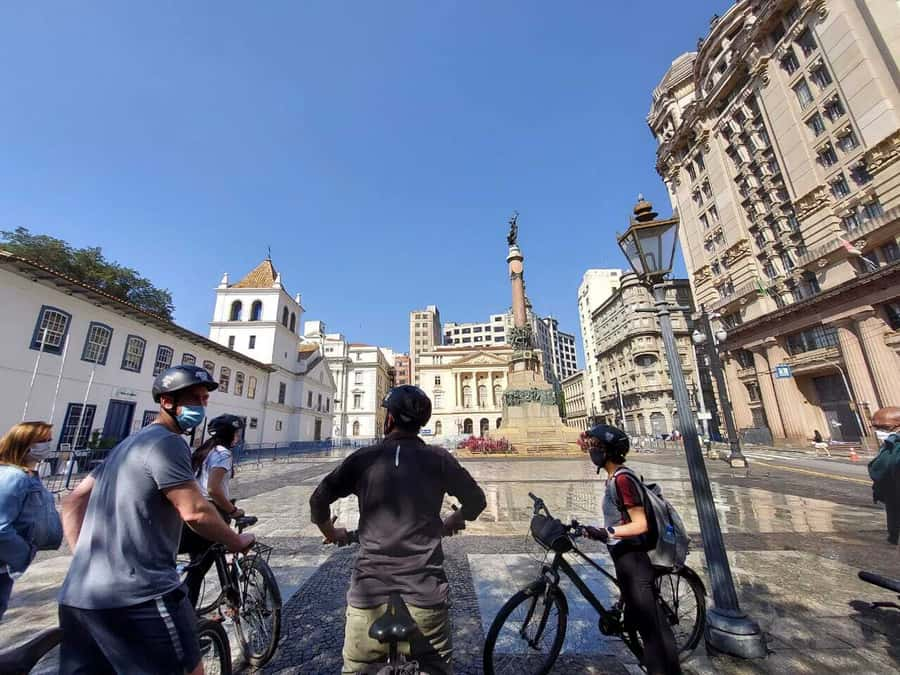
The Historic Triangle is where the tour turns most directly to São Paulo’s beginnings. Jesuit missionaries founded the original settlement in this area, and the old center still contains buildings and monuments linked to the city’s early development.
This part matters because it changes the way you see the rest of São Paulo. The towers along Paulista and the modern cultural institutions are not the whole story. The city began as a small settlement and expanded into a vast metropolis, and the Historic Triangle provides the clearest physical link between those two stages.
Your guide’s explanation is particularly valuable here. Several old buildings can look similar if you do not know what you are seeing. A licensed guide can point out why a site matters, how the city developed around it, and what changed as São Paulo grew.
The stop is more about history and orientation than entering every building. If you prefer a slow museum-style tour, this may feel quick. If you want a broad introduction before exploring more on your own, it works well.
The optional extension to Luz
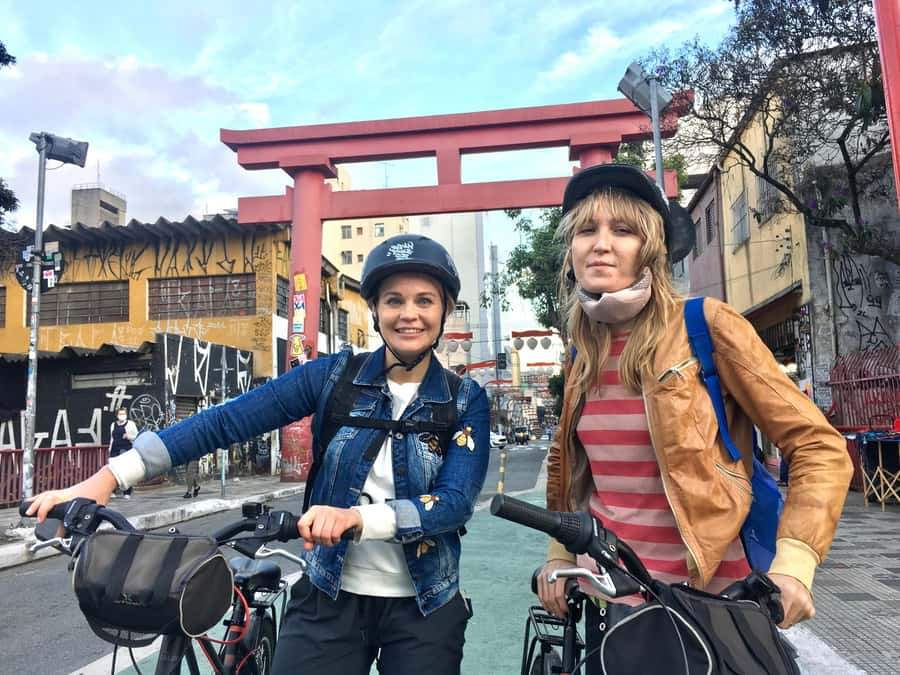
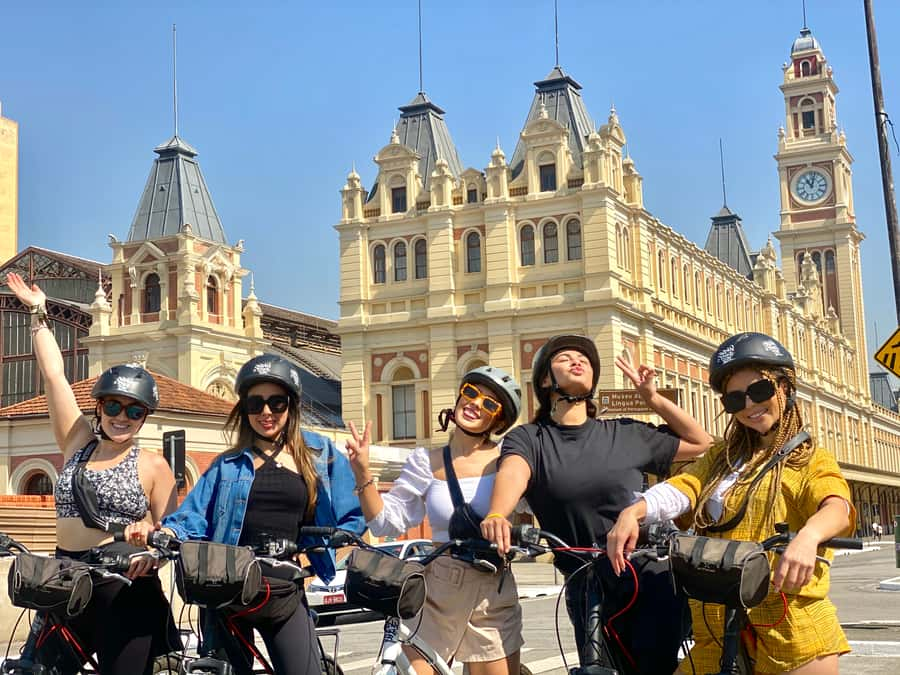
If time and energy allow, the route can continue toward Luz. This extension adds the grand Luz Station, the adjoining park, and the Pinacoteca Museum.
Luz Station brings another architectural contrast. Its scale and formal design create a strong visual counterpoint to the more recent buildings along Paulista. The adjacent park gives you another open setting before the route turns back toward the central districts.
Pinacoteca is one of São Paulo’s major art institutions. As with MASP, this bike tour is not a substitute for a dedicated museum visit. You may see the building and receive useful context, but you should plan extra time if you want to study the collection.
The Luz extension is best for someone who wants a wider city overview and is happy to trade longer visits for more neighborhoods and landmarks. Since the full activity lasts 210 minutes, ask the guide how the optional section will fit into your departure time.
Entering Liberdade, São Paulo’s Japanese district
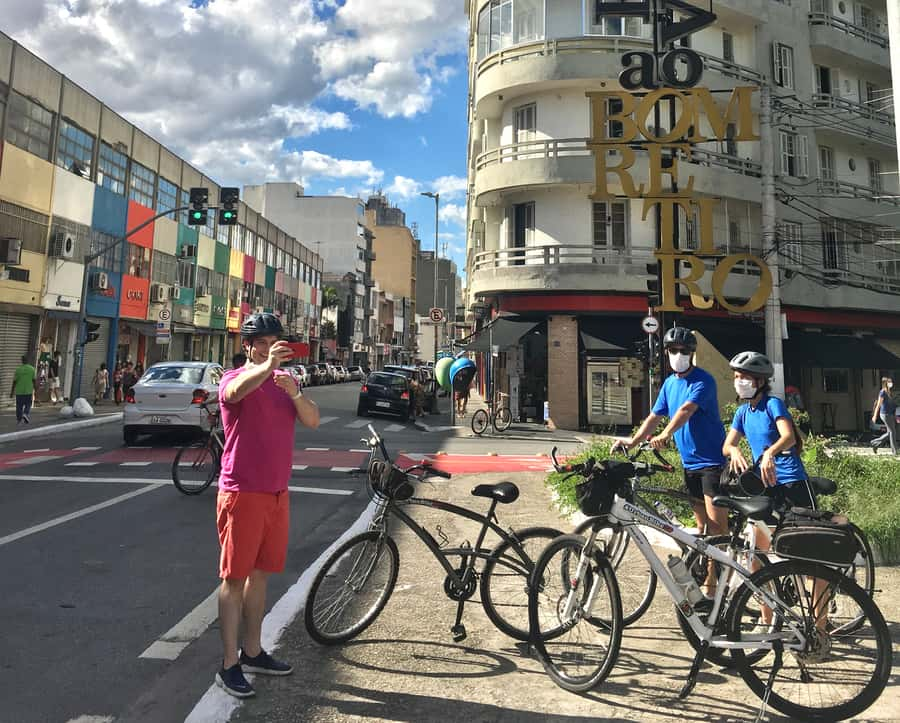
On the return route, the tour passes through Liberdade. This district is known for its Japanese heritage and its multicultural character, and it feels different from both Paulista and the old civic center.
The value of visiting by bike is the transition. You do not simply arrive at Liberdade as a separate stop. You pass from the historic center into a district with its own signs, atmosphere, and cultural identity, seeing how different parts of São Paulo sit side by side.
The tour provides an introduction rather than a full food or shopping excursion. You may have time to notice the streets and hear about the district’s background, but the route does not promise a meal or extended market visit. A guide can still point you toward places to return to later.
One of the most useful comments connected with this ride involved tastes of São Paulo during the outing. Food stops are not listed as a guaranteed inclusion, so do not book specifically for a tasting. Still, it is worth asking your guide if a brief local taste fits the day’s route.
Centro Cultural São Paulo and the Orthodox Cathedral
Near the end, the route includes Centro Cultural São Paulo. This gives the tour one more cultural stop before its final landmark. The center adds a contemporary public arts note after the older buildings and historic districts earlier in the ride.
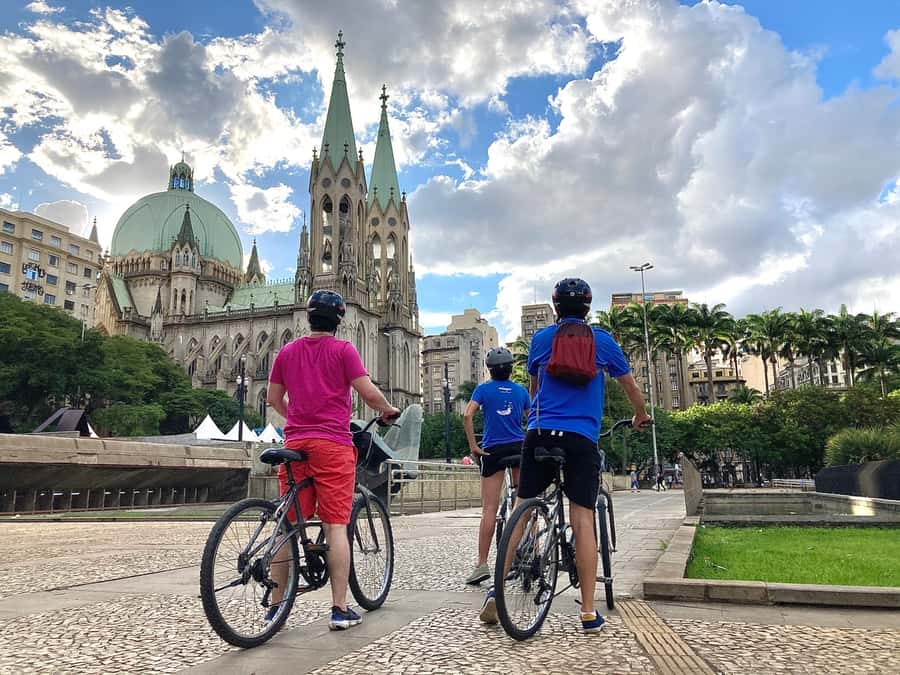
The finish is at the Catedral Metropolitana Ortodoxa, described as a beautiful closing point for the journey. Ending there gives the route a final connection to São Paulo’s religious and immigrant history, after you have already seen Jesuit origins and Japanese Brazilian culture.
A departure in the late afternoon can create a different view of the city. One past ride took place as darkness arrived, with lit streets and large buildings providing a striking final scene. Since starting times vary, you should check availability if seeing São Paulo after dark appeals to you.
What the $120 price includes
At $120 per person, this is not the cheapest way to see São Paulo. The value comes from combining a private group, a bicycle, a licensed bilingual guide, and a route that crosses several major districts in three and a half hours.
Your price includes:
- Bicycle use
- Helmet and bike gear
- Bottle of water
- Raincoat
- Professional licensed guide
- Portuguese, English, or Spanish service
- Souvenir
The raincoat is a small but useful detail in São Paulo, where a wet-weather forecast can change the feel of a bike ride quickly. One guide also supplied bike lights during a ride that continued into darker conditions. Lights are not listed as a standard inclusion, so treat that as an example of practical support rather than a guaranteed item.
The price makes the most sense if you value interpretation and private attention. You are paying for more than bicycle rental, since the guide connects the buildings, districts, and historical changes into one route. If you only want to pedal along Avenida Paulista, renting a bike would cost less, but it would not provide the same context or the structured downtown journey.
Who should book this São Paulo ride?
I would choose this tour for a first visit, especially if you want a quick but meaningful introduction before exploring the city on your own. It covers Paulista, the old center, Liberdade, and possibly Luz, giving you a practical map of several key areas.
It also suits travelers who like architecture, urban history, public art, and local culture more than long indoor visits. The guide’s explanations are a central part of the value, and the private setup lets you ask questions as the city changes around you.
You should think twice if you dislike cycling in a large city, want long visits inside MASP or Pinacoteca, or prefer a slow walking tour with plenty of time at each monument. The ride covers a lot of ground, and the optional Luz section adds even more.
The cancellation terms are flexible: you can cancel up to 24 hours before departure for a full refund, and you can reserve now and pay later. Starting times depend on availability, so check the schedule before planning other São Paulo activities around it.
Should you book it?
Book this ride if you want breadth, local explanation, and a private guide in one half-day outing. The 4.9 rating from six recorded ratings reflects strong satisfaction, with special praise for clear English, city knowledge, helpful tips, safety, rain planning, and friendly assistance from guides including Lucas, Renato, and Pedro.
I would not book it as a replacement for São Paulo’s museums. I would book it as an orientation tour that shows you where those museums, districts, parks, and historic sites fit together. It is a good first-day choice for an active visitor who wants to understand the city before returning to favorite places on foot or by metro.
FAQ
How long does the São Paulo bike tour last?
The activity lasts 210 minutes, or three and a half hours.
Where does the tour begin?
It begins at Portinha 183, Rua França Pinto, 183, in Vila Mariana, São Paulo.
How early should I arrive?
You should arrive 15 minutes before departure.
What is the closest metro station?
Ana Rosa Station is the closest stop. It is served by Line 1, the Blue Line, and is about 600 meters, or eight minutes on foot, from the meeting point.
Is hotel pickup included?
No. Hotel pickup and drop off are not included.
Which languages are available?
The guide service is available in Portuguese, English, and Spanish.
Is this a private tour?
Yes. The activity is operated as a private group.
What equipment is included?
The tour includes a bicycle, helmet, other bike gear, a bottle of water, and a raincoat.
Does the route visit MASP and Pinacoteca?
The route stops at MASP and can continue to the Pinacoteca area in Luz. The tour does not state that museum admission or extended interior visits are included.
Can I cancel the booking?
Yes. You can cancel up to 24 hours in advance for a full refund. You can also reserve now and pay later.
Just added in São Paulo
- REIKI – Crystal Therapy – by Venus’ Secret Spa – San Francisco★ 5.0 · 41 reviews
- Terraço Italia Restaurant experience★ 4.5 · 43 reviews
- Art Of Wine – Travel Through The So-Called Wine Route Visiting Various Wineries★ 5.0 · 40 reviews
- Private Half-Day Guided Tour to São Paulo★ 5.0 · 50 reviews
- Private Street Art Tour of São Paulo with Batman´s Alley Visit★ 5.0 · 30 reviews
- Full Day Private Beach Tour Santos & Guarujá – Combine Culture, History & Beach★ 5.0 · 37 reviews
- Private Tour: São Paulo’s Top Attractions–6 Hours, Hotel/Airport★ 5.0 · 50 reviews
- Gastronomic Tour São Paulo – Culture & History Through The Art Of Food – Private★ 5.0 · 50 reviews
Historical Tours, compared.

Scenic Train ride to historical cities of Morretes and Antonina
Read our review →
From Foz do Iguazu: Triple Frontier Landmark Ticket
Read our review →
Explore Little Africa : Unveiling Afro Heritage in Rio de Janeiro
Read our review →
Downtown-Center History Walking Tour – in English
Read our review →Browse the lists this tour appears in