
Reviewed · WALKING TOURS
São Paulo: Downtown Walking Tour with Farol Santander Entry
São Paulo’s historic center tells the story of a small Jesuit settlement becoming the largest city in the Southern Hemisphere. This three-hour walk links that story to grand churches, law schools, banks, coffee wealth, and high-rise views. I like the way Farol Santander’s observation deck gives the tour a strong finish, while the route itself connects places that are easy to miss on your own.
I also like the focus on the many communities that helped build São Paulo, rather than treating the city as a simple tale of one group or one industry. The guide also explains how coffee money helped drive the city’s economic rise. The main trade-off is clear: you cover a lot of ground in three hours, so this is a brisk introduction, not a slow inspection of every building.
Key points to know before you book
- Start at Pátio do Colégio: Learn about the site where São Paulo’s early story begins.
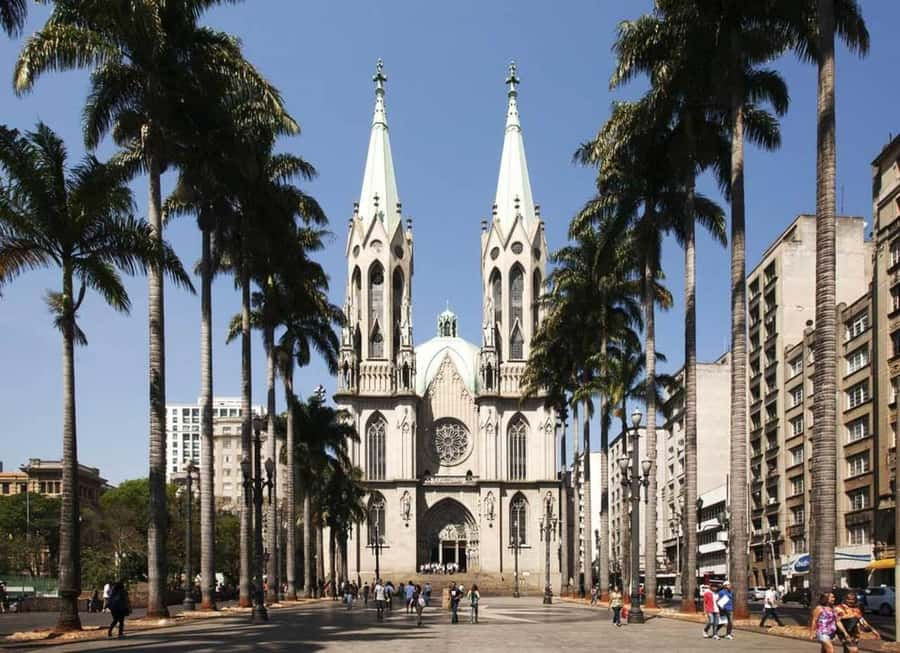
- Walk through the historic core: The route includes Sé Cathedral, Sé Square, Largo São Francisco, cultural centers, banks, and old commercial buildings.
- See coffee’s mark on the city: Your guide explains how coffee helped fund São Paulo’s growth and economic power.
- Reach Farol Santander’s observation deck: Your ticket is included, giving you a high view over the center.
- Finish at Municipal Theater: The tour ends with one of the area’s most ornate architectural landmarks.
- Plan for a real city walk: Wear comfortable shoes, bring sunscreen and sunglasses, and expect the tour to operate in all weather.
Why this walking tour makes sense in São Paulo
São Paulo can feel hard to read at first. It is huge, dense, and full of sharp contrasts. Modern towers rise close to old churches, legal institutions, banks, cultural centers, and city offices. A guided walk gives you a thread to follow.
This route is especially useful if you have only a short time in the city or want to get your bearings before exploring more on your own. In three hours, you move from São Paulo’s earliest foundations to the financial and civic buildings that helped make it a national powerhouse.
The guide’s main task is not simply to name buildings. It is to explain how the pieces fit together. You hear about the importance of different communities in the city’s development and the role of coffee in funding new wealth, trade, and construction. That context turns a series of façades into a story about power and change.
The walk is offered in English, Spanish, or Portuguese. It is a private group experience, which matters if you want the guide’s attention focused on your party rather than a large mixed group. The supplied information does not name individual guides, so you should select your preferred language when booking and confirm the exact meeting details.
More walking tours in São Paulo
- Sao Paulo: Downtown-Center History Walking Tour – in English
★ 5.0 · 91 reviews - Sao Paulo: Downtown-Center Walking Tour | 2 Hours – English
★ 4.9 · 84 reviews - Ecological walk in sao paulo
★ 5.0 · 61 reviews
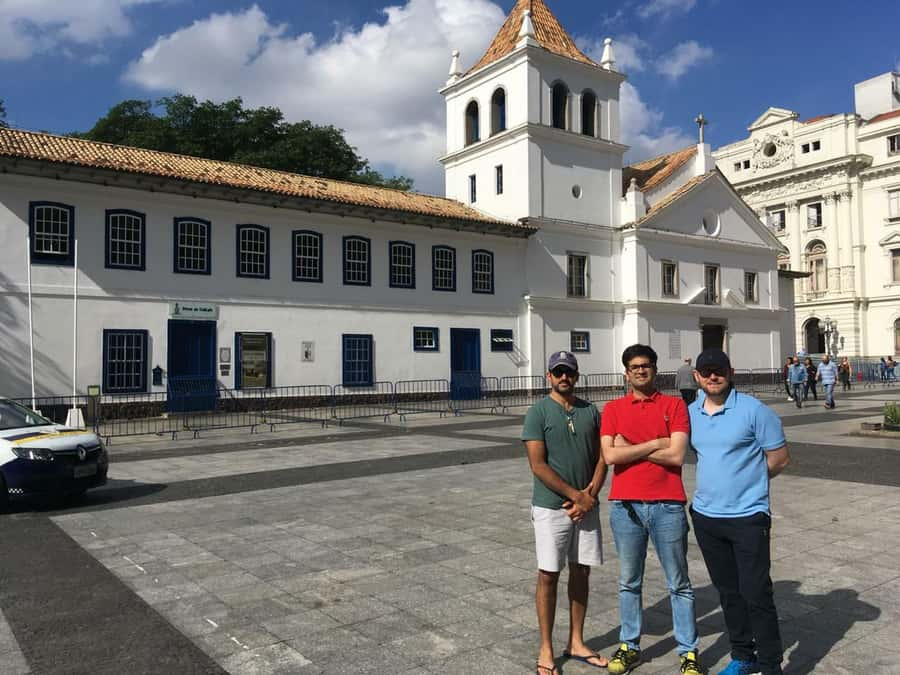
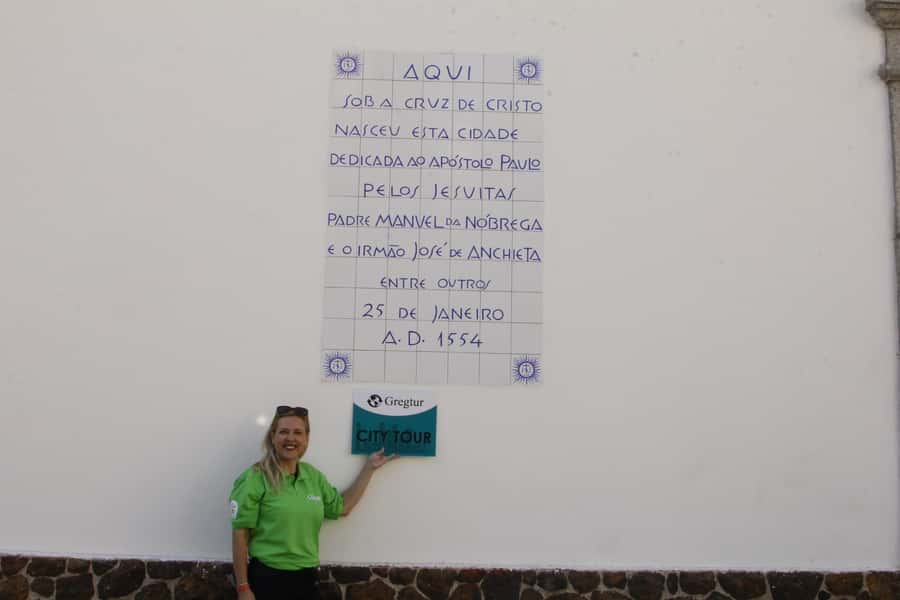
Beginning at Pátio do Colégio
The meeting point is Pátio do Colégio, at Praça Pátio do Colégio, 2, in the historic center. It is within walking distance of both Sé and São Bento metro stations, making public transportation the sensible way to reach the start.
This is a good place to begin because the guide provides background before the walking starts in earnest. You get the basic story of the area first, then see how later buildings and institutions grew around it.
Do not treat the opening stop as a quick photo opportunity only. The point is to understand why this part of central São Paulo matters. Once you have that starting frame, the later churches, schools, banks, and civic buildings make more sense.
Manor of the Marchioness of Santos and the city’s social story
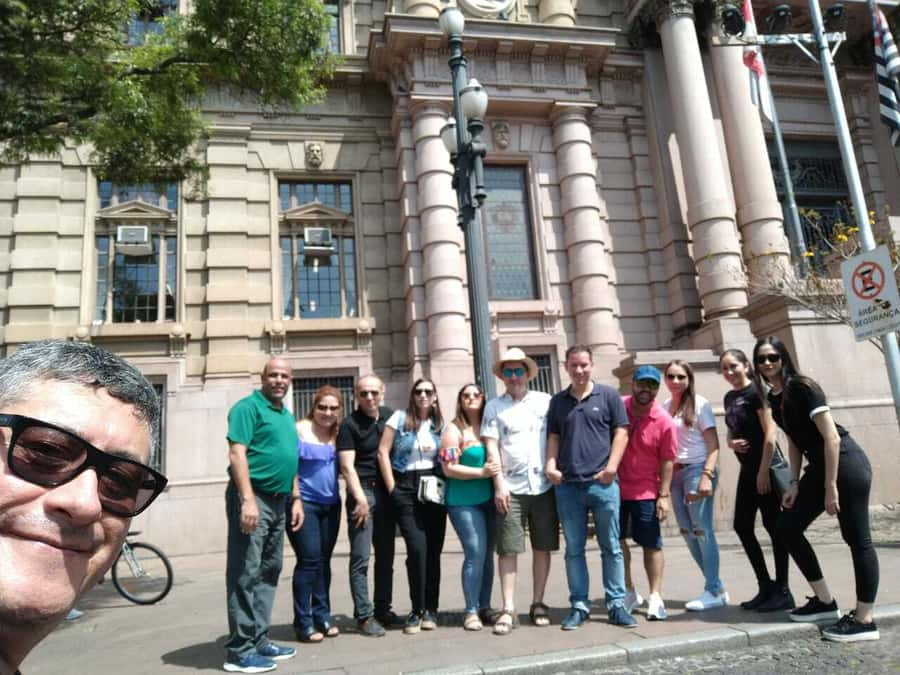
The next stop is the Manor of the Marchioness of Santos. The visit adds a more personal and social angle to a route otherwise filled with major public institutions.
The itinerary does not promise a long interior visit here, so expect the guide to place the building within the wider story of São Paulo rather than spend the whole tour inside. That is useful for anyone who wants more than a parade of famous names. Buildings linked to individuals and social life help show how the city’s development was shaped by people as well as money and government.
Keep your camera ready, but listen closely to the explanation. On a fast city walk, the context is often more valuable than a long stop at one façade.
Sé Cathedral and Sé Square
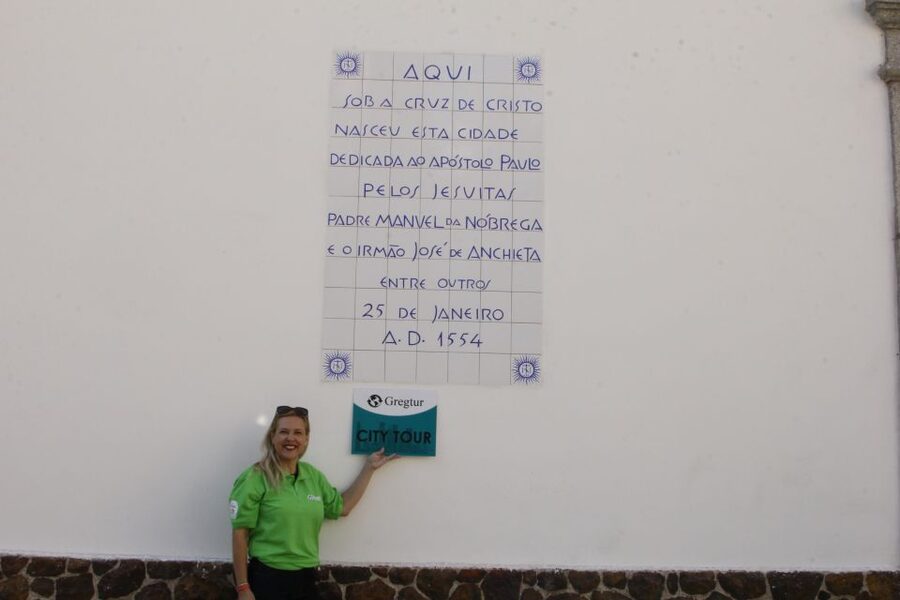
Sé Cathedral is one of the route’s main sights. Its scale and position make it a natural landmark in central São Paulo, and the nearby Sé Square gives you room to take in the setting.
I like this part of the tour because it shifts the focus from private wealth and historic residences to religious and civic space. The cathedral is not just another building on a checklist. It helps explain the central role of faith and public gathering in the old city.
The stop at Sé Square also gives you a useful pause in the walking rhythm. You can take pictures, look around, and hear how the center developed around major institutions. Since the tour is limited to three hours, the guide will need to keep the group moving, but this is one of the places where a short explanation can add real value.
More Tours in Brazil
- São Paulo: Main City Sights in 7 Hours – Shared Group Tour
★ 4.9 · 587 reviews - São Paulo: City Highlights Guided Tour
★ 4.5 · 307 reviews - Private São Paulo City Tour
★ 4.8 · 264 reviews - São Paulo: Downtown Historical Bike Tour
★ 4.9 · 191 reviews
Law, trade, and coffee money
Largo São Francisco Law School brings another major force into the story: education and law. The route then includes FECAP, the Fundação Escola de Comércio Álvares Penteado, linking the walk to commerce and business training.
These stops are valuable because they show São Paulo as more than a church-centered colonial settlement. Legal education, accounting, trade, and business helped create the professional class that supported the city’s expansion.
Your guide also explains coffee’s role as a driving force behind São Paulo’s economic progress. That theme gives the walk a strong backbone. Coffee did not simply appear in the background as an agricultural product. It helped generate the wealth and commercial energy that reshaped the city.
You will not get a full coffee plantation tour or a tasting. Meals and drinks are not included. The value here is the explanation of how coffee money connected rural production with banks, education, trade, and grand urban construction.
A short pause at Brazil Bank’s Cultural Center
The tour continues to Brazil Bank’s Cultural Center. There is a planned quick stop here where you can use the toilets or buy a drink.
That small practical break matters. Three hours of city walking can feel much easier when you have a chance to pause, especially in warm weather. It is also a sensible moment to refill your water or grab a snack, since food and drinks are not part of the tour price.
The stop is brief, so do not count on a long visit to every gallery or exhibition. Think of it as a useful cultural and practical pause before the route moves toward São Paulo’s financial landmarks.
The Stock Exchange and the power of commerce
The Stock Exchange adds a direct look at the financial side of the city’s growth. After hearing about coffee and commerce, you see where financial activity helped turn that wealth into urban power.
This part of the walk is especially helpful if you want to understand why São Paulo became Brazil’s economic center. The guide connects the city’s business institutions with the wider story of expansion. You see how the historic center was shaped not just by government and religion, but also by markets and capital.
The tour does not include meals, drinks, or a separate financial museum visit, so the experience here is mainly architectural and interpretive. Still, the stop fits neatly into the route’s larger argument: São Paulo’s skyline grew from older systems of trade and finance.
Altino Arantes and Farol Santander views
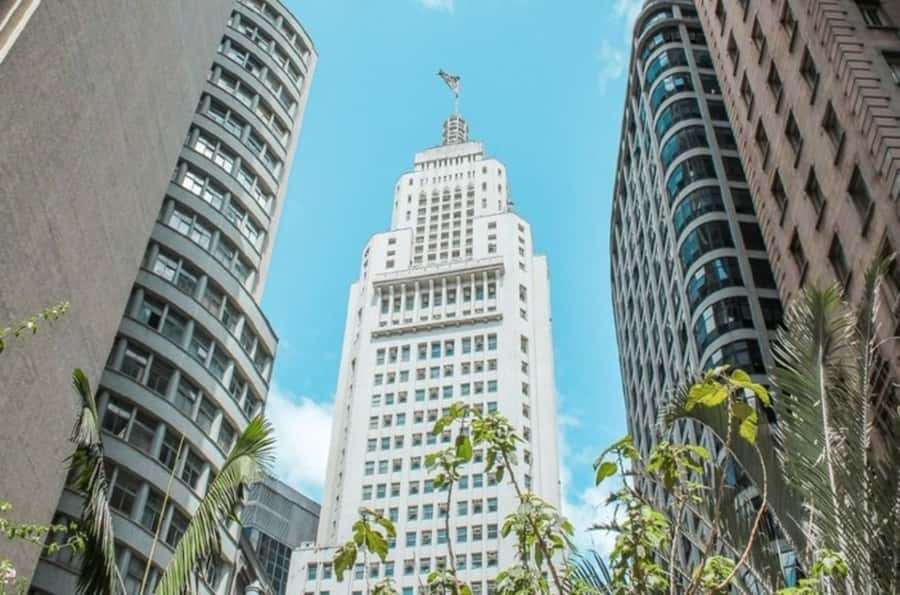
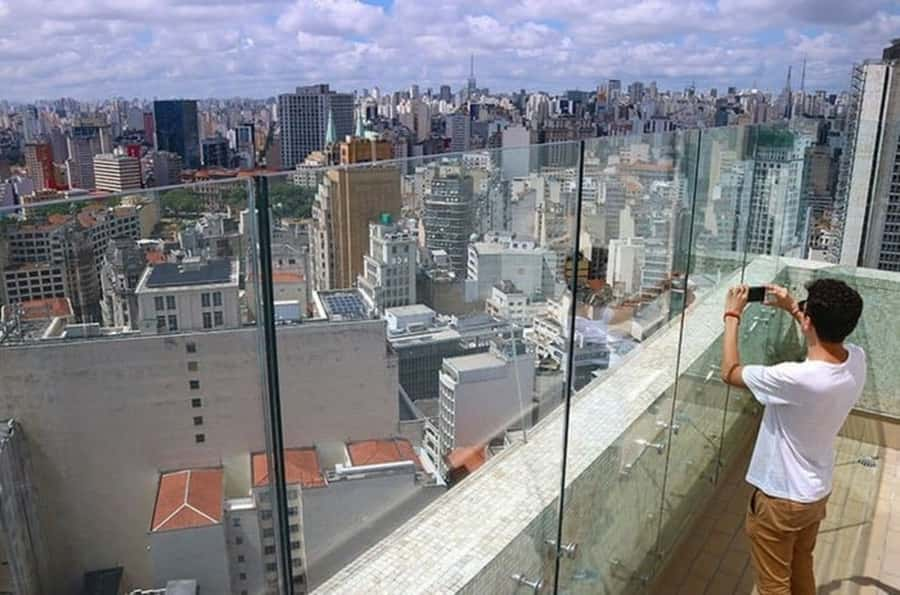
The route then reaches the Altino Arantes building and Farol Santander, where you get a strong view of central São Paulo. Your admission to Farol Santander’s observation deck is included.
This is one of the best reasons to choose this walk over a basic street-only orientation. From the ground, São Paulo can feel like a jumble of streets and towers. From above, you can better understand the scale of the center and the relationship between old buildings and newer high-rises.
The view also gives the coffee and commerce story a visual payoff. Economic growth is not an abstract idea when you can look over the vast city it helped create.
Allow enough time to enjoy the outlook without rushing your photos. The tour still has several stops ahead, so this will not be an unlimited rooftop visit. Still, the included entry adds meaningful value to the $115 price, particularly for a private group that wants a guide-led introduction rather than only independent access.
Martinelli, Saint Benedict, and Sampaio Moreira
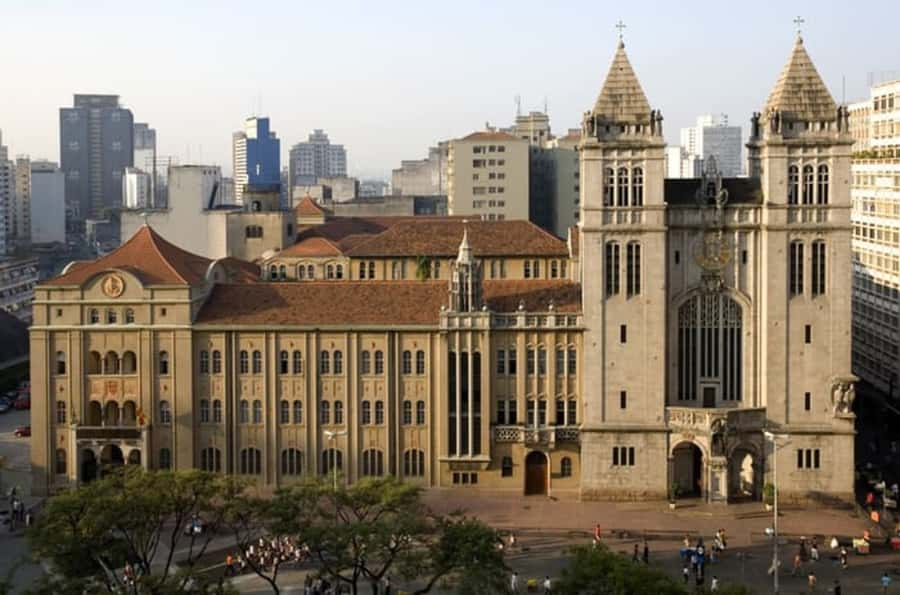
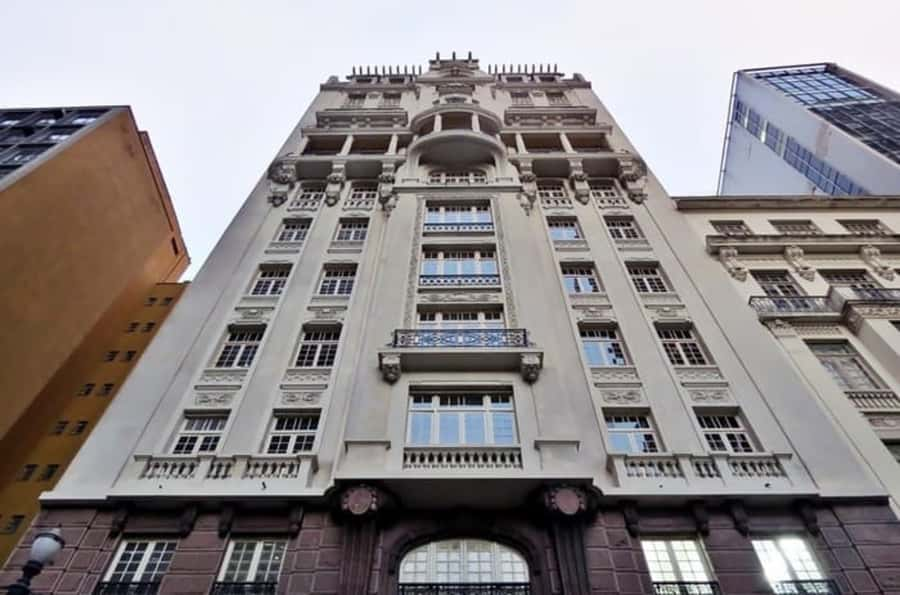
The route passes the Martinelli building, the Monastery of Saint Benedict, and the Sampaio Moreira building. These stops help fill in the center’s architectural range.
You will see how religious buildings, early skyscrapers, and commercial structures occupy the same compact part of the city. That mix is one reason a walking tour works well here. You can compare different periods and uses within a short distance instead of seeing each building in isolation.
The information provided does not promise entry to all of these sites. Plan to view them along the route, hear the guide’s explanation, and stop for pictures where appropriate. If you are passionate about interiors or architectural details, ask the guide how much time is available at each stop before the walk begins.
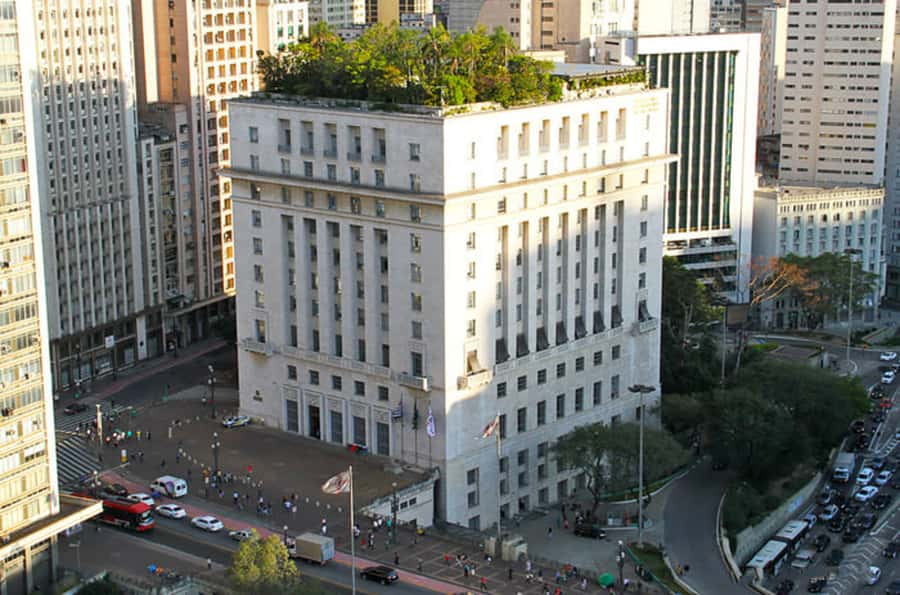
The tour also includes City Hall, another useful reminder that the historic center remains a working civic district, not just an open-air museum.
Ending at Municipal Theater
The final stop is the Municipal Theater. Its architecture provides a fitting finish to a route about money, culture, education, and civic ambition.
This is a place where the city’s desire to present itself as modern and important becomes visible in stone and ornament. After seeing churches, schools, financial institutions, and old towers, you end with a major cultural building.
The ending is practical, too. You can admire the architecture without needing to retrace the full route. Since the tour finishes here, you may want to plan your next stop in advance, though no onward transportation is included in the activity.
Is $115 a fair price?
At $115 per person, this is not the cheapest way to walk through central São Paulo. The price makes more sense if you value a private group, a live guide in your preferred language, a planned historical route, and entry to Farol Santander’s observation deck.
You are paying for interpretation and structure as much as for admission. The guide links the city’s early settlement, religious institutions, commercial schools, coffee wealth, financial power, and modern growth. That can save you a great deal of time and help you notice connections you might miss while wandering alone.
The value is weaker if you only want to see the façades, take a few pictures, and move on. You can walk through parts of the historic center independently, and food, drinks, and transport are not included. The tour earns its price through the private format and the guide’s citywide explanation.
One supplied experience was rated four out of five and described as a fun, interesting way to cover a lot of the historic center in a short time. That is a fair description of the format. This is built for breadth and context, not a slow, specialist architectural study.
Who should book this São Paulo walk?
I would choose this tour if you are visiting São Paulo for the first time, have limited time, or want a clear introduction before exploring alone. It also suits you if you enjoy seeing how religion, education, business, and government shaped one city.
The private format is useful for couples, families, or small groups who want to ask questions as they go. The available languages are English, Spanish, and Portuguese.
You should be comfortable walking for three hours in city conditions. Wear proper walking shoes, bring sunscreen and sunglasses, and dress for changing weather. The tour operates in all weather, so a light rain plan is sensible even if the forecast looks good.
The route is wheelchair accessible, which makes it a practical option for many visitors, though the exact pace and comfort of each stop can still depend on weather and city conditions.
Should you book it?
Book this tour if you want a focused, guide-led introduction to São Paulo’s historic center, with the added benefit of Farol Santander’s observation deck. The strongest feature is the way the route ties individual sights to the larger forces that made the city grow, especially coffee, commerce, education, and the work of different communities.
Skip it if you prefer to wander slowly, spend long periods inside individual buildings, or keep costs as low as possible. For everyone else, the tour offers a useful three-hour framework, a private guide, and a memorable high view over the city.
FAQ
How long is the São Paulo downtown walking tour?
The tour lasts three hours.
Where does the tour begin?
It begins at Pátio do Colégio, Praça Pátio do Colégio, 2, in São Paulo’s historic center. The meeting point is walkable from the Sé and São Bento metro stations.
What languages are available?
The live guide can conduct the tour in English, Spanish, or Portuguese.
Is entry to Farol Santander included?
Yes. The tour includes an entry ticket to the Farol Santander observation deck.
Are meals and drinks included?
No. Meals and drinks are not included. The tour makes a quick stop at Brazil Bank’s Cultural Center, where you can use the toilets or buy a drink.
Is the tour wheelchair accessible?
Yes. The activity is listed as wheelchair accessible.
Just added in São Paulo
- REIKI – Crystal Therapy – by Venus’ Secret Spa – San Francisco★ 5.0 · 41 reviews
- Terraço Italia Restaurant experience★ 4.5 · 43 reviews
- Art Of Wine – Travel Through The So-Called Wine Route Visiting Various Wineries★ 5.0 · 40 reviews
- Private Half-Day Guided Tour to São Paulo★ 5.0 · 50 reviews
- Private Street Art Tour of São Paulo with Batman´s Alley Visit★ 5.0 · 30 reviews
- Full Day Private Beach Tour Santos & Guarujá – Combine Culture, History & Beach★ 5.0 · 37 reviews
- Private Tour: São Paulo’s Top Attractions–6 Hours, Hotel/Airport★ 5.0 · 50 reviews
- Downtown Photo Tour★ 5.0 · 45 reviews
Walking Tours, compared.

Sunrise and Sunrise Walk Two Brothers with Local Guide
Read our review →
Downtown-Center History Walking Tour – in English
Read our review →
Downtown-Center Walking Tour | 2 Hours – English
Read our review →
Learn the History of Rio with an Unforgettable City Center Walking Tour
Read our review →Browse the lists this tour appears in