
Reviewed · STREET ART TOURS
Street Art and Park Bike Tour
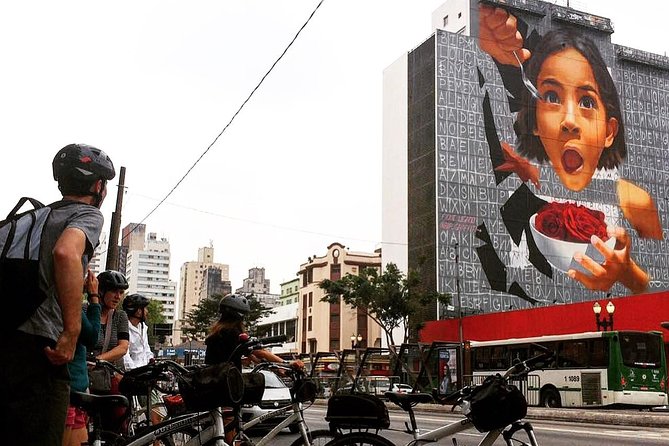
São Paulo’s street art makes more sense when you see how it fits into the city around it. This 3.5-hour bike ride links Ibirapuera Park, Batman Alley, Paulista Avenue, and major art sites, with the city’s buildings and busy streets forming part of the experience.
I like the way the tour combines outdoor art with city history, rather than keeping you inside museums all day. I also like the small maximum group of 10, plus guides such as Arthur, Roberto, Pedro, and Lucas, who adjust the route and add useful local tips. The main drawback is the hills. You should be comfortable cycling for several hours, and a late start is possible if the operator has a communication mix-up.
Key points before you book
- Ibirapuera Park begins the ride with wide paths, modern buildings, and room to get comfortable on the bike.
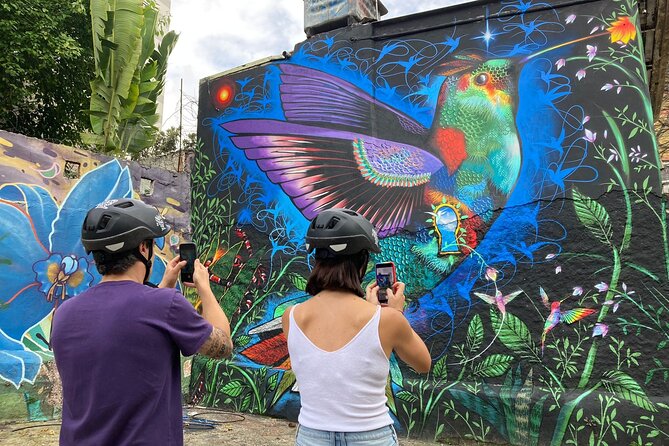
- Batman Alley is the main street-art stop, with large murals by artists from São Paulo’s graffiti scene.
- The route connects art with Afro-Brazilian culture at the Afro Brazil Museum and with modern architecture along Paulista Avenue.
- You ride beneath the Minhocão Overpass and visit the Open Museum of Urban Art, two very different public-art settings.
- The route includes hills, so this suits people who can cycle steadily for around three and a half hours.
- At $85 per person, the value comes from the guide, equipment, snacks, and the amount of city covered in one outing.
Why a bike is the right way to see São Paulo’s street art
São Paulo is enormous. A walking tour can show you one neighborhood well, but it cannot easily connect Ibirapuera Park, central art districts, Paulista Avenue, and the former Carandiru Prison site in one morning or afternoon.
A bicycle gives you a useful middle ground. You cover more ground than on foot, but you still move slowly enough to notice painted walls, odd architectural details, and smaller works along the route. You also avoid spending much of the tour inside a vehicle, looking through glass at a city you came to experience directly.
The bike is especially useful for understanding the contrast between São Paulo’s polished cultural institutions and its informal street-art culture. One moment you may be beside Oscar Niemeyer architecture or a major museum. A few minutes later, you may be looking at a wall-sized mural in an alley or beneath an overpass.
The tour uses a maximum of 10 people, which matters on city streets. A guide can keep a small group together more easily and answer questions without turning every stop into a formal lecture. The strongest guide names connected with this experience are Arthur, Roberto, Pedro, and Lucas. Roberto is noted for taking time at the stops and extending the ride when the group was happy to continue. Arthur is praised for adding a short introduction to Brazilian history and for making the ride fun and easy to follow.
More street art walks in São Paulo
- São Paulo: Bar and Street Art Crawl with Local Guide
★ 4.9 · 102 reviews - Rio: Christ the Redeemer, Sugarloaf, Selaron & BBQ Lunch
★ 4.5 · 2,428 reviews - Rio de Janeiro: Christ, Selaron Steps, and Tijuca Park Tour
★ 4.7 · 857 reviews
Starting in Vila Mariana and entering Ibirapuera Park
The meeting point is at R. França Pinto, 183, in Vila Mariana. There is no hotel pickup, so you need to make your own way to the start. The ride also ends back at this same meeting point, a useful detail if you are planning another activity afterward.
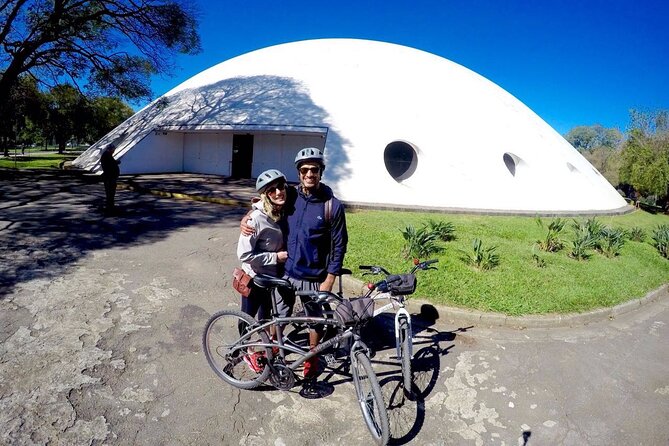
The first major stop is Ibirapuera Park, where you spend about an hour. Opened in 1954 for São Paulo’s 400th anniversary, it is the city’s best-known park and one of its main public spaces. Its size gives the tour a calmer opening than you might expect from São Paulo.
I like this part because it lets you settle into the bike before tackling denser streets. You can take in broad paths, greenery, cultural buildings, and the park’s modern design without dealing with the full pressure of the city center. The park attracts huge numbers of people, especially on weekends, so the mood may change depending on your start time.
The park is also a useful introduction to São Paulo’s scale. It is not a tiny urban garden that you can cross in ten minutes. The reported visit figures are more than 14 million per year, with especially heavy use on Sundays. You get a sense of why locals treat this place as a major part of city life, not just a patch of green between buildings.
The hour here is long enough to make the park feel like a real stop rather than a quick photo break. It also means the overall ride is not only about walls and alleys. If you want a tour focused purely on graffiti, this park section may feel like a detour. If you want a broader introduction to São Paulo, it adds welcome balance.
Afro-Brazilian culture at the Afro Brazil Museum
The Afro Brazil Museum is a short stop of about 20 minutes, and admission is not included. The museum holds more than 6,000 works covering African and Afro-Brazilian art and culture, including sculptures, documents, engravings, ceramics, paintings, jewelry, photographs, textiles, and contemporary works.
The museum’s purpose is important. It presents the role of African people in the formation of Brazilian culture, identity, and heritage. Much of the collection is on long-term display, with material from Brazil as well as parts of Africa, Cuba, Haiti, and the United States.
A 20-minute visit is enough for an introduction, but not enough for a full museum visit. I would think of this as a concentrated cultural stop rather than a replacement for visiting the museum independently. Since the ticket is not included, check your budget and your interest before booking. If you want time to read labels and study the collection, you may need to return on another day.
Its place on a street-art route is one of the tour’s better ideas. Public art is not separate from questions of identity, race, migration, and power. The museum gives you context that can sharpen what you see later on city walls.
From bohemian streets to Batman Alley
The route continues through a bohemian neighborhood, an area lined with bars and urban art, and an important business center surrounded by modern buildings. The supplied route details do not attach all of these areas to named stops, so the exact order may vary with the guide and the day.
That flexibility is useful. The guides can adjust the route according to the group’s interests, and the city’s street art changes over time. Paint fades, walls are repainted, and new work appears. A guide who knows the current streets can make better choices than a fixed route printed months earlier.
Batman Alley is the best-known street-art stop. It is an outdoor urban gallery filled with murals by recognized artists from São Paulo’s graffiti scene. You have about 20 minutes there, with no admission charge.
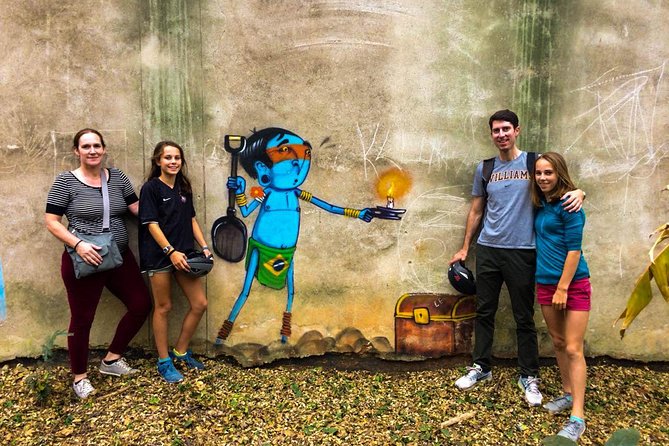
This is the place for photographs, but do not treat it as only a photo stop. Look at how the artists use narrow walls, doors, corners, and the uneven shape of the neighborhood. The art is part of the street, not isolated in a clean gallery with a white wall around it.
Twenty minutes is a brisk visit. You can see the main stretch and take pictures, but you may want longer if you are especially interested in individual artists. The guide’s role matters here. Arthur, Pedro, and Lucas are each praised for explaining the city and its art scene rather than simply leading the group from one mural to the next.
More bike tours in São Paulo
- São Paulo: Downtown Historical Bike Tour
★ 4.9 · 191 reviews - Rio de Janeiro: Guided Bike Tours in Small Groups
★ 4.5 · 133 reviews - Fatima Neighborhood and Church Unit Bike Tour
★ 5.0 · 58 reviews
Riding under the Minhocão and seeing public art in motion
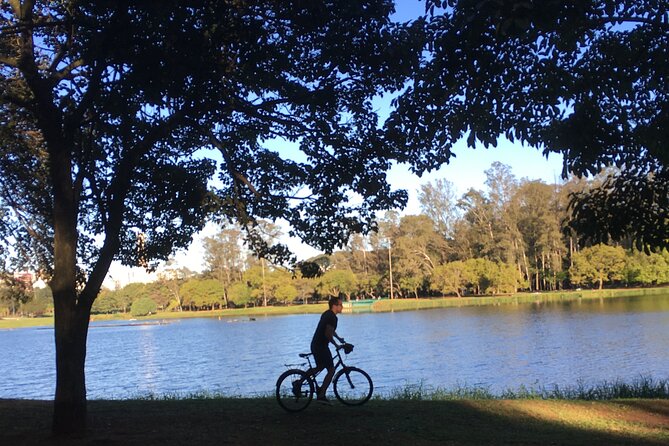
One highlight is cycling safely beneath the Minhocão Overpass. The overpass is a major piece of São Paulo infrastructure, and riding underneath it gives you a different view of the city than a standard sightseeing route.
This section also shows why a bicycle helps. You are close to the structure, walls, and street-level details. You can stop to look, then continue without the awkwardness of parking a vehicle or waiting for a large group to move.
The route also includes the Open Museum of Urban Art, known as MAAU. This adds another public setting for large-scale work. Instead of seeing one famous alley, you get a sense of street art spreading through the city’s infrastructure.
The practical point is safety. The tour description specifically highlights a safe ride beneath the Minhocão, but you still need to follow the guide closely and use the supplied helmet. São Paulo is a large, active city, and this is not a closed-road cycling outing from start to finish.
Architecture, Paulista Avenue, and Casa das Rosas
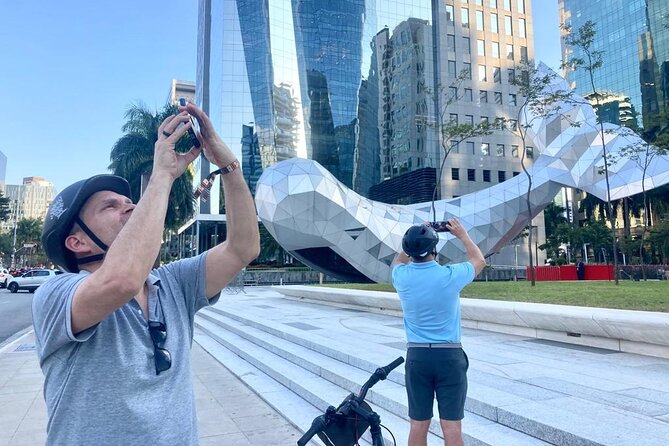
The tour passes several important cultural and architectural sites. These include the Museum of Modern Art of São Paulo, the Museum of Contemporary Art, Museu de Arte de São Paulo, Japan House, and Casa das Rosas.
Casa das Rosas is listed as a 10-minute stop with free admission. The building provides a short pause in the route and adds a more traditional cultural note to a tour otherwise centered on public art and modern city life.
Paulista Avenue is one of São Paulo’s main financial and cultural corridors. It is lined with tall buildings, museums, shopping centers, and institutions. On Sundays, the avenue opens to pedestrians, cyclists, and artists, creating a different kind of public space.
If your tour runs on a Sunday, the avenue may be especially pleasant for cycling. If it runs on another day, you will see its working-city character instead. Either way, Paulista helps explain São Paulo as a business center and cultural capital at the same time.
The route also includes a building designed by Oscar Niemeyer. The supplied information does not identify which building or how long you stop there, so you should not book this as a dedicated architecture tour. Still, this detail adds another layer to the ride. São Paulo’s art is not limited to painted walls. It also appears in museums, public buildings, modernist forms, and the way people use major streets.
Carandiru and the harder side of the city
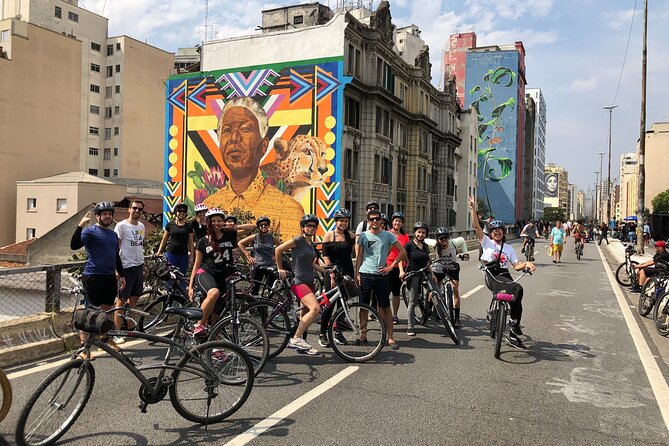
The tour highlights a visit to the ruins of the demolished Carandiru Prison. The prison became infamous, and its remains offer a more serious point of contact with São Paulo’s recent past.
This is not a light sightseeing stop in the same way as Batman Alley or Ibirapuera Park. It brings questions about incarceration, violence, public memory, and what happens to places associated with national trauma after they are torn down. The ride’s mix of murals, parks, museums, and prison ruins gives you a broader picture of the city than a route focused only on attractive sights.
The exact time at Carandiru is not provided, so treat it as one of the tour’s featured locations rather than a guaranteed long visit. The detailed route also includes MAAU, though the individual timing for that stop is not stated. Your guide may need to adjust the order or length of stops to fit traffic, weather, and the group’s pace.
What is included for $85
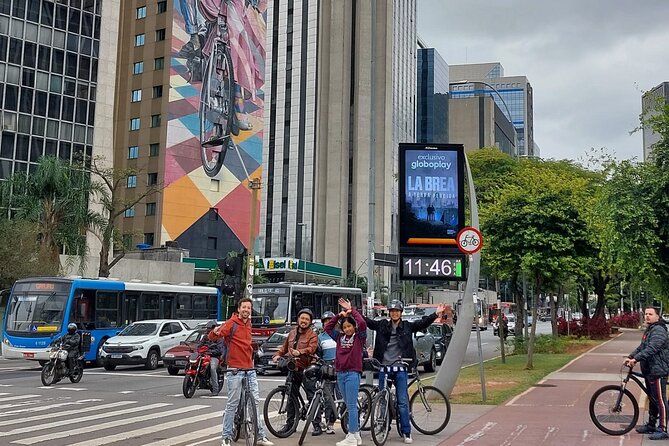
The price is $85 per person. Included are the bicycle, helmet, bottled water, raincoat, souvenir, and refreshments. The food details list iced tea and pão de queijo, a Brazilian cheese bread, under both the coffee or tea tasting and lunch sections.
That is not a full meal, so plan your day accordingly. Think of the food as a snack and a pleasant local taste, not lunch that will carry you through the rest of the day. The raincoat is useful because the experience depends on weather, and cycling in São Paulo is less enjoyable when an unexpected shower catches you without cover.
The value depends on what you want from a tour. For $85, you are paying more than you would for a simple bike rental. In return, you get a guide, equipment, a small group, a planned route, cultural explanation, snacks, and access to a much wider part of the city than you could comfortably cover on your own in three and a half hours.
I think the price makes the most sense early in a São Paulo visit. You get your bearings quickly, learn which areas you may want to revisit, and receive local suggestions from the guide. If you already know the city well and mainly want to cycle independently, the cost may be harder to justify.
Hills, timing, and who should book
The main physical issue is the hills. One rider specifically found the course hilly, while another described the ride as easy and the bikes as good. Both points can be true: the route may be manageable for a regular cyclist but still include climbs that surprise someone expecting a flat park ride.
You should be able to cycle steadily for about three and a half hours, with stops along the way. The tour is not described as a strenuous athletic outing, but it is also not a casual ten-minute spin. Wear comfortable clothes and shoes suited to pedaling. The helmet is included.
The experience suits you best if you want:
- A broad first look at São Paulo rather than a single museum
- Street art mixed with parks, architecture, and social history
- A small group and a guide who can adjust the route
- An active way to cover several neighborhoods
- Local snacks and practical city tips
- A tour that includes both attractive and difficult parts of the city
It is less suitable if you dislike cycling in a large city, need a completely flat route, want long museum visits, or prefer a fixed schedule with every stop timed in detail.
The activity requires good weather. If poor weather forces cancellation, you are offered another date or a full refund. You can also cancel for a full refund up to 24 hours before the start time. Changes or cancellations inside that 24-hour window are not accepted.
Should you book the Street Art and Park Bike Tour?
I would book this if you want to understand São Paulo through movement. The strongest parts are the combination of Ibirapuera Park, Batman Alley, public art under the Minhocão, Paulista Avenue, and the more serious Carandiru stop. The guides are central to the experience, with Arthur, Roberto, Pedro, and Lucas all associated with strong local explanations and route flexibility.
Go in knowing that the hills are real, the Afro Brazil Museum stop is brief, and the included food is a snack rather than a full lunch. If you can handle the cycling and want more than a checklist of famous walls, this is a useful and memorable first-day introduction to São Paulo.
FAQ
Where does the bike tour start?
It starts at R. França Pinto, 183, Vila Mariana, São Paulo, SP, 04016-001, Brazil.
Where does the tour finish?
The activity ends back at the same meeting point.
How long does the tour last?
The tour lasts approximately 3 hours and 30 minutes.
What is included in the price?
The price includes a bicycle, helmet, bottled water, raincoat, souvenir, iced tea, and pão de queijo. Coffee or tea tasting is also listed among the inclusions.
Is admission to the Afro Brazil Museum included?
No. Admission to the Afro Brazil Museum is not included.
What happens if the weather is poor?
The experience requires good weather. If it is canceled because of poor weather, you can choose another date or receive a full refund.
Street art walks in São Paulo
- Rio Street Art Tour
★ 5.0 · 76 reviews
Just added in São Paulo
- Corinthians Football Game Experience★ 4.8 · 33 reviews
- Companionship of a bilingual guide in São Paulo★ 4.8 · 10 reviews
- Best São Paulo City Tour History 5Hours Private Experience.★ 4.0 · 3 reviews
- From São Paulo: Aparecida Cathedral Tour★ 4.8 · 10 reviews
- Campos do Jordão – Brazilian Switzerland departing from São Paulo★ 4.5 · 53 reviews
- The Brazilian Switzerland – Day Trip on Campos do Jordão from São Paulo★ 4.5 · 53 reviews
- Ecological walk in sao paulo★ 5.0 · 61 reviews
- Wine Tour in São Roque by Car, Tour with Local Guides★ 5.0 · 60 reviews
Street Art Tours, compared.
Christ the Redeemer, Sugarloaf, Selaron & BBQ Lunch
Read our review →
Santa Teresa, Lapa, and Cinelândia with Tram Ride and Selarón Steps
Read our review →
Corcovado, Sugarloaf Mountain, and Selarón Steps 6-Hour Tour
Read our review →
Christ the Redeemer & Selarón Steps Half-Day Tour
Read our review →
Rio in Style: A Journey Thru Corcovado, Sugarloaf, Selaron
Read our review →Browse the lists this tour appears in