
Reviewed · STREET ART TOURS
Rio Street Art Tour
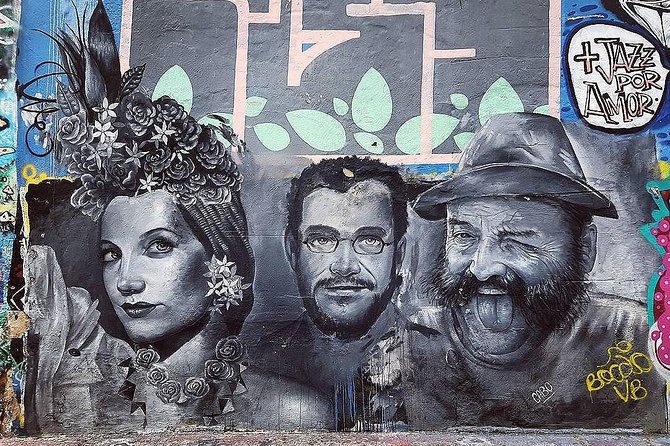
Rio’s street art is more than colorful paint on a wall. On this three-hour route, murals become a doorway into Brazilian politics, Afro-Brazilian culture, Carnival, and the city’s past. Guide Wellington leads you from central Rio to Porto Maravilha by foot, subway, and VLT, with stops at the Selarón Staircase and the giant Etnias mural.
I like the way this tour connects art to real places, especially Little Africa and the old port. I also like the local feel: you use public transportation, pass historic buildings, and can ask Wellington about food, samba schools, architecture, or current events. The main drawback is simple: you walk a lot, and older murals may appeal less if you want only the newest street art.
Key points at a glance
- A private three-hour route: Only your group takes part, including solo bookings.
- Street art with context: Wellington explains the social, political, historical, and cultural ideas behind the murals.
- Three ways to see Rio: Walk through central neighborhoods, ride the subway, and take the VLT tram.
- Major landmarks included: See Cinelândia, Selarón Staircase, the Museum of Tomorrow area, and Porto Maravilha.
- A strong Little Africa connection: The port district opens a conversation about slavery and Afro-Brazilian culture.
- Bring water: The route is manageable but includes plenty of walking in Rio’s heat.
Why Rio’s murals tell more than one story
I like this tour because it does not treat street art as decoration. A mural can point you toward the city’s political arguments, racial history, public spaces, architecture, or Carnival traditions. Wellington’s explanations give you a way to read what you are seeing instead of simply photographing it.
The guide’s personal connection to Rio is a major part of the experience. You can ask about the city beyond the planned route, and the tour can open into subjects such as samba schools, Carnival floats, local food, and present-day issues. One especially useful feature is the chance to visit or ask about the area connected with Cidade do Samba, where Carnival floats are staged and stored, if the grounds are open.
This is not a tour for someone who wants to stay in a vehicle. You move through the city as residents do, using the subway and VLT as well as your own feet. That takes a little more energy, but it gives you a better sense of how central Rio fits together.
More street art walks in Rio de Janeiro
- Rio: Christ the Redeemer, Sugarloaf, Selaron & BBQ Lunch
★ 4.5 · 2,428 reviews - Rio de Janeiro: Christ, Selaron Steps, and Tijuca Park Tour
★ 4.7 · 857 reviews - Santa Teresa, Lapa, and Cinelândia with Tram Ride and Selarón Steps
★ 4.5 · 274 reviews
Starting at the Municipal Theater in Cinelândia
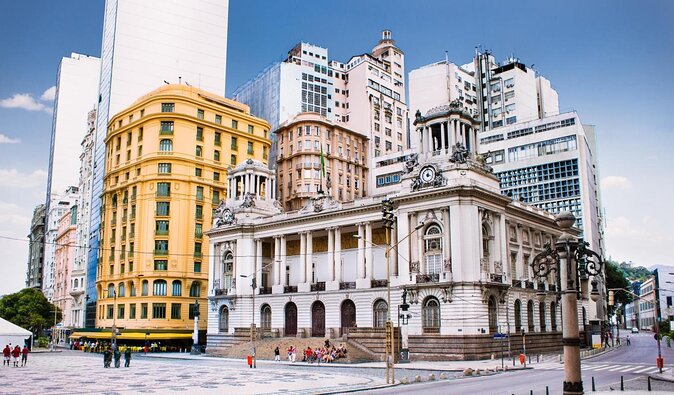
The meeting point is beside Rio’s Municipal Theater at Praça Floriano, in the Cinelândia area. This is a useful place to begin because the tour introduces you to more than murals right away. The surrounding center includes important civic and cultural buildings, including major libraries and the city’s main theater.
Cinelândia helps explain the European influence visible in parts of Rio’s architecture. You may be looking at street art, but Wellington also draws attention to the buildings around it. That mix is one of the route’s strengths. The art does not sit apart from the city. It shares streets with grand public buildings, transit stops, museums, and older neighborhoods.
The tour may begin with a subway ride toward Glória before continuing on foot. The exact order can vary with the route, but the purpose is clear: you get an early look at Rio’s public transportation and begin seeing the city from street level.
Glória and Rio’s first legalized graffiti
In Glória, the tour takes up Rio’s street art story with what is described as the city’s first legalized graffiti. This is an important starting point because it gives the art a civic and cultural setting. Legal walls raise questions about who gets to use public space, how authorities treat graffiti, and how an informal art form becomes part of the city’s identity.
I would pay close attention here rather than rushing toward the larger murals later in the day. The first stop sets up the difference between a painted wall that simply looks good and a work that carries a message about place, power, or identity.
You also begin to see how the route moves between neighborhoods rather than staying in one art district. That variety matters. Different areas bring different building styles, public spaces, and social histories.
Selarón Staircase, Rio’s colorful landmark
The Escadaria Selarón is one of the best-known stops on the tour and one of Rio’s most photographed places. The staircase is covered with colorful tiles and has become the city’s third most visited tourist attraction, according to the tour information.
The stop lasts about 20 minutes. That is enough time to see the staircase, take photographs, and hear how it fits into the city’s artistic life. It is also the most overtly tourist-focused point on the route, so expect more people and more photo activity than at lesser-known walls.
I like its place in this tour because you do not see it as an isolated attraction. You reach it after discussing legalized graffiti and the city’s architecture, then continue toward Cinelândia and the port district. The staircase becomes one chapter in a larger story about public art.
If you want a quiet, slow visit, 20 minutes may feel brief. If you want a focused introduction and good photographs, the timing works well. Wear shoes that feel secure on steps and uneven pavement.
Same city, a different sort of day:
- Rio de Janeiro: 6-Stop Highlights of Rio with Lunch
★ 4.4 · 5,157 reviews - Christ the Redeemer Entry Ticket by Corcovado Train
★ 4.4 · 4,476 reviews - Rio de Janeiro: Rocinha Favela Walking Tour with Local Guide
★ 4.8 · 3,052 reviews - Rio De Janeiro: Half-Day Rocinha Favela Walking Tour
★ 4.7 · 2,272 reviews
Cinelândia’s architecture and the ride toward the port
Back in Cinelândia, Wellington brings the city’s main cultural buildings into the conversation. This part of the route helps balance the murals with older architecture. Rio’s center can feel like several cities at once: formal theaters and libraries, busy transport links, historic streets, and walls covered with contemporary art.
The group then uses the VLT, Rio’s light rail system, toward the Olympic Boulevard area. This is one of the tour’s more useful practical features. You are not simply being driven from one photo stop to the next. You learn how central neighborhoods connect by public transit, and the ride gives your legs a short rest.
A past participant specifically appreciated help with buying a train ticket, which avoided the risk of a fine. That detail is worth keeping in mind: if you are not familiar with Rio’s subway or VLT system, Wellington can help you handle the transit part of the outing.
Olympic Boulevard and the Museum of Tomorrow area
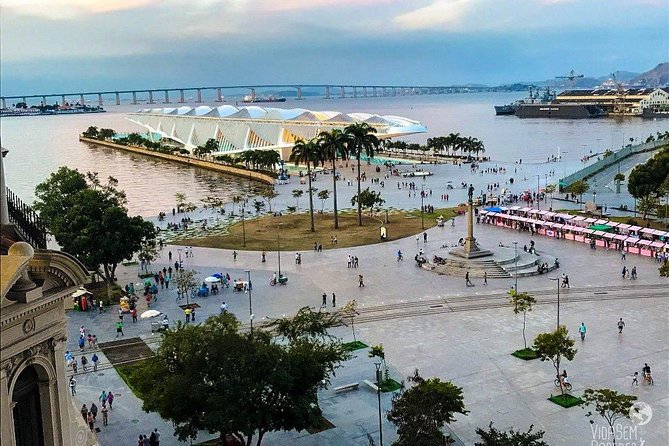
The Olympic Boulevard is home to several of Rio’s main museums. The Museum of Tomorrow is the most recognizable landmark in the area, with its futuristic design and broad public setting. The nearby Museu de Arte do Rio adds another cultural reference point.
The tour does not present these museums as isolated indoor stops. Instead, you see them as part of a large urban district shaped by redevelopment and public art. The outdoor setting makes this section easy to combine with photographs and conversation.
Expect roughly 30 minutes here before the route continues into Porto Maravilha. Wellington may use the buildings and open spaces to explain how Rio presents itself to the world, while the murals offer a different view from the ground up.
One advantage of this arrangement is flexibility. You can return later to visit a museum in more detail if its exhibits interest you. This tour gives you the district’s setting and connections, but it is not a substitute for spending several hours inside each museum.
Porto Maravilha and the giant Etnias mural
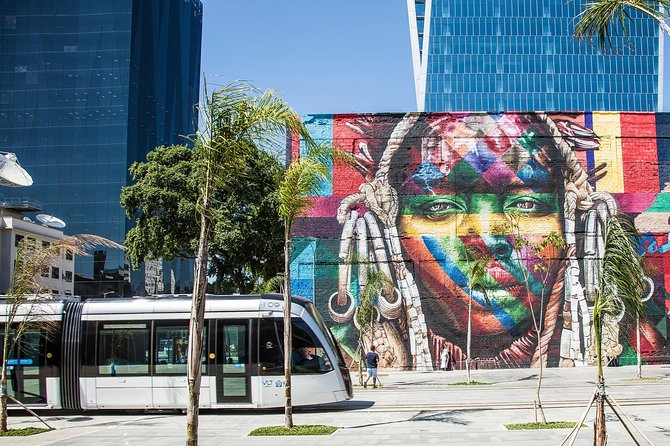
The final major section is Porto Maravilha, the revitalized port area. This is where you see the Etnias panel, described as the largest graffiti mural in the world. The mural is the visual climax of the route, but its scale is not the only reason it matters.
Wellington explains the messages in the mural and connects the port to the history of enslaved Africans in Brazil. That link gives Porto Maravilha a weight that can be missed if you come only for photographs. The public art sits near Little Africa, an area tied to Afro-Brazilian history and the arrival and enslavement of Africans in Brazil.
I would allow the full hour here. The mural is enormous, and you need time to take in its figures, colors, and placement. The setting also gives you room to ask questions and connect the artwork with the port’s past.
The route’s most valuable lesson may be here: public art can be beautiful and still ask difficult questions. The Etnias mural gives you a starting point for understanding identity and ancestry, while the surrounding district shows how old history and new urban projects can occupy the same streets.
A local view of Little Africa and Carnival
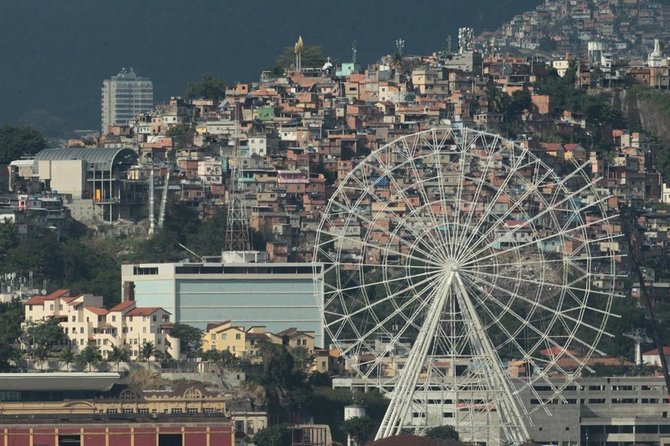
The Little Africa portion is particularly useful if you want more than a standard central-Rio sightseeing loop. The area lets Wellington discuss slavery in Brazil and Afro-Brazilian culture in a way that ties directly to the streets around you.
The tour can also touch on Carnival and samba schools. One family group enjoyed seeing some Carnival floats, and the route may offer a chance to visit a float staging and storage area if it is open. This is not guaranteed as a formal stop, so treat it as a possible addition rather than the main reason to book.
I appreciate the way these subjects broaden the tour. Rio’s art is not only about painters and walls. It is also about music, festivals, neighborhood identity, race, memory, and who gets represented in public space.
If you are especially interested in Little Africa, ask Wellington early in the tour. The standard route centers on street art, but the experience can be adapted for a group that wants more attention on Afro-Brazilian history.
How much walking and public transit to expect
The tour lasts about three hours, but the time passes through several kinds of movement. You walk between murals and landmarks, ride the subway, and use the VLT. The route is described as easy walking, yet it is still a lot of time on your feet.
Bring water, especially in warm weather. Comfortable shoes are more important than stylish ones, and a small bag is easier to manage on public transportation. You should also expect some city noise, pavement changes, and brief waits around transit.
Most people can take part, but anyone with limited stamina should ask about the route before booking. The tour is private, so your group can communicate its pace and interests more easily than on a large scheduled outing. Still, it is not a seated sightseeing experience.
The weather matters. If poor weather cancels the tour, you are offered another date or a full refund. That policy is useful in Rio, where rain can make a walking route far less pleasant.
What the private format adds
The price is $68.61 per person. For a private three-hour tour, that can be fair value if you want interpretation rather than a simple route map. The cost includes the guide’s time and a tailored experience for your group, while admission to the listed stops is free.
You should remember that public transportation is part of the experience. The provided information does not state that every subway or VLT fare is included in the price, so confirm that point when booking. One previous participant noted that Wellington helped with a train ticket, but I would still clarify the arrangement for your own group.
The private format is especially helpful for solo visitors, families, and friends with a specific interest in art or Rio’s history. A solo booking is possible, and the route can become a conversation rather than a speech. If you prefer a large group and a lower per-person rate, this may not be your best match.
What makes Wellington a strong guide
Wellington receives especially strong praise for his explanations of art, history, politics, architecture, and culture. He speaks English well, and one participant also used the tour as a chance to practice Portuguese.
His best quality is his ability to connect subjects. A mural can lead to a discussion of slavery, which can lead to Little Africa, Carnival, samba schools, or the port’s redevelopment. That gives the tour a human scale and prevents it from becoming a list of dates and names.
He also offers practical local help. At the end of one route, he pointed out places to eat, helping the group choose a lunch spot among local residents. Food is not included, but that kind of advice can make the rest of your day easier.
There is one small caveat. One person wished the route included more new or younger murals, since some works felt older. If your priority is the latest street-art scene, ask Wellington what is currently on the route. If your priority is context, architecture, and city history, the existing route is a better fit.
Who should book this Rio street art tour
I would choose this tour early in a Rio visit if you want to understand the center before exploring on your own. It gives you useful orientation, introduces public transit, and shows you neighborhoods that a beach-focused visit can easily miss.
It suits:
- Solo visitors who want a private guide and a safe, structured way to explore central Rio
- Families who prefer history and culture mixed with outdoor sightseeing
- Art fans who want to understand murals rather than only photograph them
- Visitors interested in Afro-Brazilian culture, slavery, and Little Africa
- People who enjoy walking and do not mind using local transit
- Anyone looking for an alternative to a coach tour
I would think twice if you have difficulty walking for several hours, dislike public transportation, or want a tour devoted only to new graffiti. The Selarón Staircase and Etnias mural are popular sights, and parts of the route can feel busy, but much of the value comes from the surrounding streets and explanations.
Should you book it?
Book the Rio Street Art Tour if you want art to help you understand Rio’s people, history, politics, architecture, and Carnival culture. Wellington’s personal approach, the private format, and the mix of walking with subway and VLT rides give the outing more substance than a quick mural photo stop.
Skip it if you want a short, relaxed sightseeing ride or a tightly focused survey of the newest street art. For most curious visitors, though, the $68.61 price is reasonable for three hours of personal guiding across Cinelândia, Glória, Selarón, Little Africa, and Porto Maravilha.
FAQ
Where does the Rio Street Art Tour start?
The tour starts at the Municipal Theater of Rio de Janeiro, at Praça Floriano, in the Cinelândia area of central Rio.
Where does the tour end?
The tour ends in a different location from the meeting point. The final area is Porto Maravilha, near the large Etnias mural and the Museum of Tomorrow district.
How long does the tour last?
The experience lasts approximately three hours.
How much does the tour cost?
The listed price is $68.61 per person.
Is this a private tour?
Yes. Only your group takes part, and solo bookings are possible.
Does the tour use public transportation?
Yes. The route includes the subway and the VLT, as well as walking between stops.
Are admission tickets included?
The listed stops have no admission charge. The available information does not specify whether public transportation fares are included, so confirm that when booking.
Is the tour suitable for most people?
Most people can participate, but the route includes a lot of walking. You should bring water and wear comfortable shoes.
What happens if bad weather cancels the tour?
If poor weather causes cancellation, you can choose another date or receive a full refund.
Can I cancel for a full refund?
Yes, if you cancel at least 24 hours before the experience begins. Cancellations made less than 24 hours before the start time are not refunded, and changes within that period are not accepted.
Street art walks in Rio de Janeiro
- Rio Street Art Tour
★ 5.0 · 76 reviews - São Paulo: Bar and Street Art Crawl with Local Guide
★ 4.9 · 102 reviews - Street Art and Park Bike Tour
★ 5.0 · 56 reviews - Private Street Art Tour of São Paulo with Batman´s Alley Visit
★ 5.0 · 30 reviews
Just added in Rio de Janeiro
- Rio de Janeiro: Zip Lining and Canopy Tree Tour★ 3.3 · 6 reviews
- Vidigal Favela Tour★ 4.4 · 26 reviews
- Rio de Janeiro: Attend a Vasco da Gama game with local guide★ 4.8 · 9 reviews
- Unforgettable Boat Party★ 5.0 · 3 reviews
- Hang gliding flight in Rio de Janeiro★ 5.0 · 6 reviews
- Rio Highlights: Christ, Sugarloaf, and More in a Private Tour★ 5.0 · 36 reviews
- Tijuca Forest Hike – Waterfalls & Caves, Nature & Wild Life!★ 5.0 · 51 reviews
- Rocinha Walking Tour: Get a Feel for the Brazil’s Largest Favela (Shared Group)★ 5.0 · 37 reviews
Street Art Tours, compared.
Christ the Redeemer, Sugarloaf, Selaron & BBQ Lunch
Read our review →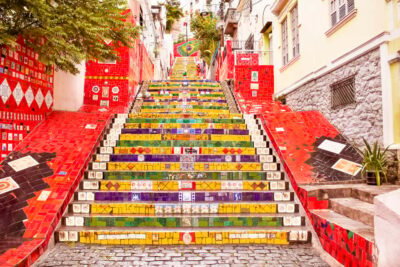

Santa Teresa, Lapa, and Cinelândia with Tram Ride and Selarón Steps
Read our review →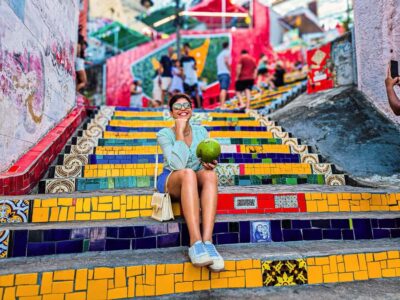
Corcovado, Sugarloaf Mountain, and Selarón Steps 6-Hour Tour
Read our review →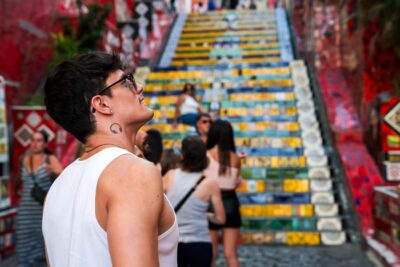
Christ the Redeemer & Selarón Steps Half-Day Tour
Read our review →

Rio in Style: A Journey Thru Corcovado, Sugarloaf, Selaron
Read our review →Browse the lists this tour appears in