
Reviewed · FOOD & DRINK
Guided Market Fruit Tasting in Rio with 15+ Exotic Flavors
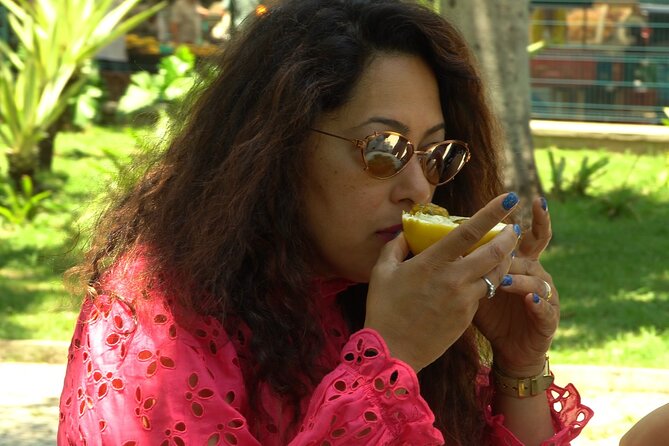
Rio’s farmers markets offer more than familiar mangoes and pineapples. Here, 15 to 20 Brazilian fruits become a lesson in geography, daily life, and local taste. You may try jabuticaba, which grows directly from a tree’s bark, learn how açaí supports life in the Amazon, and discover why cashew apples end up in sweets and liqueurs.
I like two things right away: the tasting takes place in a real neighborhood market, not a staged food attraction, and the guide helps connect every bite to Brazil’s regions and customs. Guides including Hay Za, Caterina, and Erica have been praised for being warm, generous with samples, and ready to answer questions.
The main thing to consider is the season. Finding 15 or more unusual fruits depends on what is available, although the guide managed to offer 18 kinds during one autumn visit. Extra food and drinks are not included, so bring some spending money if you want to shop after the tasting.
Key points at a glance
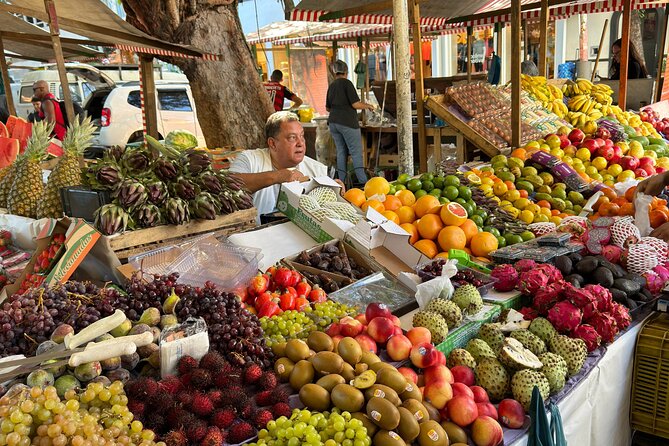
- Taste 15 to 20 Brazilian fruits: Expect familiar tropical fruit alongside varieties that may be new even if you already know Brazilian food.
- Walk through a working Rio farmers market: You see local produce and products where residents shop, rather than sampling in a formal restaurant.
- Learn the story behind each bite: Açaí, jabuticaba, and cashew apples open a window onto regional customs and Brazil’s plant life.
- Enjoy more than fruit: The tasting also includes local juices, nuts, and native ingredients.
- Keep the group small: A maximum of 15 people makes it easier to ask questions and follow the guide.
- Start and finish in Ipanema: The experience begins at 10:00 am and returns to the same meeting point after about two and a half hours.
Why a fruit market tells you more about Brazil
Brazil is too large and varied to understand through one standard menu. Fruit is a useful shortcut. Each variety points toward a region, a climate, a farming tradition, or a favorite way of preparing food.
That is what gives this experience more weight than a simple produce sampling. You are not only asked to decide which fruit tastes sweetest. You learn how açaí is linked with the Amazon, how jabuticaba grows in such an unusual way, and how cashew apples can become sweets and liqueurs.
I like this approach because it gives you a way to remember Brazil after you leave Rio. A name on a plate can be easy to forget. A fruit growing from the trunk of a tree, or a local ingredient used in a drink, is much harder to lose from memory.
The experience also suits curious eaters who want context without sitting through a formal lecture. The format is active and social. You walk, look, taste, ask questions, and keep moving through the market.
More food and drink tours in Rio de Janeiro
- Rio: Pub Crawl in Lapa with Cachaça Tasting and Live Samba
★ 4.7 · 881 reviews - Sunset Boat Tour with Beer, Water, Soda and Snacks included
★ 5.0 · 227 reviews - Petropolis The Imperial City with Beer tour and Lunch
★ 4.5 · 83 reviews
Starting in Ipanema at 10:00 am
The tour begins in Ipanema at 10:00 am and ends back at the meeting point. The fixed start time makes this easy to place early in a Rio day, especially if you want to leave the afternoon open for other plans.
The meeting point is near public transportation, which helps if you are staying elsewhere in the city. The exact transport method is not specified, so you should check your route to Ipanema before the morning of the tour.
Starting in Ipanema is useful for another reason. The area gives the experience a clear city setting. You are not being taken away to an isolated farm or a purpose-built tasting room. You begin in one of Rio’s well-known urban neighborhoods and then enter the everyday food trade of the city.
Because the group can include no more than 15 people, you should have a reasonable chance to hear the guide and ask about unfamiliar ingredients. That limit is especially useful in a market, where narrow aisles and nearby shoppers can make a large group awkward.
Entering a real Rio farmers market
The market walk is the backbone of the experience. You will see produce and other goods sold by local people, with the guide pointing out ingredients that might otherwise pass unnoticed.
This matters because markets show food in its normal setting. You see the fruit before it has been arranged into a neat tasting menu. You can compare colors, shapes, and sizes, and notice the wider range of products available beyond the samples chosen for the group.
One part of the experience is helping you shop. Erica, one of the guides named by the operator, has taken participants around the market and helped them choose products. That can be handy if you want to buy something but are unsure what it is, how it is normally used, or which item looks ready to eat.
The market is described as cozy rather than huge. That may appeal to you if you prefer a focused visit over a long, tiring food crawl. The tradeoff is that you should not expect an enormous market tour covering every corner of Rio’s food scene. This is a compact experience built around fruit.
Fifteen or more fruits, with a few surprises
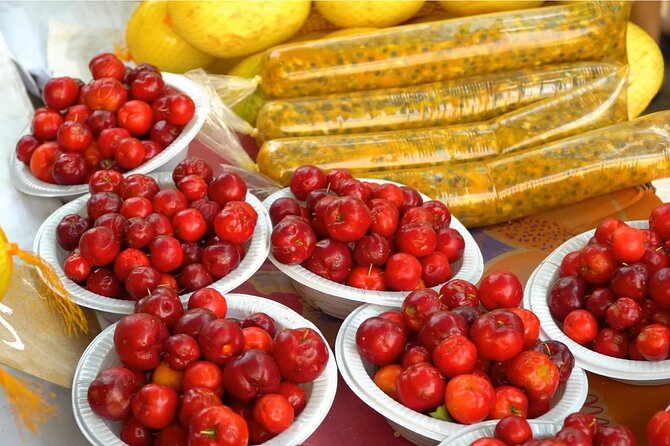
The tasting includes 15 to 20 exotic Brazilian fruits. Some will be familiar tropical varieties. Others may be new to you, and even Brazilians can encounter fruit they have never tried before.
Jabuticaba is one of the most memorable examples. Instead of growing from thin branches like many fruits, it grows directly on the tree’s bark. That unusual shape makes it a strong reason to pay attention to the guide rather than simply eating your way through the samples.
Açaí offers a different kind of lesson. Many people outside Brazil know it as a chilled bowl or smoothie ingredient. Here, you learn about its connection to the Amazon and its place in local life. That wider context helps separate the ingredient from the international health-food image it often has abroad.
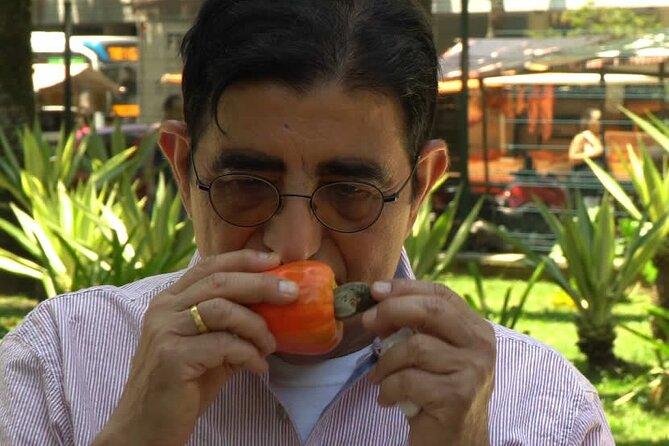
Cashew apples also show how one plant can serve several purposes. The fruit can be used in sweets and liqueurs, giving you a glimpse of the creativity built into Brazilian food traditions.
The full selection will change with the season. One autumn visit still produced 18 exotic fruits, which suggests that the tasting can remain varied outside the peak of summer. Still, you should treat the number as a target rather than a promise that every specific fruit will appear.
More market tours in Rio de Janeiro
- Belém: Half-Day City Tour with Ver-o-Peso Market Visit
★ 4.8 · 16 reviews - Belém: Ver-o-Peso Market and Full-Day City Tour with Lunch
★ 3.8 · 4 reviews
Juices, nuts, and native ingredients
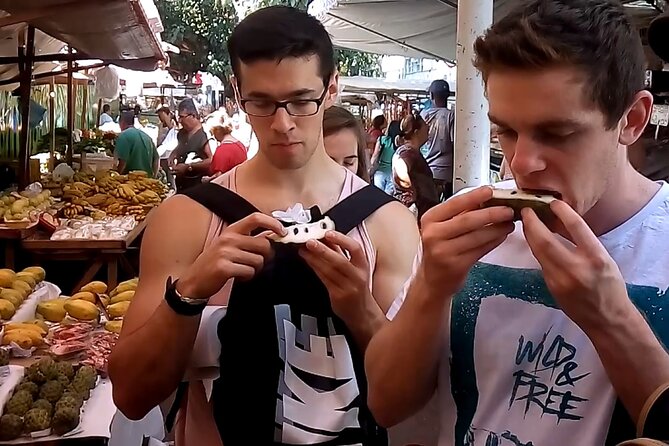
Fruit is the star, but the tasting does not stop at cut pieces on a plate. You also receive local juices, nuts, and native ingredients.
That wider mix makes the session more useful. A fresh fruit tells you about flavor and texture. A juice shows how locals may turn that fruit into a drink. Nuts and other native ingredients help you see the market as a source of cooking products, not just sweet snacks.
You might find that some samples are instantly appealing while others are more unusual. The point is not to like every taste. It is to notice the range, compare textures, and ask how each item is eaten or prepared.
The guide’s role matters here. Hay Za has been described as sweet and well informed, with an easy way of introducing both familiar and unfamiliar fruit. Caterina has led tastings with a wide selection, and Erica has added local context while answering questions. Since the guide can vary, you should expect the same general format rather than a single named host.
What the guide adds to each tasting
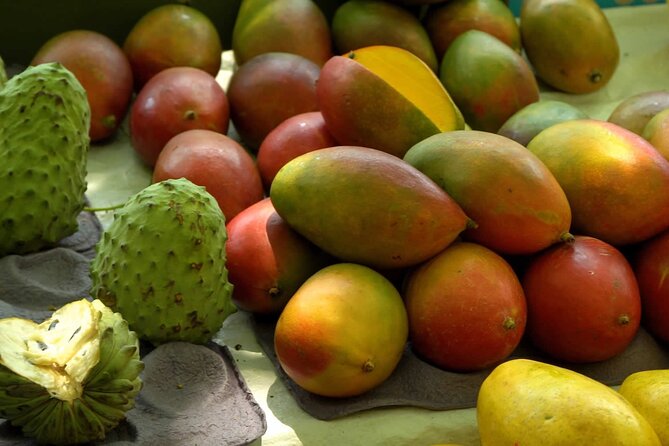
Without a guide, a market visit can become a quick parade of colors. With a guide, the fruit becomes a set of clues.
You may learn where a fruit is grown, how it fits into regional food, and how Brazilian cooks preserve or transform it. The information is presented through short stories and practical facts, so you can keep eating while you learn.
I especially like the balance between explanation and action. This is not a classroom with a market backdrop. You are moving through the stalls, tasting products, and stopping when something calls for more discussion.
The small group helps with that balance. With 15 people or fewer, a question about a strange fruit does not need to wait until the end. You can ask what it is, how it is normally eaten, or where else it might appear in Brazil.
The guides also appear to bring some generosity to the tasting. That is important with fruit, since a small sample can leave you wondering what the full flavor is like. The experience includes the guided samples, while anything additional that catches your eye is yours to buy.
Is $49 a fair price?
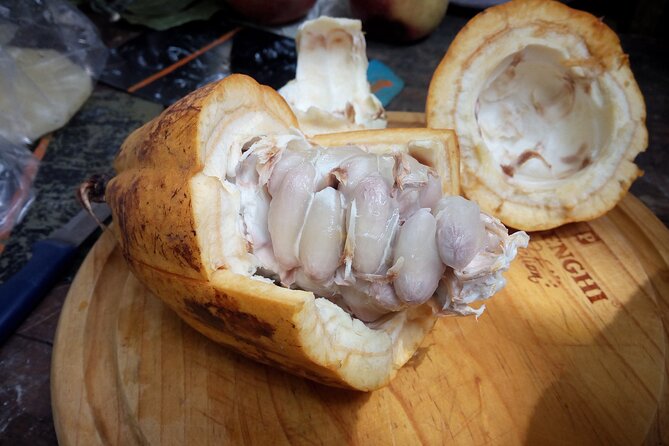
At $49 per person, this is not the cheapest way to eat fruit in Rio. You could buy produce at a market for less. But the price includes more than the food itself: about two and a half hours, a guided walk, a planned tasting of 15 to 20 fruits, juices, nuts, native ingredients, and cultural explanation.
I see the value in the structure. If you went alone, you might recognize mangoes and pineapples but miss the less familiar choices. You might also hesitate to buy something because you do not know what it is. The guide turns the market into a tasting route and gives you a better chance to understand what you are seeing.
The value is strongest for food-focused visitors, first-time visitors to Brazil, and anyone who likes learning through small local details. It is weaker if you only want a quick snack or if you already have a full schedule of food tours.
The five-star guarantee also reduces some of the risk. If the experience is not five-star, the terms say you do not pay for four. You should still read the booking conditions carefully, but this policy gives the price a little extra protection.
What is not included, and why it matters
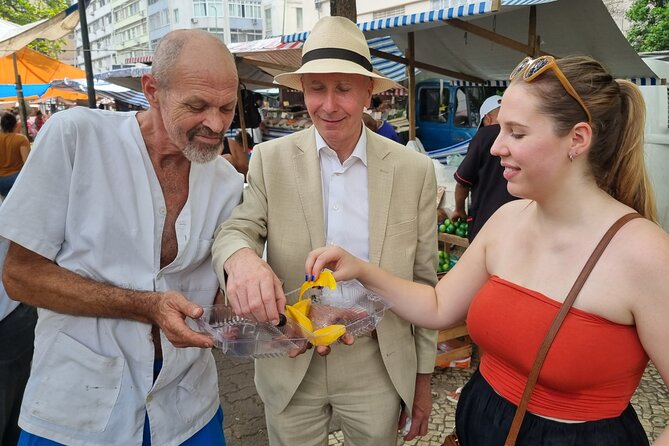
The food and drinks selected for the tasting are included. Extra fruit, food, and drinks you decide to buy are not.
That is easy to manage, but you should plan for it. The market may tempt you with products beyond the tasting, and buying something to take with you can be part of the fun. Carry a payment method that works locally and leave room in your budget for optional purchases.
The lack of included extras is also fair. The operator cannot know which products you will want, and keeping personal shopping separate lets you choose your own treats rather than paying for a larger package you may not use.
Who will enjoy this most
I would recommend this for people who enjoy food with a story. It works particularly well for:
- Curious eaters who want to try ingredients they may not find at home
- Visitors interested in Brazilian regional culture
- Food-focused couples, families, and small groups
- People who prefer an active market visit to a formal restaurant meal
- Repeat visitors to Rio looking for a different way to spend a morning
- Brazilians who want to discover fruit they may not have tried before
It is less suited to anyone with very limited time, since the experience lasts about two and a half hours. It may also disappoint you if you expect a full meal. This is a tasting and market walk, not lunch.
Service animals are allowed, and the market is near public transportation. The group maximum is 15 people. Since market conditions and fruit availability can change, contact the provider in advance if you have a specific accessibility or dietary concern that is not covered in the available details.
Booking timing and cancellation
This experience is often booked about 26 days ahead, so reserving early makes sense if you have fixed dates in Rio. Confirmation is provided when you book.
You can cancel for a full refund up to 24 hours before the local start time. Cancellations or changes made inside that 24-hour window are not accepted for a refund. The tour also requires a minimum number of people. If that minimum is not reached and the experience is canceled, you are offered another date or experience, or a full refund.
Should you book the Ipanema fruit tasting?
Book it if you want a compact, friendly introduction to Brazilian produce and enjoy asking why a food matters, not just whether it tastes good. The combination of a real market, 15 or more fruits, local drinks, and guides such as Hay Za, Caterina, or Erica gives you a useful connection to everyday food in Brazil.
I would especially choose it early in a Rio stay. You can use what you learn later when ordering juices, shopping, or recognizing ingredients on restaurant menus.
Skip it if your main goal is a large meal, a farm visit, or a tour with a fixed list of guaranteed fruit varieties. For everyone else, $49 buys more than samples. It buys a guided way to see Rio through the foods people grow, sell, drink, and share.
FAQ
Where does the fruit tasting begin?
The experience begins in Ipanema, Rio de Janeiro, Brazil.
What time does the tour start?
The tour starts at 10:00 am.
How long does the experience last?
The experience lasts approximately two hours and 30 minutes.
How many people can join the tour?
The activity has a maximum of 15 travelers.
How many fruits will I taste?
The guided tasting includes 15 to 20 exotic Brazilian fruits.
Are extra market purchases included?
No. Additional fruit, food, and drinks that you choose to buy are not included.
Can I cancel for a full refund?
Yes. You can cancel at least 24 hours before the local start time for a full refund. Cancellations or changes made less than 24 hours before the start time are not accepted for a refund.
Just added in Rio de Janeiro
- Rio: Fluminense Match at Maracanã with Guide and Ticket★ 4.9 · 22 reviews
- Explore Santa Teresa: Walking Tour★ 5.0 · 6 reviews
- The Best Food Tour: Taste the Most Authentic Flavours of Rio★ 4.7 · 18 reviews
- Explore Fernando de Noronha: 7-Hour Ilhatour★ 4.9 · 3 reviews
- Favela Santa Marta: Walking Tour with local guide★ 4.8 · 41 reviews
- Helicopter flight no doors in Rio de Janeiro★ 4.7 · 22 reviews
- Discover Rocinha: Guided Tour of the Famous Favela★ 4.5 · 3 reviews
- Discover Noronha: 7-Hour Ilhatour Adventure★ 4.8 · 8 reviews
Food & Drink, compared.

Pub Crawl in Lapa with Cachaça Tasting and Live Samba
Read our review →
Jolimont Winery Tour – Visitation and Tasting – Canela RS
Read our review →
Sunset Boat Tour with Beer, Water, Soda and Snacks included
Read our review →

São Paulo 5 Hour Private Tour With Fruit Tasting
Read our review →
Petropolis The Imperial City with Beer tour and Lunch
Read our review →

Browse the lists this tour appears in