

Reviewed · FAVELA TOURS
2h30 circuit in the Vidigal Favela
Morro Dois Irmaos gives you one of Rio’s finest viewpoints, with the chance to see Christ the Redeemer and Sugarloaf Mountain from the same hike. The experience then moves into Vidigal itself, where guide Jean-Christophe connects the views with local life, architecture, and community projects.
I like the small maximum group of 10, which should make narrow lanes and conversation with the guide easier. I also like the stop at a local home, since it adds a personal viewpoint rather than keeping the visit on a standard sightseeing route.
The main consideration is weather. Clouds can hide the best views from Dois Irmaos, and the tour requires a hike followed by a walk through steep, uneven areas of Vidigal.
Key points to know
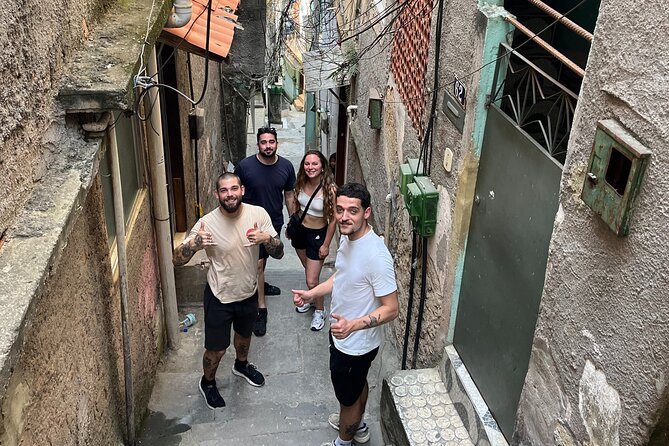
- Two Rio icons in one morning: Combine the Morro Dois Irmaos hike with an in-depth walk through Vidigal.
- A guide with local ties: Jean-Christophe lives in Vidigal and can explain the area from personal experience.
- A dramatic viewpoint: On a clear day, you may see both Christ the Redeemer and Sugarloaf Mountain.
- A local home visit: Pause for around 30 minutes at a resident’s place with a broad view over Rio.
- Community and ecology: The final walk includes local alleys and the Ecological Park, a project carried out by residents.
- Compact format: The tour lasts about 2 hours 30 minutes and begins at 8:00 am, with a maximum of 10 people.
Why this Vidigal tour is different
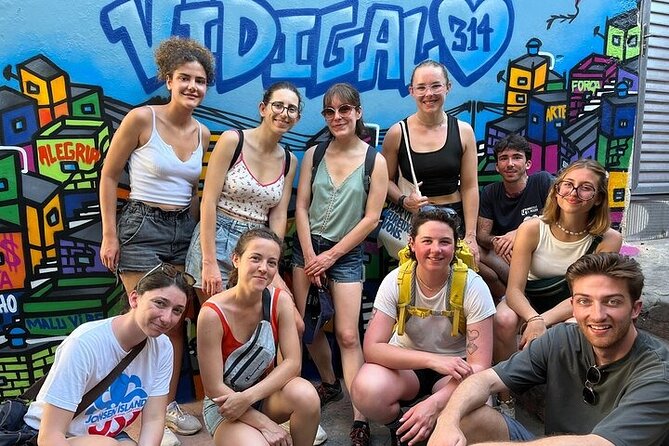
Many Rio sightseeing outings keep you at famous monuments and major roads. This one uses Morro Dois Irmaos and Vidigal to show you how the city looks from above and how daily life works on the hillside below.
That combination matters. The hike gives you the big postcard view, while the favela walk provides context that a lookout point cannot. You see the physical shape of the community, the way buildings fit along steep lanes, and the Ecological Park project created by local residents.
I especially like that the tour does not treat Vidigal as a backdrop for photographs alone. Jean-Christophe is described as living in the community, and that local connection shapes the visit. He can explain the area’s development, answer questions about its buildings and residents, and guide you through sections that a first-time visitor would not find easily on their own.
At $50.03 per person, the price is reasonable if you want both a hike and a guided community visit in one morning. You are not simply paying for transport to a viewpoint. The price covers a guide, the hike, the walk through Vidigal, the local-home stop, and access to the Ecological Park portion of the route.
More favela tours in Rio de Janeiro
- Rio de Janeiro: Rocinha Favela Walking Tour with Local Guide
★ 4.8 · 3,052 reviews - Rio De Janeiro: Half-Day Rocinha Favela Walking Tour
★ 4.7 · 2,272 reviews - Rio de Janeiro: Favela Santa Marta Top Tour with Local Guide
★ 4.9 · 488 reviews
Starting at Praça do Vidigal at 8:00 am
You meet at Praça do Vidigal in Vidigal, Rio de Janeiro, at 8:00 am. The tour ends at the same meeting point, which keeps the morning simple and avoids a one-way drop-off problem.
The first transfer is by motorbike to the Olympic stadium, where the Morro Dois Irmaos portion begins. This is a practical way to reach the starting point, although you should be comfortable with that type of short local transport. The supplied details do not state how long the ride lasts or whether helmets are provided, so ask the operator if those points matter to you.
An early start is useful in Rio. It gives you a better chance of avoiding the strongest midday heat during the hike and leaves part of the day open afterward. It also makes weather conditions especially important, since cloud cover can change the view quickly on the upper trail.
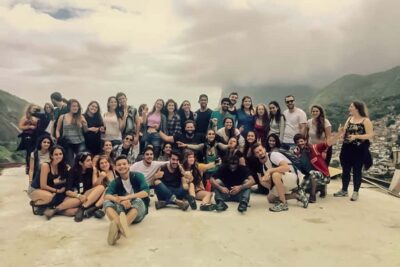
The group limit is 10 people. That is large enough to have some company but small enough for the guide to answer questions and keep the group together in tight passages. One practical point is that the experience has been offered in different group sizes, so confirm the group limit at booking if that detail is important to you.
Morro Dois Irmaos and Rio’s best wide-angle view
The first main stop is Morro Dois Irmaos, or Two Brothers Mountain. You spend about one hour here, with admission included.
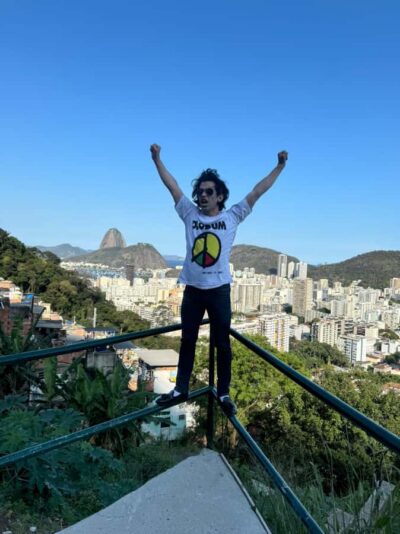
The appeal is the view. From this high point, a clear day can reveal Christ the Redeemer and Sugarloaf Mountain in the same sweep. You also look across Rio’s coast, hills, and built-up areas, giving you a useful sense of how the city is arranged rather than seeing each sight in isolation.
I would make this the weather-sensitive part of your planning. If the summit is covered by cloud, the hike may still be worthwhile, but the central reward is reduced. The best advice is simple: choose the clearest available morning, and check the forecast before setting out.
The hike also requires a reasonable level of comfort with walking uphill. The supplied information says most people can participate, but it does not give a distance, trail surface, or exact elevation gain. You should therefore expect outdoor walking rather than a flat city tour, and wear shoes that can handle uneven ground.
The one-hour timing gives you enough room to stop for views and listen to explanations without turning the morning into a long mountain outing. If you want an extended hike, this may feel short. If you want a manageable introduction to Rio’s hills followed by a cultural walk, the balance works well.
A 30-minute pause at a local home
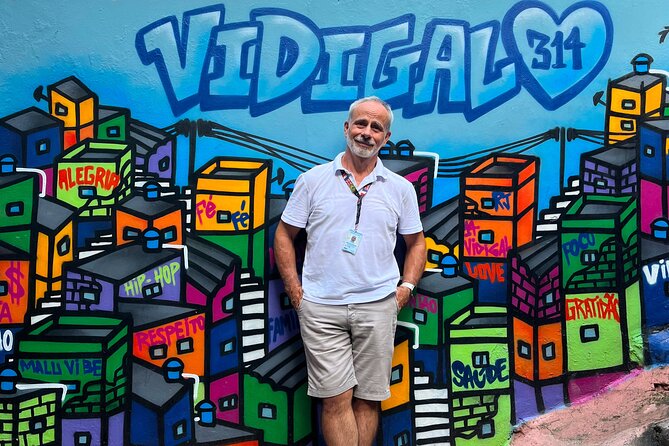
After the mountain portion, the tour includes a 30-minute break at a local resident’s home in Vidigal. The setting has a broad view over Rio, making this more than a simple rest stop.
This pause gives the experience a human scale. Instead of moving straight from a trail into a checklist of streets, you have time to sit, take in the view, and see part of the community through a resident’s space. Jean-Christophe has also shown his own home during the visit, which adds a personal element not found on a standard lookout tour.
The stop is particularly useful if you want to ask questions. A guide can explain facts while walking, but a relaxed pause often creates better room for conversation about life in Vidigal, the city’s growth, and the practical realities of living on a hillside.
Do not expect a restaurant meal or a formal attraction here. The information describes a break at a local place, not a food tasting or scheduled lunch. Think of it as a viewpoint and personal meeting point within the community.
More Tours in Brazil
- Rio de Janeiro: 6-Stop Highlights of Rio with Lunch
★ 4.4 · 5,157 reviews - Christ the Redeemer Entry Ticket by Corcovado Train
★ 4.4 · 4,476 reviews - Rio: Christ the Redeemer, Sugarloaf, Selaron & BBQ Lunch
★ 4.5 · 2,428 reviews - Rio de Janeiro: Angra dos Reis and Ilha Grande Full-Day Tour
★ 4.6 · 1,673 reviews
Walking Vidigal’s alleys after the descent

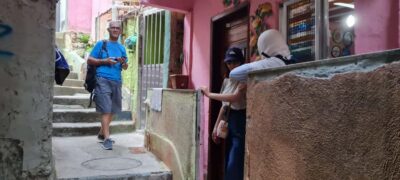
The final hour focuses on Vidigal itself. After descending from the hike, you walk through the alleys and see the area’s distinctive architecture and everyday life.
This is where the tour earns its value beyond the mountain view. Rio’s hillsides are shaped by steep streets, tightly arranged homes, small passages, and constant adaptation to difficult terrain. Walking rather than simply looking across the city lets you notice how people move through and use the community.
Jean-Christophe’s local connection is important here. He can take you beyond the most obvious route and explain details that may otherwise seem confusing to an outsider. The supplied comments describe him as friendly, careful with the group, and able to discuss Vidigal in detail.
At the same time, you should approach this part with respect. Vidigal is a living community, not an open-air museum. Keep your camera away when asked, follow the guide’s advice about photography, and remember that some places are appropriate for visitors while others are private. The experience includes access to less familiar sections, but that does not mean every scene should be recorded.
The route’s physical character also deserves attention. Alleys and hillside paths may be steep or uneven, and the description does not promise an accessible route for every mobility level. Most people can take part, and service animals are allowed, but anyone with trouble on slopes should ask about the exact walking conditions before booking.
The Ecological Park and local environmental work

The walk also includes Vidigal’s Ecological Park, a project carried out by local residents. This gives the final section a clear purpose beyond sightseeing.
Community projects can be easy to miss when you only visit Rio’s famous attractions. Here, you get a look at residents working to improve and protect part of their own surroundings. The park offers a different view of Vidigal, one that includes local initiative and care for the environment.
The details provided do not specify the park’s size, facilities, or exact activities. You should not expect a long nature excursion. It is better understood as one part of a guided community walk, where the project helps explain how local people shape the place where they live.
I like this inclusion because it keeps the tour from presenting Vidigal only through poverty, danger, or dramatic views. You see a community with challenges, but also with projects, ideas, and people taking action. That is a more useful and fair way to approach a visit.
Safety, atmosphere, and the role of the guide
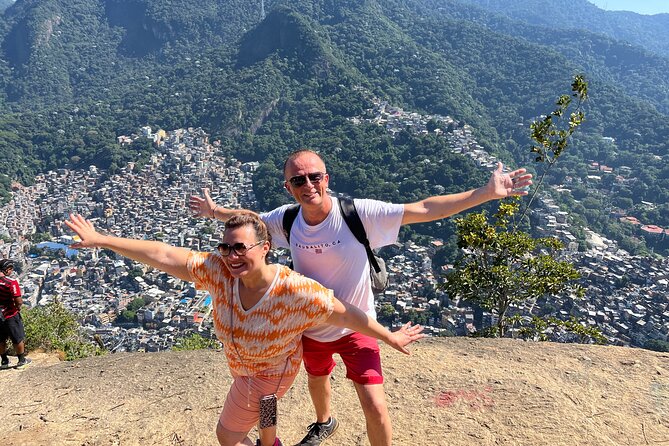
Safety is a central concern for many people considering a favela visit. The tour information says most people can participate, and the guide’s role is to accompany the group through the hike and community routes. Jean-Christophe is repeatedly described as attentive, easygoing, and careful about the group.
That does not mean you should ignore normal city precautions. Carry only what you need, keep valuables secure, and follow instructions about where to stand, walk, and take photographs. The most sensible approach is to let the guide set the pace and avoid wandering away from the group.
A local guide also helps with tone. Vidigal is not presented as a place to pass through quickly for a dramatic photograph. The visit includes personal explanations, local architecture, resident life, and an environmental project. Those details encourage a more thoughtful encounter.
The experience can also feel intense because it combines a mountain hike, a community walk, and a close look at a part of Rio that many visitors never see. If you want a polished sightseeing route with little physical effort, this may not be your best choice. If you want direct contact with the city’s hillside communities, it offers far more substance.
How the $50.03 price holds up

At $50.03, the cost sits in a sensible range for a 2-hour-30-minute guided outing with several parts. The value is strongest if you would otherwise book a separate hike and a separate Vidigal visit.
You receive the guide’s time, the motorbike transfer to the hike’s starting point, the Morro Dois Irmaos visit, the local-home stop, and the guided walk through Vidigal and the Ecological Park. Admission is included where stated, while the local-home stop has no separate admission charge.
The tour is not designed as a luxury experience. There is no mention of meals, hotel pickup, private transport throughout Rio, or an extended stay at the viewpoint. You are paying for access, interpretation, and a compact route rather than comfort or a long list of included extras.
For me, the strongest value is the guide’s local perspective. Without that, you might get an excellent view and a quick walk through unfamiliar streets. With it, the same morning becomes a lesson in how Rio’s hills, homes, and community projects fit together.
Who will enjoy this best
I would recommend this outing to you if you want a mix of scenery and local context. It suits people who enjoy walking, asking questions, and seeing more than Rio’s most famous monuments.
It is also a strong choice if you want to see both Christ the Redeemer and Sugarloaf Mountain from a different angle. The view is weather dependent, so flexible visitors will get more from it than those working with a fixed, cloudy day.
The tour may be less suitable if you dislike motorbike transport, steep walking, narrow alleys, or changing outdoor conditions. It is also not ideal if you expect a completely private experience, since the maximum group is 10.
Service animals are allowed, and the tour is near public transportation. Still, the uneven, hillside nature of the route means you should ask for more detail if you have mobility concerns. The supplied information says most people can participate, but it does not promise a fully accessible route.
Booking, cancellation, and weather planning
Confirmation is normally received at booking. If you book within one hour of departure, confirmation comes as soon as possible and depends on availability.
You can cancel for a full refund up to 24 hours before the 8:00 am start time. Changes or cancellations made less than 24 hours before departure are not accepted for a refund, and the cut-off follows Rio’s local time.
Weather deserves special attention. If poor conditions force cancellation, you are offered another date or a full refund. Since clouds can hide the Dois Irmaos view, I would check the forecast and avoid treating this as a guaranteed sunny lookout visit.
Should you book the Vidigal and Dois Irmaos circuit?
Book it if you want one compact morning that combines Rio’s best hillside views with a respectful, locally guided look at Vidigal. The strongest reasons are the chance to see Christ the Redeemer and Sugarloaf Mountain together, the stop at a resident’s home, and Jean-Christophe’s personal connection to the community.
Skip it if you want a flat, highly polished sightseeing route or if the weather forecast is poor and you cannot change your plans. For most active visitors who want Rio to feel like a real city rather than a string of monuments, this $50.03 experience offers a fair mix of scenery, walking, and local insight.
FAQ
Where does the tour start?
The tour starts at Praça do Vidigal in Vidigal, Rio de Janeiro, at 8:00 am.
Where does the tour end?
The activity ends back at the meeting point at Praça do Vidigal.
How long does the experience last?
The tour lasts approximately 2 hours and 30 minutes.
How large is the group?
The experience has a maximum of 10 participants.
Is transportation included?
The route begins with arrival by motorbike at the Olympic stadium, where the Morro Dois Irmaos portion starts. The supplied information does not specify other transportation details.
Does the tour include Morro Dois Irmaos?
Yes. The first main stop is Morro Dois Irmaos, with about one hour allocated to the visit and admission included.
Is the tour suitable for most people?
The information says most people can participate. Because the experience includes a hike and walking through hillside alleys, ask the provider about conditions if you have mobility concerns.
What happens if the weather is bad?
If poor weather causes cancellation, you can choose another date or receive a full refund. You can also cancel up to 24 hours before the start time for a full refund.
Just added in Rio de Janeiro
- Rio: Fluminense Match at Maracanã with Guide and Ticket★ 4.9 · 22 reviews
- The Best Food Tour: Taste the Most Authentic Flavours of Rio★ 4.7 · 18 reviews
- Explore Santa Teresa: Walking Tour★ 5.0 · 6 reviews
- Explore Fernando de Noronha: 7-Hour Ilhatour★ 4.9 · 3 reviews
- Favela Santa Marta: Walking Tour with local guide★ 4.8 · 41 reviews
- Helicopter flight no doors in Rio de Janeiro★ 4.7 · 22 reviews
- Discover Rocinha: Guided Tour of the Famous Favela★ 4.5 · 3 reviews
- Discover Noronha: 7-Hour Ilhatour Adventure★ 4.8 · 8 reviews
Favela Tours, compared.


Favela Rocinha Tour with Local Guide & Secret Spots
Read our review →

Favela Tour The Original, Rocinha & Vila Canoas since 1992
Read our review →
Sunrise at Morro 2 Irmãos – Vidigal – Rio de Janeiro
Read our review →Browse the lists this tour appears in