
Reviewed · FAVELA TOURS
Favela Tour The Original, Rocinha & Vila Canoas since 1992
Rocinha is not just a place to look at from a distance. It is a working community with shops, homes, schools, tight passageways, and remarkable views across Rio. This three-hour walking tour puts you inside that daily setting, with a guide explaining how favelas formed and how they fit into Brazilian society.
I especially like the visit to the community school financed by Favela Tour, and the fact that the route includes both Rocinha and Vila Canoas. You also get friendly guides such as Mateo and Francesco, along with pickup from much of Rio’s South Zone.
The main caution is that language arrangements can change. An Italian-language departure was reportedly moved because there were not enough places, and one outing did not enter Rocinha. Confirm your language, meeting point, and exact route directly before you go.
Key points to know
- Rocinha and Vila Canoas in one visit: You see two communities rather than only the largest favela.
- A walking tour with real context: The guide explains housing, public policy, social contrasts, and daily life as you move through the streets.
- A school visit with a direct community link: Part of the tour’s contribution supports educational work in the favela.
- Wide Rio views: The hillside setting gives you striking panoramas on the way.
- Pickup in the South Zone: Meeting points are available around Leme, Copacabana, Ipanema, Leblon, and São Conrado.
- A useful language check: English, French, Spanish, Italian, and Portuguese are offered, but less common language departures may depend on demand.
Why this tour changes your view of Rio’s favelas

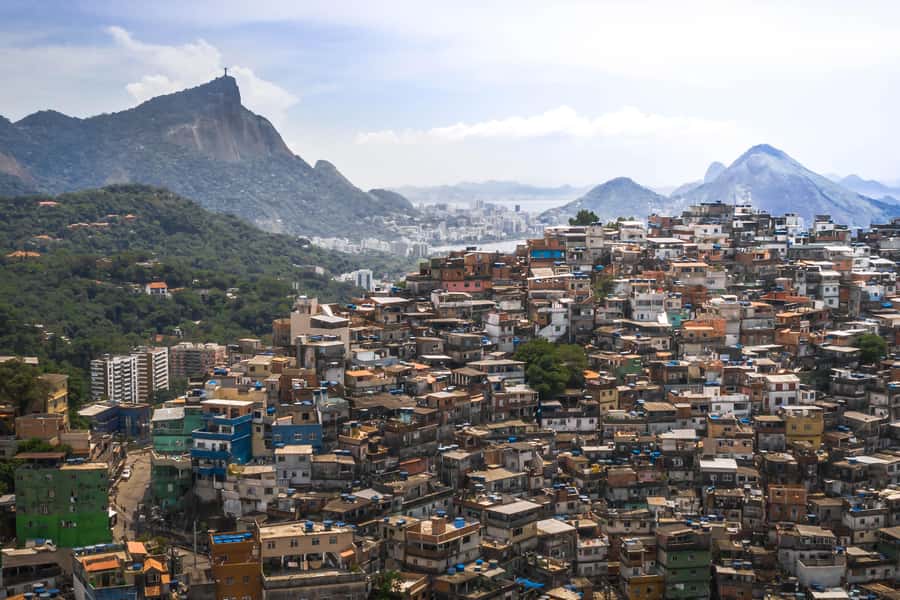
From Rio’s beaches, the hillsides can look almost theatrical: dense homes rising above the city, with the sea and high-rises below. From inside Rocinha, the picture becomes more practical and more complicated. You see where people shop, work, study, and move through narrow streets built over many years.
That shift in viewpoint is the heart of Favela Tour The Original, which has operated since 1992. The purpose is not to treat Rocinha as a spectacle. It is to explain how favelas became part of Rio’s social and physical structure, and to let you meet a community on an organized visit.
Rio has close to 1,000 favelas, and about 20 percent of the city’s population lives in them. Many began on former public land along the hillsides. The tour uses those facts as a starting point, then adds the details you cannot get from a beach lookout or a museum display.
I value that approach. You are not simply shown poverty, and you are not handed a polished public-relations story either. The stated goal is to show both the strengths and the problems of favela life, including Brazil’s economic contrasts and social tensions.
More favela tours in Rio de Janeiro
- Rio de Janeiro: Rocinha Favela Walking Tour with Local Guide
★ 4.8 · 3,052 reviews - Rio De Janeiro: Half-Day Rocinha Favela Walking Tour
★ 4.7 · 2,272 reviews - Rio de Janeiro: Favela Santa Marta Top Tour with Local Guide
★ 4.9 · 488 reviews
Starting from Rio’s South Zone
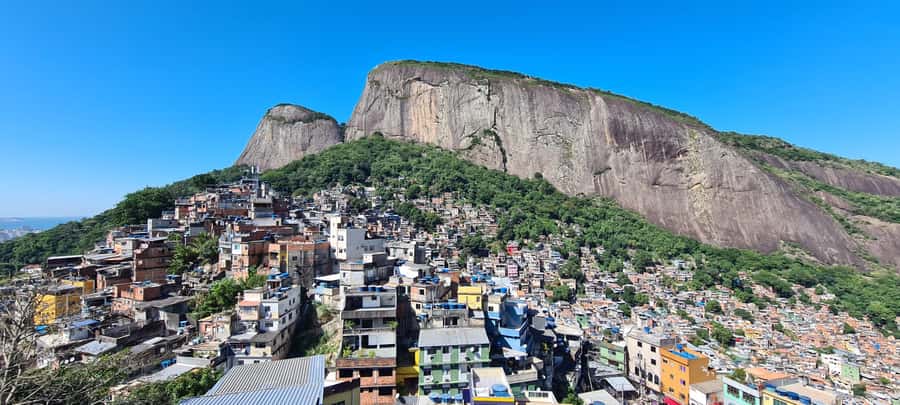
Pickup is offered from hotels in Leme, Copacabana, Ipanema, Leblon, and São Conrado. In practice, the meeting point is more likely to be a hotel near the beachfront than every individual hotel, so you should be ready to walk to a designated pickup place.
The vehicle ride is part of the tour, not dead time before the tour begins. Information starts as soon as you board, and the drive helps connect Rio’s familiar tourist districts with the hillside communities you are about to visit.
That matters because this is not a simple transfer to Rocinha followed by a short stroll. The operator describes the whole experience as a walking tour, with explanation beginning on the road and continuing through the communities.
The tour lasts about three hours, so the schedule is compact. You will not get an exhaustive academic study of Rio’s urban development. You will get a focused introduction, a guided walk, scenic stops, and contact with local projects.
Wear shoes suited to walking and expect to spend much of the visit on foot. Bring money for a drink, a snack, or local handcrafts if you want to buy something, since those extras are not included.
Entering Rocinha, Brazil’s largest favela
Rocinha is the main draw. It is identified as the largest favela in Brazil, and its scale becomes easier to understand once you are moving through its residential and commercial areas.
The route takes you along alleyways and streets where homes and businesses sit close together. The point is not only to see the architecture, but to understand why it looks the way it does. Buildings have developed over time, often in tight hillside spaces, creating a maze-like urban form that feels very different from Rio’s planned beachfront districts.
Your guide provides the missing context. Expect discussion of how favelas formed, how residents built communities, and how these areas are viewed by people who live elsewhere in Rio. You may also hear about the practical contrasts between public services, housing, education, and economic opportunity.
The commercial activity is an important part of the visit. Rocinha is not presented as a silent residential zone. It is a place where people run businesses and carry on ordinary routines. That helps correct the common mistake of treating every favela as a single story of danger or deprivation.
You should still act with care. Follow the guide, do not wander away from the group, and ask before taking close-up photographs of people. The tour’s central promise is respectful contact, not unrestricted access.
Vila Canoas brings a different comparison
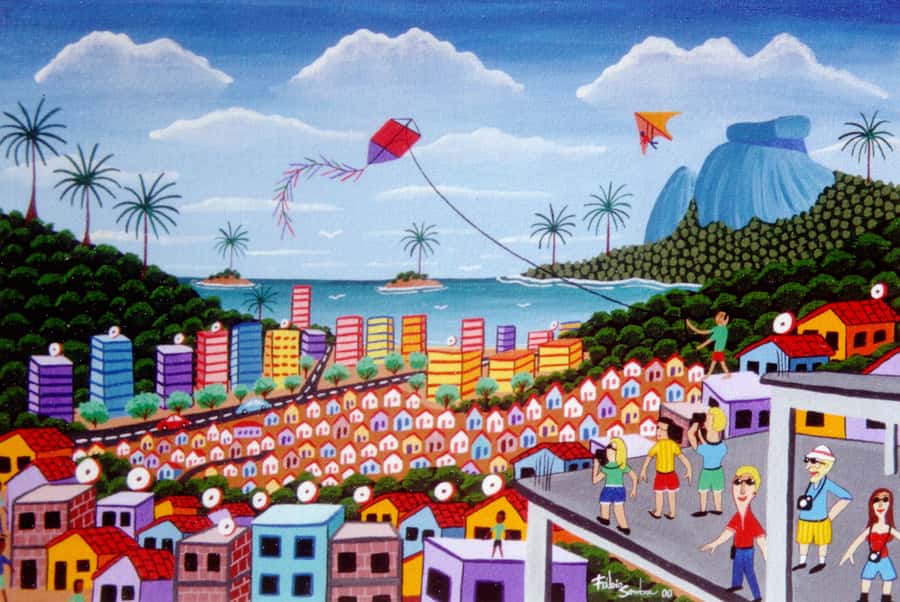
The second stop is Vila Canoas. Seeing it alongside Rocinha gives the tour more value than visiting one community alone.
Rocinha is large and dense, while Vila Canoas provides a smaller point of comparison. The two places help you see that favelas are not interchangeable. Their scale, layout, projects, and local character can differ.
This second visit also keeps the tour from becoming a one-note portrait. You are not asked to leave Rio believing that every hillside community works in the same way. Instead, you get a more flexible understanding of how communities develop under different conditions.
The available information does not promise a fixed list of stops inside Vila Canoas, so the exact order and emphasis can change. That is normal for a community-based walk, where access and local conditions may shape the route. If a particular location is essential to you, ask when confirming the tour.
More Tours in Brazil
- Rio de Janeiro: 6-Stop Highlights of Rio with Lunch
★ 4.4 · 5,157 reviews - Christ the Redeemer Entry Ticket by Corcovado Train
★ 4.4 · 4,476 reviews - Rio: Christ the Redeemer, Sugarloaf, Selaron & BBQ Lunch
★ 4.5 · 2,428 reviews - Rio de Janeiro: Angra dos Reis and Ilha Grande Full-Day Tour
★ 4.6 · 1,673 reviews
The school visit gives the tour a practical purpose
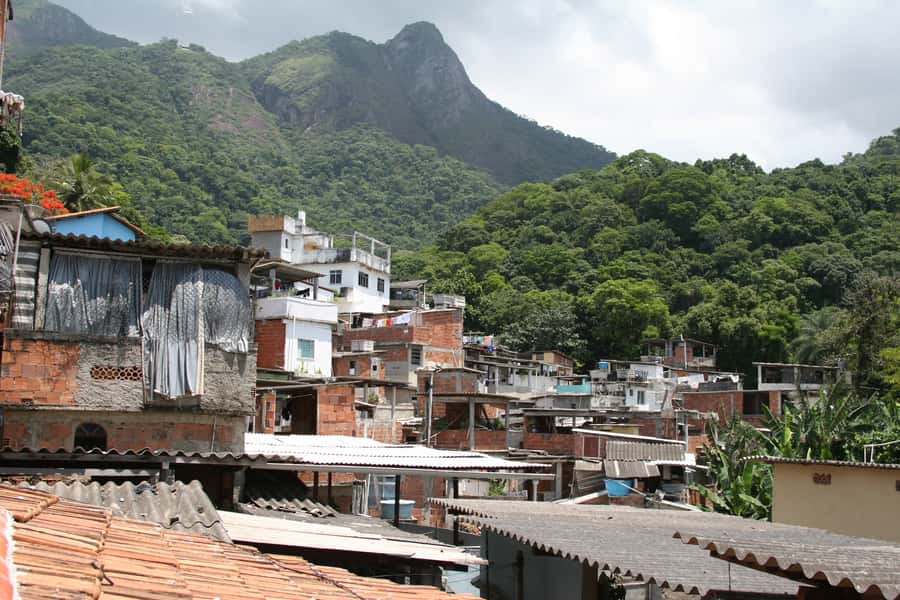
The community school is one of the most meaningful parts of the experience. Favela Tour helps finance it, so your participation is linked to an ongoing educational project rather than only a sightseeing route.
That does not mean the tour turns the school into a photo opportunity. The value is in learning how education fits into community life and seeing one concrete example of local investment.
A stop like this also gives the social discussion a human scale. Statistics about Rio’s population and housing can feel remote. A school shows what those issues mean in daily life, especially for children and families.
The school was the highlight for some visitors, and I can understand why. It gives the tour a clear connection between tourism and community benefit. Still, keep your expectations realistic. The visit is one part of a three-hour route, not an extended volunteer placement or education workshop.
Views that connect the hillside to Rio
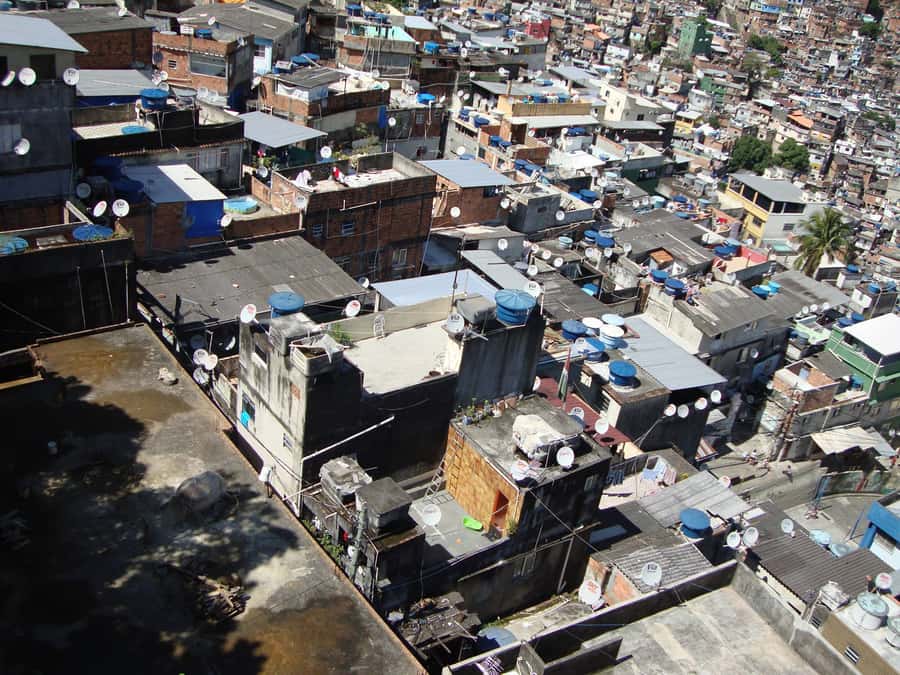
The panoramic views are another strong reason to choose this experience. From the hills, you can look across Rio’s urban districts and see how the communities relate to the coastline, roads, and wealthier neighborhoods below.
These views are useful because they reveal physical proximity. The favela is not an isolated world far from the main city. It sits alongside the places most people visit in Rio, separated less by distance than by income, opportunity, and public perception.
Your guide can connect what you see to the wider discussion of Brazilian society. The contrast is immediate: dense hillside housing, polished tourist districts, dramatic mountains, and the ocean can all appear in one broad view.
Bring a phone or camera if you want scenic pictures, but keep photography secondary. A panoramic stop is a chance to understand the city, not just collect another skyline image.
Friendly contact without treating people as scenery
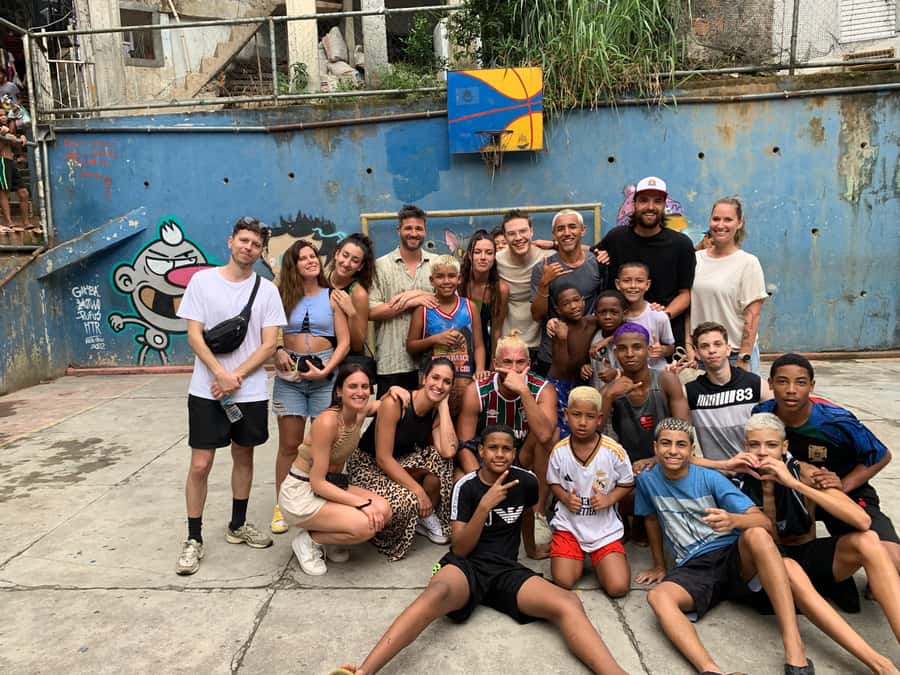
A good favela tour has to manage a difficult balance. You want direct contact and honest information, but you do not want residents to feel placed on display.
This experience presents itself as socially inclusive and non-voyeuristic. The guide introduces the community as a place where people live, work, and welcome organized visits. That tone matters. You are encouraged to meet local people and support projects, not to stare at hardship from behind a vehicle window.
Your own behavior still matters. Keep the group’s pace, listen to instructions, avoid intrusive photos, and remember that shops and homes are not attractions. Buying a handcraft can be a simple way to support local commerce, but it should never feel compulsory.
The tour also makes a useful safety point: favelas are safer than many outsiders assume, but you should visit with an organized local tour. That is sensible advice. A guide knows the route, speaks the local language, and can respond if conditions change.
This is not a promise that every street is risk-free. It is a reason to choose a structured visit instead of entering on your own.
Guides, languages, and the risk of a mixed group
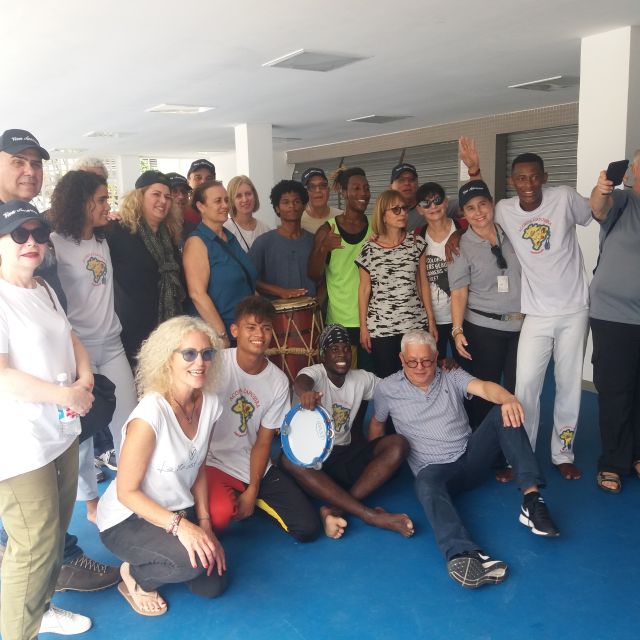
Tours are offered in English, French, Spanish, Italian, and Portuguese. Past departures have included guides such as Mateo and Francesco, who were praised for clear explanations and strong command of English.
Language is more than a booking detail here. The tour deals with housing, economics, politics, and social history. If you are constantly translating in your head, you may miss the links between the facts and the places around you.
English appears to be the most dependable option, but you should confirm your preferred language by phone, email, or WhatsApp before the tour. Less common language departures may need enough demand to run, and Italian availability has not always matched the original booking date.
One visitor also found that a guide chose not to enter Rocinha because of a disagreement over a local fee. That is an unusual but important warning. Ask directly if the route will include both Rocinha and Vila Canoas on your chosen date, especially if entering Rocinha is the main reason you are booking.
A mixed-language group may also mean less time for individual explanation. One visitor felt that there could have been more information because the guide was translating into several languages. If detailed commentary matters most to you, a departure conducted in your strongest language is the safer choice.
Is $33 good value?
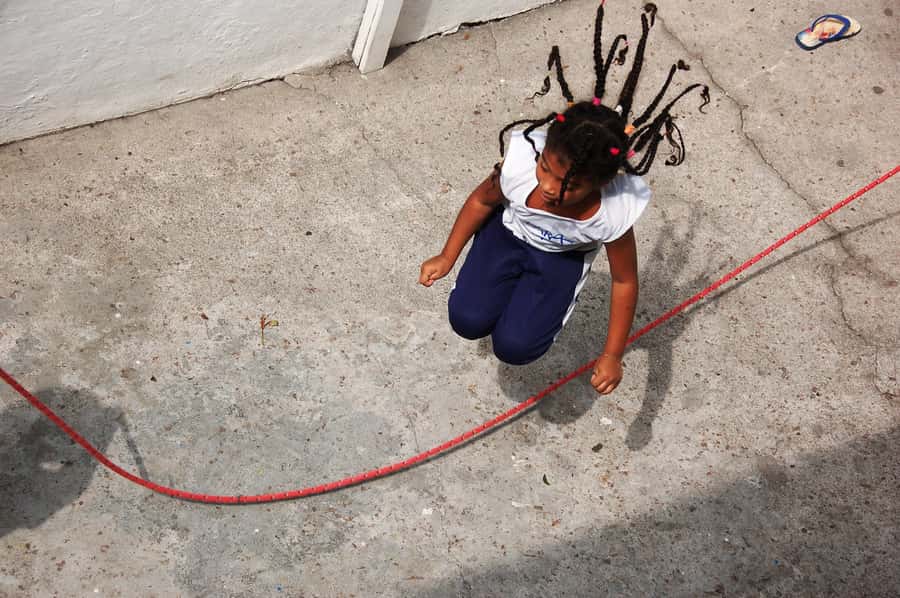
At $33 per person, this is fairly priced for a three-hour guided visit that includes transportation from and back to much of Rio’s South Zone, a multilingual guide, two communities, scenic views, and access to community projects.
The value is not in the number of monuments or ticketed attractions. You are paying for local access, interpretation, transport, and a route that would be difficult to arrange responsibly on your own.
The community connection improves the value. A portion of the tour’s purpose is tied to educational projects, including the school visit. That gives the fee a social element beyond ordinary sightseeing.
You should budget a little extra for drinks, snacks, or handcrafts. Those purchases are optional and not included. Also remember that the experience is only three hours, so it is best seen as a focused introduction rather than a full-day examination of Rio’s favelas.
Who should book this experience?
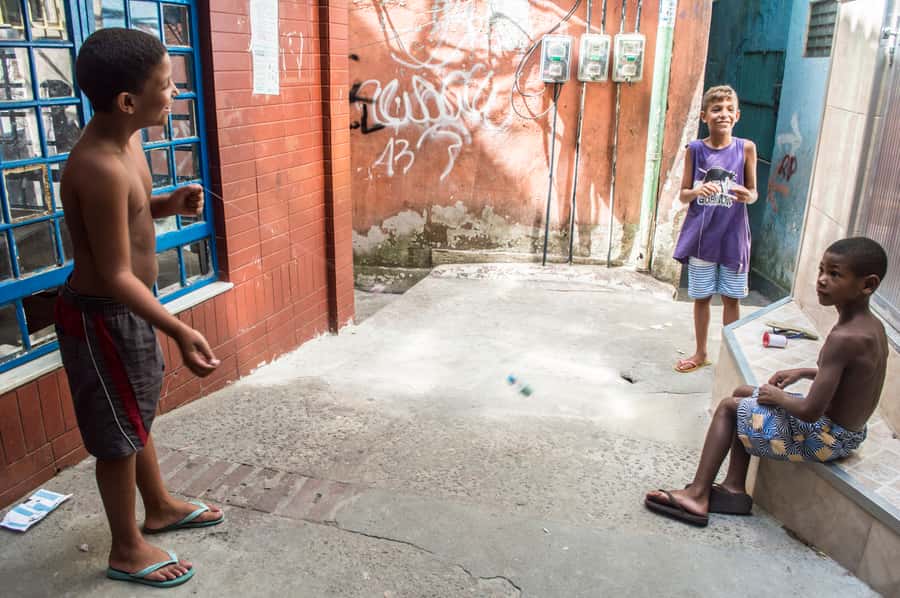
I would choose this tour if you want to understand Rio beyond beaches, viewpoints, and famous landmarks. It suits people who are curious about Brazilian society and willing to listen to complicated answers.
It is also a good fit if you prefer a guided walk to a passive bus tour. You will be moving through residential and commercial areas, asking questions, and paying attention to how the community works.
You may not enjoy it if you want a carefully timed sightseeing route with guaranteed access to every advertised point. Community conditions can affect the visit, and language arrangements can change. It also requires sensitivity, patience, and a willingness to walk.
Families, students, and first-time visitors can all find value here, provided everyone understands that this is an educational community visit, not an amusement attraction.
Practical details before you reserve
Confirm the tour directly once you are in Rio, using the operator’s phone, email, or WhatsApp contact. Do not rely on an unrelated middleman to reconfirm the booking, since that can create confusion about prices, language, or meeting places.
Check four things:
- Your exact pickup hotel or meeting point
- The language of the guide
- Confirmation that both Rocinha and Vila Canoas are planned
- The starting time and return location
Pickup and drop-off options include São Conrado, Ipanema, Leblon, and Copacabana Beach. If your hotel is outside the regular South Zone area, you may be asked to reach another hotel used as a meeting point.
You can cancel up to 24 hours before departure for a full refund, and reserve now while paying later. Starting times depend on availability.
Should you book Favela Tour The Original?
Book it if you want a clear, guided introduction to the social structure behind Rio’s postcard views. The strongest parts are the two-community route, the hillside panoramas, the school project, and the chance to replace vague fears with direct context.
Before paying, confirm your language and ask if Rocinha will definitely be included. That small check matters, especially after a departure was changed and one group did not enter the community.
With that precaution, $33 buys more than a scenic outing. It gives you a grounded way to understand a part of Rio that many people see every day but never take time to learn about.
FAQ
How long does Favela Tour The Original last?
The tour lasts three hours.
Which favelas does the tour visit?
The planned route includes Rocinha, identified as the largest favela in Brazil, and Vila Canoas.
Is transportation included?
Yes. Transportation from and back to many hotels in Rio’s South Zone is included. Pickup and drop-off areas include Leme, Copacabana, Ipanema, Leblon, and São Conrado.
Where does pickup take place?
Pickup is offered from hotels in the South Zone, particularly around Leme, Copacabana, Ipanema, and Leblon. You may be asked to meet at a specific hotel, often near the beachfront.
What languages are available?
The tour is offered in English, French, Spanish, Italian, and Portuguese. Language availability other than English may depend on demand.
Will I walk during the tour?
Yes. The experience is mostly a walking tour through residential and commercial areas, so you should come ready to walk.
Does the tour visit a school?
Yes. The route includes a community school financed by Favela Tour.
Are food, drinks, and handcrafts included?
No. Bring extra money if you want to buy drinks, snacks, or local handcrafts.
Can I cancel and receive a refund?
Yes. You can cancel up to 24 hours in advance for a full refund.
Just added in Rio de Janeiro
- Rio: Fluminense Match at Maracanã with Guide and Ticket★ 4.9 · 22 reviews
- Explore Santa Teresa: Walking Tour★ 5.0 · 6 reviews
- The Best Food Tour: Taste the Most Authentic Flavours of Rio★ 4.7 · 18 reviews
- Explore Fernando de Noronha: 7-Hour Ilhatour★ 4.9 · 3 reviews
- Favela Santa Marta: Walking Tour with local guide★ 4.8 · 41 reviews
- Helicopter flight no doors in Rio de Janeiro★ 4.7 · 22 reviews
- Discover Rocinha: Guided Tour of the Famous Favela★ 4.5 · 3 reviews
- Discover Noronha: 7-Hour Ilhatour Adventure★ 4.8 · 8 reviews
Favela Tours, compared.

Favela Rocinha Tour with Local Guide & Secret Spots
Read our review →

Sunrise at Morro 2 Irmãos – Vidigal – Rio de Janeiro
Read our review →Browse the lists this tour appears in