
Reviewed · TIJUCA FOREST TOURS
Tijuca Forest w/ Chinese View,cascatinha Taunay,horto waterfall and parque laje
Rio’s Tijuca Forest gives you a rare change of scene without leaving Rio’s southern zone. In a few hours, you can move from a city panorama at Chinese View to a rainforest waterfall, historic roadways, monkeys, toucans, and the grand setting of Parque Lage.
I like the mix of nature and local history, especially the story behind Chinese View and the old imperial route to Alto da Boa Vista. I also like the small-group format, which may give you a more personal outing with guides such as Ederson or Jael. The main drawback is that the route is short and vehicle-based, so you should not expect a long forest hike or a full botanical-garden visit.
Key points to know before booking
- Chinese View delivers the strongest panorama: A paved access route leads to one of Rio’s finest views over the southern zone.
- Cascatinha Taunay adds real forest atmosphere: This is Tijuca National Park’s highest waterfall, framed by a historic stone bridge.
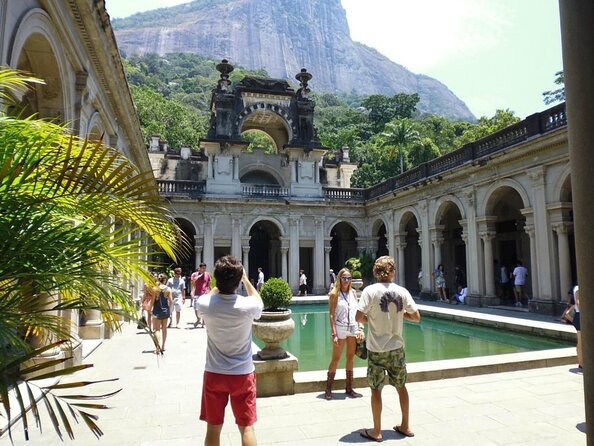
- Parque Lage changes the mood: You finish among gardens, forest, and a grand old mansion near the Botanical Garden and Christ the Redeemer.
- Wildlife sightings are possible: Monkeys and toucans have appeared during the outing, but animals are never guaranteed.
- The four-hour length is practical: You can fit the tour around other Rio plans, though each stop receives limited time.
- The price reflects private-style transport: At $88.21 per person, value depends on group size, vehicle arrangement, and how much you value a guide.
Why Tijuca Forest works so well in a half-day

Tijuca Forest is one of Rio’s best answers to the question, Can I see nature without spending a whole day outside the city? This tour keeps you close to the southern neighborhoods while taking you into a very different setting.
The route combines four kinds of stops: a city viewpoint, a historic lookout, a waterfall, and a cultural park. That variety matters. If you only want rainforest, Parque Lage may feel like a detour. If you want a broad introduction to Rio’s green spaces, the changing scenery makes good use of four hours.
The outing is designed around a car or jeep, with transport available for small groups and a maximum group size of 14. The exact vehicle arrangement deserves attention when booking, since the information describes transport for up to five people as well as a car or jeep for larger groups. Ask how your party will be transported if this point matters to you.
The guides named in the supplied material include Ederson and Jael, with one reference also spelling the name Jabier. The guide’s role is important here. The sights are attractive on their own, but the old roads, Chinese tea-growing project, imperial connections, and forest restoration stories give the stops much more meaning.
More Tijuca Forest trips in Rio de Janeiro
- Rio de Janeiro: Christ, Selaron Steps, and Tijuca Park Tour
★ 4.7 · 857 reviews - Rio de Janeiro: Guided Jeep Tour through Tijuca Rainforest
★ 4.3 · 740 reviews - Jeep Adventure: Guided Tour through Tijuca Rain Forest
★ 4.0 · 554 reviews
Chinese View and Rio’s southern panorama
Your first stop is Vista Chinesa, usually translated as Chinese View. The small pavilion was built in the early twentieth century to honor Chinese workers and the attempt to grow tea in Brazil.
The attraction is not simply the structure. The lookout opens toward a wide sweep of Rio’s southern zone, with the forest in the foreground and the city beyond. On a clear day, this is the kind of view that helps you understand Rio’s unusual shape, where steep green hills press close to urban neighborhoods and the sea.
Access to the lookout is paved, which keeps the stop manageable for most people. The road climbs steeply, however, so do not confuse an easy surface with a flat walk. You may spend only about 30 minutes here, enough for photographs and a short look around, but not enough for a relaxed walk through the surrounding forest.
Wildlife can add a welcome surprise. One couple saw about 20 monkeys moving through the trees near the lookout. That is a memorable sight, but you should treat it as luck rather than a promised part of the experience. The forest also supports toucans, and one outing included sightings of these colorful birds.
I would keep your camera ready but avoid letting the search for animals take over. The view is the main event, and the forest can be quiet one minute and full of movement the next.
Emperor’s Table and the old road to Alto da Boa Vista
Emperor’s Table, or Mesa do Imperador, is a smaller stop with a more historical focus. It recalls the old connection between the Botanical Garden and Alto da Boa Vista, created in the nineteenth century by a cantilevered road.
The place takes its name from the resting point used during walks by Brazil’s royal family. That detail gives the stop a direct link to the imperial period, but the wider story is more complicated than a royal picnic spot.
Chinese workers arrived in Brazil during the effort to establish tea cultivation. When the agricultural project failed, some were used in road construction. Historical accounts also refer to a building called Casa dos Chinas, or House of the Chinese, recorded on an 1844 map of the area.
You do not come here for a large monument or a long visit. The stop lasts about 30 minutes and works best when your guide explains what you are seeing. Without context, it can feel like a quick roadside viewpoint. With a good explanation, it becomes a useful link between Rio’s forest roads, royal history, Chinese migration, and the city’s attempts to develop new crops.
The historical story is also a reminder to listen critically. The workers were brought for one purpose and then assigned different labor when the tea project failed. That human detail gives the stop more weight than a simple photo break.
Cascatinha Taunay and its Roman-style bridge
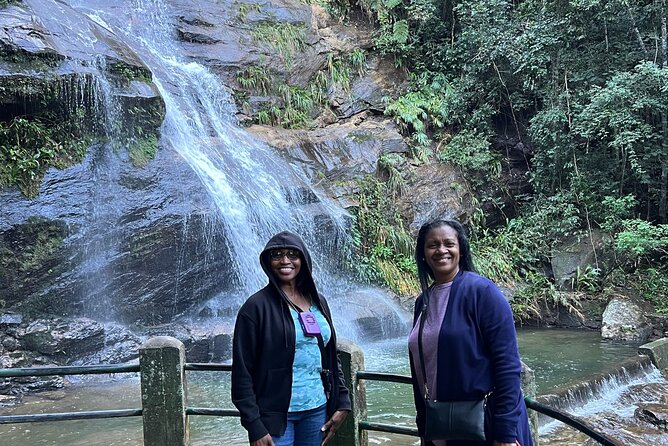
Cascatinha Taunay is the tour’s most atmospheric forest stop. The waterfall is formed by the Tijuca River, the Conde River, and other tributaries, and it is described as the highest waterfall in Tijuca National Park.
A stone bridge with a Roman arch crosses in front of the cascade. Built in 1860 under the Imperial Government, the bridge gives the setting a formal, almost theatrical appearance. Water, stone, thick forest, and the sound of the falls make this a natural place to slow down.
The waterfall also has an artistic connection. In 1817, painter Nicolas Antoine Taunay built a small house nearby and painted the cascade. He became a host to the court, organizing gatherings in the forest. His former house was demolished in 1946, and an old restaurant on the site has been prepared for refurbishment as a café and restaurant.
You have about an hour here, the longest stop on the route. That is useful because the waterfall deserves more than a rushed photograph. You can take in the bridge, watch the water, and let the guide explain the connection between the artist, the court, and the forest.
Do not expect a rugged trek to reach the cascade. The supplied details describe the attraction and the bridge, but they do not promise a substantial hike. The tour is better suited to people who want several scenic stops with limited walking than to anyone seeking a demanding forest route.
More Tours in Brazil
- Rio de Janeiro: 6-Stop Highlights of Rio with Lunch
★ 4.4 · 5,157 reviews - Christ the Redeemer Entry Ticket by Corcovado Train
★ 4.4 · 4,476 reviews - Rio de Janeiro: Rocinha Favela Walking Tour with Local Guide
★ 4.8 · 3,052 reviews - Rio: Christ the Redeemer, Sugarloaf, Selaron & BBQ Lunch
★ 4.5 · 2,428 reviews
Parque Lage closes the tour on a different note
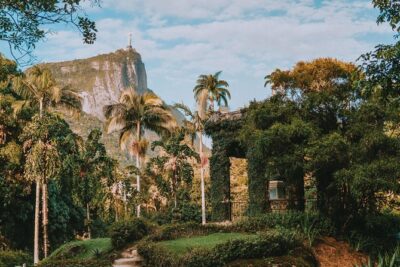
Parque Lage shifts the experience from forest road to historic park. Located in the Jardim Botânico neighborhood, it covers 52 hectares of forest and sits close to the Botanical Garden and Christ the Redeemer.
The park is part of the wider Tijuca National Park setting, but it feels more formal than the waterfall and lookouts. Its old mansion, open spaces, and forest paths give you a mixture of culture and nature. One guide-led visit included a walk through the forest and time for a drink in the mansion, which is a pleasant way to finish a half-day outing.
You have about 50 minutes here. That is enough to see the main setting and enjoy the atmosphere, but not enough to explore every corner of the park or combine it with a full visit to the nearby Botanical Garden. The Botanical Garden has been mentioned in descriptions of the experience, yet Parque Lage is the named stop, so confirm exactly what is included if the garden is a priority for you.
I especially like this final stop because it gives the tour a human scale. After viewpoints and waterfalls, you get a place where Rio’s history, architecture, gardens, and forest meet. It also makes the tour appealing if one person in your group prefers historic sites while another prefers nature.
What the four-hour schedule feels like
The timing is tight but sensible. The listed stops total roughly three hours and 50 minutes, leaving little room for long delays, extended walks, or an unplanned extra attraction.
That structure works well if you want an introduction rather than an all-day expedition. You get around 30 minutes at Chinese View, 30 minutes at Emperor’s Table, one hour at Cascatinha Taunay, and 50 minutes at Parque Lage. The waterfall receives the most time, which feels right.
The short visits also mean you should arrive ready to move. If you like lingering at a viewpoint, photographing every detail, or stopping often for food, the schedule may feel hurried. If you prefer a guide to handle the route while you focus on the sights, the pace is a benefit.
The outing requires good weather. If rain or poor conditions cancel it, you are offered another date or a full refund. That policy is sensible for forest roads and viewpoints, but you should keep some flexibility in your Rio schedule.
The wildlife factor
The forest is home to Brazilian plants and animals, and the tour creates several chances to look for them. Monkeys have been seen swinging through the trees near Chinese View, and toucans have appeared during the route.
Still, this is not a dedicated wildlife safari. The schedule is built around fixed sights, not long waits in one place. You might see monkeys or birds, or you might mainly experience the forest through its trees, streams, and sounds.
A guide can make a real difference here by pointing out movement and explaining what you are seeing. Keep food packed away, avoid trying to approach animals, and give yourself time to look beyond the main viewpoints. The supplied information does not set out wildlife rules, so follow the guide’s instructions on the day.
Is $88.21 a fair price?
At $88.21 per person, this is not the cheapest way to see a city viewpoint and a waterfall. The value comes from combining several locations in one half-day with transport and a guide.
For a group of two, the price may feel reasonable if you would otherwise need to arrange several rides and work out the forest route yourself. For a larger party, the per-person cost may compare more favorably, especially if the vehicle is arranged for your group rather than shared with many others.
The maximum group size is 14, so do not assume every departure is private. At the same time, the experience can sometimes be very small. One person ended up alone on the tour and received a much more personal outing. Your group size will depend on the booking date.
Snacks and bottled water are not included. Bring your own water and a small snack, particularly because four hours can stretch if traffic or stop times change. Comfortable shoes make sense for the paved but steep access at Chinese View and any walking around the waterfall and park.
The tour receives a 4.7 rating from 29 ratings, and 93 percent of customers recommend it. That is a strong record, but it is not a guarantee of perfect operations. One serious complaint involved the operator failing to arrive because a Google Calendar error moved the booking to another date. The provider apologized, refunded the money, and changed its scheduling system to use two calendars. This appears to have been an unusual mistake, but it is worth confirming your pickup and date before the tour.
Who should book this experience?
I would choose this tour if you want:
- A half-day escape from Rio’s built-up streets
- Several major Tijuca Forest sights without planning transport yourself
- A guide who can explain the Chinese tea project and imperial connections
- A chance to see monkeys or toucans without booking a specialist wildlife trip
- A flexible mix of viewpoints, waterfall scenery, architecture, and parkland
- A small-group or private-style experience, depending on the departure
I would look elsewhere if you want a long hike, a full Botanical Garden visit, or a slow photography day at one location. The tour moves between several stops, and Parque Lage is not a substitute for spending hours in the Botanical Garden.
You should also confirm the guide, vehicle, meeting details, and exact inclusion of Horto Waterfall before paying. The title refers to Horto Waterfall, while the detailed stop information centers on Cascatinha Taunay and Parque Lage. That may reflect the way the route is named, but it is a fair point to clarify.
Should you book the Tijuca Forest tour?
Book it if you want an efficient first look at Rio’s forested side and prefer a guide-led route over arranging separate taxis or rides. The best parts are the Chinese View panorama, the historical explanation at Emperor’s Table, the hour at Cascatinha Taunay, and the graceful finish at Parque Lage.
I would rate it as a strong choice for couples, small groups, and first-time visitors who want nature without giving up comfort. Just keep your expectations clear: this is a scenic and historical half-day outing, not a strenuous hike or a full park expedition. Confirm the date carefully, bring water, and ask which guide and vehicle will handle your booking.
FAQ
How long does the Tijuca Forest tour last?
The experience lasts approximately four hours.
What places are included?
The route includes Vista Chinesa, Emperor’s Table, Cascatinha Taunay, and Parque Lage. The tour title also refers to Horto Waterfall, so you should confirm whether it is a separate stop on your selected departure.
Is transport included?
Yes. Transport is provided by car or jeep. The information also refers to transport for groups of up to five people and a maximum group size of 14, so confirm the vehicle arrangement for your party.
How many people can join the tour?
The maximum group size is 14 people. Some departures may be much smaller.
Are food and drinks included?
No. Snacks and bottled water are not included, so you should bring your own.
Is the tour suitable for most people?
Yes. Most people can participate. Chinese View has a paved route, but the access road climbs steeply.
Can I see monkeys or toucans?
You might. Monkeys and toucans have been seen during the experience, but wildlife sightings are not guaranteed.
Does the tour operate in bad weather?
The experience requires good weather. If it is canceled because of poor conditions, you are offered another date or a full refund.
Can I cancel for a refund?
You can cancel up to 24 hours before the experience start time for a full refund. Cancellations or changes made less than 24 hours before the start time are not refunded or accepted.
Just added in Rio de Janeiro
- Rio de Janeiro: Zip Lining and Canopy Tree Tour★ 3.3 · 6 reviews
- Vidigal Favela Tour★ 4.4 · 26 reviews
- Rio de Janeiro: Attend a Vasco da Gama game with local guide★ 4.8 · 9 reviews
- Unforgettable Boat Party★ 5.0 · 3 reviews
- Hang gliding flight in Rio de Janeiro★ 5.0 · 6 reviews
- Rio Highlights: Christ, Sugarloaf, and More in a Private Tour★ 5.0 · 36 reviews
- Tijuca Forest Hike – Waterfalls & Caves, Nature & Wild Life!★ 5.0 · 51 reviews
- Rocinha Walking Tour: Get a Feel for the Brazil’s Largest Favela (Shared Group)★ 5.0 · 37 reviews
Tijuca Forest Tours, compared.

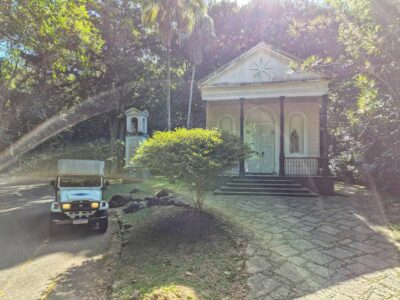
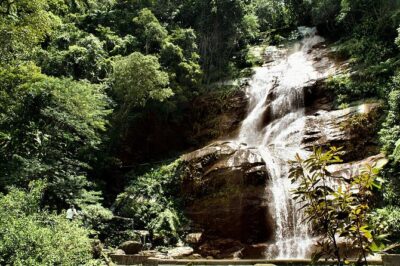
Jeep Adventure: Guided Tour through Tijuca Rain Forest
Read our review →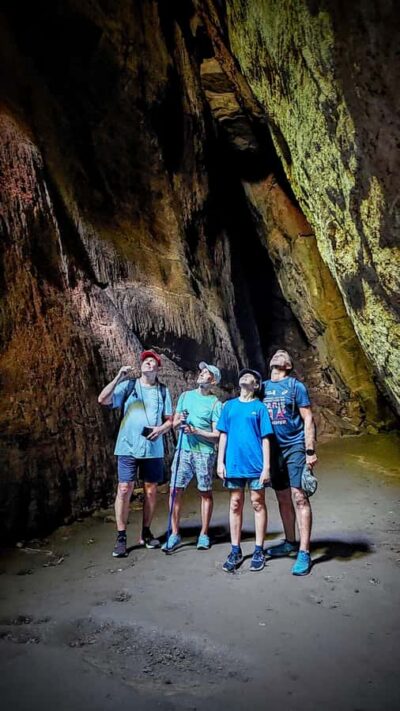
Tijuca Forest Small Group Hike to Caves and Waterfalls
Read our review →
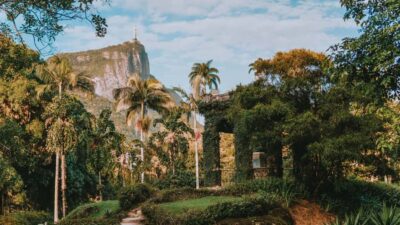
Rio de Janeiro Botanical Garden & Tijuca Forest Tour
Read our review →
Browse the lists this tour appears in