
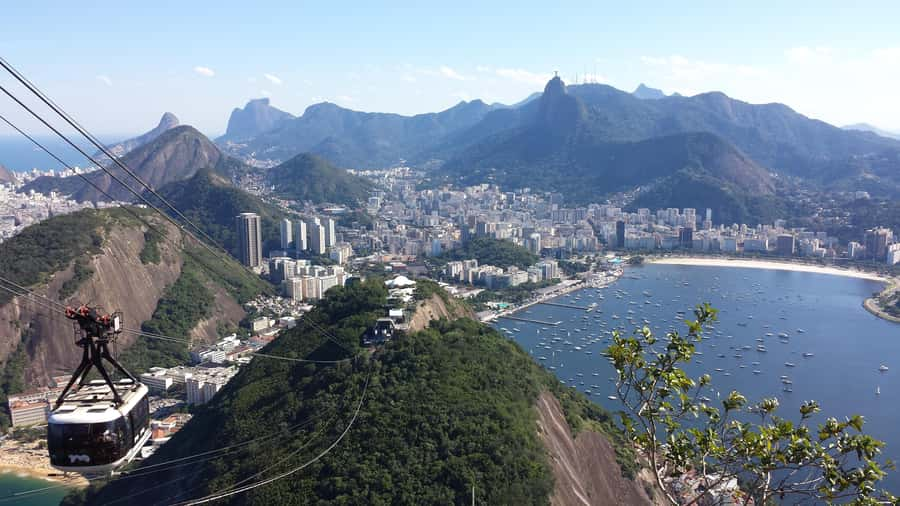
Reviewed · SUGARLOAF MOUNTAIN TOURS
Rio de Janeiro: Sugarloaf Mountain Hike and Climb
Sugarloaf Mountain is usually seen from below or reached by cable car. This four-hour outing takes the more unusual route: you walk up through forest and over bare rock, then use climbing equipment on a 20-meter vertical wall before reaching the summit. It is a fine way to see Rio from several angles, not just from the busy top platform.
I like the mix of outdoor challenge and sightseeing. The trail gives you fine views of Guanabara Bay, Niterói, Copacabana, Pedra da Gávea, and Morro Dois Irmãos before the main summit. I also like that the climbing sections are designed as an introduction, so you do not need previous rock-climbing experience. The main caution is fitness: this is a steep, scrambling-heavy hike, not a gentle walk with a little adventure added.
Key points to know before booking
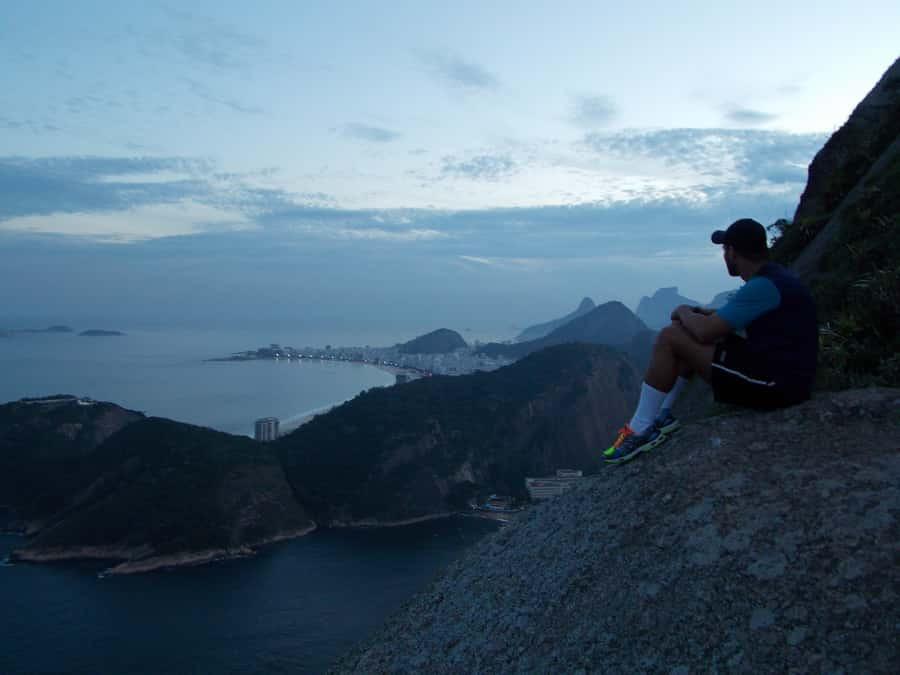
- The historic route begins at Pista Claudio Coutinho, with an early lookout reached in about 20 minutes.
- The trail includes steep ramps, scrambling, and two climbing sections, including a 20-meter vertical wall.
- The guide supplies certified climbing equipment, and personal accident insurance is included.
- Sergio, Didi, Thomas, Tommy, and Eduardo have all been praised for patient pacing, safety, and encouragement, though your assigned guide may differ.
- A good fitness level matters more than climbing experience, since the hike itself is the harder part for many people.
- The descent is by cable car, with the outing ending around Urca Hill and, according to one account, a pleasant walk toward the beach.
What this Sugarloaf hike is really like
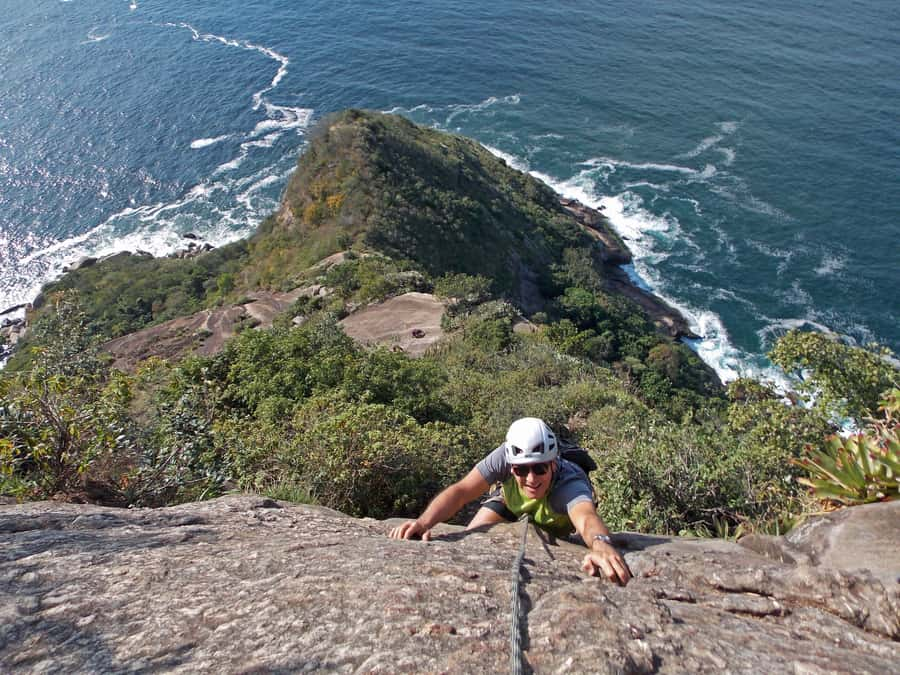
This is not a standard city sightseeing trip. You spend much of the morning on a rocky trail, using your hands at times, stepping over uneven ground, and gaining height steadily. The climbing is only part of the outing, but the approach to it requires more effort than the short activity description might suggest.
The route follows the path used by the first person to walk up Sugarloaf Mountain in 1817. That detail gives the outing a sense of place, but the practical point is more important: you are using an old mountain route rather than a paved access path.
The first section begins at Pista Claudio Coutinho in Urca. In roughly 20 minutes, you reach a lookout facing the entrance to Guanabara Bay and the city of Niterói. This is an excellent first pause. You get a broad view quickly, before the trail becomes more technical.
From there, expect stone ramps, steeper ground, and sections where you scramble over rock. One experienced hiker rated the route as advanced, with a lot of scrambling apart from the two climbing sections. Another person with average fitness found the hike challenging but manageable. That difference is useful: you do not need to be an athlete, but you should be comfortable with a sustained uphill workout.
More Sugarloaf Mountain trips in Rio de Janeiro
- Rio: Christ the Redeemer, Sugarloaf, Selaron & BBQ Lunch
★ 4.5 · 2,428 reviews - Skip the Line to Christ Redeemer, Sugar Loaf and Barbecue Lunch
★ 4.0 · 593 reviews - Rio de Janeiro: Christ the Redeemer and Sugarloaf Tour with…
★ 4.6 · 499 reviews
The route from Pista Claudio Coutinho to the first lookout
The opening walk is the easiest part of the day, though you still need proper footwear. Wear shoes with a firm grip, not sandals or flip-flops. A small daypack is fine, but large bags and luggage are not allowed.
The first lookout gives you an immediate reward for the uphill effort. Guanabara Bay opens out below, and Niterói sits across the water. This is also a good place to settle into the group’s pace and ask your guide about the route ahead.
Guide quality is important here because the outing is active and interpretive at the same time. Sergio has been praised for explaining Rio’s history, local animals, and the outdoor life of Brazil. Thomas has been described as energetic and considerate with the pace. Didi has been praised for keeping people informed about where the group was going and for pointing out good places to stop for photographs.
You should not assume you will receive a particular guide, but the repeated praise for several guides is encouraging. The best guide for this route is not simply someone who can climb. You want someone who explains hand and foot placement, checks your comfort, and knows when a viewpoint deserves a pause.
Scrambling and the approach to the climbing wall
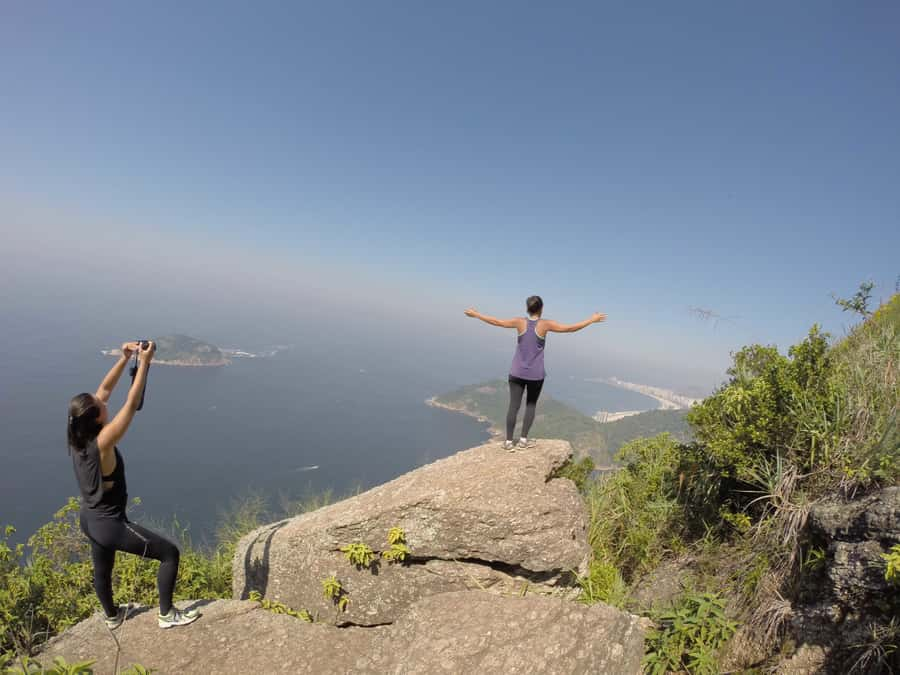
The middle section is where the outing earns its adventurous label. The trail crosses rock ramps and reaches several belvederes, or lookout points, before the main climb. You may need to use your hands for balance and choose your steps carefully.
This part can be more tiring than expected because the surface is uneven and the slope is steady. The total outing lasts four hours, but one account puts the walk to the top at about two and a half to three hours. That leaves little room for a slow, casual pace if the group is to reach the summit and descend by cable car on schedule.
The payoff comes at Pedra Filosofal. From this viewpoint, you can see Copacabana Beach, Pedra da Gávea, and Morro Dois Irmãos. These views help explain why the route is worth taking instead of simply buying a cable-car ride. The city appears in layers, with coast, rock formations, water, and built-up neighborhoods all visible from the same high route.
I would treat each lookout as a chance to catch your breath rather than rushing straight upward. The group may stop for photographs, and a good guide will use these pauses to explain the surrounding area. Bring sunscreen, since the exposed rock sections offer less shade.
What to expect on the 20-meter vertical wall
The climbing section is an introduction to basic rock climbing rather than a full technical climbing course. Certified climbing equipment is provided, and the guides help you work out where to place your hands and feet.
The wall is about 20 meters high. That sounds imposing, and it will feel serious if you are not used to heights, but the accounts indicate that people with no prior climbing experience have completed it with guide support. The activity is not described as difficult climbing, yet you still need to be comfortable being above the ground and following instructions.
Sergio has been particularly praised for helping people through awkward spots and pointing out usable holds. Thomas has also been praised for making people feel safe during the climbing sections. These details matter more than technical jargon. A calm guide can turn a worrying first climb into a manageable series of small movements.
You should tell the guide early if you are nervous about heights or unsure about your fitness. Do not wait until you are halfway up the wall. The trip is not suitable for people with heart problems or other serious medical conditions, and alcohol or drug use before or during the activity leads to cancellation.
The climbing does not replace the hike. That is worth stressing. If you are looking for a short climb with little walking, this is the wrong choice. If you like the idea of combining a proper uphill route with a supported climbing challenge, the balance is appealing.
More hikes and treks around Rio de Janeiro
- Rio: Tijuca Forest Small Group Hike to Caves and Waterfalls
★ 4.9 · 536 reviews - Pedra do Telégrafo Hike and Beach Full-Day Tour
★ 4.5 · 417 reviews - Rio de Janeiro: Pedra da Gávea 7-Hour Hike
★ 4.7 · 183 reviews - Rio de Janeiro: Tijuca Forest Challenge Hike Full-Day Trip
★ 4.9 · 163 reviews
Reaching Sugarloaf summit and returning by cable car
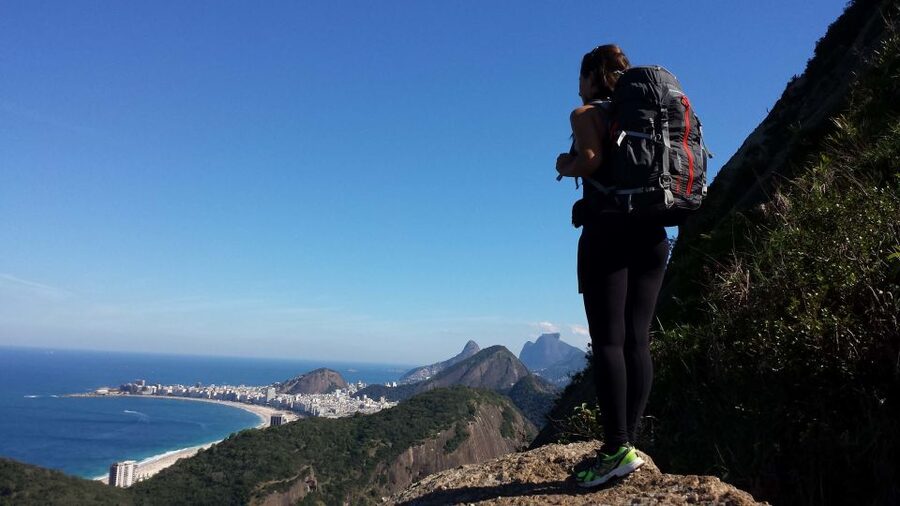
After the climbing and upper trail, you continue to the summit of Sugarloaf Mountain. The top gives you the classic Rio panorama, but arriving on foot changes the feeling of the visit. You have seen the mountain from several angles and earned the final view through your own effort.
The summit is likely to be the busiest part of the outing, since cable-car passengers also reach it. The route up provides the quieter moments and the more personal views. At the top, take time to look back toward Copacabana, the bay, Niterói, Pedra da Gávea, and Morro Dois Irmãos.
The descent is by cable car to Urca Hill. This is a sensible finish after a demanding climb. One account also mentions walking from Urca toward the beach and stopping for pizza, though that food stop is not part of the stated inclusions, so do not count on it as a planned feature.
The cable-car descent also gives you a different view of the route you have just completed. You move quickly from mountain summit to lower ground, avoiding a long and tiring walk back down. Check the exact ticket arrangements when booking, since the listed inclusions name the guide, equipment, insurance, taxes, and optional transportation but do not separately describe a cable-car ticket.
Monkeys, scenery, and the value of the slower route

Wildlife sightings are never guaranteed, but monkeys have been seen along the route. That possibility adds a pleasant surprise to the hike, especially during the descent or quieter trail sections. Keep food packed away and avoid trying to approach or feed animals.
The scenery is the strongest reason to choose this experience. You see Guanabara Bay and Niterói early, then reach higher views toward Copacabana, Pedra da Gávea, and Morro Dois Irmãos. The route gives you repeated changes in viewpoint instead of one large panorama at the end.
At $68 per person, the experience costs more than visiting Sugarloaf by cable car alone. The price makes better sense if you value a guide, certified climbing equipment, personal accident insurance, and a small-group or private setting. You are paying for the route, safety support, and the chance to reach the mountain under your own power.
It is less compelling if you mainly want a quick view of Rio. In that case, the regular cable car is more direct. This activity earns its price through the combination of hiking, climbing, interpretation, and the unusual approach.
Guides, group size, and transport choices
The activity is available with a bilingual guide in English, Spanish, or Portuguese. Private and small-group options are available, which can make a real difference on a route where pace and confidence vary from person to person.
Guide names that have received strong praise include Sergio, Didi, Thomas, Tommy, and Eduardo. Sergio has been praised for climbing help, local information, and encouragement. Didi has been praised for his experience, steady pace, and clear directions. Thomas has been described as enthusiastic, safe, and good at explaining local flora and the outdoor scene. Tommy has also been praised for making people feel secure.
These names are useful when you compare options, but guide assignment can change. I would focus on requesting an experienced climbing guide and confirming the language you need rather than booking solely for one person’s name.
You can meet the guide at Praça General Tibúrcio, 75, in Urca, near the obelisk. Optional pickup is available from most hotels in Rio’s South Zone and Downtown. Hotels in Barra da Tijuca, Recreio, São Conrado, and Santa Teresa are not eligible for direct pickup. If your hotel is outside the pickup route, you will be directed to the nearest available meeting point.
What to bring and how to prepare
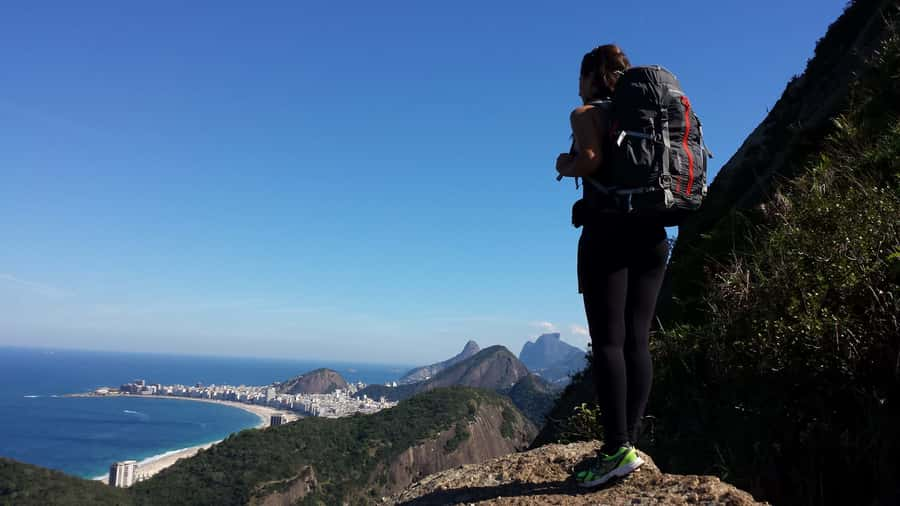
The stated water recommendation is up to three liters. That sounds like a lot for four hours, but Rio can be hot, and the route includes exertion in exposed areas. Bring enough water for your own needs, plus a light snack and sunscreen.
Your daypack should be small and comfortable. Leave luggage and large bags at your accommodation. Good walking shoes with grip are essential, and sandals or flip-flops are not allowed.
You do not need previous climbing experience. You do need enough fitness for steep hiking and scrambling, along with a willingness to listen carefully during the climbing sections. The activity is not suitable for people with heart problems or other serious medical conditions.
Weather can change the order of the route or alter the outing. Clear, dry conditions will give you the best views and a more comfortable grip on the rock. If rain or poor conditions interfere, the itinerary may be adjusted. Build some flexibility into your Rio schedule if possible.
The booking terms are useful for uncertain weather or changing plans: you can cancel up to 24 hours before the activity for a full refund, and you can reserve now and pay later. Confirmation is provided at booking.
Who should book this Sugarloaf adventure
I would choose this for an active visitor who wants more than the standard cable-car viewpoint. It suits people who enjoy hiking, do not mind getting hands-on with rock, and want a guide to explain the scenery and manage the climbing equipment.
It also works for first-time climbers who are comfortable with heights and have average fitness. The climbing itself is presented as accessible, but the hike is not effortless. Regular walkers should still prepare for steep sections, scrambling, and a long uphill push.
I would skip it if you want a relaxed morning, dislike exposed heights, have a heart condition, or are carrying a large bag. I would also avoid scheduling it immediately after another demanding outdoor activity. Four hours is not a full-day expedition, but the physical work is real.
Should you book it?
Book this Sugarloaf Mountain hike and climb if you want Rio views with a sense of achievement attached. The combination of historic trail, rock scrambling, a 20-meter climbing wall, wild-monkey possibilities, and a cable-car finish gives you a more varied visit than the standard summit stop.
The main decision comes down to fitness and comfort with heights. If you can manage a steep, advanced-feeling hike and follow a guide’s climbing instructions, $68 is a fair price for the equipment, insurance, guiding, and access to viewpoints most cable-car passengers do not see. If your priority is easy sightseeing, take the cable car instead.
FAQ
How long does the Sugarloaf Mountain hike and climb take?
The activity lasts four hours. The uphill route to the summit may take about two and a half to three hours, followed by the cable-car descent to Urca Hill.
Do I need previous rock-climbing experience?
No. The climbing sections introduce basic rock climbing, and the guide provides certified equipment and assistance. You should still be comfortable with heights and steep terrain.
How difficult is the hike?
The hike includes steep sections, stone ramps, and a lot of scrambling. It is manageable with average fitness but can feel advanced to regular hikers because of the uneven, rocky route.
Where do I meet the guide?
The meeting point is Praça General Tibúrcio, 75, in Urca, near the obelisk.
Is hotel pickup available?
Optional pickup is available from most hotels in Rio’s South Zone and Downtown. Direct pickup is not available from hotels in Barra da Tijuca, Recreio, São Conrado, or Santa Teresa. You may be sent to the nearest pickup point instead.
What should I bring?
Bring water, preferably up to three liters as recommended, a daypack, a light snack, sunscreen, and comfortable shoes with a good grip. Sandals, flip-flops, luggage, and large bags are not allowed.
Just added in Rio de Janeiro
- Rio de Janeiro: Zip Lining and Canopy Tree Tour★ 3.3 · 6 reviews
- Vidigal Favela Tour★ 4.4 · 26 reviews
- Rio de Janeiro: Attend a Vasco da Gama game with local guide★ 4.8 · 9 reviews
- Unforgettable Boat Party★ 5.0 · 3 reviews
- Hang gliding flight in Rio de Janeiro★ 5.0 · 6 reviews
- Rio Highlights: Christ, Sugarloaf, and More in a Private Tour★ 5.0 · 36 reviews
- Tijuca Forest Hike – Waterfalls & Caves, Nature & Wild Life!★ 5.0 · 51 reviews
- Rocinha Walking Tour: Get a Feel for the Brazil’s Largest Favela (Shared Group)★ 5.0 · 37 reviews
Sugarloaf Mountain Tours, compared.

Christ the Redeemer, Sugarloaf, Selaron & BBQ Lunch
Read our review →
Skip the Line to Christ Redeemer, Sugar Loaf and Barbecue Lunch
Read our review →

5-hour Christ the Redeemer and Sugarloaf Express Tour
Read our review →
Christ the Redeemer Early Access and Sugarloaf
Read our review →
Two of Rio’s Best: Christ the Redeemer & Sugarloaf Mountain Half-Day Tour
Read our review →
Sugarloaf Cable Car and Corcovado Train Tickets
Read our review →Browse the lists this tour appears in