Reviewed · EVERY TOUR
Fatima Neighborhood and Church Unit Bike Tour
Brasília makes the most sense when you see it at street level. This three-hour bike ride moves beyond the famous monumental axis and into the Fatima neighborhood, where apartment blocks, schools, shops, cinemas, parks, and churches reveal how the planned city was meant to function. The highlight is SQS 308, the model superquadra designed to show Lucio Costa’s residential idea in practice.
I like the route’s mix of modernist design and ordinary city life, and I like that the stops include free public places rather than only formal attractions. Guides such as Duda add useful context about living in Brasília, not just facts about buildings. The main consideration is pace: with several stops packed into about three hours, you get a good overview rather than long visits at each site, and the tour depends on suitable weather.
Key points at a glance
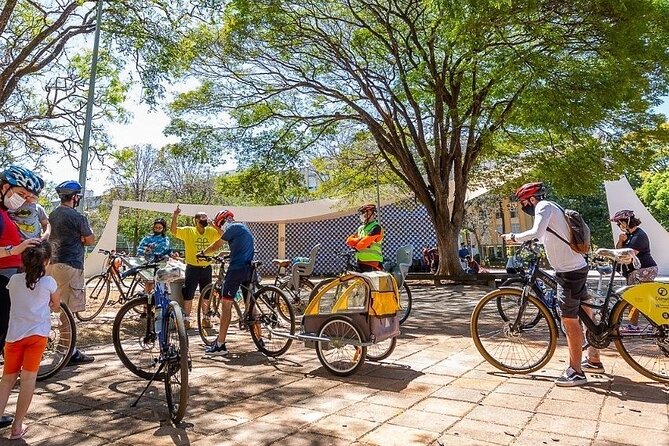
- SQS 308 is the central lesson: See the model superquadra, its planned residential setting, nearby services, and Burle Marx’s garden work.
- The route has a strong cultural thread: Visit the Choro Club area, Praça Eduardo e Mônica, Cine Brasília, Renato Russo Hall, and churches tied to Brasília’s identity.
- The churches are free to enter: Igrejinha Nossa Senhora de Fátima and Santuário São João Bosco bring art, faith, and architecture into the ride.
- The tour stays small: The maximum group size is 15, which should make guide explanations easier to follow.
- Families can ask for special equipment: An articulated tandem passenger trailer or bike is available for children roughly 4 to 10 or 12 years old.
- The price reflects a guided half-day outing: At $62.73 per person, you are paying for bikes, route planning, interpretation, and access to several parts of Brasília in one outing.
Why the Fatima neighborhood makes a good bike route
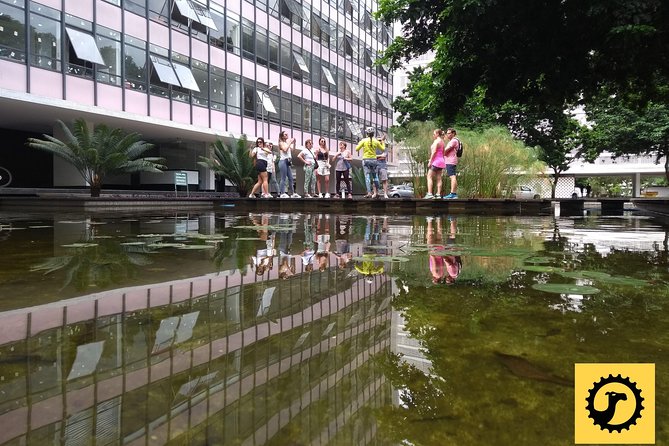
Brasília is often presented through its monumental buildings and broad ceremonial spaces. Those are important, but they do not tell you much about daily life. This route heads into the residential sector, where the city’s ideas about housing, open space, schools, shopping, and community facilities become easier to understand.
You ride through Asa Sul and the Fatima area, including the model SQS 308 superquadra. Here, the point is not simply to look at an apartment block. You see how a residential unit was planned as a small neighborhood, with services close by and greenery woven between the buildings.
That makes the ride useful for anyone interested in urban design. It also gives you a more grounded view of Brasília. Instead of moving from one grand structure to another by car, you have time to notice the relationship between homes, public areas, cultural sites, and religious buildings.
The route is also thoughtfully varied. A lookout and cultural venue begin the ride. A large city park follows. Then come the planned residential blocks, cinemas, music references, and two very different churches. I like that progression because it gives the tour a clear story rather than a random collection of photo stops.
More bike tours in Brazil
- São Paulo: Downtown Historical Bike Tour
★ 4.9 · 191 reviews - Rio de Janeiro: Guided Bike Tours in Small Groups
★ 4.5 · 133 reviews - Street Art and Park Bike Tour
★ 5.0 · 56 reviews
Starting at the TV Tower and Choro Club
The meeting point is Camelo Bike Tour Brasília at SHS Quadra 06, Conjunto A, Bloco A, Loja 17, Centro Empresarial Brasil 21, in Asa Sul. From there, the TV Tower is the first stop.
You spend about 10 minutes here for an explanation and photos. Admission is free. The tower gives you a quick visual introduction to Brasília’s wide layout, and it is a practical place to begin before turning toward the city’s residential areas.
This is a short stop, so do not expect a long visit or a full tower experience. Its value is orientation. Your guide can explain where the main parts of Brasília fit together before the route moves into the Fatima neighborhood.
The itinerary also includes a cultural space inspired by the idealism of Reco do Bandolim and shaped by Oscar Niemeyer’s design. It houses the concert hall of Brasília’s Choro Club. Choro is one of Brazil’s important instrumental music traditions, so this stop adds a specifically Brazilian cultural note to a tour otherwise centered on architecture and urban planning.
The combination works well. You begin with the city’s physical structure, then connect it to music and national culture. The tour is not only about concrete, curves, and planning diagrams.
Riding through Sarah Kubitschek City Park
Parque da Cidade Sarah Kubitschek is one of the largest urban parks in the world, and it was created by garden designer Burle Marx. The tour spends about 25 minutes inside the park, including a visit to Praça Eduardo e Mônica.
That plaza honors a song by Legião Urbana, one of Brasília’s best-known bands. The reference gives the park a local cultural flavor. You are not just passing through a large green recreation area. You are seeing how Brasília’s music and public spaces connect.
This is one of the route’s better breaks because it changes the feel of the ride. After the opening explanation and cultural venue, the park gives you open space and a chance to take photographs. The stop is still fairly brief, though. If you want to explore the entire park at leisure, this tour will not provide enough time.
The separate Burle Marx Garden stop lasts about 10 minutes. It gives the guide a chance to point out the designer’s approach to planting and public space. Because the stop is short and admission is free, think of it as an informed look rather than a formal garden visit.
I like having both the park and garden on the route. They help explain that Brasília’s planned character was not only about buildings. Public planting, pedestrian areas, and broad open spaces were part of the city’s original design.
Understanding SQS 308, Brasília’s model superquadra
The 45-minute visit to SQS 308 is the heart of the tour. This superquadra in Asa Sul was selected as Brasília’s model residential block. Lucio Costa designed it, Burle Marx handled its urban planning and gardens, and Banco do Brasil built it. It opened on February 19, 1962.
Here, the abstract idea of Brasília’s residential scale becomes easier to picture. You can look at the relationship between apartment buildings and the surrounding grounds, then consider how nearby schools, shops, and cultural facilities fit into the plan.
This is also where the tour becomes especially useful for understanding local life. Guide Duda has taken visitors through a typical superquadra and its nearby shopping area, school, and cinema. That is the kind of detail I would want from a city bike tour. You learn how a neighborhood was intended to operate, not only who designed it.
A 45-minute stop gives the guide enough time to explain the layout and answer questions. It is also the point where the ride may feel most like a walking architecture lesson, even though you arrive by bike.
You should keep expectations realistic. SQS 308 is not a single monument with a dramatic entrance. Its interest comes from seeing a planned system in use. If you enjoy architecture, city planning, or Brasília’s history, this may be the most rewarding part. If you want a nonstop sightseeing ride, the explanation may feel slower than the other stops.
More Tours in Brazil
- Rio de Janeiro: 6-Stop Highlights of Rio with Lunch
★ 4.4 · 5,157 reviews - Christ the Redeemer Entry Ticket by Corcovado Train
★ 4.4 · 4,476 reviews - Rio de Janeiro: Rocinha Favela Walking Tour with Local Guide
★ 4.8 · 3,052 reviews - Rio de Janeiro: Sugarloaf Cable Car Official Ticket
★ 4.6 · 2,873 reviews
Cine Brasília and Renato Russo Hall
The route includes Cine Brasília, a cultural venue that hosts the Brasília Film Festival. Its program includes Brazilian film releases, foreign films, themed weeks, discussions, book launches, painting exhibitions, photography, posters, and partnerships with embassies, schools, and universities.
You may not spend a long time inside, but the stop helps broaden the idea of Brasília beyond government buildings. The cinema functions as part of the city’s cultural life and education network. That matters because the residential sectors were planned to include more than housing.
Renato Russo Hall adds another music connection. Along with Praça Eduardo e Mônica and the Choro Club, it reinforces Brasília’s strong link with Brazilian music. These references are useful if you know little about the city’s cultural side.
The exact time allocated to these cultural stops is not specified separately, so I would treat them as part of the route rather than guaranteed extended visits. The tour’s main goal is to connect them to the neighborhood, not provide a full film festival or concert-hall program.
Igrejinha Nossa Senhora de Fátima and Athos Bulcão
Igrejinha Nossa Senhora de Fátima is one of the route’s most distinctive stops. It was inaugurated in June 1958 and was the first church in Brasília’s residential sector.
The church was built at the request of Dona Sarah Kubitschek after a grace connected with the cure of her daughter. That personal story gives the building a different character from the city’s larger civic projects.
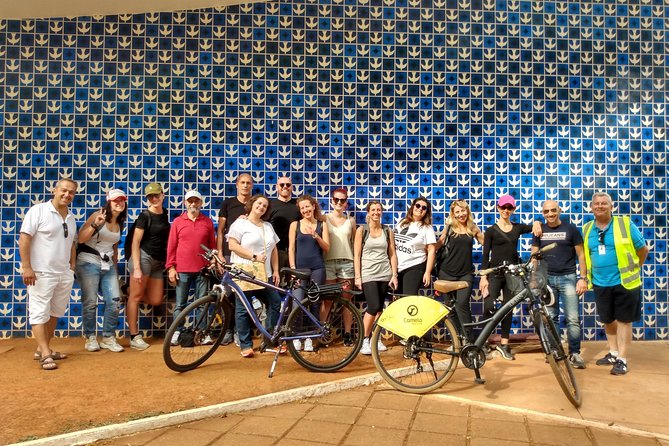
The exterior walls are lined with tiles by Athos Bulcão. Their stylized forms represent the Dove of the Divine and the Star of the Nativity. You get about 20 minutes here, with no admission charge.
This is a good place to pay attention to details rather than only take a quick photograph. The tiles bring pattern and color to the simple church exterior, while the building’s early date ties it to Brasília’s first years.
The stop also shows how art was built into the new capital from the beginning. Oscar Niemeyer’s architecture, Athos Bulcão’s tiles, and the religious purpose of the church meet in one compact site. Compared with the wide spaces of the park and superquadra, Igrejinha offers a more intimate pause.
Santuário São João Bosco and the final ride
The final listed stop is Santuário São João Bosco, built in honor of Brasília’s patron saint, St. John Bosco. The visit lasts about 10 minutes and admission is free.
This is a short finish, but it gives the tour a strong architectural and spiritual endpoint. The sanctuary is one of the city’s notable religious landmarks, and it contrasts with the smaller Igrejinha Nossa Senhora de Fátima.
A 10-minute stop means you will get an introduction and time for photographs rather than a long period of quiet reflection. Still, the sanctuary is a fitting final sight before returning to the agency.
The activity ends back at the original meeting point. That makes planning easier, especially if you are using the tour as a morning introduction to Asa Sul and the Fatima neighborhood.
What the $62.73 price includes in practical terms
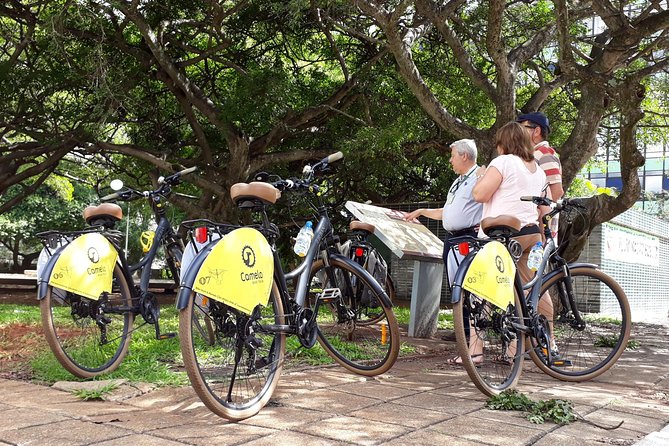
At $62.73 per person, this is not the cheapest way to move around Brasília. You are paying more than you would for an independent ride through a park or a self-guided visit to free public sites.
The value comes from the route and explanation. In three hours, you cover the TV Tower, Choro Club area, Sarah Kubitschek Park, Burle Marx Garden, SQS 308, Cine Brasília, Renato Russo Hall, Igrejinha, and Dom Bosco Sanctuary. You also avoid having to work out the order and transport between these places.
For me, the strongest value is SQS 308. Without a guide, you could pass through the model superquadra and miss why it matters. A good explanation turns an ordinary-looking residential area into a lesson in Brasília’s design.
The small maximum group of 15 helps justify the cost. It is not a private tour, but it should be easier to hear the guide and ask questions than on a large coach outing. The free admission at every listed stop also keeps extra costs low.
The tour is booked an average of 41 days ahead, so early planning may be sensible if your dates are fixed. Confirmation is normally issued when you book, although bookings within two days of departure may require up to 48 hours for confirmation and remain subject to availability.
Who will enjoy this bike tour most
I would choose this ride if you want to understand Brasília as a planned city rather than simply photograph its famous buildings. It is especially well suited to people interested in architecture, urban design, Brazilian music, public art, or neighborhood life.
It also works well as an early activity in Brasília. The route gives you names, districts, and design ideas that can make later independent sightseeing easier.
Families can ask in advance about an articulated tandem passenger trailer or bike for children from about 4 to 10 or 12 years old. The age range is not presented as an automatic booking feature, so contact the operator before assuming the equipment will be ready.
Most people can participate, and the route is near public transportation. You should still be comfortable spending about three hours on a bike and moving between several stops. The tour requires good weather. If poor weather cancels it, you can choose another date or receive a full refund.
Free cancellation is available until 24 hours before the start time. Changes or cancellations made inside that window are not accepted for a refund, so keep an eye on the local cut-off time.
Should you book the Fatima Neighborhood and Church Unit Bike Tour?
Book it if you want the residential side of Brasília explained clearly and you like mixing architecture with parks, music, and religious art. The model superquadra, Athos Bulcão’s tiles at Igrejinha, and the final Dom Bosco Sanctuary give the ride plenty of substance.
I would skip it if you want extended time inside each attraction, a strenuous cycling workout, or a tour focused mainly on Brasília’s monumental government buildings. This is a guided overview of the city’s residential scale, not a full-day architecture seminar.
For most first-time visitors with suitable weather, the route earns its strong reputation. A 4.9 rating from 58 evaluations and a 100 percent recommendation rate support the choice, but the real reason to book is simpler: you get a practical look at how Brasília’s grand ideas were meant to work for everyday life.
FAQ
Where does the bike tour begin?
It begins at Camelo Bike Tour Brasília, SHS Quadra 06, Conjunto A, Bloco A, Loja 17, Centro Empresarial Brasil 21, Asa Sul, Brasília.
Where does the activity finish?
The tour ends back at the original meeting point.
How long does the tour last?
It lasts approximately three hours.
What is the price?
The listed price is $62.73 per person.
What is the maximum group size?
The activity accepts a maximum of 15 people.
Are admission tickets included?
All listed stops specify free admission, so no admission fee is required for those visits.
Can children join the bike tour?
Most people can participate, and an articulated tandem passenger trailer or bike is available for children from about 4 to 10 or 12 years old. Ask the operator in advance.
What happens if the weather is poor?
The tour requires good weather. If it is canceled because of poor weather, you will be offered another date or a full refund.
Just added in Brazil
- From Puerto Iguazu: Itaipu Dam Tour with Entrance Ticket★ 4.7 · 31 reviews
- From Puerto Iguazu: Secret Falls Adventure★ 5.0 · 5 reviews
- Gramado and Canela private trip with English speaking guide★ 5.0 · 6 reviews
- From Natal: Pipa, Cacimbinhas, And Love Beach Full-Day Tour★ 4.5 · 14 reviews
- From Puerto Iguazú: Brazilian Bird Park Tour with Tickets★ 4.7 · 7 reviews
- from Foz do Iguaçu: Private Tour on Argentinean Falls★ 5.0 · 5 reviews
- From Jericoacoara: Preá Beach and Paradise Lagoon Tour★ 3.8 · 51 reviews
- From Manaus: Negro River Half-Day Trip★ 4.7 · 20 reviews
Tours in Brazil, compared.

Christ the Redeemer Entry Ticket by Corcovado Train
Read our review →
Christ the Redeemer, Sugarloaf, Selaron & BBQ Lunch
Read our review →