
Reviewed · IGUAZU FALLS TOURS
Foz do Iguaçu: Brazilian Side of the Falls
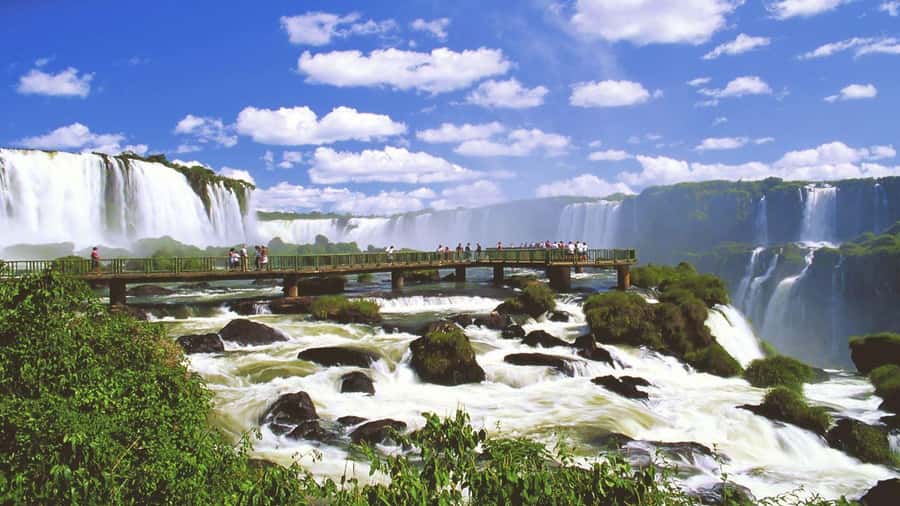
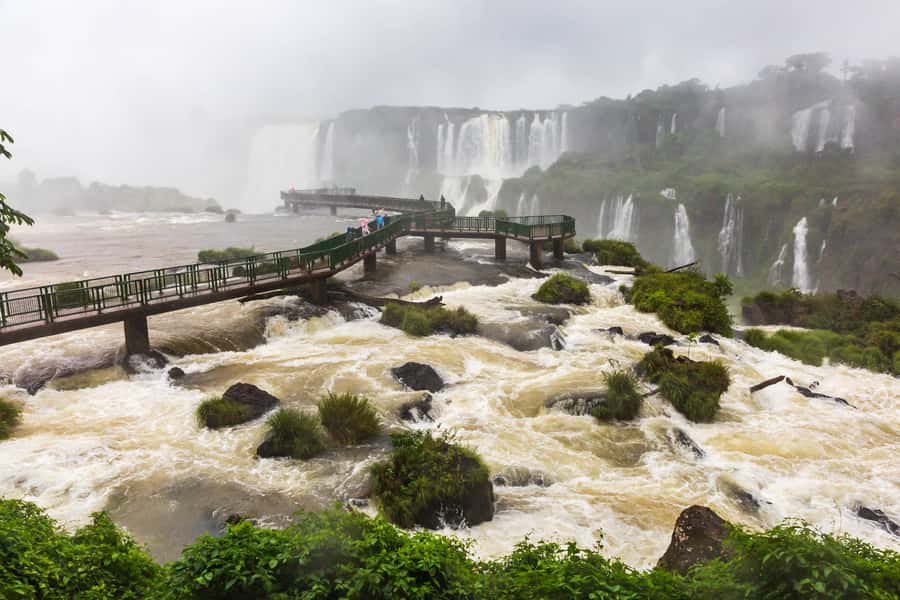
The Brazilian side of Iguazu Falls gives you the big picture fast. From a 950-meter walkway, you can look across the Iguaçu River toward roughly 75 percent of the waterfall system, while Brazil’s own section supplies close views, spray, rainbows, and the great rush of water around Devil’s Throat. The panorama is the main event.
I like the simple three-hour format and the air-conditioned pickup and drop-off, especially if you have only one day in Foz do Iguaçu. I also like the chance to spot coatis, colorful butterflies, and birds in the forest along the park road. The main caution is that guiding may be light: some visitors had help getting into the park but little explanation on the walking route, and language service has not always matched the booking choice.
Key points at a glance
- A 950-meter walkway brings you close to spray, rainbows, and several sections of the falls.
- Brazil offers the broad view: you see most of the waterfall system spread across the river in Argentina.
- The 11-kilometer park road passes through forest where coatis, birds, and butterflies may appear.
- A panoramic elevator provides another angle after the main walkway.
- Morning and afternoon departures make this easy to fit around other plans in Foz do Iguaçu.
- Guide service varies in practice, so confirm the language, pickup point, and what assistance you should expect.
Why the Brazilian side gives you the best first view
Iguazu is not one single waterfall. It is a sprawling system of about 275 falls along the Iguaçu River, shared by Brazil and Argentina. Only about 25 percent is on the Brazilian side, but that smaller share gives you the broadest view of the whole formation.
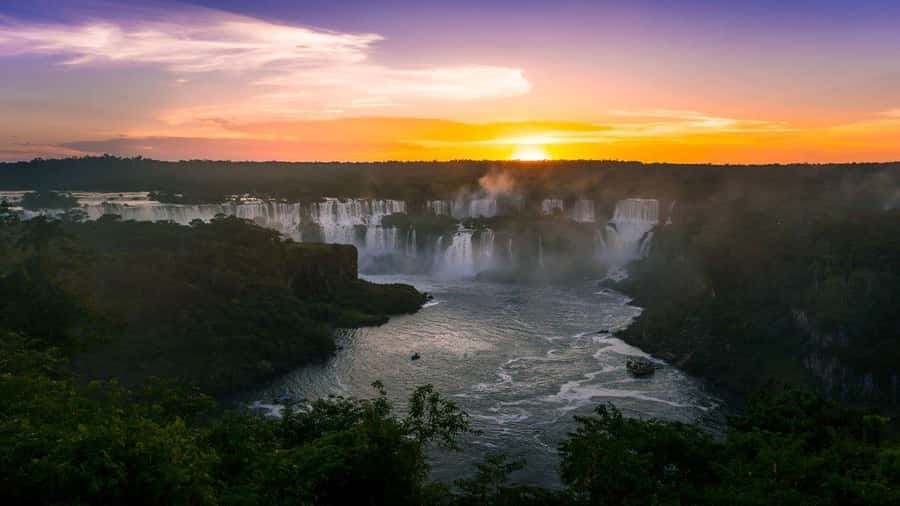
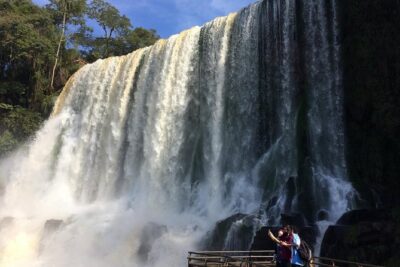
That is why this visit works so well as an introduction. From Brazil, you look across at the long line of Argentinian cascades instead of seeing only one section from close range. You get scale: water dropping in many separate curtains, forest filling the gaps, and Devil’s Throat pulling the eye toward its immense plume.
The park is part of the wider Iguazu National Park system, which Brazil shares with the protected area across the border in Argentina. It is also recognized as one of the New 7 Wonders of Nature. Those labels matter less once you are on the path, but they help explain why the setting feels much larger than a single scenic stop.
I would choose the Brazilian side first if you want a short visit with a strong visual payoff. The Argentine side generally offers more close-up routes, but this Brazilian outing gives you the classic overall view in a manageable three hours.
More Iguaçu Falls trips from Brazil
- Iguazu Falls: Full-Day Tour of Brazil & Argentina Sides
★ 4.9 · 1,542 reviews - From Foz do Iguazu: Brazil Iguazu Falls & Macuco Safari Boat
★ 4.7 · 358 reviews - Iguassu Waterfalls: 1 Day Tour Brazil and Argentina’s sides
★ 4.9 · 353 reviews
From the Visitors’ Center to the forest road
Your visit begins at the park’s Visitors’ Center. This is where you get oriented before continuing along an 11-kilometer road into the park. The included ticket and transport take away some of the basic work, which is useful when you do not want to sort out the park entrance on your own.
The road itself is part of the experience. As the vehicle moves through dense forest, the sound of the falls begins to build. You may hear the water before you see it, a nice change from arriving at a viewpoint with no sense of what lies ahead.
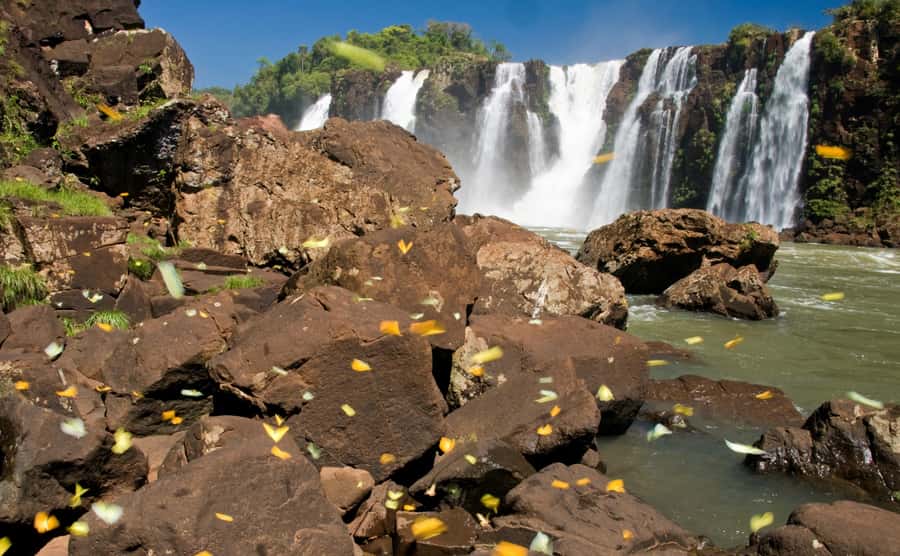
Keep your eyes open during this section. The park is home to many bird species, multicolored butterflies, and small mammals such as coatis, also called Nasua. A coati sighting is never guaranteed, and this is not a wildlife safari, but the forest gives the visit more life than a simple road-to-viewpoint transfer.
The guide’s role here is important. A good guide can help you move through the park efficiently and explain where the best views begin. In practice, the service can be more practical than interpretive. Some English-speaking visitors found that the guide mainly assisted with transport and entry, then left them to walk at their own pace.
That may suit you if you like exploring independently. If you expect a detailed nature walk, historical explanation, or constant commentary, ask before departure what the guide will provide.
The 950-meter route and the first waterfall views
The main walking circuit covers about 950 meters. It is short enough to fit comfortably into a half-day visit, but it gives you a series of changing viewpoints rather than one quick photo stop.
At first, the attraction is the wide view across the river. The Argentinian side contains most of the falls, so you can study the many channels and cascades spreading through the forest. The Brazilian route is especially good for understanding how large the entire system is.
As you continue, the path brings you closer to the water. Depending on the day’s weather and sunlight, rainbows may appear over the falls. Mist can also reach the walkway, so pack a poncho or other rain protection even if the sky looks clear at the hotel.
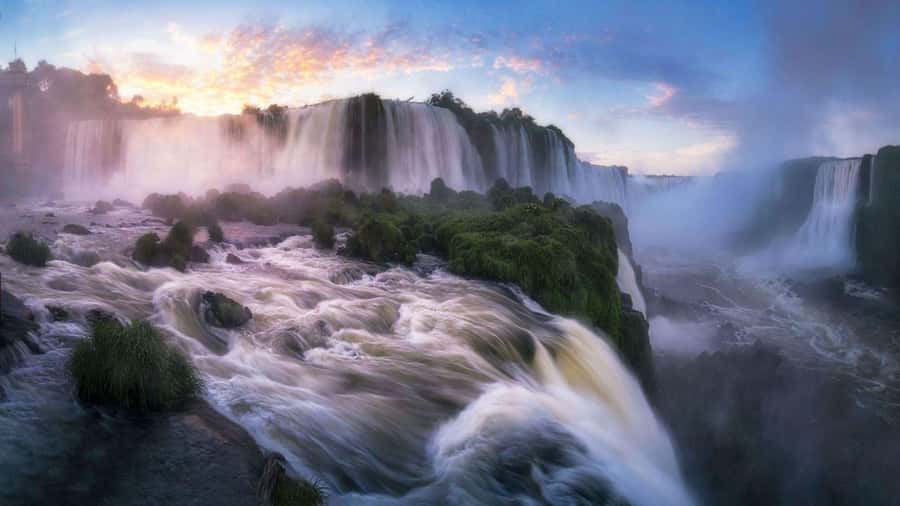
The path is best treated as a scenic walk rather than a race. Stop at the viewpoints, look for changing angles, and give yourself time to notice how the falls shift from distant silver lines to heavy curtains of water. The sound grows stronger as you approach the most dramatic sections.
One practical point: a previous visit found the Devil’s Throat area closed because a bridge had been damaged. That closure was tied to conditions at the time, so you should not assume every section will always be open. The falls remain impressive from the Brazilian route, but access to individual viewpoints can change.
Devil’s Throat and the final rush of water
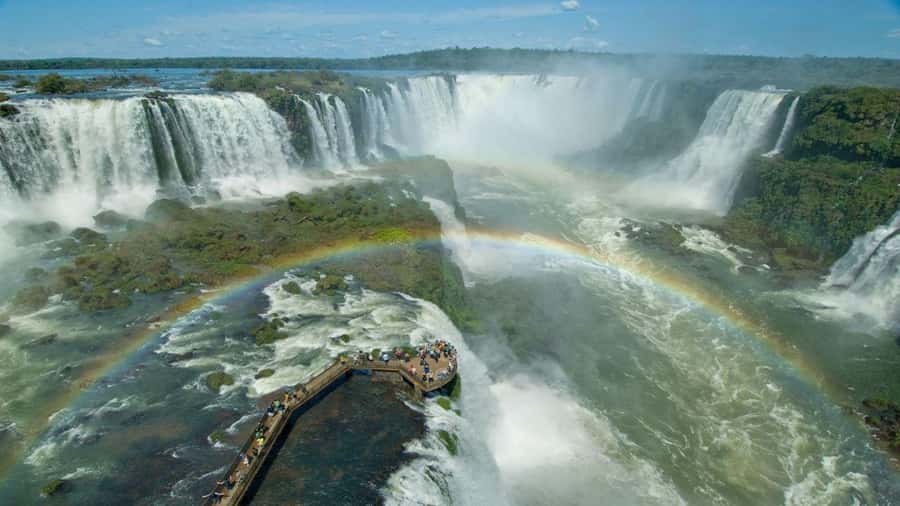
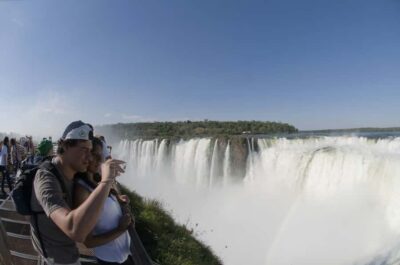
Devil’s Throat is the most powerful feature in the park. It is an approximately 80-meter cascade, and its scale is difficult to grasp until you are close enough to see the volume of water folding into the gorge.
The Brazilian side does not give you the same route configuration as Argentina, but it provides strong views of this central spectacle and the surrounding falls. Mist, noise, and shifting light make this the point where the visit feels most physical. You are not simply looking at a postcard. You are standing near a huge moving body of water.
The weather matters here. On a sunny day, rainbows can appear in several places. On a gray or wet day, the falls may look more forceful and moody, though your photographs may be less bright. Either way, bring something to protect your phone and camera.
Allow for the possibility that you will get wet. The supplied advice to bring ponchos and bug spray is sensible. Bug spray is useful for the forest portions, while a poncho is the more important item near the water. Wear shoes suited to a wet walking path, though no specific footwear requirement is given.
More Tours in Brazil
- Rio de Janeiro: 6-Stop Highlights of Rio with Lunch
★ 4.4 · 5,157 reviews - Christ the Redeemer Entry Ticket by Corcovado Train
★ 4.4 · 4,476 reviews - Rio de Janeiro: Rocinha Favela Walking Tour with Local Guide
★ 4.8 · 3,052 reviews - Rio de Janeiro: Sugarloaf Cable Car Official Ticket
★ 4.6 · 2,873 reviews
The panoramic elevator and Porto Canoas
Near the end of the route, a panoramic elevator gives you another angle over the falls. It is a worthwhile finish because the view changes again after the lower walkway. From above, you can reconnect the individual cascades with the broad scene you saw earlier.
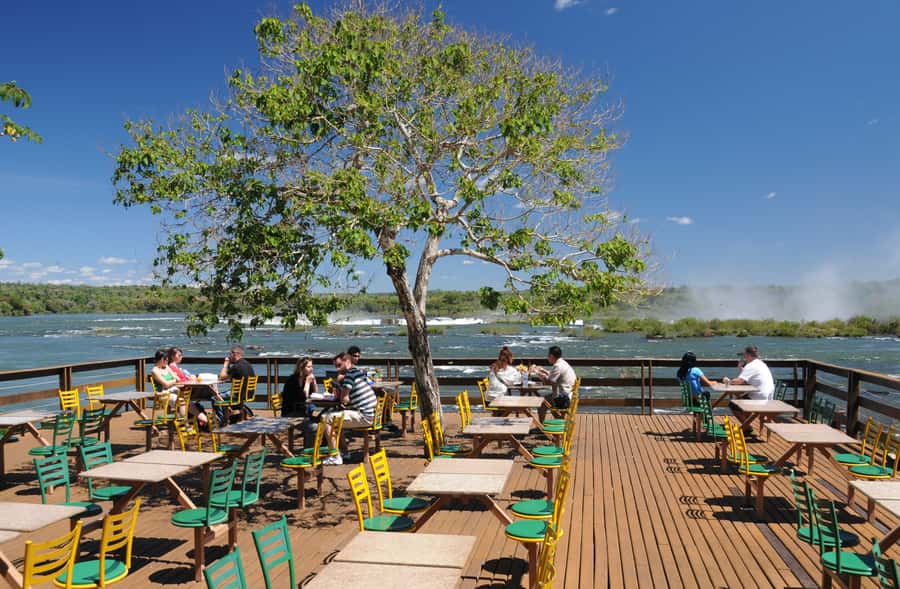
After the elevator, you can stop at the Porto Canoas gastronomic center. Food and drinks are not included in the $80 price, but you can buy them there. One visitor specifically found the restaurant food good, making it a useful place to pause after the walk rather than treating the meal as part of the tour package.
You also have access to the park’s souvenir shop. This is a standard stop, but it can be handy if you want a small reminder of the visit without arranging another shopping trip in town.
Do not count on a long meal break within the three-hour schedule. The tour is built around the park visit, not a leisurely restaurant outing. If you want to eat at Porto Canoas, keep an eye on the return time and ask the guide how much free time is available.
What the $80 price really covers
At $80 per person, this tour is mainly buying convenience. The price includes transport in an air-conditioned vehicle, hotel or airport pickup and drop-off in Foz do Iguaçu, a professional guide, entrance tickets to Iguazu National Park, and taxes and handling charges.
That can be good value if you are staying at a listed hotel, do not have a car, and want someone else to coordinate the park entry. The airport pickup is especially useful if your schedule lines up with the morning or afternoon departure.
The value is less clear if you are comfortable arranging a taxi or other ride to the park and prefer to walk without a guide. One visitor felt that going directly to the national park would cost less and provide much the same park experience. That is a fair comparison.
I would pay the $80 for convenience, especially on a first visit or when timing matters. I would look for a self-organized option if your priority is the lowest price and you do not need hotel transport or language support.
The tour lasts three hours, with morning pickups expected between 8:00 and 9:00 and afternoon pickups between 2:00 and 3:00. Those are pickup windows, not exact times, so contact the operator to confirm the actual time. If your hotel is not on the pickup list, you will be given a nearby meeting point.
The guide and language question
The experience is advertised with live guiding in English, Portuguese, Spanish, German, and Italian. That is useful in a multilingual destination, but you should confirm your chosen language before booking and again before pickup.
Language matching has not always been reliable. A German-language booking once resulted in an English-speaking guide, while another visitor who expected English support found no English-speaking guide with the group. German service was also expected by one person but was not provided.
This does not necessarily ruin the park visit, since the route is easy to follow and the waterfalls need little translation. Still, it changes what you are paying for. If you want nature facts, history, or help throughout the walk, language is a major part of the decision.
The guide may be most useful for getting you from your hotel to the entrance, handling tickets, and making sure you know where and when to return. Prepare for some independent walking time rather than a fully narrated tour.
Timing, clothing, and small practical choices
The morning departure is the safer choice if you want more flexibility afterward. It also gives you the rest of the day for another activity, though the tour’s exact return time will depend on pickup and park conditions.
The afternoon option works well if you arrive in town later or want a slower morning. Sunlight can change the look of the water and the chance of rainbows, but the available information does not promise a particular viewing condition.
Bring:
- Passport or ID card
- Visa, if your nationality requires one
- Poncho or rain protection
- Bug spray
- Water and a camera protected from spray
- Comfortable shoes for the 950-meter route
Food and drinks are available for purchase at Porto Canoas, but they are not included. Keep your expectations realistic about wildlife too. Coatis, birds, and butterflies are possible sightings, not scheduled stops.
The tour offers free cancellation up to 24 hours in advance, and you can reserve now and pay later. Those terms are helpful if your Foz do Iguaçu plans may shift, but the pickup time still needs direct confirmation.
Who should book this Brazilian falls visit?

I think this suits you if you want the essential Brazilian viewpoint without spending a full day in the park. It is a good fit for a first visit, a short stay, airport-linked plans, or anyone who values included transport and park admission.
It also works for families and mixed-age groups because the route is relatively short and the major viewpoints come without a long expedition. The waterfall views are the reason to book, not a detailed guided nature lesson.
I would hesitate if you want a fully guided walk with reliable commentary in a specific language. I would also compare the cost with a direct park visit if you are staying near the entrance or can arrange transportation cheaply.
Should you book it?
Book this tour if you want a convenient three-hour overview, broad views of the Argentinian falls, and help with transport and entry. The Brazilian side is superb for scale, and the 950-meter route, elevator, forest road, and Devil’s Throat views pack a lot into one outing.
Before paying, confirm three things: your exact pickup time, the guide’s language, and how much guided explanation is included once you enter the park. If those details line up, $80 is a reasonable convenience price. If they do not, arranging the Brazilian side independently may give you more control for less money.
FAQ
How long does the Brazilian side tour last?
The tour lasts three hours.
Where does pickup take place?
Roundtrip pickup is available from hotels in Foz do Iguaçu and from the airport. If your hotel is not on the pickup list, you will be told the nearest pickup point and time.
What are the usual departure times?
Morning tours usually leave between 8:00 and 9:00. Afternoon tours usually leave between 2:00 and 3:00. You should contact the tour company to confirm your exact pickup time.
Is transportation included?
Yes. Transportation is provided in an air-conditioned vehicle, with pickup and drop-off included from eligible hotels and the airport.
Is the Iguazu National Park entrance ticket included?
Yes. The ticket to Iguazu National Park and all listed taxes, fees, and handling charges are included.
What languages are offered?
Live guiding is offered in English, Portuguese, Spanish, German, and Italian. Confirm your requested language before the tour because language service may not always match the selection.
How much of the waterfall system can I see from Brazil?
The Brazilian side contains about 25 percent of the falls, but it gives you a panoramic view of roughly 75 percent of the falls on the Argentinian side.
Are food and drinks included?
No. Food and drinks are not included, but you can buy them at the Porto Canoas gastronomic center.
What should I bring?
Bring a passport or ID card, plus a visa if one is required for you. A poncho, bug spray, and protection for your camera or phone are also practical choices because of spray and the forest setting.
Just added in Brazil
- From Puerto Iguazu: Itaipu Dam Tour with Entrance Ticket★ 4.7 · 31 reviews
- From Puerto Iguazu: Secret Falls Adventure★ 5.0 · 5 reviews
- Gramado and Canela private trip with English speaking guide★ 5.0 · 6 reviews
- From Natal: Pipa, Cacimbinhas, And Love Beach Full-Day Tour★ 4.5 · 14 reviews
- From Puerto Iguazú: Brazilian Bird Park Tour with Tickets★ 4.7 · 7 reviews
- from Foz do Iguaçu: Private Tour on Argentinean Falls★ 5.0 · 5 reviews
- From Jericoacoara: Preá Beach and Paradise Lagoon Tour★ 3.8 · 51 reviews
- From Manaus: Negro River Half-Day Trip★ 4.7 · 20 reviews
Iguazu Falls Tours, compared.

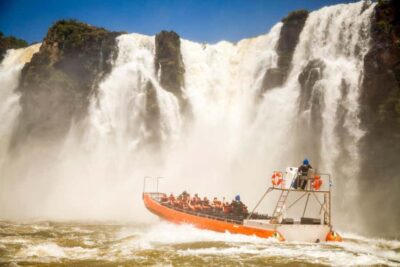
From Foz do Iguazu: Brazil Iguazu Falls & Macuco Safari Boat
Read our review →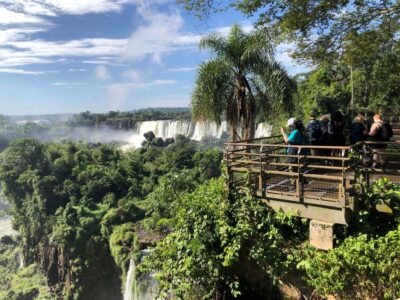
Iguassu Waterfalls: 1 Day Tour Brazil and Argentina’s sides
Read our review →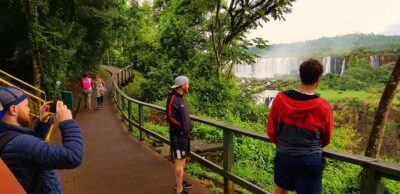

Day Trip to the Argentinian Side of Iguassu Falls from Foz do Iguaçu
Read our review →Browse the lists this tour appears in