
Reviewed · RIO DE JANEIRO
Ancient Rio and Santa Teresa Tour with Hotel pick-up and drop-off
Rio’s past comes into focus when you leave the beach behind. This four-hour outing links the bohemian hills of Santa Teresa with the old center, where imperial squares, grand theaters, churches, cafés, and former government buildings crowd together.
I like the efficient route and the chance to see places many first-time visitors skip. I also like the hotel pickup and drop-off, especially in a city where getting between neighborhoods can take time. The main catch is that the tour moves quickly, and the famous Santa Teresa tram is viewed rather than ridden.
Key points to know before booking
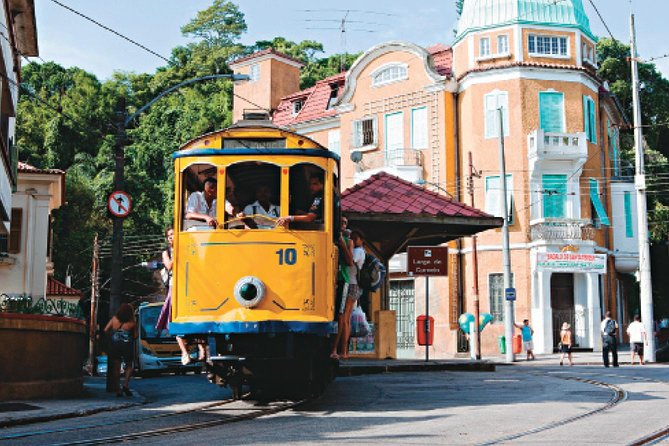
- Santa Teresa’s 1897 tram: You can see the historic yellow tram and learn why it still matters, but a tram ride is not part of this shared tour.
- Two very different sides of Rio: The route pairs hillside mansions and street art with the formal squares and institutions of Ancient Rio.
- Architecture over museum visits: The National Museum of Fine Arts, Municipal Theater, and National Library are exterior viewing stops.
- Hotel pickup and return: Pickup timing is arranged after booking, and the activity returns to the starting meeting point.
- Short, tightly planned stops: Most visits last between 10 and 30 minutes, so this suits sightseeing more than slow exploration.
- A guide makes the difference: Guides including Renato, Dario, Wagner, Monica, Wanessa, and Romeu have received especially warm praise for clear explanations and local insight.
Santa Teresa first, with a look at old Rio’s hillside character
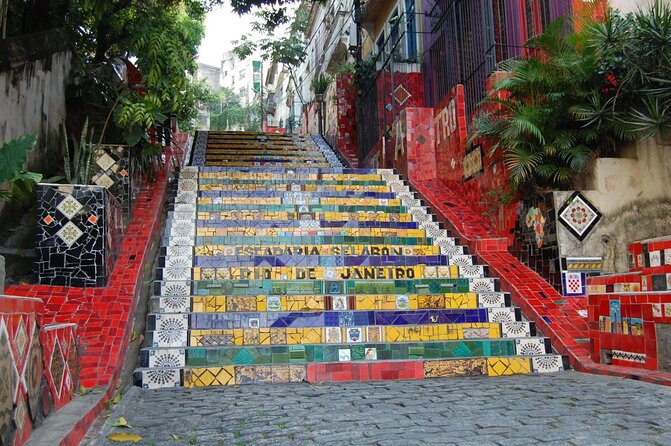
Santa Teresa is the most atmospheric part of the route. Built on a hill above central Rio, it feels far removed from Copacabana’s broad beach avenues. The streets are uneven, the pace is slower, and old mansions sit beside studios, cafés, small shops, and colorful graffiti.
The neighborhood has long attracted painters and other artists. Your guide explains how Santa Teresa changed over time, while pointing out the early twentieth-century homes that give the district its distinct look. You are not simply checking off buildings. You are seeing how Rio’s upper neighborhoods developed away from the port and commercial center.
The tram is one of Santa Teresa’s symbols. It was built in 1897 and is still part of the neighborhood’s identity. You should set your expectations carefully: this tour lets you admire the original tram and hear about it, but it does not include a ride. One past guest felt particularly disappointed by this difference, so I would treat the tram as a photo and history stop, not as transportation.
The first part lasts about an hour. That sounds generous, but Santa Teresa rewards a slow pace. If you have trouble walking, pay attention here. The cobblestones can be rough and the streets uneven, and several stops involve walking rather than simply looking out of a vehicle window. Comfortable shoes are essential.
The upside is that the guide can help you notice details you might miss alone: a tiled facade, a faded mansion, a piece of graffiti, or the way the tram line fits into the steep streets. Monica received special praise for taking extra care with a guest who had difficulty walking, but the tour is not designed as a fully accessible outing.
More Tours in Brazil
- Rio de Janeiro: 6-Stop Highlights of Rio with Lunch
★ 4.4 · 5,157 reviews - Christ the Redeemer Entry Ticket by Corcovado Train
★ 4.4 · 4,476 reviews - Rio de Janeiro: Rocinha Favela Walking Tour with Local Guide
★ 4.8 · 3,052 reviews
Parque das Ruínas and the story of Laurinda Santos Lobo
The next stop is the Municipal Cultural Center Parque das Ruínas. This was once the home of Laurinda Santos Lobo, a prominent supporter of artists. Today, the ruins serve as a cultural center that carries on that connection with art and performance.
The appeal here is partly architectural. The old structure has an open, weathered character, and its position in Santa Teresa gives you a different view of the city. You have about 20 minutes, which is enough for a short look and photos, though not enough for a long cultural program.
This is also a good example of what the tour does well. It does not limit Ancient Rio to rulers, dates, and official buildings. It includes the people and places that shaped Rio’s creative life. If you enjoy art, old houses, and city views, this stop may be one of your favorites.
Lapa’s arches and the practical side of Rio’s past
Arcos da Lapa is one of the most recognizable structures on the route. The white arches were originally built to carry water. Today, they support the tram line connecting Santa Teresa with the city below, giving an old engineering project a modern role.
The stop lasts about 30 minutes. That gives you time to see the arches from different angles and hear how the structure fits into Rio’s growth. You are seeing more than a photogenic monument. The aqueduct points to the practical problems of supplying water to a growing colonial city, while the tram shows how older infrastructure can remain useful.
Admission is not included, but this is primarily an exterior stop, so you are not facing a large entry fee here. The best value comes from the explanation provided by the guide and from placing the arches within the larger story of central Rio.
Traffic can affect this part of the route. Rio’s central streets become especially difficult during major events such as Carnival, and a delay early in the day can reduce time at later stops. If you are visiting during a major festival, allow extra flexibility.
Praça XV, imperial buildings, and the old port district
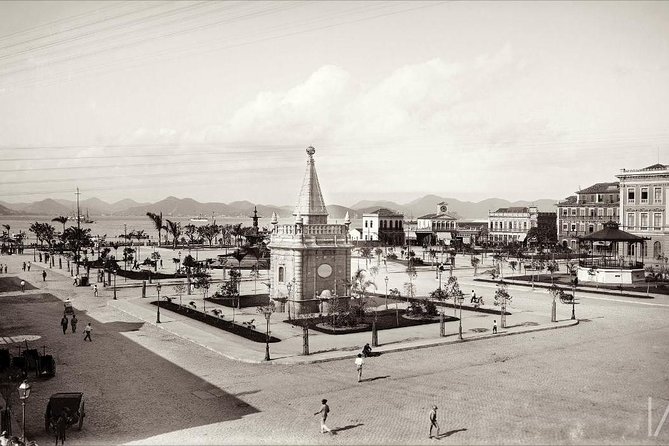
Praça Quinze de Novembro is where the tour shifts from the artistic hills to formal, civic Rio. The square sits in the historic center and is surrounded by major buildings, including the Palácio Tiradentes, the Legislative Assembly, and the Paço Imperial.
This is a good place to understand Rio as a former capital. The square connects political power, royal history, transport, and the waterfront. Its ferry terminal serves Rio and Niterói, so the area is not just a preserved historical setting. It remains part of the city’s daily movement.
You have about 30 minutes here. I like that the schedule gives Praça XV more time than some of the later architectural stops. There is enough room to hear the basic story, take photographs, and look around without turning the visit into a hurried drive-by.
The historic center can be quiet on Sundays, especially early in the morning. That can make the streets easier to appreciate, but it also means many shops and some attractions may be closed. New Year’s Day and Mondays can bring similar limitations. The tour still works on those days, but you should book it for the streets and buildings, not for open shops or interiors.
Same city, a different sort of day:
- Rio: Christ the Redeemer, Sugarloaf, Selaron & BBQ Lunch
★ 4.5 · 2,428 reviews - Rio De Janeiro: Half-Day Rocinha Favela Walking Tour
★ 4.7 · 2,272 reviews - Rio de Janeiro: Angra dos Reis and Ilha Grande Full-Day Tour
★ 4.6 · 1,673 reviews - Rio de Janeiro: Beginner Samba Lesson in Ipanema
★ 4.9 · 1,071 reviews
Arco do Teles and the lanes around the former market
Arco do Teles is a smaller, more intimate stop. It sits in an area that was once Rio’s downtown market, where narrow streets and alleys now hold bars and small restaurants.
After the broad space of Praça XV, these lanes give you a better sense of how the old center works at street level. The charm is in the details: compressed passageways, old facades, and the change from formal public buildings to places built for eating, drinking, and social life.
The scheduled visit is about 20 minutes. That is enough to walk through and take photographs, but it is not enough for a leisurely meal. Lunch is not included, and the tour does not promise a restaurant stop. If you want to sit down for coffee or food, ask before the route begins. Some guides keep a very tight schedule, and one poor experience involved a guest being unable to stop for a drink or restroom break.
You may hear about Confeitaria Colombo, one of Rio’s famous old cafés. Some versions of this route have ended near the café, and one particularly enthusiastic account praised its art nouveau interior, coffee, and sweets. Do not assume that a sit-down visit is included. Treat it as a possible nearby suggestion rather than a guaranteed part of this tour.
Cinelândia’s grand public architecture
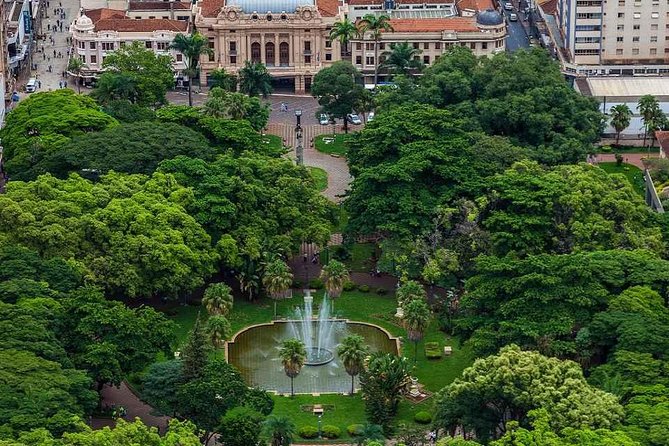
Cinelândia is one of the central city’s best photo stops. The square is surrounded by large historic buildings and gives you a chance to see the public face of twentieth-century Rio.
The name is tied to the cinemas and entertainment venues that once filled the area, but the square’s main value on this tour is architectural and civic. It helps you see how Rio presented itself as a modern capital during a period of major urban change.
You have around 30 minutes. That is useful because the area is spread out and the buildings are worth viewing from more than one angle. Still, the stop is guided sightseeing rather than a long independent visit. If you want to study facades or photograph every detail, you may feel pressed.
Three impressive buildings viewed from outside
The route then makes three brief architectural stops: the National Museum of Fine Arts, the Municipal Theater, and the National Library.
The National Museum of Fine Arts was designed in 1908 by Adolfo Morales de los Rios to house the National School of Fine Arts, which grew out of the Imperial Academy of Fine Arts. Its construction formed part of the urban modernization led by Mayor Pereira Passos when Rio was Brazil’s federal capital.
You spend about 10 minutes here and do not enter. That is enough to appreciate the facade and hear why the building belongs to this period of planned renewal. If you want to see the art collection, you need a separate visit.
The Municipal Theater opened in 1909 and is one of Brazil’s major theaters. It has hosted international artists and important Brazilian performers, and it maintains its own choir, symphony orchestra, and ballet company. Again, the stop is outside only, with about 10 minutes for the architecture.
The National Library is another exterior viewing stop. Founded in 1810 by João VI of Portugal, it holds almost nine million items and is described as the largest library in Latin America. Its collection includes rare books, manuscripts, letters written by Princess Isabel, early Brazilian newspapers, and two copies of the Mainz Psalter Bible, printed in 1492.
The building may be one of the most intriguing stops for history-minded visitors, but you should know exactly what you are buying. The tour does not take you inside the library. The same is true of the museum and theater. Several people wished they had visited on a day when these buildings were open to the public, so consider adding your own interior visits before or after the tour if your schedule allows.
Why the guide matters more than the vehicle
The tour uses an air-conditioned vehicle, which is welcome in Rio’s heat. Pickup and drop-off are arranged around your hotel location, with the listed starting point at Hotel Rio Othon Palace in Copacabana. After booking, you are contacted with the pickup time, so check your email and phone rather than assuming a standard departure hour.
The shared vehicle can hold up to 19 people per minivan. The wider operation may handle as many as 99 people, but your actual minivan is the more useful number. A smaller group can feel personal, while a full vehicle can make the route less flexible and can put some passengers in less favorable seats.
Several guides have been singled out for the qualities that make this tour work: Renato for clear links between history and economics, Dario for local pride and careful explanations, Wagner for a strong general presentation, Monica for thoughtful assistance, Wanessa for punctuality, and Romeu for his cultural insight. Guides such as Jack Daniel and Roger were also praised for fluent English and enthusiasm.
That said, the experience is not uniform. A guide who is engaged can turn a short stop into a memorable lesson. A guide who simply drives between locations can make the same route feel flat. You should book this as a guided sightseeing tour, but understand that the guide is a major part of its value.
Is four hours enough for Ancient Rio?
Four hours is enough for an introduction, not a full exploration. The route covers nine stops, but some receive only 10 minutes. You will see a lot of central Rio, yet you will not have time to linger in every square, enter each museum, browse shops, and stop for a long lunch.
I like the trade-off for a first visit or a short stay. You can cover Santa Teresa and the historic center without arranging several taxis or trying to understand the city’s complicated layout on your own. The air-conditioned vehicle also gives your feet a break between walks.
The downside is the pace. Some guides leave generous room for photographs and questions, while others move quickly from one place to the next. If you prefer to sit in a café, wander side streets, or spend an hour inside one museum, this is not the right format.
The price of about $55 per person is fair if you value transport, a guide, and a broad introduction to two very different parts of Rio. It is less compelling if you mainly want a tram ride, museum admission, or a relaxed food-focused day, since none of those is included.
Who should book this Rio history tour?
I would choose this tour if you have limited time in Rio and have already planned, or do not need, the city’s major viewpoints. It complements visits to Christ the Redeemer and Sugarloaf Mountain by showing the city’s older streets, institutions, and creative districts.
It suits you best if you:
- Want hotel pickup and return rather than managing central Rio transport alone
- Enjoy architecture, urban history, and local stories
- Are comfortable walking on uneven cobblestones
- Prefer seeing many sites over spending a long time at one
- Can accept exterior visits instead of museum interiors
- Want a small shared group, ideally with an active and clear guide
I would look for another option if the tram ride is your main goal, if you need a wheelchair-friendly route, or if you want a slow afternoon with time for lunch and shopping. You can cancel without a fee up to 24 hours before the start, but poor weather or an insufficient number of bookings can also lead to a change or refund.
Should you book it?
Book it for a practical first look at Santa Teresa and Ancient Rio, especially if you have only a few days in the city. The route is broad, the price is reasonable, and the contrast between hillside mansions, Lapa’s arches, imperial squares, and grand public buildings is genuinely useful.
Go in with clear expectations. The tram is seen, not ridden. Museum and theater entries are not included. Some stops are brief, and traffic or a late pickup can squeeze the schedule. Confirm your pickup time, wear sturdy shoes, and choose a day when you care more about streets and architecture than open shops.
FAQ
How long does the Ancient Rio and Santa Teresa tour last?
The tour lasts approximately four hours.
What is the price of the tour?
The listed price is $55 per person.
Where does the tour start?
The listed meeting point is Hotel Rio Othon Palace at Av. Atlântica, 3264, Copacabana, Rio de Janeiro. Pickup timing is arranged according to your hotel location.
Does the tour return to the hotel?
The activity ends back at the meeting point. Pickup and drop-off details should be confirmed with the provider according to your hotel location.
Is the Santa Teresa tram ride included?
No. The tour lets you see and learn about the historic tram, which dates from 1897, but a tram ride is not included.
Are museum and theater admissions included?
No. The route views the National Museum of Fine Arts, Municipal Theater, and National Library from outside. Museum entrance fees are not included.
Is lunch included?
No. Lunch is not included in the tour price.
How large is the tour group?
The activity can have up to 19 people per minivan. The wider operation may accommodate up to 99 people, and at least two people are required for the activity to run.
Just added in Rio de Janeiro
- Rio: Fluminense Match at Maracanã with Guide and Ticket★ 4.9 · 22 reviews
- Explore Santa Teresa: Walking Tour★ 5.0 · 6 reviews
- The Best Food Tour: Taste the Most Authentic Flavours of Rio★ 4.7 · 18 reviews
- Explore Fernando de Noronha: 7-Hour Ilhatour★ 4.9 · 3 reviews
- Favela Santa Marta: Walking Tour with local guide★ 4.8 · 41 reviews
- Helicopter flight no doors in Rio de Janeiro★ 4.7 · 22 reviews
- Discover Rocinha: Guided Tour of the Famous Favela★ 4.5 · 3 reviews
- Discover Noronha: 7-Hour Ilhatour Adventure★ 4.8 · 8 reviews
Tours in Rio de Janeiro, compared.

Christ the Redeemer Entry Ticket by Corcovado Train
Read our review →

Christ the Redeemer, Sugarloaf, Selaron & BBQ Lunch
Read our review →



Browse the lists this tour appears in